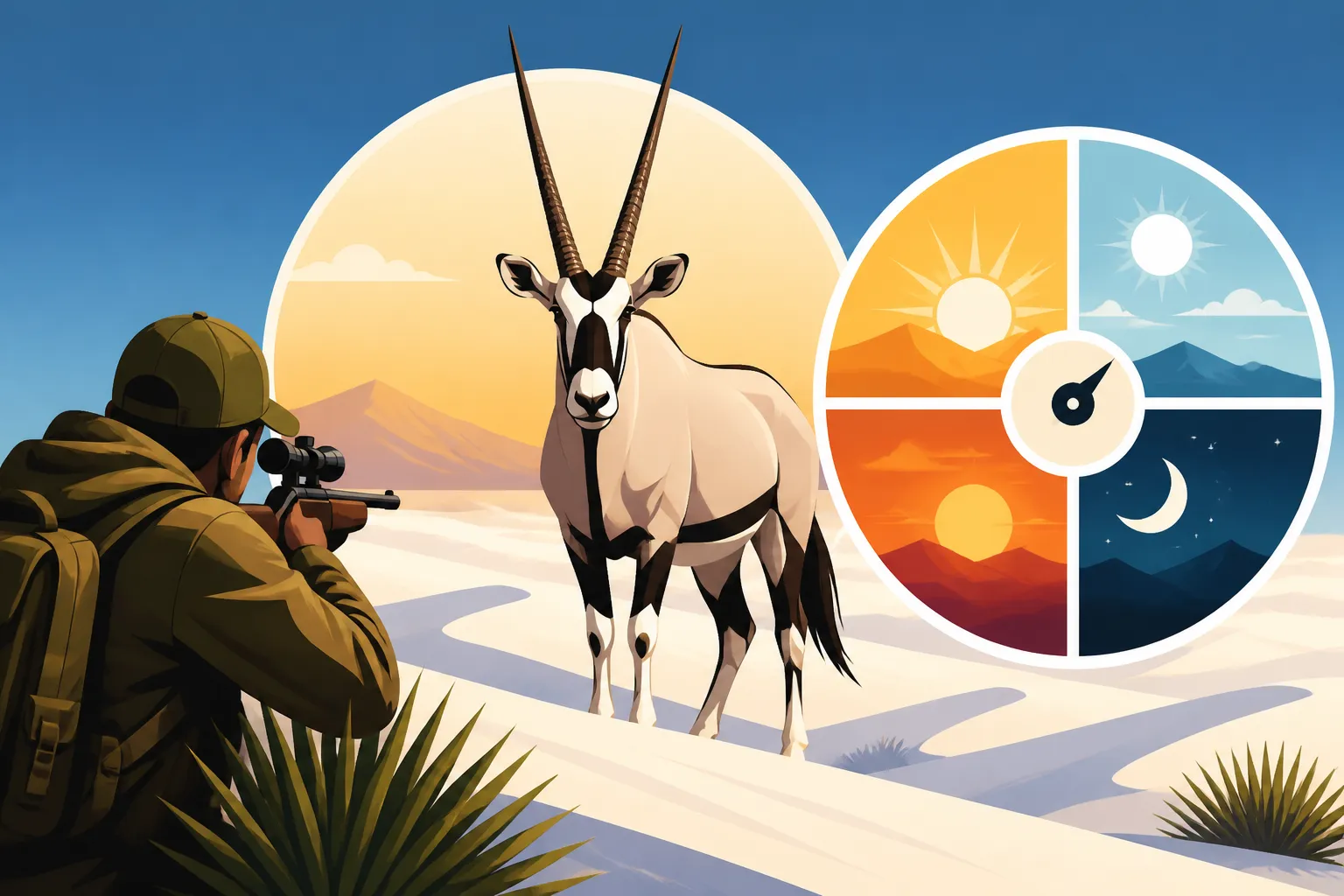
New Mexico White Sands Oryx Hunt Timing
If you've ever dreamt of an absolutely unique big game experience, a New Mexico oryx hunt on the White Sands Missile Range (WSMR) probably tops the list. But getting your boots on that iconic white gypsum and spotting one of these majestic animals is only half the battle. The real challenge, and often the biggest source of frustration for hopeful hunters, lies in understanding the unpredictable and often confusing hunt timing. This guide will meticulously break down everything you need to know about when these coveted hunts occur, why their dates are so specific, and how to navigate the system to maximize your chances.
The Unique Allure of White Sands Oryx Hunting
Hunting oryx in New Mexico isn't just another big game hunt; it's an adventure steeped in a fascinating history and set against an utterly surreal backdrop. These magnificent African antelopes, also known as gemsbok, have truly made New Mexico's deserts their own, and the White Sands Missile Range offers an experience that's unlike anything else in North America.
A Hunt Unlike Any Other
Imagine stalking a creature that looks like it stepped right out of an arid African savanna, but you're surrounded by miles of dazzling white gypsum dunes, under the vast, azure sky of New Mexico. It's a surreal experience that many hunters describe as almost spiritual. The oryx itself is a formidable quarry, known for its keen senses, incredible endurance, and formidable spear-like horns that can reach impressive lengths. Unlike deer or elk that might vanish into thick timber, oryx often hold their ground in the open, making for intense, drawn-out stalks in truly unique terrain. It's this combination of an exotic animal and an otherworldly landscape that draws hunters from across the globe, creating a truly once-in-a-lifetime opportunity.
Why Oryx Thrive in New Mexico's Deserts
It might seem counterintuitive to find an African species thriving in the American Southwest, but the oryx, specifically the Scimitar-horned oryx, were introduced to New Mexico decades ago as part of a game management program. These animals are incredibly well-adapted to harsh desert environments, capable of surviving long periods without water by extracting moisture from the plants they eat, and tolerating extreme temperatures. The vast, open landscape of the White Sands Missile Range, with its sparse vegetation, mimicked their native habitat surprisingly well. As a result, the population exploded, creating a sustainable hunting opportunity that helps manage their numbers and mitigate their impact on native species. If you're curious about their journey, you can delve deeper into How Oryx Came to New Mexico.
Trophy Potential and Meat Quality
Beyond the unique experience, oryx offer an exceptional trophy and fantastic table fare. Both male and female oryx grow impressive, straight horns, often reaching lengths of 30-40 inches, making them a highly prized addition to any trophy room. Field judging can be tricky, as both sexes look very similar and possess horns. The key is often in body size and the thickness at the base of the horns. Moreover, the meat from oryx is lean, flavorful, and highly sought after. Hunters consistently report it to be among the best wild game meat they've ever tasted, rivaling or even surpassing prime beef. Given the effort to draw a tag and the intensity of the hunt, knowing you'll bring home such high-quality meat adds another layer of satisfaction to the endeavor.
Understanding New Mexico's Oryx Hunt Structure
New Mexico's approach to oryx hunting is highly regulated, primarily due to the unique nature of the species and the limited access to the White Sands Missile Range. It's not a hunt you can just decide to do next week; it requires careful planning, understanding a complex draw system, and recognizing the different hunt categories available.
The Limited Draw System for Oryx
Drawing an oryx tag in New Mexico, especially for the White Sands Missile Range, is a serious challenge. The New Mexico Department of Game and Fish (NMDGF) uses a limited-entry lottery system for most big game species, and oryx are no exception. This means you submit an application during a specific window, and successful applicants are chosen randomly. Unlike some other western states, New Mexico does not have a preference point or bonus point system, so every applicant, whether it's your first time applying or your tenth, theoretically has the same odds of drawing a tag in any given year. This can be both frustrating and exciting, as it means you always have a shot, but there's no way to "build up" points for a guaranteed tag down the line. Many hopeful hunters check New Mexico Oryx Draw Odds religiously before applying.
Once-in-a-Lifetime Opportunity
One of the most significant rules governing New Mexico oryx hunting is the "once-in-a-lifetime" stipulation for on-range hunts. If you are fortunate enough to draw and harvest an oryx on the White Sands Missile Range, you will not be eligible to draw another WSMR oryx tag in the future. This rule underscores the rarity and prestige of these hunts and emphasizes the importance of making the most of your opportunity if you draw. There are, however, opportunities to hunt oryx off-range multiple times, which we'll discuss next. Understanding this crucial difference is vital when you plan your applications and set your expectations for future hunts.
Hunt Categories: On-Range vs. Off-Range
New Mexico categorizes its oryx hunts into two primary types: "On-Range" and "Off-Range." The On-Range hunts are those conducted directly on the White Sands Missile Range (WSMR), which is the original introduction site and typically boasts the highest population densities and trophy potential. These are the coveted, once-in-a-lifetime tags. Off-Range hunts, on the other hand, take place on public lands surrounding the missile range, such as Bureau of Land Management (BLM) property and some state trust lands. While off-range hunts are not subject to the once-in-a-lifetime rule and offer more accessible terrain, the oryx populations can be more dispersed and the hunting can be significantly more challenging. It's a trade-off: higher draw odds and more frequent opportunities off-range, versus the unparalleled experience and density of on-range hunts.
Specific Hunt Timing for White Sands Missile Range WSMR
The White Sands Missile Range is an active military testing facility, which means all hunting activities must be carefully coordinated with their operational schedule. This leads to very specific, often short, and sometimes unpredictable hunt windows, which is the crux of why this timing is so important to understand.
The Short, Intense Hunt Windows
Unlike many other big game seasons that might span weeks or even months, New Mexico's on-range oryx hunts are typically very short and concentrated. Most often, these hunts are designated for a mere three days. This compressed timeframe demands an intensive, focused effort from hunters. You don't have the luxury of slow-playing the hunt or waiting for perfect conditions; you need to hit the ground running, locate animals quickly, and execute your plan efficiently. This intensity adds to the thrill, but also amplifies the need for thorough preparation and knowledge of the terrain and oryx behavior. It's a sprint, not a marathon, and every hour in the field counts. For a better idea of how these short hunts unfold, read up on Why a New Mexico Oryx Season Runs Three Days.
Calendar of Typical WSMR Hunts
Oryx hunts on the White Sands Missile Range are typically scheduled during the cooler months, primarily in late fall, winter, and early spring. This is largely due to more favorable temperatures for both hunters and for field dressing and transporting game, as well as minimizing interference with military activities that might be more prevalent in warmer months. You'll often see hunts scheduled in September, October, November, December, January, February, and March. Specific dates within these months are announced annually by the NMDGF. It's absolutely crucial to consult the most current New Mexico Hunting Rules & Information booklet each year, as dates can shift. These dates are meticulously planned months in advance, so once they're released, that's your window.
| Hunt Month | Typical Days on WSMR | General Conditions | Notes |
|---|---|---|---|
| September | 3 | Warm, potential monsoons | Can be challenging with heat |
| October | 3 | Mild, pleasant | Very popular, good conditions |
| November | 3 | Cooler, comfortable | Good for spotting |
| December | 3 | Cold, potential snow | Animals often in larger groups |
| January | 3 | Cold, windy | Fewer hunters, challenging weather |
| February | 3 | Mild, warming | Good for longer stalks |
| March | 3 | Warm, windy | Last chance for the season |
This table represents typical scheduling and is subject to annual changes by NMDGF.
Why the Dates Are So Specific and Few
The strictness of WSMR oryx hunt dates boils down to two main factors: military operations and game management. First and foremost, the White Sands Missile Range is a critical testing facility for the U.S. military. Their operations take precedence over all other activities, including hunting. Hunt dates are carefully selected to avoid conflicts with scheduled tests, drills, and other classified activities. This is why hunts are limited in number and often short in duration. Secondly, the NMDGF manages the oryx population through these hunts. By controlling the number of tags issued and the timing of the hunts, they ensure a healthy, sustainable population while achieving harvest objectives. It’s a delicate balance between public hunting opportunity and the primary mission of the missile range. Knowing that the military operations can impact your hunt, it's wise to understand Hunting Oryx on an Active Missile Range.
Applying for a White Sands Oryx Tag
Successfully drawing a New Mexico oryx tag, especially for the coveted White Sands Missile Range, requires a solid understanding of the application process. It’s not just about picking a unit; it’s about timing your application, understanding the financial commitment, and strategically choosing your hunt codes.
The Application Deadline and Process
The application period for New Mexico big game tags, including oryx, is famously rigid. All applications for species like elk, deer, antelope, bighorn sheep, ibex, and oryx close on a specific day in March, typically the 18th, at 5 p.m. Mountain Time. There are no extensions, no exceptions, and if you miss it, you're out of luck for the year. The entire process is conducted online through the NMDGF licensing portal. You’ll need to create an account, select your hunt choices by specific hunt code, and provide payment information for the application fees and the full license fee, which will only be charged if you're successful in the draw. It's a critical deadline that often sneaks up on folks, so mark your calendar for The March Deadline for New Mexico Applications.
Checking Draw Odds and Strategies
Given the high demand for oryx tags, especially on WSMR, draw odds are notoriously low. It’s common to see success rates in the single digits for the most popular hunt codes. While New Mexico doesn't use a preference point system, many hunters meticulously study past draw statistics to identify units and hunt dates with slightly better odds, or those that align with their availability. Resources like GoHunt, for example, provide excellent tools and historical data that can help you analyze draw odds, see application trends, and even estimate what your chances might be for specific hunt codes. Utilizing these kinds of data analysis platforms can be a game-changer for building a strategic application, helping you make informed decisions rather than just guessing.
The Nonresident Perspective and Cost
For nonresident hunters, drawing a New Mexico oryx tag presents an even steeper hill to climb, not only in terms of draw odds but also financially. Nonresidents are allocated a smaller percentage of tags compared to residents, further compressing the odds. Beyond the application fee, the cost of a nonresident oryx tag is substantial. For example, A Nonresident New Mexico Oryx Tag Runs $1,623 (plus application fees and a game hunting license). This significant financial investment means that every aspect of the application, from unit choice to hunt timing, needs to be thoroughly researched. It's a dream hunt for many, but one that requires careful budgeting and a clear understanding of the full financial commitment involved.
Operational Considerations on White Sands Missile Range
Hunting on an active military installation like the White Sands Missile Range is inherently different from hunting on typical public land. There are unique rules, access protocols, and the ever-present possibility of military operations impacting your hunt.
Military Operations and Hunt Interruptions
This is perhaps the most significant difference when hunting WSMR. The missile range's primary purpose is military testing, and this can, and sometimes does, interrupt or even cancel scheduled hunts. It's a reality every hunter applying for a WSMR oryx tag must accept. The NMDGF regulations explicitly state that military operations can cut hunts short or change access points with little to no notice. While every effort is made to avoid such conflicts, the military's mission takes precedence. Understanding What Happens If Military Operations Shorten Your Hunt is crucial for setting realistic expectations and planning contingencies. It’s a gamble, but for many, the potential reward is worth the risk.
Access Restrictions and Checkpoints
Gaining access to the White Sands Missile Range is not like driving onto a National Forest. You'll be entering a secure federal facility. All hunters must pass through designated checkpoints and are often required to show photo identification, hunting licenses, and proof of their drawn tag. There are strict rules about what you can bring onto the range, where you can drive, and specific areas that are off-limits due to ongoing operations or sensitive areas. Before your hunt, you'll receive detailed instructions about entry points and procedures. It's imperative to follow all instructions from range personnel to the letter. This includes staying on designated roads and not venturing into restricted zones. You can find more details on Getting Onto White Sands Missile Range before your hunt.
Safety Protocols and Required Briefings
Safety is paramount on the White Sands Missile Range. All drawn hunters are typically required to attend a mandatory safety briefing prior to their hunt. These briefings cover everything from range rules, potential hazards (like unexploded ordnance, though areas are generally cleared for hunting), communication protocols, and emergency procedures. It's not just a formality; it's a critical component of ensuring everyone's safety in a potentially hazardous environment. Pay close attention, ask questions, and ensure you understand all rules before heading out into the field. Ignoring these protocols can not only jeopardize your hunt but also lead to severe penalties or even endanger lives.
Maximizing Your Short Hunt Window
With only three days to hunt, making the most of every moment on the White Sands Missile Range is crucial. This means diligent preparation, smart hunting tactics, and efficient post-harvest care.
Pre-Scouting and E-Scouting Challenges
Traditional on-the-ground pre-scouting for WSMR hunts is often impossible due to the restricted access of an active military base. However, e-scouting becomes your most powerful tool. Using satellite imagery programs like Google Earth, BaseMap, or the GoHunt mapping platform allows you to identify potential water sources, travel corridors, bedding areas, and glassing points from afar. Look for terrain features that might concentrate oryx, such as washes, low hills, or isolated stands of vegetation. Pay attention to fence lines and natural funnels. While you can't walk the ground, detailed e-scouting can give you a significant advantage in understanding the layout and planning your initial approach on opening morning.
Effective Hunting Strategies for Oryx
Given the open, often featureless terrain, most WSMR oryx hunts involve a combination of extensive glassing and strategic spot-and-stalk techniques. You'll spend a lot of time behind quality optics, scanning vast expanses for the tell-tale white bodies of oryx against the desert backdrop. Once an animal is spotted, a patient and calculated stalk is necessary. Oryx have excellent eyesight, and the lack of cover can make getting within shooting range incredibly challenging. Using terrain to your advantage – draws, low ridges, and even sparse brush – is key to closing the distance. Be prepared for long shots, but always strive to get as close as ethically possible for a clean kill. Understanding how oryx behave in this unique environment will be critical for success. Consider also reading How an Oryx Hunt Actually Runs for a better understanding of the dynamics.
Post-Harvest Requirements and Field Care
Success on an oryx hunt doesn't end with the shot. Due to the remote and often warm conditions, especially during the earlier season hunts, immediate and proper field dressing is paramount. Oryx are large animals, and their meat can spoil quickly if not handled correctly. Have a plan for quartering and cooling the meat rapidly. This often involves bringing plenty of ice chests, tarps, and even a reliable game retrieval system if you're hunting alone. You’ll also need to be aware of specific tagging and reporting requirements from the NMDGF, and ensure you retain the necessary evidence of sex on the carcass. The challenge of keeping meat cool in the desert heat is a real one, something many hunters learn the hard way if they don't prepare sufficiently for Field Dressing in Desert Heat.
Disclaimer
Please remember that hunting regulations, fees, and season dates are subject to change. Always consult the most current New Mexico Department of Game and Fish Hunting Rules & Information booklet and any specific range regulations before planning and executing your hunt.