How Elk Herds Recover After a Burn
When devastating wildfires sweep across New Mexico's stunning landscapes, it's natural for hunters and conservationists alike to feel a pang of worry about the iconic elk herds. We see the scorched earth, the smoldering timber, and our immediate thought goes to the wildlife that calls these places home: "Where do they go? How will they survive? Will the elk ever come back?" It's a valid concern, particularly in a state where elk hunting is such a cherished tradition. This comprehensive guide will walk you through the intricate process of how New Mexico's resilient elk herds, and their habitats, recover and often even thrive in the wake of a wildfire, dispelling some myths and shedding light on the surprising ecological benefits fire can bring.
The Immediate Shock: Fire's Initial Impact on Elk and Their Habitat
A wildfire is a terrifying, destructive force in its immediate path. When flames roar through a forest or across a mountainside, it's a crisis for every living creature in its way, including the majestic elk. Understanding the initial impact helps us appreciate the resilience that follows.
Immediate Dangers and Displacement
During the inferno itself, elk face a life-or-death situation. While they are surprisingly agile and can move quickly, thick smoke can disorient them, and fast-moving crown fires can be inescapable in certain terrains. Direct mortality from burns or smoke inhalation does occur, though it's often less widespread than one might imagine, as elk possess an innate ability to sense danger and move away. Their primary immediate response is displacement. Herds will flee ahead of the fire, seeking refuge in unburned patches, riparian corridors, or adjacent units that haven't been affected. This can lead to temporary overcrowding in these refuge areas, increasing competition for existing food and water sources. It's a chaotic, stressful time for the animals, and observing their movement patterns during and immediately after a fire requires diligent tracking by wildlife biologists and savvy hunters.
Think about a major blaze tearing through a vast section of the Gila National Forest, a prime elk habitat. An archery hunter, scouting weeks before the season, might find the familiar wallows and bedding areas completely charred. The elk that once called that particular ridge home are now pushed into a neighboring canyon, potentially putting pressure on an already established herd. This sudden shift in distribution means hunters need to be more adaptable, often scouting new areas or paying closer attention to game movement patterns on public lands adjacent to the burn. Understanding these immediate effects helps us anticipate how elk might react and where they might seek temporary haven.
Loss of Cover and Forage
Once the flames subside and the smoke clears, the landscape is often a stark picture of black and gray. For elk, this means an immediate and significant loss of both crucial cover and primary forage. The dense timber that once provided security from predators and thermal regulation against harsh weather might be gone, leaving them exposed. Likewise, the grasses, forbs, and browse that made up their diet are either incinerated or severely damaged. This is perhaps the most challenging period for elk, as they must navigate a landscape stripped of its necessities.
Imagine an early season archery hunt in September. You've patterned a bull in a specific patch of ponderosa, knowing he uses a dense thicket for bedding during the heat of the day. If a summer wildfire sweeps through that area, his accustomed bedding cover is obliterated. Not only is his security gone, but the succulent forbs he relied on are now ash. This forces elk to move into remaining pockets of unburned forest, or to travel greater distances to find sufficient food and shelter. Hunters, even those who diligently E-Scouting a New Mexico Unit Before the Season, need to quickly adapt their strategies, recognizing that traditional elk haunts might now be barren and less attractive to game.
The Regenerative Power: How Fire Renews Elk Habitat
While the initial scene is one of destruction, fire is a natural and often beneficial part of many ecosystems, including those that support New Mexico's elk. Over time, the burned landscape transforms, often becoming more productive for wildlife than before.
Nutrient Cycling and Soil Health
One of the most profound, yet unseen, benefits of wildfire is its role in nutrient cycling. When vegetation burns, the organic matter rapidly decomposes, releasing essential nutrients like nitrogen, phosphorus, and potassium back into the soil. These nutrients, which were previously tied up in standing trees and plants, become readily available for new growth. The ash itself can act as a natural fertilizer. Furthermore, fire can reduce the density of organic litter on the forest floor, allowing sunlight to reach the soil and warm it, which can stimulate seed germination.
This process essentially hits a "reset" button for the ecosystem. The soil, enriched and exposed, becomes a prime canvas for new plant life. For an elk hunter looking to understand why certain areas become hotspots years after a burn, this foundational change in soil chemistry is key. It's not just that new plants grow; it's that these new plants often grow more vigorously and are packed with the nutrients elk need. How Wildfire Changes Gila Elk Habitat is a fascinating topic, and this nutrient cycling is a significant part of that change.
New Forage Emergence
This renewed soil health directly translates into an explosion of new, highly nutritious forage. Many native plant species in New Mexico's elk country are fire-adapted, meaning they either require fire to germinate or thrive in post-fire environments. Within months or a year after a burn, especially with adequate moisture, you'll see a flush of tender grasses, fireweed, aspen sprouts, and various forbs. These new growths are often more palatable and digestible for elk than the mature, tougher vegetation they replaced. The increased sunlight reaching the forest floor also promotes a greater diversity and abundance of these understory plants.
Consider a patch of forest previously dominated by dense, mature conifers that cast too much shade for undergrowth. After a fire clears the canopy, sunlight floods the forest floor. Aspen, for example, is a species that aggressively sprouts after fire, and its young shoots are a favorite food of elk. This new, high-quality forage can lead to better body condition for elk, and ultimately, healthier calves and larger antler growth for bulls. A hunter might notice that areas burned a few years prior hold a higher density of elk, particularly cows and calves, attracted by this abundant and nutritious food source. When checking draw odds on sites like GoHunt, considering historical burn data can provide crucial insights into potential future hotspot units.
Creating Edge Habitat
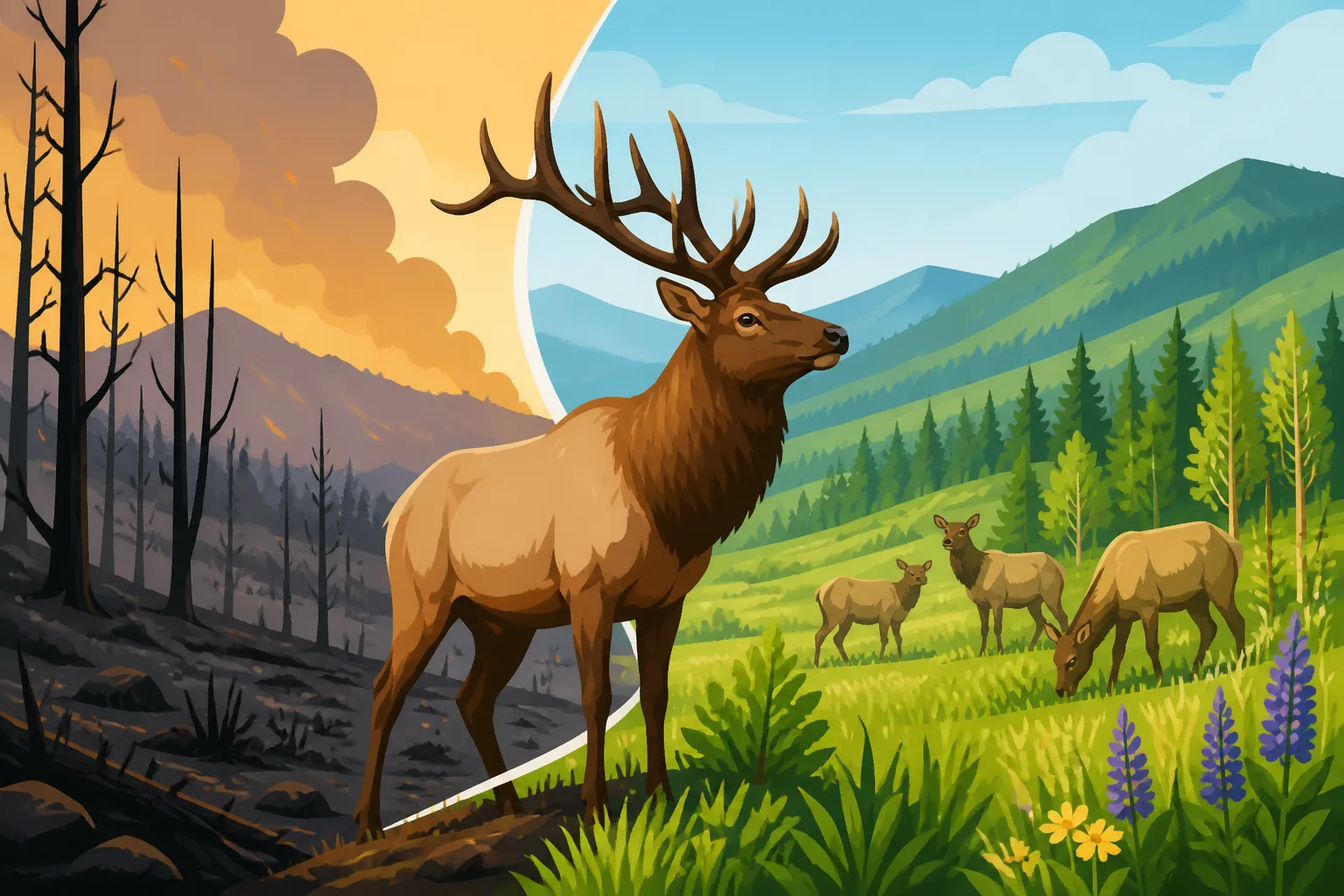
Wildfires rarely burn with uniform intensity. Instead, they often create a mosaic pattern of severely burned areas, lightly burned areas, and unburned pockets, or "islands." This creates a highly diverse landscape known as "edge habitat." Elk are creatures of the edge; they thrive where different habitat types meet. They need open areas for foraging (now abundant with new growth in burned patches) and dense cover for bedding, security, and thermal protection (found in the unburned islands and adjacent forests). This checkerboard pattern provides the best of both worlds.
Imagine a hunt in the Cibola National Forest a few years after a large fire. You might find elk actively feeding in a grassy, regenerating burn scar during the cooler hours of the morning and evening, then retreating into a nearby stringer of unburned timber on a north-facing slope as the day warms. This mosaic allows elk to utilize different parts of the landscape more efficiently, reducing the need for long, exposed movements between feeding and bedding areas. Understanding how these edges are formed and utilized is crucial for Reading Fresh Elk Sign in Ponderosa Timber and predicting elk movement patterns.
Elk Behavioral Adaptations and Movement Patterns Post-Fire
Elk are incredibly adaptable, and their behavior shifts significantly in response to a post-fire landscape. Their survival depends on their ability to find new ways to meet their needs.
Shifting Foraging and Bedding Habits
With their previous food sources and cover gone, elk must quickly adjust their daily routines. They will actively seek out the new, nutrient-rich growth in burned areas, often venturing into places they might have avoided before. Foraging patterns will center around these regenerating areas, sometimes even at different times of day than pre-fire, especially if overall cover is sparse. Bedding habits also change; instead of dense timber, they might use smaller patches of unburned forest, steep canyons with north-facing slopes, or even just areas with good topographical features that offer visual concealment.
Think about scouting for a Gila bull. Before a fire, you might have focused on south-facing slopes in the morning and dense timber in the afternoon. After a burn, you might find that same bull actively grazing on a newly sprouted hillside well into the late morning, taking advantage of the abundant forage. He might then bed down in a small, unburned draw with a few thick junipers, relying more on wind and terrain for security than heavy canopy. Being flexible and observing these shifts is key to successful hunting in post-fire landscapes.
Migration to Adjacent Unburned Areas
While some elk remain close to the edges of burned areas, many will initially migrate to entirely unburned, adjacent habitats. This is a survival mechanism, allowing them to escape the immediate dangers and find reliable food and water. This can lead to a temporary increase in elk density in these unburned "refuge" areas. However, as the burned areas begin to regenerate, elk will often return, drawn by the flush of new, nutritious forage. The timing and extent of these migrations depend heavily on the size and intensity of the fire, as well as the availability of suitable habitat nearby.
For example, a massive wildfire in the San Juan Mountains might push elk into lower elevations or into neighboring units that were spared. This means those unburned units might see a temporary boom in elk numbers, while the burned unit appears barren. However, within a season or two, as the burn begins to green up, those elk will often filter back in, drawn by the high-quality forage. Hunters researching units on GoHunt might notice patterns where units adjacent to historical fire scars initially see increased game activity, followed by a return to the regenerating burn itself.
Utilizing Burned Areas for Nutrition
It’s crucial to understand that elk don't just tolerate burned areas; they actively seek them out for their nutritional benefits once the regeneration begins. The young grasses, forbs, and shrubs that sprout up are highly digestible and packed with nutrients essential for growth and reproduction. This "candy store" effect can draw elk back into burned landscapes with remarkable speed, sometimes within months of a fire. The protein content in these new plants can be significantly higher than in mature vegetation, providing a vital boost to their diet, especially for cows raising calves and bulls growing antlers.
Imagine a hunter using a spotting scope to scan a mountainside in the Jemez. A few years ago, it was dense timber. Now, it's a mix of black skeletons and vibrant green undergrowth. You might observe several cows and calves, along with a bull or two, systematically grazing across this regenerating burn. They are taking full advantage of the fresh growth. This is a testament to the fact that while fire can be destructive, it is also a powerful force for renewal, creating conditions that are incredibly beneficial for elk. This dynamic change is one of the reasons Why Elk Numbers Vary Across the Gila can be tied to fire events.
Long-Term Recovery: Habitat Evolution and Herd Dynamics
The journey from scorched earth to thriving elk habitat is a multi-year process involving ecological succession, active management, and continuous adaptation by the elk themselves.
Succession and Habitat Evolution
Ecological succession is the natural process by which an ecosystem changes over time, especially after a disturbance like a wildfire. In the years immediately following a burn, the landscape is dominated by pioneer species – those fast-growing grasses and forbs that capitalize on the newly available nutrients and sunlight. This is the "candy store" phase for elk. Over subsequent years, shrubs and young trees begin to establish themselves, gradually providing more cover and diversifying the browse. Eventually, if left undisturbed, the area will mature into a forest again, though the species composition might be different from pre-fire, depending on seed sources and fire intensity.
This ongoing evolution means that a ten-year-old burn will look and function differently for elk than a two-year-old burn. Early on, it's all about high-quality forage. Later, it becomes a mix of forage and increasing cover. Understanding these stages helps hunters predict where elk might be found at different points in the recovery process. An old burn might still offer great forage in certain pockets, but it will also provide more security cover than a very recent burn.
Population Recovery and Management Strategies
While a severe fire can cause localized reductions in elk numbers due to displacement or direct mortality, overall herd populations often recover remarkably well, sometimes even increasing in the long run due to improved habitat quality. Wildlife agencies play a crucial role in monitoring these changes. Biologists track elk movements, assess habitat quality, and conduct population surveys to understand the impact of fires. Based on this data, they might adjust harvest quotas in affected units to allow populations to rebound, or they might implement habitat improvement projects like seeding efforts to accelerate regeneration or Water Development Projects Built for Wildlife in arid areas.
For hunters, staying informed about these management decisions is key. Publications like the New Mexico Department of Game and Fish's annual hunt rule and information booklet will often include notes on fire impacts. Tools like GoHunt can help you analyze past harvest data and population trends, which might reveal how specific units have bounced back after historical fires. It's a testament to good wildlife management and the elk's inherent resilience that these herds can not only recover but thrive. Reading a Herd Unit Management Plan can give you even deeper insight into how specific areas are managed after such events.
Challenges and Monitoring
While fire generally benefits elk habitat in the long term, there are certainly challenges. Severe, high-intensity fires can sterilize soil, leading to erosion and slow recovery, especially on steep slopes. Invasive weed species can sometimes colonize burned areas faster than native plants, outcompeting valuable forage. Additionally, the loss of mature timber can impact species that rely on specific types of cover. Ongoing monitoring by wildlife agencies is vital to address these issues. They assess erosion potential, monitor for invasive species, and may intervene with mitigation efforts when necessary.
For the hunter, these challenges mean that not all burned areas are created equal. A "hot" burn on a steep slope might take much longer to recover and be less appealing to elk than a patchy, moderate burn on a gentler grade. Being able to read the landscape, understand the burn severity, and continually adapt your scouting and hunting strategies is crucial. This proactive approach ensures that even after nature's most dramatic events, we can continue to pursue our passion and support healthy elk populations across New Mexico.
Short-Term Challenges vs. Long-Term Benefits of Wildfire for Elk
To summarize the complex relationship between wildfire and elk, here's a quick overview of the trade-offs:
| Aspect | Short-Term Challenges (0-2 Years Post-Fire) | Long-Term Benefits (2-10+ Years Post-Fire) |
|---|---|---|
| Elk Survival | Direct mortality (rare), stress, displacement | Increased overall herd health, better calf survival |
| Forage | Immediate loss of food sources | Flush of highly nutritious grasses, forbs, browse |
| Cover | Significant loss of thermal and security cover | Development of diverse edge habitat, new shrub growth |
| Habitat Diversity | Monolithic devastation, stark landscape | Mosaic of burned and unburned patches, increased plant variety |
| Soil Health | Potential for erosion, initial sterilization | Nutrient cycling, improved soil chemistry, sun exposure |
| Predation | Increased exposure to predators due to lack of cover | Balanced predator-prey dynamics with diversified cover |
| Hunter Success | Unpredictable elk movements, unfamiliar landscape | Concentrated elk in regenerating areas, improved visibility |
Ultimately, while the immediate aftermath of a wildfire can be concerning, these natural events are often a crucial part of maintaining vibrant and productive elk habitat across New Mexico. The resilience of these animals and the land they inhabit is truly remarkable.
Disclaimer
This article is for general informational purposes only and does not constitute professional advice. Laws, prices and regulations vary by location and change over time. Consult a qualified professional for guidance on your specific situation.