Pronghorn on the Eastern Plains Units
Hunting pronghorn on New Mexico's Eastern Plains can feel like trying to find a needle in a colossal haystack, with miles of seemingly endless short grass prairie stretching out before you. The sheer scale of these units, coupled with the pronghorn's incredible eyesight and speed, presents a unique challenge that can leave even seasoned hunters scratching their heads. This guide is here to walk you through the specific nuances of pursuing these remarkable animals in New Mexico's vast eastern regions, offering insights into their habitat, effective scouting tactics, and proven hunting strategies to help you fill your tag.
The Unique Landscape of New Mexico's Eastern Plains Pronghorn Country
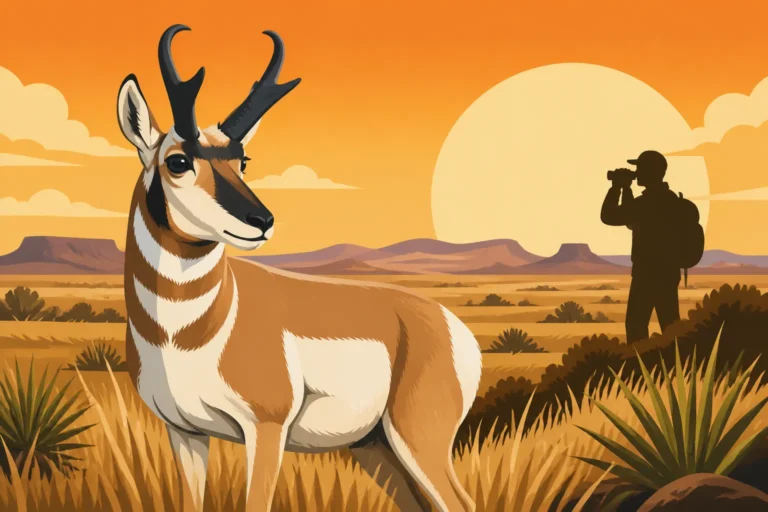
The Eastern Plains of New Mexico offer a completely different hunting experience compared to the high-country elk hunts in the Gila or the dense timber mule deer pursuits. Here, the landscape is defined by vast expanses of grassland, punctuated by rolling hills, dry washes, and scattered brush. This open, unforgiving terrain is precisely what makes it ideal habitat for pronghorn, often called "speed goats," but it also demands a specialized approach from hunters. Understanding this environment is the first step to success.
Identifying Prime Pronghorn Habitat
When you're looking at a map of New Mexico's Eastern Plains units, it might all seem like one big, flat expanse. But that's where a keen eye and a bit of homework come in. Prime pronghorn habitat isn't just any open country; it's specific areas within that open country that offer the right blend of food, water, and cover—sparse as that cover might be. Look for areas with a mosaic of short and mixed-grass prairies, interspersed with sagebrush, mesquite, or other low-lying shrubs. These subtle changes in vegetation provide both forage and just enough visual obstruction for pronghorn to feel secure, or for you to use for an approach. They'll gravitate towards areas where the grass is palatable and nutritious, often near agricultural fields that might offer supplemental feed, especially in drought years.
Hunters often overlook these subtle changes, but they are critical. A slight rise in elevation, a patch of different grass species, or a network of shallow arroyos can be the difference between seeing a few animals and finding a strong herd. Understanding these micro-habitats within the larger plain is paramount. It’s not about finding a field; it’s about finding the right field or pasture that provides exactly what the pronghorn need at that moment in the season.
The Importance of Water and Forage
Like all wildlife, pronghorn need water, especially in the arid environment of New Mexico. While they can derive a surprising amount of moisture from the plants they eat, accessible water sources are still major attractants, especially during the hotter early seasons. Stock tanks, windmills, and seasonal potholes become magnets for these animals. You'll often find pronghorn herds concentrated around these water points, particularly in the mornings and evenings. However, don't forget the importance of forage. Pronghorn are primarily browsers, not grazers, meaning they prefer forbs, weeds, and shrubs over tall grasses.
The quality and availability of this forage dictate where herds will be. If there's been a recent rain, new green growth can pop up in unexpected places, drawing animals away from traditional spots. Conversely, during dry periods, they'll seek out the most succulent vegetation they can find, which often leads them to private agricultural fields or areas with deeper-rooted plants. Paying attention to these subtle shifts in food availability is crucial. For more insights on how drought impacts wildlife, check out our guide on How Drought Affects Desert Deer Numbers. Understanding these patterns can help you predict movement, whether you're planning to sit water for deer and antelope or simply trying to get a read on where the herds are moving.
Eastern Plains Unit Characteristics
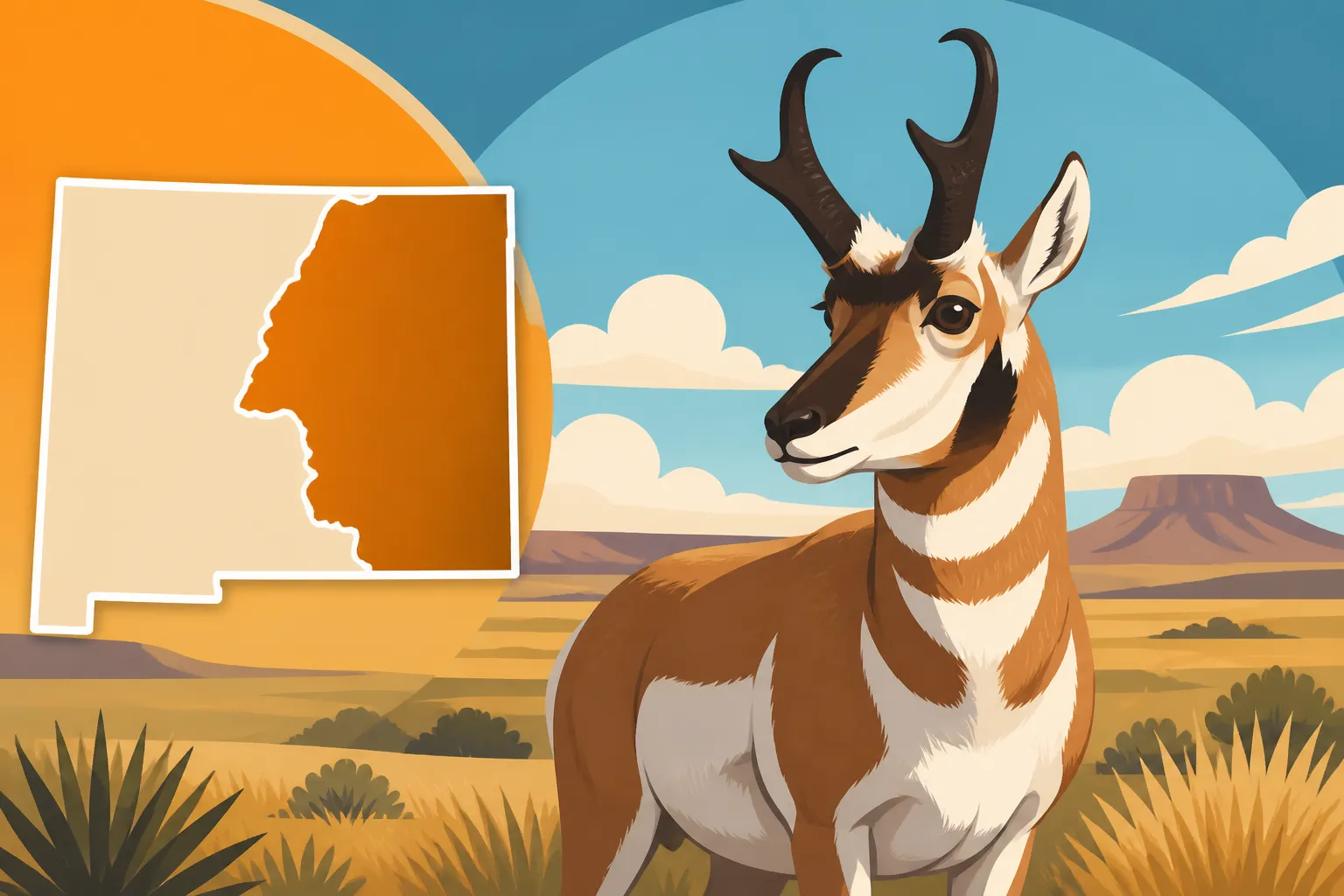
New Mexico's Eastern Plains are comprised of several game management units, each with its own specific blend of public and private land, terrain features, and pronghorn populations. Units in this region, such as those near Portales, Clovis, or Tucumcari, typically feature immense tracts of private ranch land interspersed with smaller, often checkerboarded, parcels of state trust land or BLM. This means access can be a significant hurdle. You'll encounter sprawling cattle ranches, dryland farms, and vast open rangelands.
The public land access that exists often comes in the form of these scattered parcels, requiring careful navigation and often permission to cross private ground to reach them. Our article on Access Across the Eastern Plains delves deeper into these challenges. These units are generally lower in elevation than the mountainous regions to the west, meaning they can get incredibly hot during early season hunts. The lack of significant cover means every stalk is exposed, and the wind can be a constant, swirling factor. Hunters need to be prepared for long sightlines and the strategic use of what little topography is available.
Essential Scouting Techniques for Pronghorn on the Plains
Scouting for pronghorn on the Eastern Plains isn't like scouting for elk in thick timber. You won't be looking for rubs or wallows in the same way. Here, your eyes and your glass are your best friends. The vastness requires a different approach, one that blends modern technology with tried-and-true field methods.
Leveraging E-Scouting and Topographic Tools
Before you ever set foot in the field, a significant amount of your scouting work should happen from your computer. Tools like GoHunt or other mapping applications with satellite imagery and topographic layers are invaluable. Start by identifying large expanses of suitable pronghorn habitat—those open grasslands and sagebrush flats. Then, overlay public and private land boundaries to determine your access points and potential hunting areas. Pay close attention to subtle changes in elevation, even a few feet can create a crucial visual break that you can use for a stalk. Look for dry washes, low ridges, or even large clumps of mesquite that could offer cover.
Mark potential water sources, like stock tanks and windmills, as these are natural gathering points. Identify roads and trails that can get you into position, but also note areas that are landlocked by private property. This pre-season digital reconnaissance helps you create a strategic plan, narrowing down thousands of acres to a few key areas that warrant closer inspection. For more on digital scouting, check out E-Scouting a New Mexico Unit Before the Season.
On-the-Ground Reconnaissance with Optics
Once you've done your e-scouting homework, it's time to hit the field, long before opening day if possible. This is where your optics really shine. A high-quality spotting scope and a good pair of binoculars are non-negotiable for pronghorn hunting. You'll spend hours glassing vast areas from elevated positions—a small hill, a fence line, or even the roof of your truck. The goal is to locate herds and individual bucks, observe their patterns, and identify potential approach routes.
Set up your tripod and glass in wide arcs, slowly dissecting the landscape. Pronghorn blend in surprisingly well despite their distinct markings. Look for movement, a flash of white, or the distinctive silhouette against the horizon. When you spot animals, use your spotting scope to judge their size and assess their location relative to terrain features. Pay attention to how they use the land, where they feed, where they bed down, and their travel corridors. Our guide on Optics Power for New Mexico's Open Country offers advice on selecting the right tools for this kind of work.
Understanding Pronghorn Behavior Before the Hunt
Pronghorn are creatures of habit, but they are also incredibly alert. They rely on their phenomenal eyesight—often likened to that of an 8x binocular—to detect threats from miles away. This means understanding their behavior patterns is key to getting within range. During your scouting trips, observe their daily routines: when they water, when they feed, and when they bed down. Note how they react to vehicles, fence lines, and even cattle. They are often curious, which can sometimes be used to a hunter's advantage, but their default is usually flight.
Consider the time of year as well. Early season hunts, often in late August or early September, can be hot, meaning pronghorn will be most active in the early mornings and late evenings. The rut typically kicks in later in September or early October, and while it might make bucks less cautious, it also means they'll be constantly on the move, chasing does. Understanding these patterns, combined with knowledge of New Mexico Pronghorn Season Timing, helps you predict their location and anticipate their next move, giving you a crucial edge when it's time to hunt.
Stalking and Hunting Strategies for Open Country
The moment you spot a good buck from a distance, the real challenge begins: how do you close the gap in country with virtually no cover? This is where patience, creativity, and a healthy dose of humility come into play.
The Art of the Pronghorn Stalk
Stalking a pronghorn is arguably one of the most demanding hunts in the West. With their legendary eyesight, you simply cannot walk up to them. Every stalk must be meticulously planned and executed. The key is to use any available cover: a dry wash, a shallow ditch, a fence line, even a slight rise in terrain. I've crawled on my hands and knees for hundreds of yards, pushing my rifle ahead, just to gain another 50 yards of cover. This is where those subtle topographic features you marked during e-scouting become invaluable.
Sometimes, the best strategy is to put the wind in your favor, which can be tricky on the plains where it swirls constantly. Our article on Reading Wind in a Deep Gila Canyon might be about elk, but the principles of reading thermal and prevailing winds apply universally in New Mexico. Use the terrain to break up your silhouette, move slowly, and constantly glass ahead to ensure the herd hasn't moved or spotted you. If the pronghorn are bedded, they might be easier to approach, but even then, their eyes are constantly scanning. A successful stalk often takes hours and involves significant physical effort, but the reward is immense.
Patience and Shot Selection
Once you've managed to get within range, patience is paramount. Don't rush the shot. Pronghorn are often on the move, even when feeding, and they can be jumpy. Wait for the animal to present a clear, ethical shot. This might mean waiting for them to stop feeding, or turn broadside. Given the open country, shots can often be long, so practice shooting from a stable rest at extended distances. Shooting sticks or a bipod are absolutely essential.
Also, be prepared for the herd to blow out immediately after the shot. If you're hunting with a partner, having one person ready to spot for a follow-up shot or to mark the animal's direction of travel is a huge advantage. Remember, even with a solid hit, a pronghorn can cover a lot of ground quickly. Take your time, confirm your shot placement, and be ready for anything. This isn't a quick hunt; it's a game of chess played out over miles.
Dealing with Wind and Thermals
The Eastern Plains are notorious for their relentless wind. Wind can be both a blessing and a curse. It can help mask your sound and scent during a stalk, but it can also make shooting accurately incredibly difficult. You'll need to learn how to compensate for wind drift, especially on those longer shots. Practice shooting in windy conditions leading up to your hunt. Understand how even a moderate crosswind can push your bullet off target by several inches at 300+ yards.
Beyond the wind, thermals play a role, albeit less dramatically than in the mountains. In the mornings, cooler air tends to drain into lower areas, while in the evenings, warmer air rises. While these effects are subtle on the plains, they can still influence scent dispersal. Always try to approach with the wind in your face or quartering, even if it means taking a longer route. A pronghorn's nose might not be as legendary as its eyes, but it's still good enough to bust a poorly planned stalk.
Practical Considerations for a Successful Plains Hunt
Beyond the tactics, there are several practical elements you need to consider to make your New Mexico Eastern Plains pronghorn hunt a success. From the gear you carry to how you prepare yourself, every detail matters.
Gear Essentials for Open Country Hunting
Your gear list for a pronghorn hunt will be heavily influenced by the open, often hot, conditions. Here's a breakdown of some essentials:
| Item | Why It's Essential |
|---|---|
| High-Quality Optics | Binoculars (10x-15x) and a spotting scope (20-60x) are crucial for locating and judging animals across vast distances. |
| Tripod | A sturdy tripod for your spotting scope and binoculars is non-negotiable for stable, long-duration glassing sessions. |
| Shooting Sticks/Bipod | Essential for stability when shooting across open plains, where natural rests are almost non-existent. |
| Hydration Pack | Carrying plenty of water is vital in the hot, dry climate. Consider a hydration bladder for easy access during stalks. |
| Lightweight Clothing | Breathable, light-colored clothing to reflect heat. Long sleeves and pants offer sun protection. |
| Wide-Brimmed Hat | Protects your face and neck from intense sun. |
| Sunscreen & Lip Balm | The sun on the plains is relentless. |
| Knee Pads | You'll be crawling. A lot. Your knees will thank you. |
| GPS/Mapping App | For navigation, marking waypoints, and understanding land boundaries, especially when using GoHunt. |
| First-Aid Kit | Essential for any remote hunting trip, especially considering heat exhaustion, cuts, and scrapes from crawling through brush. |
| Cooler & Ice | Crucial for quickly cooling meat after a harvest in warm temperatures. |
Don't underestimate the physical toll of crawling and hiking in this terrain. Good boots are always important, even on relatively flat ground, as you'll cover many miles.
Navigating Public and Private Land Access
Access is often the biggest headache for Eastern Plains pronghorn hunters. Much of the prime habitat is on private ranch land, and securing permission can be a full-time job. Start by researching specific units and their public land percentages well in advance. Our guide on Ranch Access on Eastern Plains Units offers detailed advice. Contact landowners early, be polite, and respect their property. Sometimes, a trespass fee might be required, or they might only grant permission for a limited number of days.
Even with public land, you'll need to know exactly where the boundaries lie. Using a GPS with a land ownership layer is critical to avoid accidental trespass. Be aware of landlocked public parcels that require permission to cross private ground. New Mexico also has State Trust Land, which often allows hunting with a valid hunting license, but remember there are specific rules, such as the You May Scout New Mexico Trust Land 14 Days Before a Hunt provision. Always double-check regulations for the specific unit and land type you're hunting to ensure you're legally accessing the property.
Physical and Mental Preparation
A pronghorn hunt on the Eastern Plains isn't usually about vertical feet, but it's absolutely about horizontal miles. You'll spend hours glassing, walking, and crawling. The physical demands come from covering vast distances in potentially high temperatures, often under intense sun. Being able to hike comfortably for several miles a day, carry your pack, and then execute a long crawl is essential. Regular cardio and leg strength training will pay dividends.
Mentally, pronghorn hunting requires immense patience and resilience. You'll spot animals, plan a stalk, only to have them disappear over a ridge or spot you at the last minute. The heat can be draining, and the constant wind can be maddening. It's easy to get frustrated. Maintaining a positive attitude, staying focused on the process, and understanding that success often comes down to persistence will be your greatest mental assets. Being prepared for Heat Management on an Early Season Hunt is also critical for your well-being and focus.
Disclaimer
This article is for general informational purposes only and does not constitute professional advice. Laws, prices and regulations vary by location and change over time. Consult a qualified professional for guidance on your specific situation.