New Mexico Quail Season Openers
Trying to pin down the exact opening day for quail season in New Mexico can feel like a game of hide-and-seek, almost as elusive as a covey of Gambel's in thick cholla. You're scanning the regulations, seeing different species, different regions, and wondering if you're missing some critical detail. This guide is here to untangle that, giving you a clear picture of when New Mexico's quail seasons typically open, what to expect for each species, and how to prepare for that exhilarating first flush of the year.
Understanding New Mexico's Quail Diversity and Seasons
New Mexico is a fantastic state for bird hunters, offering a diverse landscape that supports several species of quail. But with that diversity comes the need to understand who lives where and, importantly, when their hunting seasons generally kick off. It’s not a one-size-fits-all approach, although the statewide opener is pretty consistent for most.
The Three Main Quail Species
When we talk about quail in New Mexico, we're primarily focused on three distinct species, each with its own preferred habitat and hunting nuances. Getting to know them helps you predict where you'll find them and how to approach your hunt.
First up, we have the Scaled Quail, often affectionately called "Blue Quail" or "Cotton Tops." These guys are perhaps the most widespread and recognizable in the state. You'll find them in open grasslands, rolling hills, and arroyos with scattered mesquite, creosote, and prickly pear, especially in the central and eastern parts of New Mexico. They’re notorious for running rather than flying, making for a challenging but incredibly fun hunt. A covey of scaled quail will often sprint ahead of your dogs, only taking flight as a last resort, usually bursting into the air in every direction, which is exactly why we love chasing them!
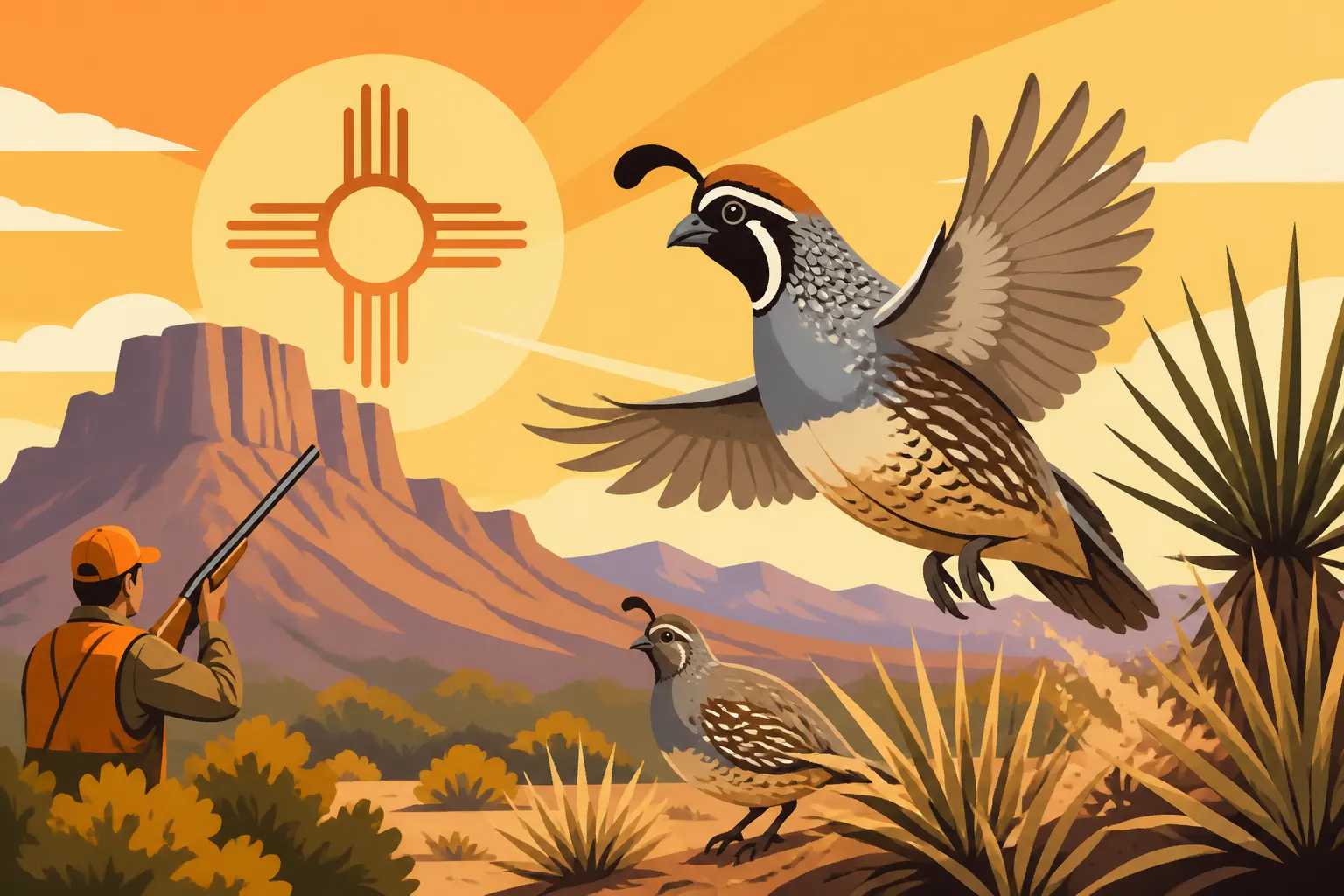
Then there are the Gambel's Quail, true desert dwellers that thrive in the arid environments of southern and western New Mexico. Think of dense, thorny riparian areas, washes choked with brush, and close proximity to reliable water sources. They are incredibly handsome birds with a distinctive topknot, and their "chi-ca-go" call is a quintessential sound of the desert. Hunting Gambel's often means navigating unforgiving terrain, pushing through thickets, and constantly seeking out those critical water points. They'll run just like the scaled, but can be a bit more inclined to take to the air if pressured correctly, often darting into incredibly thick cover. If you're looking for an adventure, you'll find it Hunting Gambel's Quail in New Mexico Desert.
Finally, the Bobwhite Quail. These are a bit rarer in New Mexico, primarily found in the denser grasslands and agricultural areas of the eastern plains. They require more substantial cover than their scaled and Gambel's cousins, often favoring areas with a mix of brushy draws and cultivated fields. Bobwhites are known for their explosive covey rise, a true thrill that can make your heart pound. However, their populations can be more localized and susceptible to extreme weather events, making successful bobwhite hunts a special occasion. You can learn more about these birds in Bobwhite on the Eastern Grassland. Understanding these differences is key to planning a successful quail hunt, as their habitats often dictate where and when you might find the best action.
General Season Framework and Key Dates
For many years, the opening day for New Mexico's quail season has been remarkably consistent. Generally, you can mark your calendar for a mid-November start, usually around the 15th, and the season typically runs through mid-February of the following year. This long season offers a fantastic window of opportunity, allowing hunters to experience different conditions – from the relatively mild temperatures of early winter to the crisp, colder days of late January and February.
This consistent framework applies to most quail species across the state, which simplifies planning immensely. There isn't typically a complex patchwork of varying opening dates by unit or by species, which is a blessing for anyone who's ever tried to decipher complex hunt codes for other big game species. The season length, roughly three months, also means you don't have to rush your hunts. You can pick and choose your days, allowing you to chase different species or explore new areas as the season progresses. However, even with this general consistency, it’s always crucial to confirm the exact dates each year, as slight adjustments can occur. That initial mid-November opener is usually when the excitement really starts to build, as hunters and their dogs eagerly await that first opportunity to hit the field.
Diving into Specific Quail Season Openers
While the general opener is fairly consistent, knowing the nuances for each species can make a big difference in your hunting strategy and expectations for early season success. Let’s break down the individual opening dynamics for scaled, Gambel's, and bobwhite quail.
Scaled Quail Opener and Prime Time
The Scaled Quail season typically kicks off with the general statewide opener, which has historically fallen around November 15th. This timing is fantastic for scaled quail hunters because it usually means the scorching summer heat has finally broken, making for much more comfortable hunting conditions for both hunters and their dogs. Early season scaled quail hunts can be incredibly productive, especially if New Mexico has received decent monsoon rains earlier in the summer, which boosts insect populations and overall habitat health. The coveys tend to be larger and perhaps a little less pressured right out of the gate.
As the season progresses from November into December and January, the cooler temperatures and sometimes even light snow can cause scaled quail to concentrate more in thicker cover and brushy drainages, making them a bit easier to find, though no less challenging to flush. The prime time for scaled quail often extends well into December and January, after they've had a chance to mature a bit and before they've been too heavily educated by hunting pressure. Their behavior changes from being somewhat scattered in early season to holding tighter in dense cover as the season wears on and the weather gets colder. Just remember, these birds are sprinters, so be ready to hustle and cut off their escape routes. You can find more specific details on Where to Find Scaled Quail in New Mexico.
Gambel's Quail Opener and Desert Hunting
Similar to scaled quail, the Gambel's Quail season generally opens around that mid-November mark. For anyone who has spent time hunting the New Mexico desert, an early November opener is a welcome relief from the brutal heat of September and October. However, even in November, especially in the southern units, daytime temperatures can still climb into the 70s or even low 80s, which demands careful planning around Heat Management on an Early Season Hunt. Hydration for both yourself and your dogs is paramount, and it's often best to hunt early mornings and late afternoons, letting the midday sun pass.
Gambel's quail are inextricably linked to water sources in their desert environment. Early in the season, before winter rains or snowmelt become prevalent, these birds will be concentrated near stock tanks, ephemeral pools, and riparian corridors. This makes Finding Water in New Mexico's Dry Country a critical scouting strategy. The challenge of hunting Gambel's in the desert isn't just the heat and the thorny vegetation; it's also their uncanny ability to vanish into the thickest, most impenetrable cover imaginable. A covey might be holding in a mesquite flat one moment, and the next, they've sprinted into a dense patch of tamarisk along a wash, disappearing without a trace. This requires patience, good dog work, and often, a willingness to push through some nasty stuff.
Bobwhite Quail Opener on the Eastern Plains
The Bobwhite Quail also fall under the umbrella of the general statewide opener, typically around November 15th. However, hunting bobwhites in New Mexico is a different beast altogether. Their populations are much more localized, primarily concentrated on the eastern plains, where suitable habitat exists. This means you're generally looking at units in the far eastern portion of the state, where grasslands transition into agricultural fields and brushy draws.
The success of a bobwhite season, particularly on opening day, is heavily dependent on the spring and summer rainfall. A good wet year means healthier habitat, more insects for chicks, and stronger populations. Conversely, drought years can severely impact bobwhite numbers, making for tough hunting. As mentioned in Why Rainfall Drives Quail Numbers, precipitation is king for these birds. If you're targeting bobwhites, scouting those specific eastern units well in advance, and even speaking with local landowners or biologists, can be incredibly helpful. Due to their more sensitive populations and limited range, bobwhite hunts tend to be more focused and often require a greater understanding of their specific habitat needs. Their explosive covey flush is legendary, so be ready for fast action when you do find them.
Practical Considerations for New Mexico Quail Hunters
Knowing when the season opens is just the first step. To ensure a safe, ethical, and successful hunt, you've got to cover your bases with regulations, gear, and tactics. The desert and plains of New Mexico can be unforgiving, so preparation is key.
Checking the Official Regulations for Exact Dates
I cannot stress this enough: always, always, always check the current year's New Mexico Department of Game and Fish (NMDGF) "Rules and Information Booklet." While I've given you the historical and general opening dates, regulations can and do change. A slight shift in a date, a new management area, or an unexpected closure can throw a wrench into your plans if you're not up-to-date.
You can usually find the most current regulations directly on the NMDGF website, or you can pick up a physical copy at license vendors, NMDGF offices, or many sporting goods stores across the state. The online version is often available well in advance of the season, allowing you ample time to review. Pay close attention to the small game sections, looking specifically for "Upland Game Birds" and then "Quail." Read through everything, including the general rules that apply to all species and any specific notes about particular units or areas. This diligence is crucial for avoiding violations and ensuring you're hunting legally and ethically. For more information, consult Where the Current New Mexico Regulations Are Posted.
Gear and Tactics for Opening Day Success
Quail hunting in New Mexico demands robust gear and well-honed tactics. The terrain can be brutal, and the weather unpredictable. Let's talk about what you need to be effective and comfortable.
First, footwear is paramount. You'll be covering a lot of ground, often through rocky, uneven, or brush-choked terrain. For desert units where Gambel's and scaled quail roam, Choosing Boots for Rocky Desert Ground is critical. You'll want sturdy, snake-proof or snake-resistant boots that offer excellent ankle support and can withstand thorns. On the eastern plains for bobwhites, good comfortable hunting boots that shed burrs and offer good traction will suffice, though snake protection is still wise.
Hydration is another non-negotiable, especially for early season hunts. Even in November, temperatures can soar in the desert, and Heat Management on an Early Season Hunt is essential. Carry more water than you think you'll need for yourself and your dog. A good hydration pack or multiple water bottles are a must. Electrolyte supplements can also be a game-changer.
Dog work is truly at the heart of quail hunting. Your bird dog needs to be conditioned for the mileage and heat, and trained to handle running birds. Work with your dog well before the season to build stamina and reinforce commands. A well-behaved, efficient dog makes all the difference in finding and flushing coveys, and more importantly, in retrieving downed birds from thick cover.
Optics might seem less critical for bird hunting than big game, but a good pair of binoculars can be incredibly useful. A compact pair, say 8×32 or 10×32, is perfect for scanning distant hillsides for movement, spotting coveys running ahead, or confirming the type of habitat you're approaching. For more on this, check out Binocular Size That Survives an All-Day Session.
Finally, know your bag limits. New Mexico has specific daily and possession limits for quail, which can vary slightly by species or unit if specific rules are in place. These limits are designed to manage populations sustainably, and respecting them is a core part of responsible hunting. Be aware of New Mexico Quail Bag Limits by Species for the current year. Carrying a small game vest with ample pockets for shells, water, and downed birds is also highly recommended.
Maximizing Your Quail Hunting Experience
Beyond the basic opener, understanding environmental factors and access points can elevate your quail hunting from a casual outing to a truly strategic and rewarding endeavor.
The Impact of Rainfall on Quail Populations
If there's one thing that dictates the success of a New Mexico quail season, it's rainfall. Quail populations, especially scaled and bobwhite, operate on a boom-and-bust cycle that is directly tied to annual precipitation, particularly the timing and intensity of the summer monsoons. A healthy monsoon season, with consistent, gentle rains in July and August, leads to lush vegetation growth. This translates to more insect forage for rapidly growing chicks and better cover to protect them from predators.
Conversely, a dry year can be devastating. Without sufficient moisture, habitat conditions degrade, insect numbers plummet, and chick survival rates drop significantly. This is why you'll often hear veteran quail hunters talking about the "rain dances" they perform in spring and summer. Knowing Why Rainfall Drives Quail Numbers helps manage expectations and can even inform which units might be more productive in a given year. Websites like the U.S. Drought Monitor or local weather resources can give you an idea of current conditions, helping you decide where to focus your efforts for the best opening day prospects. Areas that received ample rain will generally have stronger populations and healthier birds.
Finding Public Access for Quail Hunting
New Mexico offers vast expanses of public land, making it a fantastic destination for DIY quail hunters. Identifying and navigating these lands is crucial for a successful season opener. The main categories you'll encounter are Bureau of Land Management (BLM) lands, State Trust Lands, and National Forests.
BLM ground constitutes a significant portion of New Mexico's open access and is often prime quail habitat, especially for scaled and Gambel's. These lands are generally accessible to hunters and are excellent places to start your search, particularly in the central, southern, and western parts of the state.
New Mexico State Trust Land is another incredible resource. Critically, your valid New Mexico hunting license serves as your access easement for recreational use on these lands, which is a huge benefit for hunters. There's no need for an additional permit, unlike in some other states. This means millions of acres are open for you to explore. For more on this unique aspect, refer to A New Mexico License Is Your State Trust Land Easement. Just remember to always respect the specific rules and regulations associated with State Trust Lands, such as restrictions on overnight camping or motorized vehicle use.
While National Forests like the Gila, Lincoln, or Cibola might be more famous for elk and deer, many of the lower elevation areas, especially those with piñon-juniper breaks, grasslands, and riparian zones, can hold good numbers of quail. Access can sometimes be trickier due to terrain or road closures, but they definitely offer opportunities.
To effectively locate these public lands and potential quail hotspots, mapping tools are invaluable. Apps and platforms like GoHunt, onX Hunt, or BaseMap allow you to overlay land ownership, topo maps, and satellite imagery directly on your phone or GPS device. This lets you identify public parcels, pinpoint water sources, and plan your routes efficiently. When scouting, pay close attention to areas where different habitat types converge, or where you see signs of water, as Water Sources That Concentrate Desert Game are often magnets for quail. Using these tools and understanding the land types will dramatically increase your chances of finding birds, whether it's on opening day or later in the season.
| Quail Species | Typical Opening Date | Primary Habitat | Key Characteristics |
|---|---|---|---|
| Scaled Quail | Mid-November | Open grasslands, arroyos, mesquite, creosote | Most widespread, prefer running, often called "Blue Quail." Explode in all directions when flushed. |
| Gambel's Quail | Mid-November | Desert washes, thorny riparian areas, near water | Desert dwellers, distinctive topknot. Highly dependent on water. Tough, thorny habitat. |
| Bobwhite Quail | Mid-November | Denser grasslands, brushy draws, agricultural margins | Localized on eastern plains. Explosive covey rise. Populations highly sensitive to rainfall. |
Disclaimer
Please remember that hunting regulations, season dates, and specific rules can change annually. Always consult the most current New Mexico Department of Game and Fish "Rules and Information Booklet" before planning and executing any hunt. This article provides general information and historical context, but the official regulations are the ultimate authority.