Two-Way Radio Use Between Hunting Partners
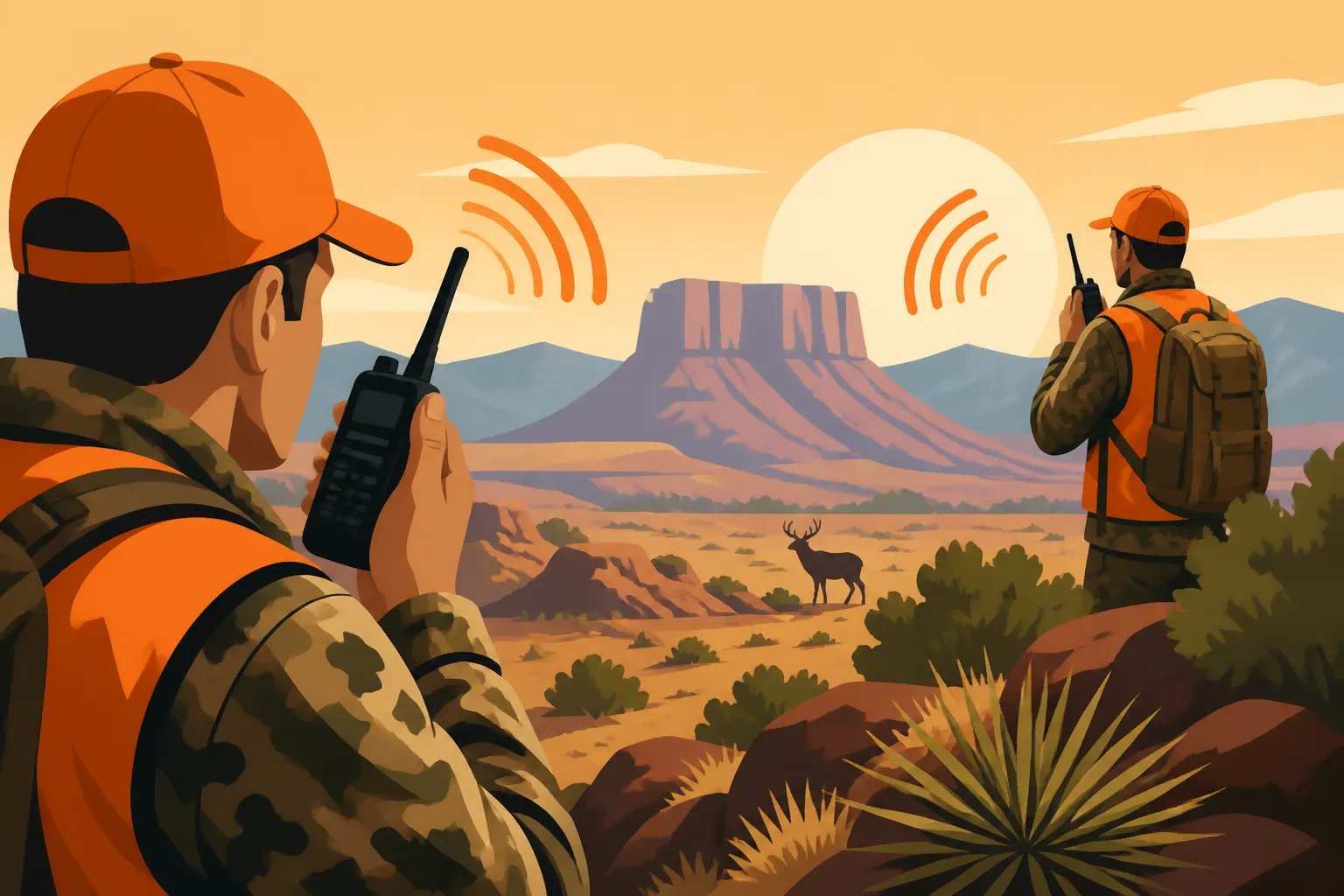
There's nothing quite like the silence of a New Mexico backcountry morning, when the only sounds are the rustle of pine needles and your own heartbeat. But that silence can quickly turn into a frustrating isolation when you're hunting with a partner and suddenly lose track of each other, especially in broken canyon country or dense timber. Trying to coordinate a stalk, confirm a position, or simply check in can feel impossible when cell service vanishes faster than an antelope over a ridge. This guide is all about navigating those communication challenges, focusing on the smart, safe, and legal use of two-way radios to keep your hunting party connected, no matter where your New Mexico adventure takes you.
The Legality of Two-Way Radios in New Mexico Hunting
Let's cut right to the chase: is it even legal to use two-way radios while hunting in New Mexico? This is a question many hunters grapple with, fearing they might unknowingly violate fair chase principles or state regulations. The good news is, generally speaking, using two-way radios for simple communication between hunting partners is perfectly acceptable. However, there are nuances, and understanding them is key to staying on the right side of the law and maintaining ethical hunting practices.
Understanding NMDGF Regulations
The New Mexico Department of Game and Fish (NMDGF) regulations are designed to ensure fair chase and prevent any technological advantage that would undermine the sport. When it comes to two-way radios, the rules primarily focus on what they cannot be used for. There isn't a blanket prohibition on carrying or using radios for communication, unlike, say, certain types of electronic calls designed to mimic big game animals to draw them in. You can't use an electronic device to attract elk, for example, but you can certainly use one to tell your buddy, "Hey, I'm at the bottom of the draw, moving slowly north."
The critical distinction lies in the intent and specific application. Radios are intended for human-to-human communication. Where it gets a little murky is if a radio is used to gain an unfair advantage in taking game. For instance, actively transmitting the exact location of a bedded animal from one hunter to another, allowing the second hunter to walk directly to it for a shot, could be seen as crossing an ethical line, even if not explicitly forbidden by a specific statute. The regulations prioritize the spirit of the hunt. Think of it this way: are you using the radio to coordinate a safe and efficient hunt, or are you using it to remove the challenge of locating and stalking an animal? Most general-use two-way radios, like Family Radio Service (FRS) or General Mobile Radio Service (GMRS) devices, operate on public frequencies and are generally accepted for interpersonal communication.
Avoiding Misuse and Ethical Considerations
Beyond the letter of the law, every hunter has a responsibility to uphold the spirit of fair chase. Using a two-way radio to communicate tactical movements, such as a pincer movement on a group of mule deer or coordinating a silent push through a canyon, falls squarely within ethical bounds. This kind of communication enhances teamwork and safety, which are core elements of hunting with partners. However, imagine a scenario where one hunter is glassing from a distant ridge, spots a trophy bull bedded in thick cover, and then uses a radio to direct a partner, step-by-step, to that exact animal for a shot. While technically not using an "electronic call," this could be viewed as providing an unfair advantage, akin to a spotter using a drone to pinpoint game, which is explicitly prohibited.
It's about avoiding situations where the radio completely negates the hunter's skill in finding and approaching game independently. Most hunters using radios simply want to know their partner's general location, confirm they're safe, or whisper a plan for the next move without spooking game. When you're trying a Two-Hunter Calling Setups That Actually Work for elk, a quiet radio can be far more effective than shouting or whistling across a canyon. This allows for genuine cooperation without stripping the challenge from the hunt. Before heading out, discuss ground rules with your hunting partners about radio use. Agree on what's acceptable and what's not, ensuring everyone is comfortable with the approach. This self-policing within a hunting group is often the most effective way to maintain ethical standards in the field, especially in units that lack specific, granular rules on every type of communication device.
How Two-Way Radios Boost Hunting Teamwork and Safety
For many of us, hunting isn't just a solitary pursuit; it's a team effort, especially when tackling vast and challenging landscapes like those found across New Mexico. Two-way radios, when used correctly, can transform a hunting party from a collection of individuals into a cohesive unit, dramatically improving both coordination and safety. There’s a certain peace of mind that comes from knowing you can instantly connect with your partners, even when they’re out of sight.
Enhancing Coordination in Challenging Terrain
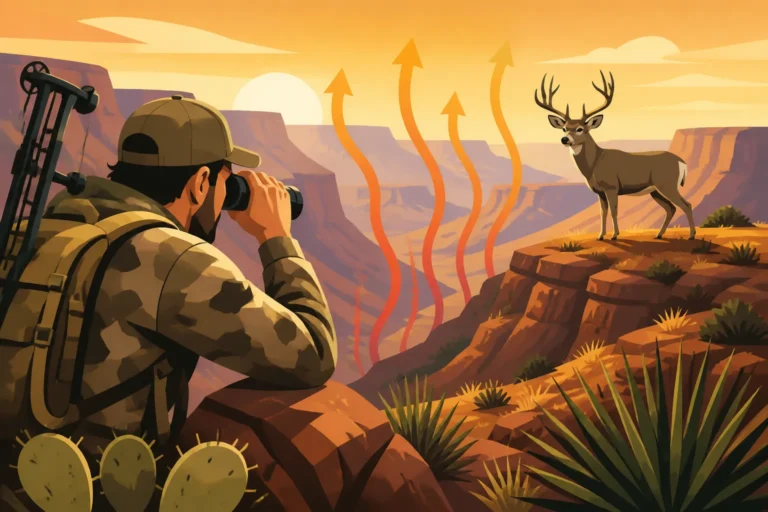
New Mexico's hunting grounds are incredibly diverse, from the dense timber and steep canyons of the Gila National Forest to the wide-open sagebrush flats of the eastern plains. In places like the Gila, with its broken topography and vastness, losing visual contact with a partner is almost guaranteed. Trying to coordinate a silent push through thick ponderosa or orchestrate a gentle drive can become a chaotic mess without reliable communication. Radios allow you to stay synced. You can confirm positions, relay observations about game movement, or adjust your approach instantly. Imagine being on one side of a deep canyon, trying to understand how your partner is Reading Wind in a Deep Gila Canyon on the opposite ridge to help you Playing Thermals on a Canyon Stalk. A quick radio call can clarify conditions far better than guesswork or risky movements.
This enhanced coordination is invaluable for executing complex hunting strategies. If one partner spots movement far off, they can radio the other, describing the animal's direction of travel, size, and approximate location. This isn't about directing a kill shot, but about working together to put yourselves in a better position for a successful hunt. Perhaps one hunter moves to cut off an escape route while the other attempts a stalk. Without radios, such maneuvers would be incredibly difficult, often resulting in game slipping away or partners accidentally bumping into each other. Even something as simple as confirming a rendezvous point or changing plans due to unexpected game movement becomes seamless.
Critical Communication for Safety and Emergencies
Perhaps the most compelling argument for carrying a two-way radio is the undeniable boost it provides to safety. We all know that Cell Coverage Across New Mexico Hunt Units can be notoriously spotty, especially in the remote areas where big game thrives. A dropped cell signal can quickly turn a minor inconvenience into a major safety concern if something goes wrong. An injury, a fall, getting disoriented, or encountering dangerous wildlife are all real possibilities in the backcountry. In these moments, being able to call for help or simply confirm your situation can be life-saving.
Think about a solo hunter who might consider Packing an Elk Out of the Gila Alone – if they were part of a group, radios would allow them to communicate needs, coordinate meeting points for relaying loads, or simply check in as they navigate rugged terrain. Radios provide an immediate lifeline when you're outside of cell service range, which is often the norm in New Mexico's wild places. In an emergency, a quick call can initiate an immediate response from your partners, who are often closer and can react faster than any distant emergency service. While not a substitute for a satellite messenger for truly dire situations or long-range rescue, for immediate needs within your hunting party, radios are invaluable. They allow for critical coordination, such as when How Outfitters Plan Emergency Evacuations for their clients; these professional guides rely heavily on reliable radio communication to ensure client safety.
Overcoming Radio Challenges in New Mexico's Diverse Landscape
While two-way radios offer significant advantages, they aren't magic. New Mexico's incredibly varied topography, from jagged mountain ranges to expansive plains and deep, winding canyons, presents unique challenges to radio communication. Understanding these limitations before you head into the field is just as important as knowing the regulations.
Line of Sight and Signal Limitations
The biggest hurdle for two-way radios in a mountainous state like New Mexico is the fundamental principle of line-of-sight communication. Unlike cell phones or satellite devices, most handheld two-way radios rely on a direct, unobstructed path for their signals. That means mountains, ridges, deep canyons, and even thick stands of timber can act like giant signal blockers, creating frustrating "dead zones." You might be able to talk to your partner from one side of a wide-open mesa, but as soon as they drop into a deep arroyo or disappear behind a prominent hill, your signal can vanish.
This is the reality we face when hunting in places like the Mogollon Mountains or the Pecos Wilderness. You could be just a mile apart, but with a few hundred feet of rock and dirt between you, communication becomes impossible. Elevation changes profoundly impact signal reliability; what works at 8,000 feet might fail completely at 6,000 feet in the same unit. This is why when you're scouting, using tools like GoHunt or other mapping apps that show topography can be incredibly helpful. You can often anticipate where you'll encounter signal issues by looking at the contours. Understanding Terrain That Hides an Approach at 10,000 Feet also means understanding the terrain that will hide your radio signal. This isn't just an annoyance; it's a critical factor that can affect your ability to coordinate a hunt or call for assistance.
Battery Life, Frequencies, and Interference
Beyond line of sight, other practical challenges can plague your radio use. Battery life, for example, is a constant concern, especially in colder weather which can dramatically reduce a battery's performance. There’s nothing worse than needing to communicate and finding your radio dead. It's not just the cold; constant scanning for signals or high-power transmissions drain batteries quickly. Hunters often choose between FRS (Family Radio Service) and GMRS (General Mobile Radio Service) radios. FRS radios are low power and license-free, making them simple to use but with limited range. GMRS radios are higher power and require a simple, inexpensive license from the FCC, offering significantly better range and clarity. The choice often comes down to balancing ease of use with the need for extended range in rugged terrain.
Another common frustration is interference from other users. FRS/GMRS channels are public, and especially during popular hunting seasons, you might find other hunting parties or recreational users on the same frequency. This can lead to crossed signals, confusion, or simply being unable to get a clear message through. Using privacy codes (sometimes called sub-channels or CTCSS/DCS tones) can help filter out unwanted chatter, but it doesn't prevent others from hearing your conversation if they're on the same main channel. It's a good practice to test your radios thoroughly before leaving home, familiarizing yourself with channels, privacy codes, and battery life indicators.
Choosing the Right Radios and Smart Communication Strategies
Navigating New Mexico's vast landscapes with hunting partners demands more than just good boots and a keen eye; it requires smart communication. Choosing the right two-way radios and establishing clear communication protocols can make all the difference in a successful and safe hunting trip.
Selecting Radios for New Mexico's Backcountry
When it comes to picking a two-way radio for hunting in New Mexico, ruggedness and reliability are paramount. FRS radios are simple, affordable, and readily available from brands like Motorola or Midland. They're great for short-range communication in relatively open country or close-knit groups, often found in retail stores like Walmart or sporting goods shops. However, their 0.5-watt power limit means their advertised "20-mile range" is usually a pipe dream in real-world hunting conditions, especially with any obstructions.
For most serious New Mexico hunters, GMRS radios are a much better investment. They operate at higher power (up to 50 watts for base stations, but handhelds are typically 5-8 watts), offering significantly better range and penetration through light cover. While they require an FCC license (which covers your entire family), the enhanced capability is worth it. Some popular GMRS handhelds, like the Garmin Rino series, even integrate GPS capabilities, allowing you to not only talk to your partners but also see their exact location on a map – an invaluable feature for safety and coordination. Other robust options from Midland or BaoFeng offer power and customization. Look for features like water resistance (IPX4 or higher), long-lasting rechargeable batteries, and robust antennas. When you're E-Scouting a New Mexico Unit Before the Season, considering the terrain and likely communication challenges should guide your radio choice.
Here's a quick comparison of typical FRS vs. GMRS handheld radios for hunting:
| Feature | FRS (Family Radio Service) | GMRS (General Mobile Radio Service) |
|---|---|---|
| Power Output | Max 0.5 Watts | Up to 5 Watts (handhelds), 50W (base) |
| Range | Shorter, highly terrain-dependent | Longer, better penetration |
| Channels | 22 shared with GMRS | 22 shared with FRS + 8 dedicated GMRS |
| License | No license required | FCC license required (covers family) |
| Cost | Generally lower | Generally higher, but more features |
| Antenna | Fixed, non-removable | Often removable, allowing upgrades |
| Ideal For | Close-range, casual communication | Serious hunting, better range/features |
Establishing Clear Communication Protocols
Having the best radios won't help if your team doesn't have a plan. Before you even leave camp, establish clear communication protocols. This means agreeing on specific channels and privacy codes to minimize interference from other parties. Develop a system for check-ins, especially if you're splitting up or traversing challenging terrain. "Hey, I'm checking in from waypoint Delta, all good here." "Roger that, moving to waypoint Echo." Concise, clear messages are key. Avoid unnecessary chatter that drains batteries and clogs the channel.
Consider using code words for sensitive information, like "I see horns" instead of "I see a bull," to keep other hunters on public land from knowing your exact intentions. Integrate your radio communication with mapping apps. Tools like GoHunt allow you to mark waypoints, share locations, and track movements, providing a visual component to your verbal communication. You can say, "I'm heading towards the new water source we marked on GoHunt," and your partner can instantly see where that is. Practice using your radios together before the hunt. A quick dry run in a local park or wooded area can reveal any misunderstandings in communication style or equipment quirks that need addressing.
Practical Tips for Maximizing Radio Effectiveness
To get the most out of your two-way radios in New Mexico's backcountry, a few practical tips can make a world of difference. First, always carry spare batteries or a portable power bank, especially for longer hunts or in cold weather. Second, remember that holding the radio upright with the antenna pointed towards the sky generally provides the best signal; don't just talk into it horizontally. If you're struggling to connect, try moving to a slightly higher elevation or out from behind a thick obstruction. Even a few steps in a different direction can sometimes make a difference.
While radios are fantastic, they're not foolproof. Consider them one layer of your communication strategy. A satellite messenger (like a Garmin inReach or Zoleo) serves as an excellent backup for truly remote areas or emergencies where even GMRS can't punch through. Learn how to Reading a Forest Service Road Map effectively alongside your electronic tools, understanding that sometimes the best communication is a pre-arranged plan and careful navigation. Finally, teach everyone in your group how to use the radios, including younger hunters if you're participating in something like the New Mexico Mentored Youth Can Hunt Two Years Before Certifying program. Knowing their limitations and managing your expectations realistically will ensure that your two-way radios are a valuable asset, not another frustration, on your next New Mexico hunting adventure.
Disclaimer
The information provided in this guide is for general informational purposes only and is not intended as legal advice. Hunting regulations, fees, and seasons can change, so it is the responsibility of every hunter to consult the most current New Mexico Department of Game and Fish (NMDGF) regulations and proclamations before engaging in any hunting activities. Always verify the legality of all equipment and methods with official sources.