How Outfitters Plan Emergency Evacuations
Stepping into the vast, wild landscapes of New Mexico for a hunt is an adventure unlike any other. But let's be real, the thrill of the chase often comes with a nagging worry: what happens if something goes seriously wrong out there, far from roads and cell service? This guide is going to walk you through the often-overlooked, yet absolutely critical, emergency planning that professional outfitters put into place, giving you a clearer picture of how they keep their clients safe when the unexpected happens.
The Inherent Risks of Backcountry Hunting
There’s a reason we all love the backcountry – it’s wild, untamed, and truly puts you in touch with nature. But that very remoteness, the rugged terrain, and the sheer unpredictability of it all are exactly what make emergencies a much more serious proposition out there. It’s not like you can just hail a cab or pop into an urgent care clinic.
Common Scenarios Requiring Urgent Attention
When you’re deep in the Gila Wilderness or traversing the broken rimrock of the Black Range, a simple slip can become a life-threatening event. We’ve all heard stories, or maybe even had a close call ourselves. Think about it: a hunter takes a nasty fall on loose rock, resulting in a broken leg miles from the nearest trail. Or a sudden, severe allergic reaction strikes someone who unknowingly brushed against a plant or got stung by an insect, and their EpiPen is back at camp. Dehydration and heat stroke are real threats on early season hunts, while hypothermia can set in quickly during a late-season snowstorm. Then there’s the plain old reality of getting genuinely lost in unfamiliar, dense timber or a maze of canyons, especially as darkness falls. These aren't just hypotheticals; they're situations that guides and outfitters prepare for relentlessly.
Why DIY Hunters Face Greater Challenges
Now, I'm a huge proponent of DIY hunting, but it comes with a significantly different level of personal responsibility when it comes to emergencies. When you're solo or with a buddy or two, you are the entire emergency response team. That means you need to carry all the communication devices, have extensive first aid training, know the terrain inside out, and have a solid plan for self-extraction. Often, this includes packing a satellite messenger and hoping like heck it works, then waiting for external help to arrive, which can take hours, if not days, in some of New Mexico's most remote areas. This is where the value of a professional outfitter truly shines; they bring a whole system of support that most DIY hunters simply cannot replicate on their own.
Outfitters' Proactive Planning for Emergencies
A good outfitter doesn't just react to an emergency; they spend countless hours planning to prevent one and, if it does happen, to manage it swiftly and effectively. It’s a huge part of what you’re paying for when you book a guided hunt, especially in places like the Gila where Why New Mexico Gila Country Is Hard to Hunt Alone. They understand that client safety is paramount, both ethically and from a business perspective.
Comprehensive Communication Strategies
Communication is the bedrock of any emergency plan. Outfitters often employ a redundant system, meaning they don't rely on just one method. While cell service is spotty to nonexistent in much of New Mexico's prime hunting country, satellite devices are non-negotiable. We're talking about devices like Garmin inReach or similar satellite communicators that can send SOS signals, track locations, and allow for two-way text communication even in the most remote areas. Guides often carry these, and sometimes even equip clients with smaller, personal locator beacons. Beyond that, there are often daily check-in protocols with a base camp manager or a designated contact outside the field. This ensures that if a group doesn't report in by a certain time, alarm bells start ringing immediately. Think about it: if you’re a client, you might have your own satellite device, and I highly recommend it for Satellite Communication From a Hunting Camp, but your guide is going to have one too, along with a practiced routine.
Detailed Evacuation Protocols
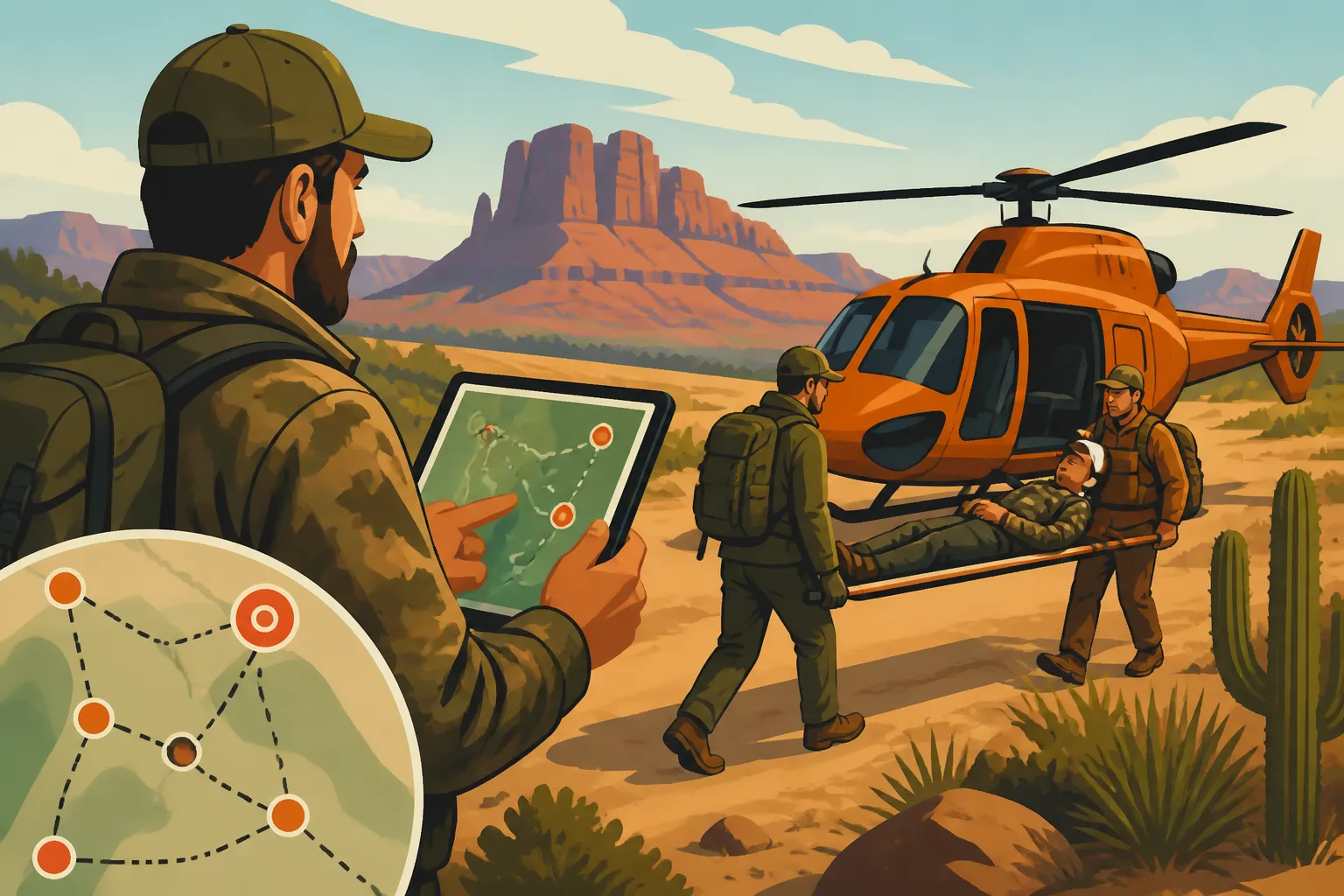
Before a single hunter sets foot in the backcountry, a professional outfitter has already mentally, and often physically, mapped out evacuation routes. This isn't just about knowing how to walk out. It involves identifying the quickest and safest ways to get an injured or ill person to definitive medical care. This might mean identifying nearest helipads or flat clearings suitable for helicopter extraction, knowing the quickest horse trails to get someone to an ATV-accessible road, or even pre-arranging relationships with local air ambulance services. They’ll have primary and secondary rendezvous points for vehicle pick-ups, and they'll know the closest hospitals and clinics, understanding their capabilities. For instance, if you're hunting elk near The Wilderness Areas Inside Unit 17 in the Gila, an outfitter knows that getting a severely injured client to a trauma center in Silver City or even Albuquerque is the priority, and they have a plan for how to do it efficiently.
Trained Personnel and First Aid Certifications
It's not enough to have gear; you need people who know how to use it. Reputable outfitters invest in their staff. Their guides often hold certifications like Wilderness First Responder (WFR), Wilderness Advanced First Aid (WAFA), or even higher-level medical training. This goes far beyond basic first aid, equipping them to handle everything from serious trauma to environmental illnesses for extended periods until professional help arrives. They're trained to assess injuries, stabilize patients, manage pain, and make critical decisions under pressure. They practice CPR and know how to improvise splints or litters. When you're interviewing potential outfitters, don't hesitate to ask about their guides' medical training and experience. It's a key part of your safety net. This is a big part of What Guides Expect From Their Clients – that you trust their judgment in these critical moments.
The Role of Technology and Partnerships in Emergency Response
In today’s world, technology plays a massive role in backcountry safety, but it's the combination of tech with established partnerships that truly creates a robust emergency plan. No one operates in a vacuum, especially when lives are on the line.
Satellite Messengers and GPS Devices
We touched on this already, but it bears repeating: reliable satellite communication is not optional; it’s essential. Devices like the aforementioned Garmin inReach, or similar offerings, allow for communication beyond cell towers. They can send pre-programmed check-in messages, but more importantly, they offer two-way texting with a global monitoring center (like GEOS for Garmin) and the ability to trigger an SOS. This SOS directly alerts Search and Rescue (SAR) services, providing them with your exact coordinates. Outfitters often have multiple such devices spread among their guides, ensuring redundancy. For a client looking to find the right outfitter, it's worth checking if they integrate these technologies into their standard operating procedures. Websites like GoHunt often highlight outfitters who prioritize safety and use modern tracking tech.
Collaborating with Local Search and Rescue
Professional outfitters understand the terrain they operate in, but they also know their limitations. They establish relationships with local county Search and Rescue teams, the New Mexico State Police, and other emergency services. These partnerships are crucial. They ensure that if an SOS is activated, SAR knows who they're dealing with, what type of terrain to expect, and often, what kind of medical resources might be needed. Outfitters might share their hunt plans, camp locations, and even client numbers with these agencies, allowing for a quicker and more informed response. They understand the local protocols, which can sometimes be complex, and how to best integrate their on-the-ground knowledge with the larger, official response.
Leveraging Local Knowledge and Resources
Beyond formal partnerships, outfitters leverage deep local knowledge. This often includes knowing the local ranchers who might have a four-wheeler that can reach a tricky spot, or the nearest private airstrip that can accommodate a small plane in a pinch. Their guides are often locals themselves, with an intimate understanding of every ridge, canyon, and water source in their hunting units. This intuitive knowledge of the landscape, coupled with a network of local contacts, can shave precious hours off an evacuation timeline. If an emergency requires a rapid extraction, knowing someone who can quickly get a horse and pack string up a rugged trail can make all the difference in places where motorized access is limited, like deep in the Aldo Leopold Wilderness Hunting in New Mexico.
What to Expect as a Client During an Emergency
If you're ever in the unfortunate position of experiencing or witnessing an emergency on a guided hunt, knowing what to expect can help you remain calm and assist effectively. It's an unnerving situation, but an outfitter's preparation means you're not facing it alone.
Communication During a Crisis
When an emergency arises, your guide will take charge. Their primary goal is to manage the situation and ensure the safety of everyone involved. Expect clear, concise instructions. It's absolutely crucial to follow these instructions without hesitation. The guide will likely communicate with their base camp or emergency contacts using a satellite device, and they may need your help relaying information or simply staying quiet and allowing them to focus. They’ll want to know details about the injured person, the nature of the injury or illness, and the current environmental conditions. Your role might be to help keep the patient calm, gather specific gear, or simply maintain your own safety to avoid further complications. Remember, every second counts, and a calm, cooperative client is an asset.
Evacuation Process
The evacuation process will vary greatly depending on the nature of the emergency, the terrain, and the remoteness of your location. It could range from a relatively quick horseback ride or ATV transport out to a waiting vehicle, to a multi-day stretcher carry by ground teams, or even a helicopter hoist extraction. If it’s a medical emergency, the goal will always be to get the individual to the nearest appropriate medical facility as quickly and safely as possible. Your guide will communicate the plan as it unfolds, explaining the steps involved and what to expect. They’ll manage the logistics, whether that involves coordinating with SAR, arranging for a horse to meet you, or preparing a landing zone for a helicopter. Be prepared for it to be uncomfortable, potentially slow, and physically demanding if you are involved in assisting.
Costs and Insurance Considerations
This is where it gets a little less romantic and a lot more practical. Emergency evacuations, especially those involving helicopters or specialized medical teams, can be incredibly expensive. Your hunting license and tag don't cover these costs. While outfitters have robust plans, they typically do not cover the financial burden of an evacuation or medical treatment. This is why having robust travel and medical evacuation insurance is not just recommended, but often essential, especially for non-residents or those venturing into truly remote areas. You might find services through providers that specialize in adventure travel insurance, some of which are listed on platforms like BookYourHunt when researching outfitters. Always, always check the fine print of your policy to understand what it covers, including medical treatment, evacuation from the field, and transportation home. Discussing this with your outfitter beforehand, as part of Questions Worth Asking Before You Book, is a non-negotiable step.
It’s easy to get caught up in the excitement of a New Mexico hunt, dreaming of trophy animals and stunning landscapes. But a true veteran understands that preparation for the worst allows you to fully enjoy the best. Outfitters provide a level of safety and emergency preparedness that can be life-saving, transforming a potentially catastrophic event into a manageable crisis.
| Aspect of Emergency Preparedness | DIY Hunter | Guided Hunter (with Reputable Outfitter) |
|---|---|---|
| Communication Devices | Own/Rent | Provided, often redundant (guide, camp) |
| Medical Training | Self-acquired | Guides are typically WFR/WAFA certified |
| Evacuation Plan Knowledge | Research required | Pre-mapped by outfitter, familiar terrain |
| SAR Coordination | Direct contact | Outfitter has established relationships |
| Local Resources/Knowledge | Limited | Extensive local network and guide expertise |
| Immediate First Aid Response | Self/Buddy | Trained guide on-site instantly |
| Logistics Management | Self-managed | Outfitter handles all coordination |
| Cost of Evacuation | Own expense | Own expense, but often supported by outfitter's network |
Disclaimer
This article is for general informational purposes only and does not constitute professional advice. Laws, prices and regulations vary by location and change over time. Consult a qualified professional for guidance on your specific situation.