Hunting a Wallow During Early Archery
Early archery season in New Mexico often greets hunters with a stark reality: hot, dry conditions that can make locating game feel like searching for a needle in a vast, sun-baked haystack. Elk and deer, especially during these periods, become incredibly reliant on water sources, and understanding how to effectively hunt a wallow can dramatically increase your chances of success when other tactics fall flat. This guide dives deep into the art and science of wallow hunting, offering insights to help you capitalize on these critical hotspots.
The Allure of the Wallow: More Than Just a Water Source
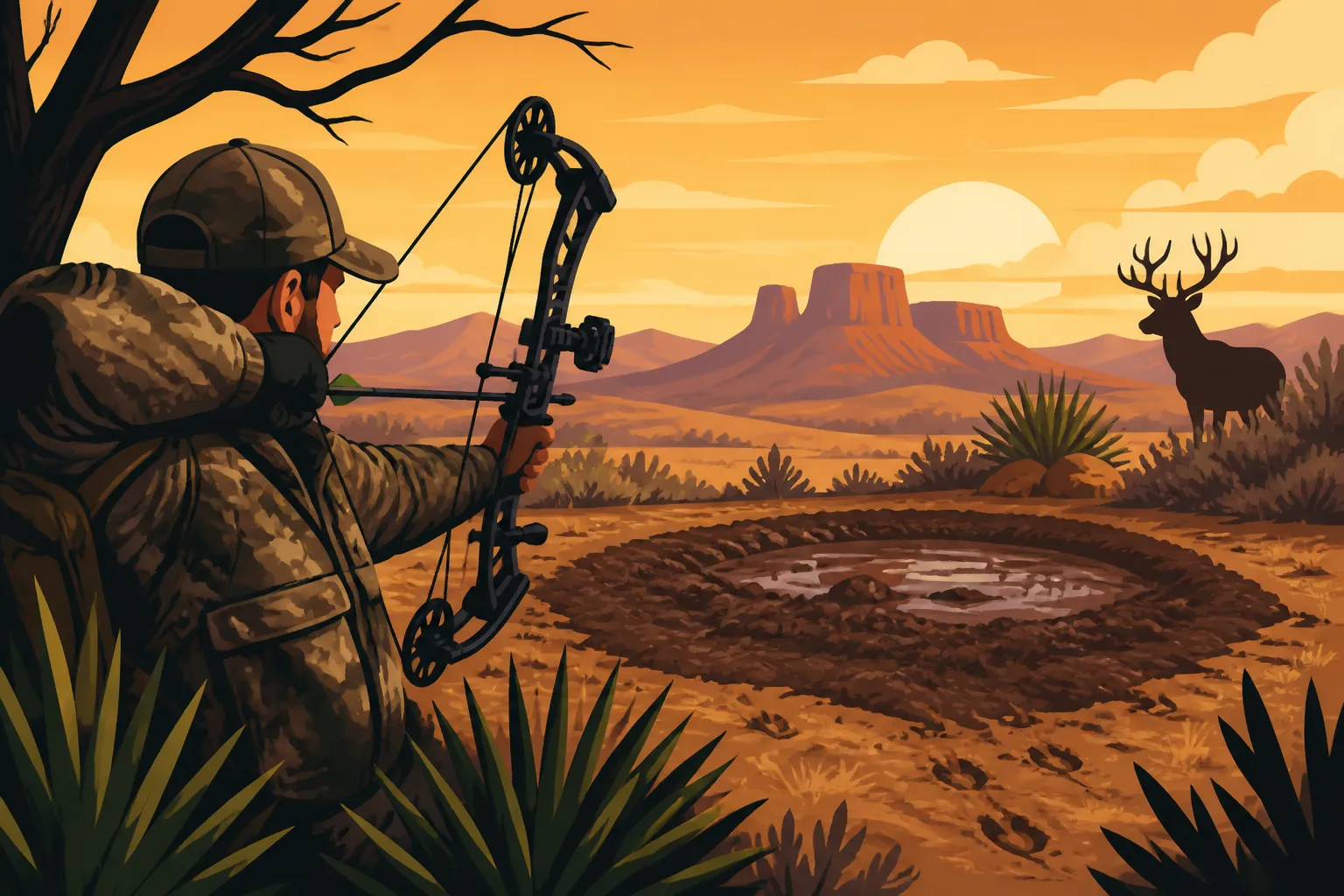
When we talk about hunting a wallow during early archery season, we're not just discussing a simple water hole. A wallow is a specific type of water feature, often muddy, where animals like elk or even mule deer will not only drink but also physically roll around, coating themselves in mud. This behavior serves multiple purposes and makes these locations absolute magnets for game when temperatures soar and feed is dry. It’s a primal instinct, a necessary part of their daily routine that we can use to our advantage.
Understanding Wallow Behavior in Elk and Deer
For elk, a wallow is a sanctuary and a social hub, especially for bulls. They roll in the mud to cool down, shed annoying parasites, and perhaps most importantly, to deposit scent. The mud often mixes with their urine and other glandular secretions, turning a simple watering spot into a scent post, a big, muddy billboard announcing their presence and dominance. During the early archery season, before the peak of the rut, a wallow can be a consistent draw for bachelor groups of bulls looking to relieve stress and establish pecking order without all the aggressive bugling that comes later. These are animals often still carrying velvet or newly shed, focused on feeding and staying comfortable.
Deer, while not as prone to rolling in deep mud as elk, will still seek out muddy edges to drink and stand in cool earth, especially when creek beds are dry. They might paw at the mud, creating small depressions that collect precious moisture. Both species will leave behind a treasure trove of information – tracks, droppings, rubs on nearby trees – that tell a story of their activity. The more you learn to interpret this story, the better your chances of intercepting them. It's truly a fascinating insight into their world, witnessing how integral these damp depressions are to their survival and social structure in the often-arid New Mexico landscape.
Seasonal Significance of Wallows
The early archery season, typically late August into early September, presents unique challenges and opportunities for wallow hunting. Unlike the full-blown rut when bulls are screaming and covering miles in search of cows, early season animals are generally in a more relaxed pattern. Their focus is still largely on feeding, building reserves, and staying cool. This means their visits to wallows might be more predictable, often in the mid-morning after feeding or in the late afternoon before heading out to forage again.
As temperatures remain high, the necessity of water intensifies. This is especially true in units like those in the Gila National Forest or the Lincoln National Forest, where natural springs and seeps can be few and far between during dry spells. A dependable wallow can act as a crucial waypoint in an animal's daily circuit, making it a prime ambush location. Contrast this with later in the year, when cooler temperatures and monsoon rains might make water more abundant, scattering animals and reducing the singular importance of any one wallow. Understanding When New Mexico Archery Elk Season Runs is key to timing your approach.
Scouting for Success: Pinpointing Active Wallows
Finding a wallow is one thing; finding an active wallow is another entirely. This is where your scouting skills, both digital and boots-on-the-ground, truly come into play. You’re looking for evidence that animals are not just visiting, but regularly using the spot, making it a reliable target for your ambush. The landscape around a wallow will tell you most of what you need to know, if you just take the time to read it.
Reading the Sign: Fresh vs. Old Activity
When you approach a potential wallow, your eyes should immediately start scanning for clues. Fresh tracks in the mud are the most obvious sign. Look for sharp, well-defined hoof prints that haven’t been dried out by the sun or washed away by rain. If there's standing water, look for ripples from recent visits, or even fresh mud that's still dripping from nearby vegetation where an animal might have brushed by after rolling. The color of the mud itself can offer clues – dark, wet mud indicates recent use, while cracked, dry mud suggests the wallow hasn't seen action in a while.
Beyond tracks, examine the surrounding vegetation. Are there fresh rubs on saplings or larger trees where bulls have polished their antlers or left scent? Is the mud splashed high on tree trunks or rocks near the wallow? This indicates vigorous activity. You might also find fresh droppings nearby. Remember, scent is a huge part of a wallow's appeal to elk, so don't be afraid to take a cautious sniff. A strong, musky elk odor, especially from a bull, is an unmistakable sign you're on the right track. Contrast these fresh signs with older, faded tracks, dry or cracked mud, and old rubs, and you'll quickly discern if a wallow is a current hotspot or a historical relic. For more on this, check out Reading Fresh Elk Sign in Ponderosa Timber.
E-Scouting and Boots-on-the-Ground Reconnaissance
Modern hunting has made e-scouting an indispensable tool, and it's particularly effective for identifying potential wallows. Start by poring over satellite imagery on platforms like GoHunt. Look for dark, circular depressions in shaded areas, especially near known water sources or along drainages. Identify areas with north-facing slopes, dense timber, or canyon bottoms that might retain moisture longer. These spots are often cooler and more private, making them ideal for a wary bull. Cross-referencing these potential spots with topographical maps can also reveal hidden seeps or springs that might not be obvious from satellite view. Using services like GoHunt allows you to overlay different map layers, helping to identify public land and navigate terrain.
Once you have a list of promising locations, it's time for boots-on-the-ground scouting. This is crucial for verifying activity and understanding access. Try to scout during off-peak times, like mid-day, to minimize disturbance. Approach wallows quietly, paying attention to wind direction so your scent doesn't blow into the area and alert any animals. Look for those fresh signs we discussed earlier. Pay attention to how game trails lead into and out of the wallow – this will inform your setup later. While scouting, remember to practice good Heat Management on an Early Season Hunt, especially in the New Mexico summer sun. Mapping out your entry and exit routes during scouting can make all the difference on hunt day. For more on digital scouting, consider E-Scouting a New Mexico Unit Before the Season.
Strategic Setup: Positioning for the Shot
Once you've identified an active wallow, the next critical step is planning your ambush. This isn't just about finding a place to sit; it's about making yourself invisible, controlling your scent, and ensuring you have a clear, ethical shot opportunity. A poorly executed setup can blow weeks of scouting and planning in a matter of seconds.
Playing the Wind and Thermals
New Mexico's terrain, particularly in areas with significant elevation changes like the Gila, means you'll be dealing with shifting thermals. During early morning, cool air typically flows downhill. As the sun rises and heats the slopes, thermals will begin to pull warm air uphill. This can create a tricky scenario around a wallow, especially if it's nestled in a canyon bottom. Understanding Reading Wind in a Deep Gila Canyon is absolutely vital.
Your setup position must account for these shifts. Ideally, you want to be positioned so that the prevailing wind or thermal drift carries your scent away from the wallow, particularly during the times you expect animals to visit. This often means being higher than the wallow in the morning and potentially lower in the afternoon, or finding a position on a ridge that catches a crosswind. Some hunters will opt to sit a wallow only during specific thermal windows, sacrificing potential opportunities for a higher percentage play. Always have a wind checker handy and use it constantly. Your scent is your biggest giveaway, especially to elk with their incredible sense of smell.
Concealment and Shot Lanes
Choosing your stand location or ground blind spot requires balancing concealment with a clear shot lane. For bowhunting, you need to be close, typically within 20-40 yards. This means finding natural cover – a thick patch of pines, a large rock, or dense oak brush – that breaks up your outline. If you're using a tree stand, ensure the tree itself offers enough cover to mask your silhouette, both from the ground and from above if an animal comes in from higher terrain.
When positioning, consider the sun's angle throughout the day, ensuring you're not silhouetted or blinded. Also, think about the most likely approach routes for animals. They often follow established game trails. Clear any small branches or obstacles that might interfere with your draw or shot before you settle in. Remember, the goal is to disappear into the landscape. Even the best camouflage won't help if you're fidgeting or exposed. For a complete hunt, consider practicing Altitude Preparation for a Gila Elk Hunt if you're heading to higher elevations, as comfort and focus are critical during long sits.
Patience and Persistence: Effective Wallow Hunting Tactics
Once you’re set up and concealed, the real test of nerve and patience begins. Wallow hunting isn’t about running and gunning; it’s about becoming part of the landscape and waiting for your moment. This requires a deep understanding of animal behavior and the discipline to remain undetected for hours on end.
Timing Your Sit for Peak Activity
Knowing when to sit a wallow is as important as knowing where. During early archery season, elk and deer often visit wallows during specific periods. Mid-morning, after their initial feeding, can be productive as they seek respite from the sun. The late afternoon and evening, before they head out for their main feeding period, is another prime time. They need to hydrate and cool down before a night of foraging. These periods often coincide with quieter times in the woods, giving you a better chance of hearing approaching animals.
While an all-day sit can be effective, it’s also physically demanding. Many hunters choose to optimize their time by focusing on these high-activity windows. However, don't discount the middle of the day entirely, especially if temperatures are scorching. A thirsty animal might break its pattern to hit water. Use a tool like GoHunt to understand historical harvest data or success rates for different times of day if available, though personal experience often trumps broad statistics here. Consider Best Time of Day to Glass for Elk to get a sense of animal movement.
Calling and Decoying Strategies Around a Wallow
Calling near a wallow during early archery season should be subtle and strategic. Aggressive bugling is usually out of place before the rut peaks and can spook animals. Instead, soft cow calls or contented mews can sometimes pique an animal's curiosity without raising alarm. If you hear an elk approaching, a soft, reassuring call can sometimes draw them those last few critical yards into your shooting lane.
Raking a branch on a nearby tree can mimic a bull rubbing, which might intrigue another bull. However, less is often more. The wallow itself is the primary draw; your calls should only serve to enhance its appeal or coax an animal closer. Decoys can also be effective, especially a passive cow decoy, which presents a non-threatening image. Ensure any decoy is positioned to draw the animal into an ethical shot presentation, not directly at your hiding spot. Remember, the goal is to make the approaching animal feel comfortable and confident as it comes into the wallow, not suspicious. Learning to read Playing Thermals on a Canyon Stalk will also help you determine if and when to make soft calls.
The Art of Patience and Minimal Disturbance
Ultimately, wallow hunting is a game of patience. You might sit for hours without seeing anything, only for a bull to materialize silently from the timber. Any movement, sound, or scent out of place can blow your opportunity. Minimize fidgeting, wear comfortable clothing that doesn't rustle, and ensure all your gear is within easy reach. Keep your phone on silent and resist the urge to check it.
Your entry and exit from the wallow are just as critical as your time spent sitting. Approach and leave quietly, using the cover of darkness or terrain to obscure your movements. Avoid disturbing the wallow itself or the surrounding area unnecessarily. If you spook an animal on your way in or out, they're much less likely to use that wallow again in the immediate future. Maintaining minimal disturbance ensures that the wallow remains a reliable hotspot for game throughout the season, giving you repeated opportunities. This attention to detail is what separates successful wallow hunters from those who merely pass through. Don't forget, Finding Water in New Mexico's Dry Country is a crucial survival element for both you and the game.
| Wallow Hunting Stage | Key Action | Why It Matters | Early Archery Consideration |
|---|---|---|---|
| Scouting | Verify fresh sign | Ensures active use, not just past visits | Look for wet mud, fresh tracks, distinct scent from current heat/dryness. |
| E-Scouting | Identify potential locations | Saves boots-on-the-ground time and effort | Use tools like GoHunt for shaded areas, drainages, north-facing slopes. |
| Setup | Plan entry/exit and ambush point | Controls scent, maximizes shot opportunity | Critical wind/thermal assessment due to fluctuating conditions. |
| Concealment | Utilize natural cover | Prevents detection by keen animal senses | Ensure full body concealment from multiple angles, especially for bow range. |
| Timing | Focus on mid-day/evening sits | Matches typical animal hydration patterns | Prioritize hottest parts of the day when water is most sought. |
| Calling | Soft, subtle calls only | Avoids spooking pre-rut animals | Contented mews or light raking, rather than aggressive bugles. |
| Patience | Remain still and quiet for hours | Animals are wary and move silently | Resist fidgeting; your presence must be completely undetected. |
Disclaimer
Please note: Hunting regulations and conditions can change. Always consult the most current New Mexico Department of Game and Fish rules and information booklet before heading afield. This guide is for informational purposes only and does not supersede official regulations.