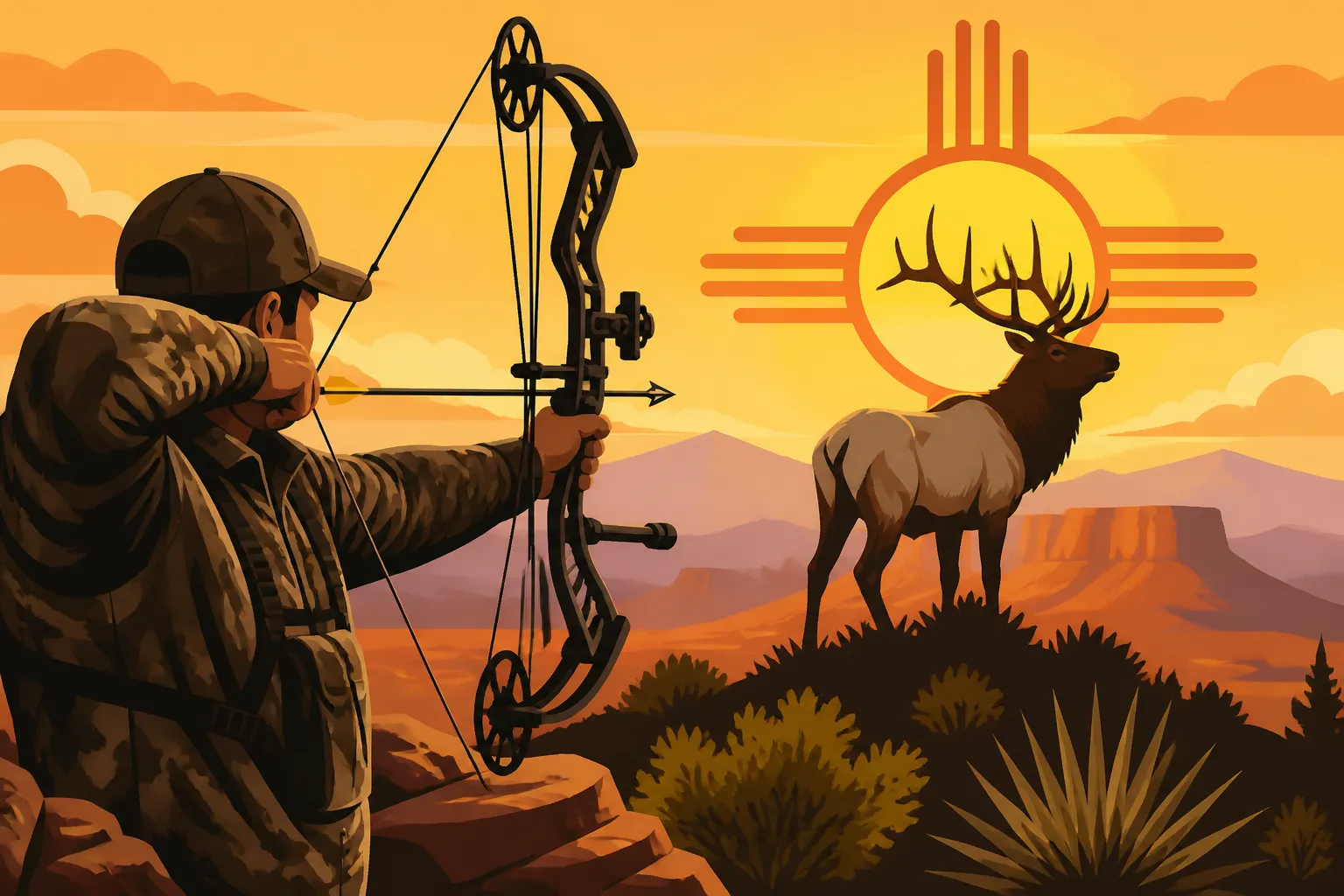
When New Mexico Archery Elk Season Runs
The thrill of chasing bugling bulls with a bow in hand is an experience unlike any other, and New Mexico's vast landscapes offer some incredible opportunities. But let's be honest, trying to nail down the exact dates for archery elk season can feel like you're reading an ancient scroll written in code. With regulations that sometimes split seasons or vary subtly by unit, it's easy to get lost in the details and potentially miss out on a prime draw application. This guide is here to meticulously break down when New Mexico's archery elk seasons typically run, helping you pinpoint the best windows for bowhunting these magnificent animals and plan your adventure with confidence.
The General Archery Elk Season Framework in New Mexico
New Mexico’s approach to elk hunting seasons is designed to offer varied opportunities, often spreading pressure and giving hunters different experiences across the expansive elk country. For archery hunters, this often means understanding a general framework that can then be fine-tuned by unit-specific details.
Understanding the Split Seasons
One of the most distinctive features of New Mexico's archery elk seasons, similar to how the state handles its deer seasons, is the common practice of splitting them into early and late segments. This isn't just arbitrary; it's a strategic move by the New Mexico Department of Game and Fish (NMDGF) to manage hunter density, provide opportunities across different phases of the rut, and adapt to varying weather patterns that sweep across the state's diverse elevations. For a bowhunter, these splits mean distinct advantages and challenges. The early season might find elk in different patterns, whereas the later segments often coincide with the peak of the rut. If you're familiar with When New Mexico's First Archery Deer Season Runs, you'll recognize this segmented approach.
Typically, the early archery elk season will kick off in late August, sometimes stretching into the first week or two of September. This period often sees warmer temperatures, and while bulls might not be bugling extensively, they're still in their summer patterns, often concentrating in higher elevations or near reliable water sources before the full intensity of the rut hits. The late archery season, which is almost universally the most coveted, generally runs through the middle and latter half of September. This is when the magic happens, as the elk rut hits its stride, transforming the quiet mountains into a symphony of bugles.
Key Dates to Mark on Your Calendar
While I'll dive into unit-specific variations shortly, most of New Mexico's archery elk opportunities fall into a fairly consistent pattern. Generally speaking, you can expect an early season window that often encompasses the last week of August and the first week of September. Then, after a short break or transition period, the more celebrated "rut hunts" typically run from about September 10th or 12th through September 24th. These dates are absolutely crucial for any bowhunter dreaming of a New Mexico elk tag.
These September dates are specifically chosen because they directly overlap with the peak of the elk rut in New Mexico. During this time, bulls are most active, most vocal, and consequently, often most vulnerable to calling strategies. The chance to engage a bull in a bugling match is what draws so many archery hunters to the mountains during this window. It's a truly electric time to be in the field. However, it's paramount to stress that these are general guidelines. The NMDGF publishes new regulations annually, and while the framework tends to be consistent, minor shifts in dates can occur. Always check the official NMDGF Hunting Rules & Information booklet for the current year's exact dates. Online platforms like GoHunt are excellent resources for quickly looking up the latest regulations and visualizing hunt codes, but nothing beats the official document for final confirmation.
Unit-Specific Variations and Early vs. Late Rut Hunts
The beauty and complexity of hunting New Mexico lie in its diversity. What holds true for an archery elk hunt in the Gila National Forest might be slightly different from an experience in the high country near Taos. This means understanding that "when" you can hunt isn't a one-size-fits-all answer.
Navigating Unit-Specific Calendars
It's a common misconception that all elk units in New Mexico run on the exact same schedule. While the general early and late season windows are consistent, there are absolutely units that will have slightly different start or end dates, or even unique season structures altogether. This is often tied to herd management objectives within specific game management units (GMUs). For instance, some units, particularly those with strong conservation efforts or unique habitat challenges, might have shorter seasons, different splits, or specific early-season opportunities to target non-breeding bulls.
The Gila Wilderness, for example, famous for its big bulls, tends to follow the general split season dates, but it's always worth a double-check. Other units, especially those on the fringe of elk habitat or with limited access, might have slightly compressed seasons. This is why when you're exploring the New Mexico Elk Season Structure by Unit, you need to pay very close attention to the specific hunt code for your chosen unit. That string of numbers and letters holds all the vital information, including the exact dates for each weapon type. Never assume; always verify for the unit you intend to apply for.
The Allure of the Early Archery Hunt
For those who manage to draw an early archery elk tag, typically in late August or early September, you're looking at a completely different ballgame than the full-blown rut. While the screaming bugles might be few and far between, this season offers its own unique advantages and challenges. The weather can be significantly warmer, sometimes even downright hot, especially at lower elevations. This means elk are often still in their summer patterns, focusing heavily on feed and water, often congregating in higher, cooler elevations or near consistent springs and seeps.
One of the biggest advantages of an early hunt is that elk haven't been pressured by hunters for long, potentially making them less wary. Your strategy will likely shift from aggressive calling to more patient spot-and-stalk tactics, or even sitting water sources. You'll need to be prepared for Heat Management on an Early Season Hunt, carrying plenty of water and planning for rapid meat cooling after a successful harvest. Also, remember that many prime elk units are at significant elevation, so Altitude Preparation for a Gila Elk Hunt is critical, regardless of the season. Bulls might not be as vocal, but if you can locate their feeding and bedding areas, a close encounter is absolutely possible.
Capitalizing on the Mid-September Rut
This is the holy grail for many New Mexico bowhunters: the mid-September rut. This period, generally running from around the second week of September through the end of the month, is when elk truly come alive. Bulls, full of testosterone, begin to gather their harems, challenge rivals, and fill the mountain air with their iconic bugles. It’s an auditory feast that can send shivers down any hunter's spine.
The peak of the rut, often around September 15th to 20th in many New Mexico units, is when the most intense action typically occurs. This is when bulls are most active, most vocal, and often most responsive to calling. Understanding When the Elk Rut Peaks in New Mexico is crucial, as is recognizing the various stages of bugling. Early in this window, bulls might be locator bugling, trying to find cows. As the rut intensifies, you'll hear more challenge bugles and herd bulls working their cows. Tactics often shift from passive observation to aggressive calling, using both bugles and cow calls to draw a bull into bow range. Being proficient in understanding Bugle Timing Through New Mexico's Rut can make or break your hunt during this exciting time. The energy in the woods is palpable, making this the most sought-after archery season for a reason.
Strategic Planning for Your Archery Elk Application
Knowing when the seasons are is just the first step. To truly capitalize on New Mexico's archery elk opportunities, you need to incorporate that knowledge into a sound application strategy and thorough preparation.
Resources for Confirming Dates
The ultimate authority for New Mexico hunting dates, boundaries, and regulations is always the official New Mexico Department of Game and Fish (NMDGF) Hunting Rules & Information booklet. You can find this document on their website, usually updated in late winter or early spring for the upcoming fall seasons. It’s absolutely vital that you consult the current year's proclamation. Relying on outdated information, even from a previous year, can lead to costly mistakes, missed application deadlines, or even legal issues in the field.
Beyond the official NMDGF site, there are fantastic third-party resources available. Many hunters swear by online tools and applications like GoHunt, which aggregate state regulations, provide detailed unit maps, historical draw odds, and other data layers that can be invaluable for e-scouting and planning your application. These platforms often make it much easier to digest the complex information found in the official rules, but always, always cross-reference. The convenience of these tools is undeniable, but the official word remains the NMDGF proclamation.
Considering Draw Odds and Hunt Choices
It's no secret that New Mexico's prime archery elk hunts, especially those coinciding with the peak rut in trophy units, are incredibly popular. This translates to challenging draw odds. Unlike some other states, New Mexico doesn't operate on a preference point system, meaning every applicant, regardless of past attempts, has an equal chance each year. This means your How New Mexico Draw Odds Work Without Points are the same as a first-time applicant. While this is great for new hunters, it means consistency isn't rewarded.
When you apply, you typically get to list several hunt choices in order of preference. Your strategy here is critical. Do you go all-in on a dream rut hunt in a historically tough-to-draw unit, knowing the odds are slim? Or do you prioritize a more "realistic" hunt, perhaps an early season or a unit with slightly higher odds, as a second or third choice? Many hunters will put their absolute dream hunt (e.g., mid-September Gila archery) as their first choice, and then use subsequent choices for hunts with better, though still challenging, odds. It's a balance of aspiration and realism that every applicant must weigh.
Preparing for the Hunt Window
Once you've drawn that coveted archery elk tag for New Mexico, the real work begins. Physical conditioning is absolutely non-negotiable, especially for high-elevation units like those in the Gila or the northern mountains. You'll be covering miles of steep, broken terrain, often at altitudes well over 8,000 feet, sometimes pushing 10,000. Start your training regimen months in advance, focusing on cardio, strength, and endurance. Being able to physically handle the demands of the hunt will significantly increase your success and enjoyment. Think about Packing an Elk Out of the Gila Alone – it's a monumental task that requires serious physical preparedness.
Beyond physical fitness, your gear needs to be dialed in for the specific hunt window. Early season hunts might require lighter layers and focus on water carrying capacity, while late September can see significant temperature swings, demanding a robust layering system for both warmth and cooling. Pre-season scouting, whether boots-on-the-ground or extensive e-scouting, is equally important. Understanding the terrain, potential water sources, and common elk travel corridors will be invaluable once your season opens.
Here's a general overview of New Mexico Archery Elk Season windows:
| Season Type | Typical Start Date | Typical End Date | Key Characteristics | Pressure/Odds |
|---|---|---|---|---|
| Early Archery | Late August | Early September | Generally warmer temperatures. Bulls in summer patterns, focused on feed/water. Less bugling activity. Spot-and-stalk or waterhole sits common. Potential for monsoon rains. | Moderate pressure. Draw odds can be slightly better than peak rut hunts due to less vocal activity, but still competitive. |
| Mid-September Rut | ~September 10-12 | ~September 24-28 | Peak of the elk rut. Intense bugling and aggressive bull activity. Most sought-after period for calling. Weather can vary widely, from warm days to cool nights. Heavy hunting pressure in popular units. | High pressure. Very challenging draw odds in desirable units. This is the "trophy" window for many, and competition for tags reflects that. |
| Late Archery | Late September | Early October | Can overlap with the tail end of the rut in some units, or transition to post-rut behavior. Bulls may be "rut-worn" and less vocal. Cooler temperatures. Often less crowded than peak rut, but elk can be harder to locate as they recover. | Moderate to high pressure, depending on unit. May offer a slightly better chance at a tag than mid-September, but still competitive. Success often relies on finding post-rut patterns or catching a lingering bugle. Not all units offer a distinct late season. |
Note: These dates are generalized. Always consult the official New Mexico Department of Game and Fish proclamation for the precise dates of your chosen unit for the current hunting year.
Disclaimer
The information provided in this guide is for general informational purposes only and is not intended as legal advice. Hunting regulations and seasons can change frequently. Always consult the official New Mexico Department of Game and Fish (NMDGF) website and the current year's hunting proclamation for the most accurate and up-to-date information before planning any hunting activity. Failure to comply with all applicable laws and regulations can result in penalties.