Why New Mexico Created an Outfitter Pool
For years, nonresident hunters faced incredibly long odds when trying to draw a coveted big game tag in New Mexico. The system, while fair in its intent, often left those from out of state feeling like an afterthought, pouring money into applications with little hope of success. Many dreamed of hunting the Gila or chasing pronghorn on the eastern plains, but the sheer volume of resident applications meant drawing a tag felt like winning the lottery. This guide dives deep into the strategic solution New Mexico implemented to address this imbalance and bolster its hunting economy: the creation of the outfitter pool, examining its origins, how it works, and what it means for every hunter looking to experience the Land of Enchantment.
Historical Context: Before the Outfitter Pool
Before the outfitter pool came into being, the New Mexico tag allocation system operated under a different set of rules, creating significant challenges, especially for those traveling from other states. It was a simpler time, perhaps, but not necessarily a more equitable one for all parties involved in the hunting landscape. Understanding the environment that led to the outfitter pool is crucial to grasping its purpose and impact.
The Landscape for Nonresident Hunters
In the days prior to the outfitter pool, nonresident hunters were essentially lumped into a single category with residents for the general draw. While there might have been a small, general nonresident allocation, it wasn't a distinct mechanism tied to specific services or economic contributions. This meant that if you were a hunter from, say, Texas or California, you were competing directly against every New Mexico resident who applied for the same tag. The sheer numbers alone made it an uphill battle, often feeling insurmountable for those without years of application history.
Imagine spending months researching units, picking hunt codes, and submitting your application, knowing full well that your chances were incredibly slim due simply to your zip code. It was a common frustration, leading many nonresidents to simply give up on New Mexico or to explore other states with more favorable allocation systems. The dream of hunting a trophy bull elk in the Gila Wilderness or a mule deer in the northern mountains often remained just that – a dream, unattainable through the public draw for most out-of-state hopefuls.
Initial Challenges and Frustrations
The primary challenge was, quite simply, access. Nonresidents felt they had limited avenues to hunt New Mexico's renowned big game. The existing draw system offered minimal preferential treatment, and with no dedicated pool, the odds of success were incredibly low, making the application process feel like a gamble with negligible returns. This led to a perception that New Mexico was a "resident-only" state for big game, deterring valuable tourism and economic input from outside hunters.
Beyond the low draw odds, there was also a growing awareness of the economic potential tied to out-of-state hunters. These hunters often spend considerably more than residents on travel, lodging, food, and other services provided by local businesses, including outfitters and guides. Without a mechanism to reliably attract and accommodate them, New Mexico was missing out on a significant revenue stream that could be reinvested into wildlife management, habitat projects, and local economies. The frustration wasn't just on the hunter's side; it was also felt by the nascent outfitting industry, which struggled to find a consistent client base when their potential customers couldn't even draw a tag.
The Genesis of the Outfitter Pool
The recognition of these challenges eventually led New Mexico to implement a structured solution designed to create more opportunities for nonresident hunters while also supporting local businesses. This solution was the creation of a dedicated outfitter pool within the tag allocation system. It wasn't just a simple tweak; it was a significant shift in philosophy, aiming to balance various interests within the hunting community and the state's economy.
Legislative Intent and Goals
The outfitter pool was born out of a legislative effort to achieve several key objectives. First and foremost, it aimed to enhance opportunities for nonresident hunters. By setting aside a specific percentage of tags exclusively for clients of registered New Mexico outfitters, the state could effectively increase the draw odds for nonresidents who chose this path. This was a direct response to the frustration felt by those who consistently applied with little success. You can dive deeper into the structure by checking out New Mexico Reserves Ten Percent of Every Hunt for Outfitter Clients.
Secondly, the legislation sought to stimulate the state's hunting economy. Outfitters and guides provide a crucial service, often employing local staff, purchasing supplies from local vendors, and booking lodging and transportation. By funneling a portion of nonresident hunter demand through these businesses, the state recognized it could create jobs and inject significant revenue into rural communities. It was a strategic move to leverage New Mexico's incredible wildlife resources for broader economic benefit, turning hunting not just into recreation, but also a vital industry.
Balancing Resident and Nonresident Access
A common concern when creating a new allocation system is how it impacts existing resident opportunities. The beauty of the New Mexico outfitter pool design was its attempt at a balanced approach. While 10% of tags were allocated to the outfitter pool, the vast majority, 84%, remained dedicated to resident hunters applying in the general draw. A smaller 6% pool was also set aside for nonresidents who choose to apply without an outfitter. This tripartite structure allowed the state to increase nonresident access without drastically diminishing the primary share reserved for its own citizens.
This careful balancing act was critical for political viability and community acceptance. It acknowledged that residents have a fundamental right to hunt their home state's game, while also recognizing the economic benefits and increased opportunities that nonresidents bring. The system ensures that all three groups — residents, unguided nonresidents, and outfitted nonresidents — have a dedicated pool of tags, albeit with differing odds and requirements. This structure is detailed further in New Mexico Splits Every Hunt 84, 10 and 6 Percent.
How the Outfitter Pool Operates Today
Understanding the "why" behind the outfitter pool is one thing, but knowing the "how" is essential for any hunter considering this route. The pool functions as a distinct allocation category within the overall big game draw, requiring specific steps and commitments from both the hunter and the outfitter. It's not a shortcut, but rather an alternative pathway with its own set of rules and benefits.
The 10 Percent Allocation Explained
At its core, the outfitter pool is precisely what it sounds like: a separate pool of tags, representing 10% of the total available licenses for each hunt code. When you apply for a big game tag in New Mexico, you declare whether you are applying as a resident, a nonresident without an outfitter, or a nonresident with a registered New Mexico outfitter. If you choose the outfitter-guided route, your application goes into this specific 10% pool. This effectively means you are only competing against other outfitter clients for those tags, rather than the much larger general resident or unguided nonresident applicant pool. This is a significant factor in Why the New Mexico Outfitter Pool Changes Your Odds.
The key benefit here is often a dramatic improvement in draw odds, especially for highly sought-after hunts like prime elk or mule deer tags in popular units. While there are no guarantee, drawing from a pool that is typically less saturated than the general resident pool often translates to better chances. This is precisely why many nonresidents, despite the additional cost of a guide, opt for this pathway, viewing it as a more reliable investment of their application fee and time. The number of applications in the outfitter pool can vary year to year, but generally, the odds are more favorable than the 6% unguided nonresident pool.
Obligations and Requirements for Outfitters and Clients
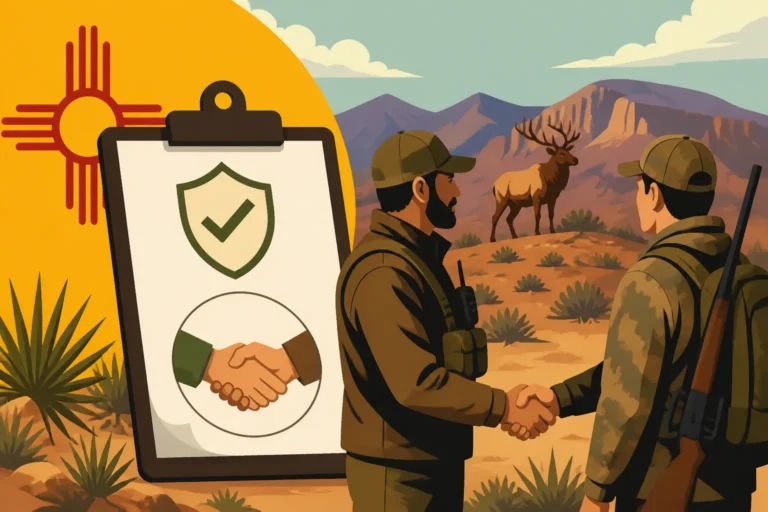
Being part of the outfitter pool comes with specific obligations. For the outfitter, they must be registered and licensed with the state of New Mexico. They are also required to provide a signed contract to their client, outlining the services to be rendered. This contract is a critical document, sometimes even needing to be submitted with the application or available upon request. For the hunter, the primary requirement is to have a valid contract with a registered outfitter before applying in the outfitter pool. This is not something you can decide after you draw a tag.
Furthermore, New Mexico has a specific "two-day accompaniment rule," which mandates that the contracted outfitter or one of their registered guides must be physically present with the hunter in the field for a minimum of two days of the hunt. This isn't just a formality; it's a legal requirement designed to ensure that the spirit of the outfitter pool — providing guided hunting experiences — is upheld. This rule protects both the state's intent and the client's investment. It's worth researching The New Mexico Outfitter Draw and Its Two-Day Rule for more details on this. If the outfitter cannot fulfill this requirement, there can be repercussions. Hunters should thoroughly vet their chosen outfitter, perhaps using resources like BookYourHunt or GoHunt, and understand all terms of the contract before committing.
Impact and Outcomes of the Outfitter Pool
The creation of the outfitter pool has had a multifaceted impact on New Mexico hunting, influencing everything from draw success rates to local economies. It's a system with clear advantages for some and important considerations for others, fundamentally reshaping how many perceive and pursue big game in the state.
Shifting Draw Odds and Opportunities
The most immediate and noticeable impact of the outfitter pool is the palpable shift in draw odds for nonresident hunters. Prior to its existence, drawing a prime tag for species like elk or quality mule deer was often a statistical anomaly for nonresidents. With 10% of tags now specifically reserved, applicants in the outfitter pool generally see significantly better chances than those in the general 6% nonresident pool. This has opened up opportunities that were previously out of reach for many.
Consider a hunter who has applied for years without success in the general nonresident pool. By contracting with an outfitter and entering the 10% pool, their mathematical likelihood of drawing a tag often improves, sometimes dramatically depending on the specific unit and species. This doesn't mean it's a guaranteed tag, as demand can still be high, but it certainly tips the scales in favor of success. This shift directly addresses the initial frustrations many nonresidents faced, providing a more tangible path to hunting New Mexico. Hunters often use platforms like GoHunt to research these shifting odds and strategize their applications.
Economic Benefits to the State and Local Communities
Beyond individual hunter success, the outfitter pool has been a significant boon to New Mexico's economy, particularly in rural areas that benefit directly from hunting tourism. Outfitted hunts typically represent a higher economic investment from the client. This investment flows into various sectors:
- Outfitting Businesses: These operations thrive, creating jobs for guides, cooks, wranglers, and support staff. They purchase equipment, food, and fuel locally.
- Lodging and Hospitality: Hunters, especially those on longer guided trips, require accommodation before and after their hunt, benefiting hotels, motels, and even Airbnb hosts.
- Restaurants and Retail: Money is spent on meals, groceries, gear, and souvenirs, supporting local businesses.
- Vehicle Services: Fuel, repairs, and rentals all see increased business.
This economic ripple effect is substantial. When a nonresident hunter draws an outfitter tag, they're not just buying a license; they're often paying a significant sum for a guided experience that directly translates into jobs and revenue for New Mexicans. This revenue, in turn, can contribute to conservation efforts, wildlife management programs, and local infrastructure, creating a sustainable cycle where hunting benefits both the wildlife and the human communities connected to it. It makes a strong case for why New Mexico maintains this allocation structure, knowing the financial injection it provides.
Navigating the Outfitter Pool as a Hunter
So, you've decided to explore the outfitter pool. It's a great option for many, especially nonresidents who want to maximize their draw odds or ensure a quality experience in unfamiliar terrain. But it's not a decision to be made lightly. There's a process to follow, and choices to make, that will significantly impact your hunting adventure.
Deciding if an Outfitter is Right for You
Choosing to hunt with an outfitter through the 10% pool is a personal decision, often influenced by your hunting experience, budget, and desired success rate. For many, especially those new to New Mexico's vast and challenging landscapes like the Gila, an outfitter offers invaluable expertise. They know the units, the game patterns, and the logistics of hunting tough country, which can be critical for success. This guidance can be particularly beneficial if you're targeting a specific trophy animal or have limited time to scout and learn an area yourself.
On the other hand, a guided hunt comes with a considerable financial commitment. You're not just paying for the tag; you're paying for professional services, accommodations, food, and often the use of horses or specialized equipment. This means a fully guided New Mexico elk hunt, for instance, can cost significantly more than a DIY public land hunt. It's essential to weigh these factors against your budget and your expectations. If you value a higher probability of success, a more comfortable camp, and expert assistance in navigating complex terrain and game behavior, then the outfitter pool might be an excellent fit. For more on cost expectations, check out What a Guided New Mexico Elk Hunt Costs.
Finding Reputable New Mexico Outfitters
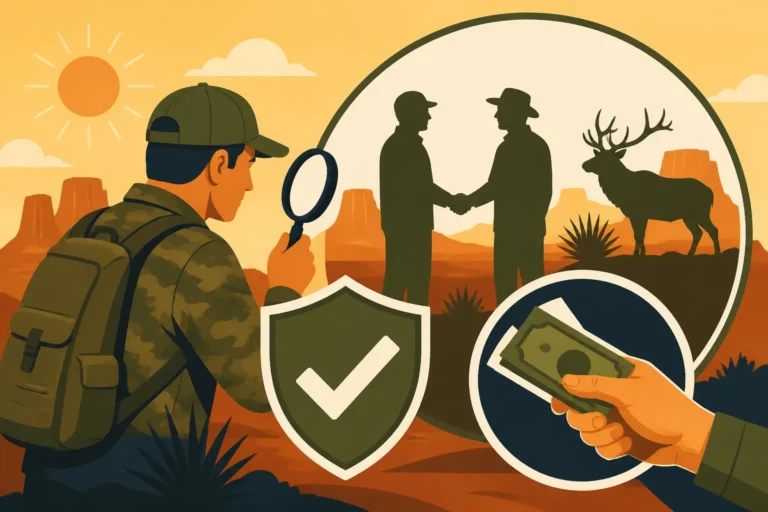
Once you've decided the outfitter route is for you, the next critical step is finding a reputable, licensed New Mexico outfitter. This isn't a task to rush. Your success and enjoyment will largely depend on the quality of your guide. Start by researching outfitters who specialize in the species and units you're interested in. Online resources like BookYourHunt or GoHunt often list outfitters and can sometimes provide reviews or basic information. However, always do your own deep dive.
- Check Credentials: Verify that the outfitter is licensed and in good standing with the New Mexico Department of Game and Fish.
- Request References: A good outfitter will gladly provide contacts for past clients. Call these references and ask detailed questions about their experience, the guide's professionalism, camp conditions, and how issues were handled.
- Understand the Contract: Before signing, meticulously read The Signed Guide-Client Contract New Mexico Requires. Pay close attention to dates, inclusions, exclusions, cancellation policies, and the two-day accompaniment rule. Ensure there are no hidden fees.
- Discuss Expectations: Be clear about what you're hoping for from the hunt – whether it's a specific trophy, a certain level of physical challenge, or just a great experience. A good outfitter will also be transparent about realistic expectations.
- Book Early: Popular outfitters often book out a year or more in advance, especially for prime draw hunts. Start your search well before the application deadline, which is typically in March. For more advice on this, look into Vetting a New Mexico Outfitter Before You Send a Deposit.
By carefully researching and choosing your outfitter, you can significantly enhance your chances of drawing a desirable New Mexico tag and enjoying a memorable hunting experience. The outfitter pool, while an added expense, can unlock incredible opportunities that might otherwise remain elusive for nonresident hunters.
Disclaimer
This article is for general informational purposes only and does not constitute professional advice. Laws, prices and regulations vary by location and change over time. Consult a qualified professional for guidance on your specific situation.