Why the New Mexico Outfitter Pool Changes Your Odds
It’s a tale as old as time for New Mexico hunters: you pour over the regulations, dream of a specific unit, and then face the sobering reality of the draw odds. Many of us find ourselves wondering if there's any way to tip the scales in our favor, especially for those coveted big game tags. One area that often causes confusion, and sometimes frustration, is the New Mexico outfitter pool and how it actually impacts your chances. This guide will meticulously break down the outfitter allocation, demystify its rules, and explain precisely how it can change your odds in the annual draw.
Deconstructing New Mexico's Tag Allocation System
New Mexico has a unique way of distributing its highly sought-after big game licenses, and understanding this system is the first crucial step in making sense of the outfitter pool. It’s not just one big pot; the tags are sliced and diced before any applications are even processed, and these allocations directly dictate the number of licenses available to different groups of hunters.
The Three Distinct Allocation Pools
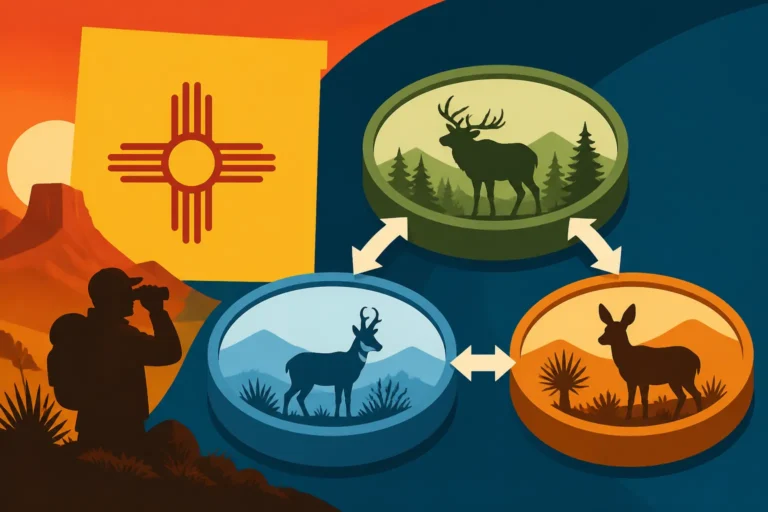
When you apply for a New Mexico big game license, whether it's for elk, deer, pronghorn, or ibex, your application isn't just thrown into a general lottery. Instead, the New Mexico Department of Game and Fish (NMDGF) has already carved out specific percentages for three different applicant pools. This system ensures a distribution that, while sometimes controversial, aims to serve different segments of the hunting community.
First, there's the largest slice, a full 84% of all available tags, which is reserved exclusively for residents of New Mexico. This substantial allocation is designed to prioritize local hunters, recognizing their contributions to the state's economy and conservation efforts. For many New Mexico families, these tags are a tradition, and this large percentage helps keep those traditions alive. This is the pool where most long-time residents will apply, hoping to secure their annual opportunity to hunt in their home state.
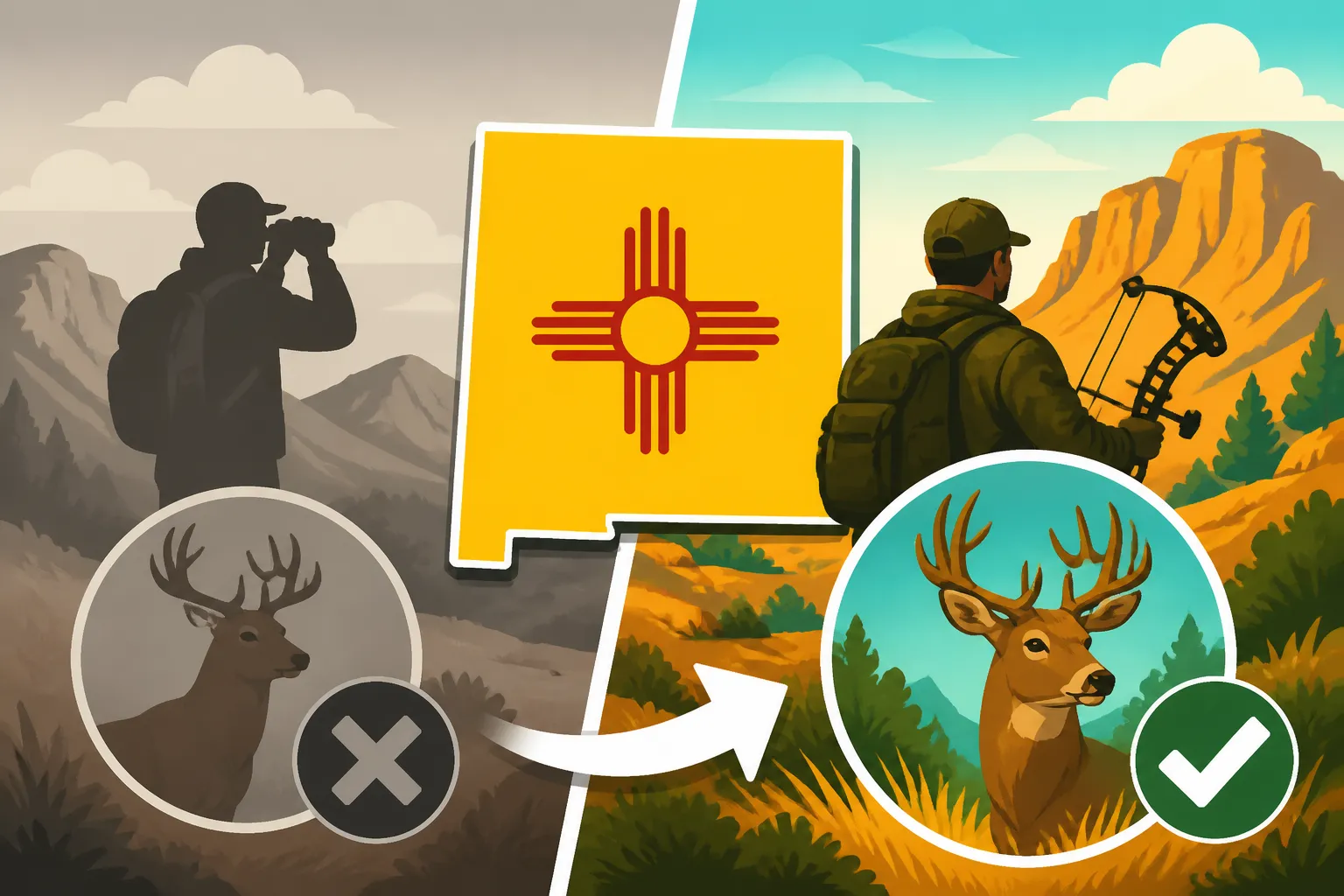
Next, we have the 10% outfitter pool. This is the one we’re really diving into today. This portion of tags is set aside specifically for applicants who have contracted with a licensed New Mexico outfitter. It's a distinct pool with its own set of rules and, importantly, its own draw odds. The idea behind this allocation is often seen as a way to support the state's outfitting industry, providing economic benefits and offering a different avenue for hunters, particularly nonresidents, to draw a tag.
Finally, the remaining 6% of tags are allocated to nonresidents who apply without the assistance of an outfitter. This is often referred to as the "general nonresident" pool, and it's notoriously difficult to draw from due to the sheer number of applicants vying for a very limited number of tags. It's in comparing the 10% outfitter pool against this 6% general nonresident pool that the outfitter pool’s impact on odds becomes most apparent. You can read more about how these percentages interact in New Mexico Splits Every Hunt 84, 10 and 6 Percent.
Why the Outfitter Pool Exists
The existence of the outfitter pool isn't arbitrary; it stems from specific legislative decisions aimed at fostering the hunting economy within New Mexico. Licensed outfitters are often small business owners who invest significantly in equipment, knowledge, and personnel, contributing to local communities, especially in rural areas. By reserving a percentage of tags for their clients, the state provides a direct incentive for hunters to utilize these services. This, in turn, helps sustain the outfitting businesses and the many ancillary services they depend on, from gas stations to local restaurants in towns like Truth or Consequences or Silver City.
For many nonresident hunters, the outfitter pool represents a structured pathway to experiencing New Mexico's diverse and challenging terrain. Drawing a tag in New Mexico can be exceptionally tough, especially for trophy species like elk in the Gila National Forest. The outfitter pool offers a potentially higher chance of success in the draw for these hunters, albeit with the added financial commitment of a guided hunt. It's a system designed to balance access for residents with opportunities for nonresidents and support for local businesses.
Initial Draw Odds Impact for Self-Guided Hunters
Now, for the critical point: how does the outfitter pool affect those of us who prefer to go it alone, without a guide? Simply put, it directly reduces the number of tags available in the general pools. Let's imagine a unit has 100 elk tags available for a specific hunt. Out of those 100 tags, 10 are immediately siphoned off for the outfitter pool. This leaves only 90 tags to be distributed among the resident (84%) and general nonresident (6%) pools.
For a New Mexico resident, this means their 84% is based on 84 tags, not 90 (or 100, if you consider the nonresident cut). For a nonresident applying without an outfitter, their 6% is based on just 6 tags. If that 10% wasn't carved out, those tags would theoretically be distributed across the remaining pools, marginally increasing the numbers for self-guided hunters. So, while it offers an opportunity for outfitter clients, it simultaneously tightens the competition for everyone else. It’s a zero-sum game when it comes to tag allocation, making every percentage point critical, especially for popular hunts like those in the Gila.
The Mechanics of the Outfitter Draw
Understanding the percentages is one thing, but actually navigating the outfitter pool requires knowing the specific rules and requirements. It's not as simple as checking a box on your application; there are legal commitments and practical considerations that go into applying through this channel.
What Qualifies as an Outfitter Application
To apply in the New Mexico outfitter pool, you can't just list an outfitter's name; you need a legitimate, signed contract with a licensed New Mexico outfitter. This isn't a handshake deal; it's a legal document outlining the services the outfitter will provide and the hunter's obligations. This contract typically needs to be in place before you submit your application, as you'll need the outfitter's license number to include on your draw application. If you fail to draw, many outfitters offer options to roll over your deposit or refund a portion, but that’s all part of the contract details.
The NMDGF takes this requirement seriously. They periodically audit applications to ensure that hunters claiming to be part of the outfitter pool actually have a valid contract on file with a registered and licensed New Mexico outfitter. Submitting a fraudulent application can lead to severe penalties, including fines and loss of hunting privileges. It's always best practice to use reputable sources like GoHunt to research licensed outfitters and ensure they are in good standing with the state. You can learn more about this specific requirement in The New Mexico Guide-Client Contract Requirement.
The Two-Day Accompaniment Rule Explained
One of the most defining, and sometimes misunderstood, aspects of the outfitter pool is the "two-day accompaniment rule." If you draw a tag through the outfitter pool, your contracted outfitter (or a registered guide working for them) must accompany you in the field for a minimum of two calendar days during your hunt. This isn't just showing up to camp and waving hello; it means they need to be actively engaged in guiding you, whether it's scouting, setting up blinds, calling, or tracking.
This rule is in place to ensure that the spirit of the outfitter allocation is met: that clients are indeed receiving a guided service. It also means that even if you're an experienced hunter, you’ll have a professional with you for at least a portion of your hunt. This can be a huge benefit, as experienced New Mexico outfitters possess unparalleled local knowledge, understanding everything from game movement patterns to crucial water sources in arid units or specific bedding areas in dense timber. What If Your New Mexico Outfitter Cannot Attend outlines what happens in less common scenarios.
Let's say you're on a five-day archery elk hunt in Unit 16A through the outfitter pool. Your outfitter might spend the first two days with you, helping you locate a herd, set up a calling sequence, or even make an initial stalk. After those two days, they might leave you to hunt independently, or they might continue to guide you for the remainder of the hunt, depending on your agreement. The key is that minimum two-day presence, which provides valuable assistance and ensures compliance with the draw conditions.
How Group Applications Work in the Outfitter Pool
Group applications are a popular strategy for hunters who want to increase their chances of hunting with a buddy or family member. New Mexico allows groups of up to four hunters to apply together for big game licenses. When it comes to the outfitter pool, the same group application rules generally apply, but with the added layer of the outfitter contract.
If a group decides to apply in the outfitter pool, all members of that group must be contracted with the same licensed outfitter, and that outfitter's license number must be on every application within the group. If the group is successful in drawing tags, then the outfitter is responsible for accompanying all members of that group for the mandatory two days. This means the outfitter might bring along additional guides to ensure adequate coverage and support for the entire group, especially if they are spread out across a large area. This can be a really effective way to improve the group's collective draw odds, as they are pooling their chances within the dedicated 10% allocation.
How the Outfitter Pool Specifically Changes Your Odds
Now for the million-dollar question: does applying in the outfitter pool actually improve your chances of drawing a tag? The short answer is, for nonresidents, often yes, significantly. For residents, it's a more nuanced calculation.
Analyzing Outfitter Pool Draw Success Rates
When you look at past draw statistics, particularly for highly desirable tags like trophy elk in Units 15 or 16D, the draw odds for the 10% outfitter pool are frequently higher than those for the 6% general nonresident pool. This isn't always the case, and it varies by unit and species, but it's a consistent trend. Why? Because while the percentage allocation for the outfitter pool (10%) is larger than the general nonresident pool (6%), the number of applicants in the outfitter pool is often much smaller. Fewer applicants vying for a larger percentage of tags naturally leads to better odds.
For example, if a specific elk hunt has 100 tags:
- Residents get 84 tags.
- Outfitters get 10 tags.
- General nonresidents get 6 tags.
If 1000 nonresidents apply without an outfitter, their odds are 6/1000 = 0.6%.
If only 50 nonresident (or resident) clients apply with an outfitter, their odds are 10/50 = 20%.
This is a simplified example, but it illustrates the potential difference. Using resources like GoHunt's draw odds analysis can help you directly compare these numbers for specific units and hunt codes. It allows hunters to make informed decisions about whether the added cost of an outfitter is a worthwhile investment given the improved statistical probability of drawing a tag. You can delve into how to interpret these figures in Reading New Mexico Hunt Draw Statistics.
| Pool Type | Allocation Percentage | Typical Applicant Volume (relative) | General Draw Odds (relative) | Cost Implication |
|---|---|---|---|---|
| Resident General | 84% | Highest | Moderate to Good | Tag fee only |
| Outfitter Pool | 10% | Moderate to Low | Good to Very Good (Nonresident) | Tag fee + Outfitter/Guide fees |
| Nonresident General | 6% | High | Lowest | Tag fee only |
The Cost Factor Beyond the Tag
While the improved odds are attractive, it's vital to acknowledge the significant financial investment that comes with applying in the outfitter pool. A New Mexico big game license itself can be pricey for nonresidents (a non-resident elk tag, for example, is over $500 as of recent changes). However, the cost of a fully guided hunt with a reputable New Mexico outfitter can range from several thousand dollars to well over $10,000, depending on the species, duration, unit, and trophy expectations.
This cost typically covers the outfitter's services, guide fees, food, lodging (which might be anything from a wall tent in the backcountry to a comfortable lodge), and often transportation during the hunt. It generally does not include your actual hunting license or tag fee, nor does it cover travel to New Mexico, meat processing, taxidermy, or tips for your guides. Therefore, when you consider the "improved odds" of the outfitter pool, you're weighing that against a substantial financial commitment that extends far beyond the price of the tag itself. For a detailed breakdown of expenses, see What a Guided New Mexico Elk Hunt Costs.
Strategic Considerations for Applying with an Outfitter
Given the interplay of draw odds and cost, applying through the outfitter pool becomes a strategic decision. For nonresidents chasing dream tags in premier units for species like mature mule deer or trophy elk, the outfitter pool often provides the most realistic chance of drawing a tag. Units like those in the Gila, known for their trophy quality and vast wilderness, are incredibly difficult to draw in the general nonresident pool. The outfitter pool can unlock those opportunities.
For residents, the decision is less clear-cut. With 84% of tags allocated to them, their odds in the resident general pool are typically much better than any nonresident. However, for those seeking specific, extremely high-demand tags that even residents struggle to draw, or for those who simply prefer the logistics and expertise a guide provides, applying with an outfitter can still be a viable path. It's about weighing your resident odds against the potentially better, but more expensive, outfitter odds, and deciding if the guided experience is worth the extra financial outlay. Understanding the nuances of The New Mexico Outfitter Draw and Its Two-Day Rule is key here.
Common Misconceptions and Realities of the Outfitter Pool
Despite the clear rules and statistics, the outfitter pool is often surrounded by myths and misunderstandings. Clearing these up is essential for any hunter considering this route.
"Guaranteed Tag" Fallacy
Perhaps the biggest misconception is that applying with an outfitter guarantees you a tag. This is absolutely, unequivocally false. The outfitter pool, just like the resident and general nonresident pools, is still a draw. You are still subject to the lottery system. While your statistical odds of drawing a tag might be significantly better in the outfitter pool compared to the general nonresident pool, there is never a guarantee. There are certainly unsuccessful applicants in the outfitter pool every year.
Outfitters cannot, and should not, promise a tag. Their role is to increase your odds in the draw and, if successful, to provide a guided hunting experience. Any outfitter guaranteeing a tag should be a major red flag, as it goes against the very nature of New Mexico's draw system. Always remember: it's an improvement in odds, not a certainty.
Resident Access to the Outfitter Pool
It's a common belief that the outfitter pool is exclusively for nonresidents. This isn't true. New Mexico residents are absolutely eligible to apply in the outfitter pool if they choose to contract with a licensed outfitter. However, as discussed, for many residents, the 84% resident allocation already provides decent odds for many hunts, making the added cost of an outfitter a less appealing proposition unless they are targeting a highly specific, hard-to-draw tag or desire the guided experience for its own sake.
For residents, the strategic use of the outfitter pool might come into play for units with exceptionally tough draw odds even for residents, or for specialized hunts like those for Barbary sheep or Ibex, where local expertise can significantly enhance the experience and success rate.
Finding Reputable Outfitters and Avoiding Scams
Because the outfitter pool involves a significant financial commitment and legal contract, vetting potential outfitters is paramount. Unfortunately, as with any industry, there are less reputable individuals. The NMDGF licenses and regulates outfitters, and it's your responsibility to ensure you're working with a legitimate professional.
Here are a few tips for finding a reputable outfitter:
- Verify their license: Ensure they are currently licensed by the NMDGF. You can often check this directly through the NMDGF website or by contacting the department.
- Ask for references: A good outfitter will gladly provide references from past clients. Take the time to call these references and ask detailed questions about their experience.
- Review their contract thoroughly: Understand all terms, including payment schedules, cancellation policies, what's included and excluded, and the specific duties of the outfitter regarding the two-day accompaniment rule.
- Check online reviews and forums: While not always definitive, these can offer additional insights. Use platforms like GoHunt that provide outfitter directories and success rates.
- Attend hunting expos: Many outfitters attend these events, offering a chance to meet them face-to-face and ask questions directly.
By doing your due diligence, you can ensure you’re getting what you pay for and that your application, if drawn, leads to a legitimate and ethical hunting experience. You’ll find more insights on this in Questions to Ask a New Mexico Outfitter.
Beyond the Draw: The Outfitter's Role in a Successful Hunt
While the outfitter pool primarily influences your odds of drawing a tag, it's important to remember that the outfitter's value extends far beyond the application process. If you're successful in the draw, a good outfitter can dramatically impact the quality and success of your actual hunt.
Expertise and Local Knowledge
New Mexico is a vast state with incredibly diverse terrain, from the high peaks of the Sangre de Cristo Mountains to the arid Chihuahuan Desert. An experienced outfitter brings invaluable local knowledge to the table. They understand game movements, preferred habitats, seasonal patterns, and crucial water sources specific to their units. This is particularly true for challenging areas like the Gila National Forest, where elk behavior can be highly localized. They know where the game hides, when they move, and the best strategies to pursue them.
Outfitters often spend countless hours scouting, both in the offseason and in the weeks leading up to a hunt. This pre-season work means they have current information on game populations, recent sign, and optimal hunting locations. For a nonresident unfamiliar with the vast expanses, or even a resident exploring a new unit, this expertise can be the difference between a frustrating hunt and a memorable, successful one. Whether it's knowing how to approach a bedded mule deer in broken terrain or how to effectively bugle bulls through New Mexico's mid-September rut, their insight is golden.
Logistical Support and Backcountry Access
Hunting in New Mexico, especially in wilderness areas or remote public lands, often involves significant logistical challenges. Outfitters excel at handling these complexities. This can include setting up comfortable spike camps deep in the backcountry, providing horses or mules for packing in gear and packing out game, and managing all the details of food, water, and shelter in rugged environments.
Imagine drawing a prime elk tag in the Gila. This often means packing in several miles, navigating dense timber, and facing significant elevation changes. For a DIY hunter, this requires substantial investment in gear, physical conditioning, and experience. A guided hunt or even a drop camp service with a pack string outfitter can alleviate much of this burden, allowing you to focus purely on the hunt. They handle the camp, the cooking, and the grueling task of getting an animal out of a remote canyon. This support is particularly valuable for hunters who may not have the time, equipment, or physical capability for a full-on DIY backcountry expedition.
Ethical Considerations and Fair Chase
It's crucial to understand that even with an outfitter, the hunt remains entirely fair chase. Outfitters are bound by strict ethical codes and state regulations. Their role is to guide, assist, and increase your opportunity for success, not to guarantee a kill or engage in unethical practices. They will put you in the best possible position, use their knowledge to locate game, and advise on strategy, but ultimately, the shot, the skill, and the effort are still yours.
A reputable outfitter will prioritize ethical hunting, conservation, and client safety. They ensure all legal requirements are met, from proper tagging to adherence to shooting hours and bag limits. When choosing to apply in the outfitter pool, you're not just buying better draw odds; you're investing in a professional service designed to enhance your hunting experience within the bounds of fair chase principles.
Disclaimer
Please be aware that hunting regulations, fees, and allocation percentages in New Mexico are subject to change by the New Mexico Department of Game and Fish. Always consult the most current official NMDGF Hunting Rules and Info Booklet for the most accurate and up-to-date information before applying for any licenses or planning a hunt.