What the Outfitter Pool Was Meant to Fix
If you've ever tried to navigate the complex world of big game hunting applications in New Mexico, especially as a nonresident, you've probably felt a twinge of frustration. The system can seem intricate, with different deadlines, tag allocations, and pools. One of the most talked-about aspects is the "outfitter pool," and many hunters wonder why it even exists. This guide will peel back the layers and explain the specific challenges this system was designed to address, providing clarity on its purpose and function.
The Challenge Before the Outfitter Pool: Why a Change Was Needed
Before the outfitter pool was established, New Mexico faced a unique set of challenges in managing its valuable big game resources and accommodating diverse hunter interests, particularly those coming from out of state. The state recognized a need to balance resident hunting opportunities with the economic benefits that non-resident hunters bring, all while ensuring that the quality of hunts remained high.
Understanding the Historical Drawbacks for Non-Residents
For years, non-resident hunters faced significantly steeper odds in the general draw. While New Mexico has always been a coveted destination for species like elk and mule deer, the sheer volume of applications from both residents and non-residents, coupled with a limited number of tags, meant that drawing a tag without a significant advantage was often a long shot. This created a barrier for many who dreamed of hunting the state's incredible landscapes, from the high peaks of the Sangre de Cristos to the vast desert expanses. Many hunters felt that their chances were so slim, it wasn't even worth the application fee. This wasn't just about disappointment for individual hunters; it also meant that New Mexico was potentially missing out on the economic contributions these hunters could bring.
The Economic Incentive for Structured Non-Resident Access
Hunting, especially for big game, is a significant economic driver. Non-resident hunters often spend more on travel, lodging, food, and gear than local hunters. They frequently extend their stays, explore local towns, and generally contribute to the tourism economy in rural areas that desperately need it. Without a structured way to encourage and facilitate these hunters, New Mexico wasn't fully capitalizing on this potential. The challenge was how to create an incentive for these hunters to come, increase their draw odds, and ensure their dollars benefited the state, all without unduly impacting resident hunters. This led to the idea of a dedicated avenue that could directly link out-of-state hunters with local services, essentially creating a win-win scenario where hunters had better access and the state reaped economic rewards.
Introducing the Outfitter Pool: A Solution for Access and Economy
The New Mexico Department of Game and Fish introduced the outfitter pool as a strategic solution to these challenges. It carves out a specific percentage of tags exclusively for applicants who apply with a licensed New Mexico outfitter. This system was designed to address the issues of low non-resident draw odds and to inject vital economic activity into the state's outdoor recreation sector.
How the 10 Percent Pool Provides a Separate Pathway
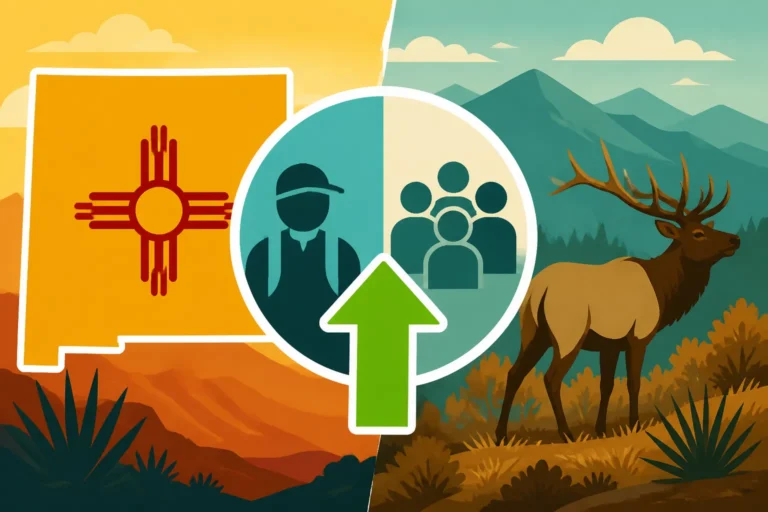
At its core, the outfitter pool is a separate allocation of tags, typically representing 10% of the total available tags for a given hunt code. This 10% is distinct from the 84% allocated to residents and the remaining 6% for non-residents who apply unguided. This clear separation means that when you apply through the outfitter pool, you're not competing with the vast majority of resident hunters or even all other non-residents. Instead, you're in a smaller pool with other hunters who have chosen to employ a New Mexico-licensed outfitter. This significantly alters the odds, often making them more favorable than applying in the general non-resident pool. It’s a mechanism to ensure that a portion of the state's highly sought-after tags are specifically reserved for hunters who are also investing in the state's guiding industry. If you're curious about the general tag distribution, you can learn more about how New Mexico allocates its big game licenses by checking out New Mexico Splits Every Hunt 84, 10 and 6 Percent.
Economic Benefits and Professional Guidance
By creating this dedicated pool, New Mexico aimed to achieve two primary goals. First, it directly supports the state's licensed outfitters and guides. These are local businesses and individuals who provide critical services, deep knowledge of the terrain, and often run complex logistical operations, especially in vast wilderness areas like the Gila. They employ staff, purchase supplies locally, and often maintain equipment and stock animals, all of which contribute to the local economy. Second, it encourages non-resident hunters to engage these professionals. Many non-residents, unfamiliar with New Mexico's diverse and often challenging terrain, find immense value in a guided hunt. An outfitter provides not just a higher chance in the draw but also the expertise to navigate unfamiliar units, locate game, and handle all the logistics from camp setup to field dressing. This professional assistance can transform a potentially overwhelming DIY hunt into a well-organized and successful experience, justifying the additional investment for many. Resources like BookYourHunt can be incredibly helpful for hunters looking to find reputable outfitters and compare their offerings.
How the Outfitter Pool Operates in Practice: What Hunters Need to Know
Understanding the 'why' behind the outfitter pool is one thing, but knowing 'how' it works in practice is crucial for any hunter considering this route. It's not simply about checking a box on an application; there are specific requirements and considerations that come with applying through this system.
The Outfitter-Client Contract and Two-Day Rule
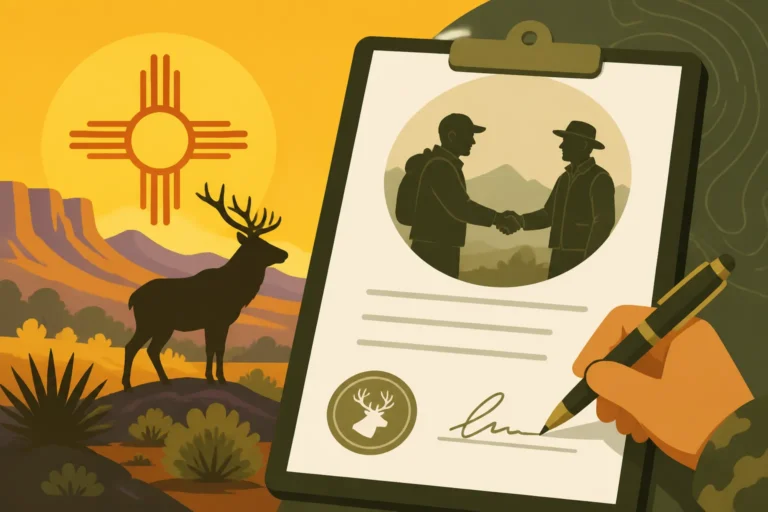
One of the most defining aspects of the outfitter pool is the explicit requirement for a signed contract between the applicant and a New Mexico-licensed outfitter. This isn't just a formality; it's a binding agreement that ensures the hunter genuinely intends to utilize guiding services. The state specifies that if you draw a tag through this pool, your chosen outfitter must accompany you in the field for a minimum of two days. This "two-day rule" ensures that the outfitter is actively involved in your hunt, providing the professional guidance the system was designed to facilitate. It prevents a scenario where hunters simply use an outfitter's license number to boost their draw odds without any intention of using their services. This commitment ensures the economic benefit flows to the outfitter as intended. Understanding these specifics is key, and you can delve deeper into the exact requirements by reading about The New Mexico Outfitter Draw and Its Two-Day Rule and The New Mexico Guide-Client Contract Requirement.
Impact on Draw Odds and Application Strategy
Applying through the outfitter pool generally improves a non-resident's draw odds compared to the general non-resident pool. This is because the 10% pool is typically less saturated with applications than the 6% general non-resident pool, which can sometimes see astronomical numbers of applicants for highly desirable tags. While it's not a guarantee, it's often seen as the most reliable pathway for non-residents to secure a coveted New Mexico tag, especially for species like trophy elk in prime units. When planning your application strategy, many hunters use platforms like GoHunt to analyze past draw odds for different units and pools, helping them make informed decisions. It’s a different kind of lottery, with better chances, but it comes with the added cost of a guided hunt. This means hunters must weigh the increased chance of drawing against the financial commitment of hiring a guide. For many, the peace of mind and expertise provided by a professional outfitter, combined with the higher draw odds, make it a worthwhile investment. To get a better grasp on this, you might explore Does a New Mexico Outfitter Application Improve Odds?.
Finding a Reputable Outfitter
The success of your outfitter pool application hinges on selecting a reliable and licensed New Mexico outfitter. This process requires due diligence. You'll want to research outfitters, check their references, inquire about their experience in specific units or with particular species, and understand their pricing and what's included. It’s also crucial to clarify their policy regarding refunds or rescheduling if you don't draw a tag. Many outfitters will require a deposit to secure your spot and facilitate the application process under their number. Websites like BookYourHunt offer a directory of outfitters and reviews, which can be a great starting point for your search. Don't rush this decision; vetting an outfitter properly is as important as the hunt itself. You can find more comprehensive advice on this topic by looking at Vetting a New Mexico Outfitter Before You Send a Deposit.
Beyond the Draw: The Broader Impact and Ongoing Discussion
The New Mexico outfitter pool is more than just a mechanism for drawing tags; it's a system with far-reaching impacts on the state's economy, its wildlife management, and the overall hunting culture. While generally accepted, it's also a topic that sparks discussion among various groups of hunters and outdoor enthusiasts.
Economic Contribution Beyond Tag Sales
The economic ripple effect of the outfitter pool extends far beyond the direct fees paid to guides. When outfitters bring clients into New Mexico, those clients patronize local hotels, restaurants, gas stations, and gear shops. They often travel through smaller towns, bringing much-needed revenue to rural communities. This inflow of capital supports local jobs and businesses, reinforcing the idea that hunting is a vital component of New Mexico's economy. Outfitters themselves purchase supplies, maintain vehicles, and invest in equipment, further stimulating local commerce. This broader economic contribution helps fund conservation efforts and allows the state to continue managing its incredible wildlife resources, ensuring that future generations can enjoy the same opportunities. It's an investment in the entire ecosystem of outdoor recreation in the state. Many hunters often wonder about the financial commitment involved, and articles like What a Guided New Mexico Elk Hunt Costs can provide some perspective.
Debates and Different Perspectives
Like any system that allocates limited resources, the outfitter pool isn't without its critics or areas of ongoing debate. Some resident hunters, and even non-residents applying in the general pool, sometimes view the outfitter allocation as preferential treatment, suggesting it creates an uneven playing field. They might argue that it makes it harder for the average hunter to draw a tag, especially for high-demand species. On the other hand, proponents emphasize the economic benefits, the professional services provided, and the fact that it diversifies access for those who might not have the time or expertise for a full DIY hunt in challenging terrain. It ensures that a segment of hunters, who are willing to pay for a guided experience, have a viable path to hunt in New Mexico. Ultimately, the system represents a balance, an attempt to serve multiple interests within the finite constraints of wildlife management. It's a continuous conversation about fairness, access, and sustainable resource use.
The Value of Professional Guidance in Challenging Terrain
New Mexico offers some of the most rugged and remote hunting experiences in the Lower 48. From the vast Gila Wilderness to the technical challenges of hunting Oryx on White Sands Missile Range, the terrain can be unforgiving and the animals notoriously elusive. For many hunters, especially those without extensive backcountry experience or local knowledge, a guided hunt isn't just about drawing a tag; it's about safety, efficiency, and maximizing their chances of a successful and memorable hunt. Outfitters bring years of experience, intimate knowledge of game movements, and the logistical capabilities to handle everything from packing in camp to quartering and packing out an animal. This expertise can be invaluable, turning a potentially difficult or unsuccessful trip into an experience of a lifetime. The outfitter pool, in a way, ensures that this professional knowledge remains a vital part of New Mexico's hunting landscape, providing an accessible pathway to high-quality hunts for those who seek it.
| Allocation Pool | Primary Beneficiary | Odds Profile (General) | Key Requirement |
|---|---|---|---|
| Resident (84% Pool) | New Mexico Residents | Generally highest odds | Proof of New Mexico residency |
| Outfitter (10% Pool) | Outfitter Clients | Often improved for non-res. | Contract with NM-licensed outfitter |
| Non-Resident (6% Pool) | Unguided Non-Residents | Generally lowest odds | No outfitter required |
Disclaimer
This article is for general informational purposes only and does not constitute professional advice. Laws, prices and regulations vary by location and change over time. Consult a qualified professional for guidance on your specific situation.