Does the New Mexico Outfitter Pool Improve Odds?
For many hunters dreaming of chasing elk or mule deer across New Mexico's vast landscapes, the draw system can feel like an insurmountable puzzle. You've heard whispers, perhaps even outright claims, that applying with an outfitter somehow unlocks a secret backdoor to highly coveted tags. This guide is here to cut through the speculation and shed light on how the New Mexico outfitter pool truly works, so you can make informed decisions about your application strategy.
Understanding New Mexico's Tag Allocation System
Before we can even begin to discuss whether applying with an outfitter "improves" your odds, it’s absolutely critical to grasp the foundational structure of how New Mexico distributes its big game tags. It’s not just one big pool where everyone competes equally; it’s a carefully segmented system designed to balance resident opportunities, outfitter business, and nonresident participation. Missing this crucial detail is like trying to navigate the Gila without a map – you’re going to get lost.
The Three Allocation Pools for Tags
New Mexico employs a unique three-tier allocation system for its public draw tags, which often surprises hunters from other states that rely on preference or bonus points. Instead of a cumulative system, each year is a fresh start, and tags are divided into distinct categories. This means your application isn’t just pitted against everyone else’s; it's competing within a specific subset.
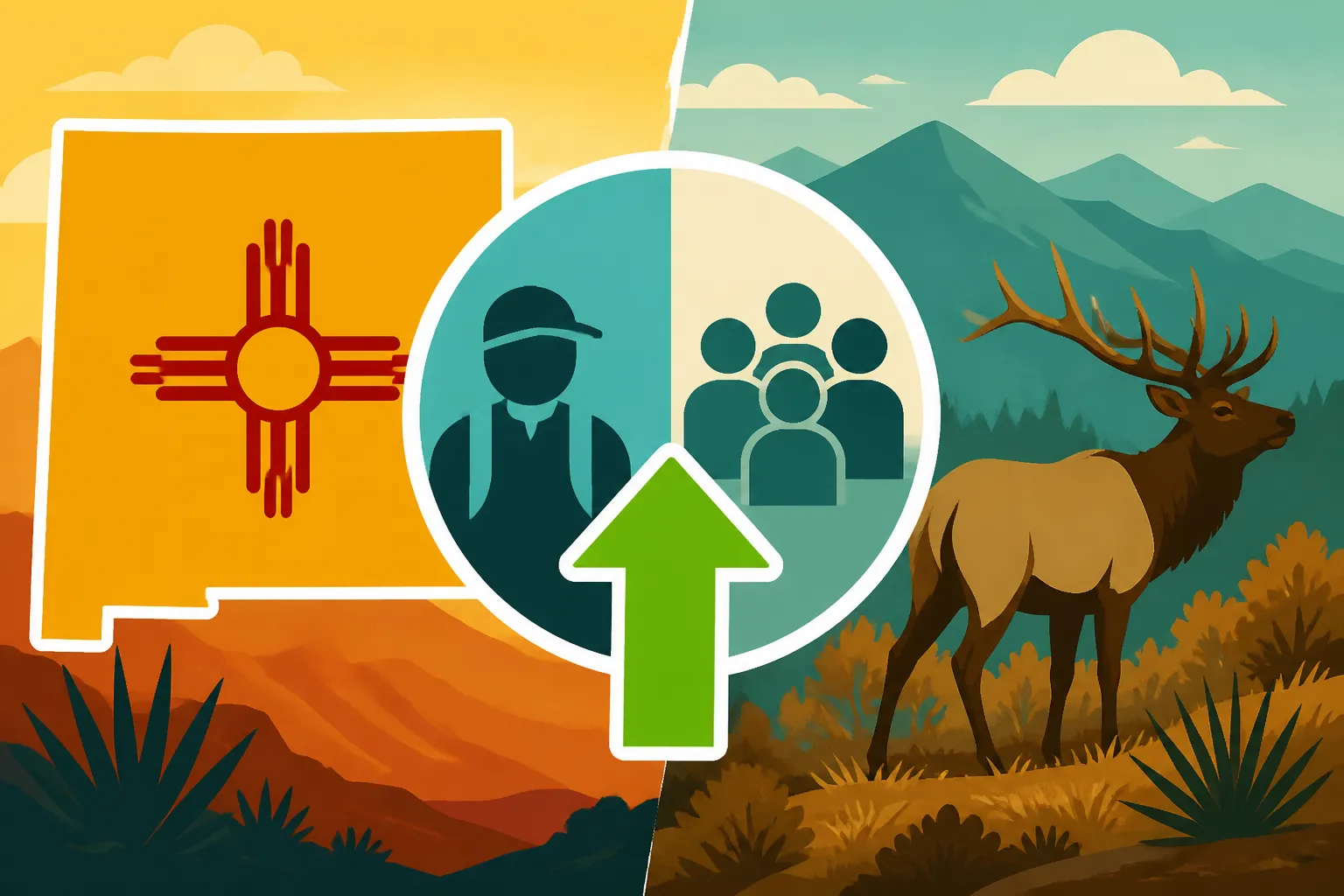
First and foremost, the lion's share, a substantial 84 percent of all available tags for each hunt code, is reserved for New Mexico residents. This is a deliberate effort to ensure local hunters have the best possible chance to pursue game in their home state, and it’s a point of pride for many here. It’s understandable; these are their lands, their resources. Then, there's a 10 percent allocation that goes to applicants who are contracted with a New Mexico registered outfitter. This is the "outfitter pool" that generates so much discussion and, frankly, confusion. Finally, a smaller, 6 percent pool is set aside for nonresidents applying independently, without an outfitter. This last category is often the most competitive and challenging to draw from, particularly for desirable hunts. The system is detailed in New Mexico Splits Every Hunt 84, 10 and 6 Percent.
How Each Pool Operates and Interacts
Each of these three pools operates independently in the draw process, meaning tags are allocated from each pool before moving to the next. For instance, if 100 tags are available for a specific elk hunt, 84 tags go into the resident pool, 10 tags into the outfitter pool, and 6 tags into the nonresident independent pool. Your application will only be considered within the pool you've chosen or qualify for. This is where the notion of "improving odds" comes into play. If fewer people apply in a certain pool, then theoretically, your chances might be better in that specific pool, even if the total number of tags is smaller.
It's not uncommon for hunters to assume that if they don't draw in one pool, their application then rolls over into another. This isn't how it works in New Mexico. Once you're in a pool, you're in that pool for that draw. There's no cascading effect. This rigid separation is a critical distinction that shapes application strategies for thousands of hopeful hunters every year. Understanding these interactions is fundamental to navigating the New Mexico draw, whether you’re a lifelong resident or a nonresident making your first application.
The New Mexico Outfitter Pool Explained in Detail
The outfitter pool isn't just a simple line item on the application; it's a specific, intentional category designed to support the state's outfitting industry and, by extension, provide another avenue for hunters, particularly nonresidents, to access tags. It comes with its own set of rules and expectations that go far beyond just checking a box on your application.
What Defines the Outfitter Pool and Its Requirements
The outfitter pool is specifically for hunters who have engaged the services of a New Mexico registered outfitter and have a signed contract with them. This isn't a casual arrangement; it's a formal business relationship. The outfitter must be licensed by the New Mexico Department of Game and Fish, and their services must meet certain criteria. The core idea is that you're not just buying a draw entry; you're committing to a guided experience. This commitment is evidenced by The New Mexico Guide-Client Contract Requirement, which must be in place before you apply.
The system is designed so that if you draw a tag through the outfitter pool, you are obligated to hunt with that outfitter. It's not a loophole to get a tag and then go DIY. The state wants to ensure that the tags allocated through this pool genuinely support guided hunting experiences. This includes listing your outfitter’s registration number on your application, a key step that ties your draw entry directly to their business. Applying Under a New Mexico Outfitter Number covers these specifics. This structured approach means that applying in the outfitter pool isn’t a decision to be taken lightly; it comes with a financial and logistical commitment to a full-service hunt, which naturally comes with a higher cost than a DIY hunt.
The Two-Day Accompaniment Rule and Its Implications
A cornerstone of the outfitter pool is the "two-day accompaniment rule." This rule mandates that your contracted outfitter, or a registered guide working under them, must accompany you in the field for a minimum of two calendar days during your hunt. This isn't just about showing up for a few hours; it's a substantive commitment of time and expertise. New Mexico's Two-Day Accompaniment Rule Explained dives deeper into this. The intention is to ensure that the outfitter is genuinely providing guiding services, not just acting as a draw proxy.
This rule has significant implications. First, it means you can't just pay a small fee to an outfitter to put their number on your application and then go off on your own for the entire hunt. There's an expectation of active participation from the outfitter or their guide. Second, it adds to the overall cost of the hunt, as those two days of professional service are part of the outfitter's fee structure. If, for unforeseen reasons, your outfitter can't fulfill this requirement, there are procedures and implications to consider, which can be found in What If Your New Mexico Outfitter Cannot Attend. This rule is a critical differentiator for the outfitter pool, emphasizing the guided experience as a fundamental component of drawing a tag through this allocation.
Does the Outfitter Pool Actually Improve Your Odds?
This is the million-dollar question for many hunters, especially nonresidents. The short answer is: it's complicated, and often, the perceived "improvement" in odds is misunderstood or exaggerated. While statistically, the outfitter pool can sometimes have slightly better draw odds than the independent nonresident pool, it's crucial to look at the full picture and manage expectations.
The Statistical Reality Versus Perception
When you look at the raw numbers, particularly for highly sought-after units and species like Gila elk, the independent nonresident pool (the 6% allocation) is almost always the toughest to draw from. Its sheer competitiveness can be disheartening. The outfitter pool (the 10% allocation) often has numerically "better" odds simply because fewer applicants compete for those tags compared to the independent nonresident pool. This is where the perception of "improved odds" originates.
However, "better" is a relative term. For example, if the independent nonresident draw odds are 1% and the outfitter pool odds are 3%, while 3% is indeed mathematically higher, it's still a very low chance. It doesn't guarantee a tag, and it certainly doesn't mean it's easy. It's also critical to remember that Why New Mexico Draw Odds Do Not Improve With Time, as there are no preference points. Every year, everyone starts on equal footing within their chosen pool. Moreover, the number of applicants in the outfitter pool can fluctuate, sometimes making it nearly as competitive as the independent nonresident pool for certain hunts. It's essential to study the draw statistics, which can often be found on the New Mexico Department of Game and Fish website or through services like GoHunt, to get a realistic perspective on specific hunt codes.
Factors Influencing Draw Success Beyond the Outfitter Pool
While applying with an outfitter can shift the mathematical odds in your favor compared to the independent nonresident pool, several other factors play a far more significant role in your overall draw success. These are elements you have more control over in your application strategy.
Your choice order on the application is paramount. New Mexico processes applications by choice. If your first choice is a highly popular unit, and you don't draw it, your application moves to your second choice, then your third, and so on. Many hunters, especially nonresidents, make the mistake of only listing extremely competitive first choices, essentially wasting their second and third options. A well-researched strategy might include a highly desirable first choice, a slightly less competitive second, and a "safety" third choice with historically higher odds.
The unit popularity and hunt type are also huge drivers. A late-season archery elk hunt in a prime unit like Unit 15 will have abysmal odds regardless of the pool, while an early-season cow elk hunt in a less popular unit might have significantly better chances across all pools. Researching historical draw statistics for specific units and hunt codes is crucial. Services like BookYourHunt and GoHunt can provide valuable insights into these trends. Don't just focus on the outfitter pool; focus on making smart choices within your chosen pool. Checking New Mexico Draw Odds Before You Apply can give you an edge by highlighting these nuances.
Here's a simplified comparison of the different draw pools:
| Feature | Resident Pool (84%) | Outfitter Pool (10%) | Nonresident Independent Pool (6%) |
|---|---|---|---|
| Eligibility | New Mexico Residents Only | Nonresidents with a valid outfitter contract | Nonresidents without an outfitter |
| Tags Allocated | Highest Percentage | Medium Percentage | Lowest Percentage |
| Draw Competitiveness | Generally moderate to high | Moderate to high | Generally highest |
| Cost | State license/tag fees only | Outfitter fees + state fees | State license/tag fees only |
| Service Obligation | None | Minimum 2 days guided service | None |
| Chance of Drawing | Best overall for residents | Potentially better than independent nonresident for some hunts | Often the most challenging |
Weighing the Pros and Cons of an Outfitter Application
Deciding whether to apply through the outfitter pool is a multifaceted decision that goes beyond just draw odds. It involves a significant financial commitment and a shift in how your hunt will be conducted. It's important to look at both sides of the coin before committing.
Potential Advantages Beyond Draw Odds
While the primary allure for many in the outfitter pool is the hope of better draw odds, there are substantial advantages to a guided hunt that extend far beyond just securing a tag. For one, especially for nonresidents or first-time New Mexico hunters, a guide offers invaluable local knowledge and expertise. They know the terrain, the animal patterns, the water sources, and how to read the sign. This can dramatically increase your chances of success in the field, even if the tag acquisition was difficult. Imagine trying to navigate the vast Gila Wilderness for the first time alone; an outfitter provides a critical safety net and navigational advantage.
Secondly, outfitters often provide comprehensive logistical support and equipment. This can include everything from horses and pack mules to transport to remote areas, camp setup, meals, and even field dressing and meat retrieval. This is a huge benefit, particularly for demanding backcountry hunts for species like elk, where getting an animal out can be as challenging as finding one. If you’re not experienced with horse packing or don't have the gear for a spike camp, a guided trip solves those problems. Thirdly, outfitters can often provide access to private land or hard-to-reach public land parcels that would be difficult or impossible for a solo hunter to navigate. This can sometimes put you in areas with less pressure and higher animal densities. For detailed insight into what a fully guided hunt might entail, consider exploring What a Fully Guided New Mexico Elk Hunt Includes.
The Financial and Commitment Considerations
The most significant consideration when contemplating the outfitter pool is, without a doubt, the financial investment. Guided hunts, especially for big game in quality units, are not inexpensive. Beyond the state license and tag fees, you'll be paying for the outfitter's services, which cover their time, expertise, equipment, and logistical support. This can range from a few thousand dollars for a basic semi-guided experience to well over ten thousand for a premium, fully-catered, backcountry hunt. It's a substantial sum, and you need to be prepared for it. Remember, you're not just paying for the possibility of a tag; you're paying for the entire guided experience if you draw.
Beyond the monetary cost, there's a commitment of time and a shift in autonomy. You are contracting for a service, and that means adhering to the outfitter's schedule, camp rules, and hunting strategy. While a good outfitter will work with you, it's not a DIY hunt where you call all the shots. You're part of a team. You also need to factor in the contractual obligations, including deposit schedules, cancellation policies, and the aforementioned two-day accompaniment rule. If you fail to draw, many outfitters have clear refund or rollover policies, but it's crucial to understand these terms before you sign anything. Booking Before New Mexico Draw Results Land offers insights into how these arrangements typically work. It's a big decision, and it’s important to enter into it with clear eyes about both the benefits and the costs.
Finding and Vetting a New Mexico Outfitter
If you decide that the outfitter pool is the right path for your New Mexico hunting aspirations, the next critical step is finding and thoroughly vetting a reputable outfitter. This isn't a decision to rush; your hunting experience and success depend heavily on the quality of your guide.
Resources for Research and Initial Contact
There are several avenues to begin your search for a New Mexico outfitter. Online platforms are a great starting point, with resources like BookYourHunt providing listings, reviews, and detailed hunt packages. Another valuable tool is GoHunt, which often features outfitter spotlights and direct booking options, complementing their draw odds analysis. These platforms allow you to browse by species, unit, and hunt type, giving you a broad overview of available services and price points.
Beyond online aggregators, individual outfitter websites are essential. Look for outfitters specializing in the species and units you're interested in, such as New Mexico Gila Elk Outfitters and What They Offer. Hunting expos and conventions are also excellent places to meet outfitters face-to-face, discuss their operations, and get a feel for their personalities. There's nothing quite like a direct conversation to gauge compatibility. Finally, don't underestimate the power of word-of-mouth. Ask fellow hunters for recommendations, especially those who have hunted New Mexico successfully. A personal referral can be gold.
Key Questions to Ask and Red Flags to Watch For
Once you've narrowed down a few potential outfitters, it's time to do your due diligence. Have a list of pointed questions ready to ask, and pay close attention to their answers. Some critical questions include:
- "What units do you primarily operate in, and which hunt codes do you recommend applying for?"
- "What is your typical client-to-guide ratio on a hunt?"
- "Can you provide references from past clients, specifically for the type of hunt I’m interested in?"
- "What exactly is included in your hunt price, and what expenses are extra (e.g., license fees, meat processing, taxidermy, tips)?" What Outfitter Prices Almost Never Include is a great resource to help you formulate this.
- "What is your policy if I fail to draw a tag?" (This is crucial, as policies vary).
- "How do you handle wounded animals?"
- "What are your emergency procedures in the field?"
Be vigilant for red flags. An outfitter who is vague about pricing, lacks clear contract terms, or is unwilling to provide references should raise concerns. Pressure to book immediately without time for research is another warning sign. Also, be wary of anyone promising "guaranteed" tags or unrealistic success rates; ethical outfitters will always emphasize the challenge of hunting and the unpredictability of wildlife. Questions to Ask a New Mexico Outfitter provides a comprehensive list that you should absolutely review before making any commitments. Your hard-earned money and precious hunt time are on the line, so choose wisely.
Alternative Strategies for Drawing a New Mexico Tag
Even if the outfitter pool isn't for you, or if you want to diversify your approach, there are still viable strategies to increase your chances of drawing a New Mexico tag. The system is challenging, but not impossible, for dedicated hunters.
Maximizing Your Chances in the Public Draw
For those applying in the resident (84%) or independent nonresident (6%) pools, a smart application strategy is paramount. As mentioned, strategic choice order is key. Instead of putting all your eggs in the "dream hunt" basket for all three choices, consider a tiered approach. Your first choice might be that highly desirable, low-odds unit, but your second and third choices should progressively lean towards units or hunt codes with historically better odds. This doesn't mean sacrificing quality entirely, but perhaps opting for a cow tag over a bull tag, or an archery hunt over a rifle hunt if those show better percentages.
Group applications can sometimes be a double-edged sword, but they are an option. In New Mexico, if any member of a group draws, everyone in that group draws. This can be beneficial if you apply with a very experienced hunter who consistently draws, but it also means that if the group doesn't draw, no one draws. Group Application Rules in New Mexico outlines the specifics. Also, be sure to understand the nuanced differences between weapon types and seasons, as some, like New Mexico Muzzleloader Deer Windows or New Mexico Archery Deer Season Structure, might present different draw opportunities depending on the unit.
Exploring EPLUS and Leftover Tags
Beyond the main draw, New Mexico offers a couple of other avenues for acquiring tags: EPLUS authorizations and leftover tags. EPLUS tags are essentially landowner tags that are allocated to private landowners based on the elk numbers on their property. These landowners can then sell these authorizations, often through outfitters or brokers, directly to hunters. How New Mexico EPLUS Authorizations Work details this system. While these tags are often more expensive than draw tags, they bypass the draw entirely, offering a guaranteed opportunity to hunt. They are particularly popular for elk and can be either unit-wide or ranch-only, providing varying degrees of access.
Leftover licenses are another option. After the main draw and any subsequent re-draws, any tags that remain unsold or unallocated are put up for sale on a first-come, first-served basis. This is typically for less desirable hunts or units, but sometimes hidden gems or viable opportunities for specific species like deer or pronghorn can emerge. Keeping a close eye on the New Mexico Department of Game and Fish website in the summer months (typically July or August) is essential, as these tags can sell out very quickly. While they won't be those prime Gila bull elk tags, they can provide an accessible hunting experience for those willing to be flexible. New Mexico Leftover License Sales explains when and how these sales occur.
Disclaimer
This article is for general informational purposes only and does not constitute professional advice. Laws, prices and regulations vary by location and change over time. Consult a qualified professional for guidance on your specific situation.