How Big a New Mexico Oryx Bull Gets
For many hunters, drawing a New Mexico oryx tag is the culmination of years of applying, a true bucket-list experience. But once that tag is in hand, a common question quickly arises: just how big do these animals really get? It's not just about the raw body weight, but the impressive, spearlike horns that truly define a trophy oryx. This guide will walk you through the impressive stature of New Mexico's oryx bulls, helping you understand the physical dimensions and horn characteristics that make these animals such a sought-after quarry.
The Physical Presence of a Mature Oryx Bull
When you talk about a "big" New Mexico oryx bull, you're looking at an animal that commands respect the moment it steps into view. These aren't your average deer; they are powerfully built, desert-adapted giants designed for survival in harsh environments.
Average Body Weight and Height Expectations
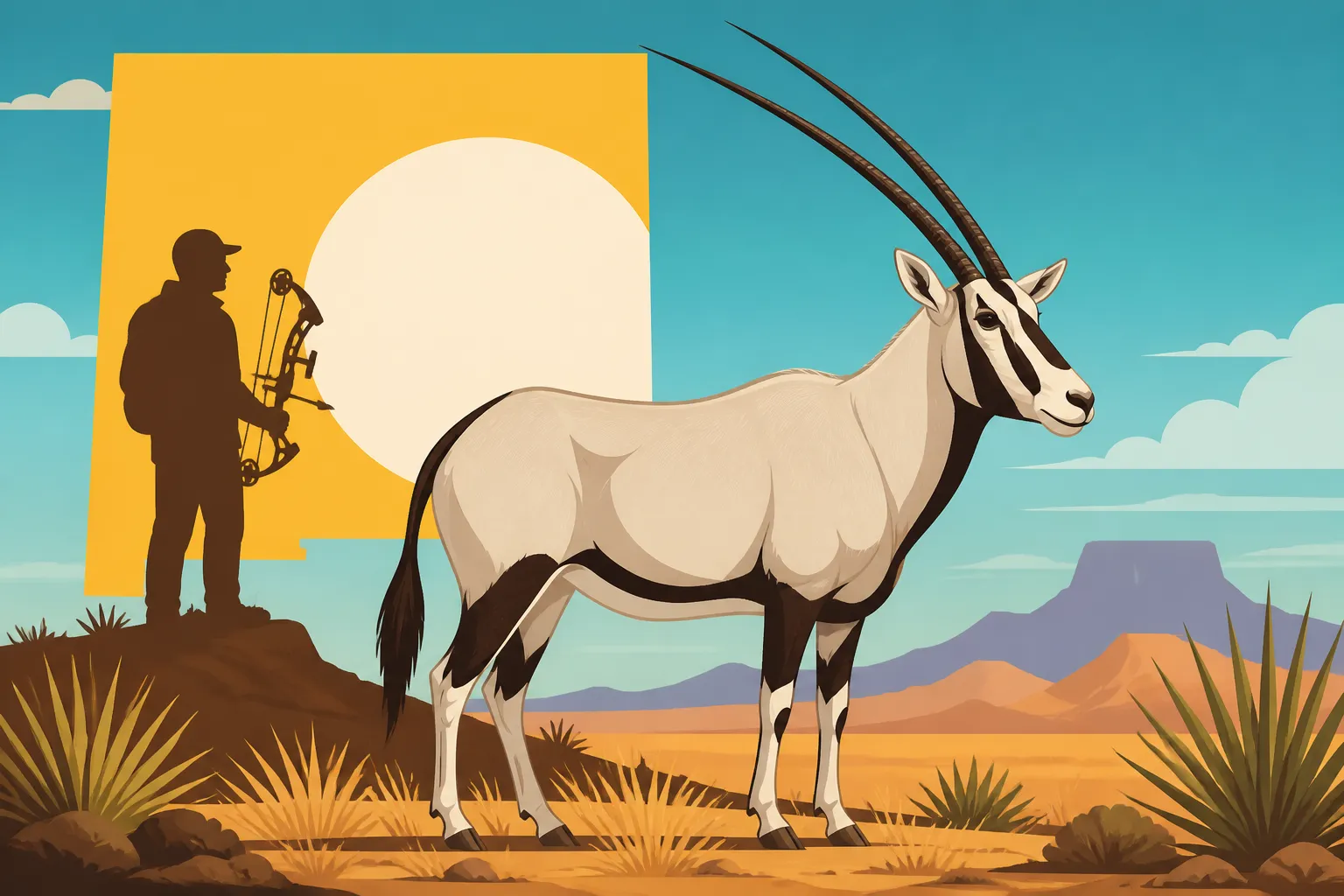
A mature oryx bull is a truly substantial animal. Imagine something with the robust, muscled shoulders of a domestic bull, but with the sleek, almost aristocratic lines of an antelope. They stand surprisingly tall at the shoulder, giving them an imposing silhouette against the open New Mexico sky. When you're out there on the range, glassing a distant herd, the sheer mass of a dominant bull is usually the first thing that catches your eye, even before you can make out horn detail.
Harvesting an animal of this size is a serious undertaking. If you've ever dealt with a large elk or a hefty mule deer, prepare for a step up. Their density and muscle mass mean that quartering and packing one out, especially if you're a long way from a vehicle, is a significant physical challenge. It's not just about getting it down, it's about getting it out. The arid, often warm conditions of the desert can add another layer of urgency to the field dressing process.
Interestingly, despite living in what can seem like a barren landscape, New Mexico's oryx populations thrive, particularly in areas like the White Sands Missile Range. Their unique physiology allows them to conserve water incredibly efficiently and utilize sparse forage effectively. This adaptation, coupled with careful management, often allows animals to reach their full genetic potential in terms of body size and overall health, contributing to their impressive stature.
Visual Indicators of Maturity and Size in the Field
Beyond the sheer scale, there are specific visual cues that keen-eyed hunters look for to identify a mature bull. It's more than just the horns; the entire animal tells a story of age and dominance. A truly big bull will have a remarkably thick, muscled neck, often much heavier than that of a cow or younger bull. Their chest will appear deep and broad, giving them a barrel-chested appearance. This overall body mass is a key indicator, suggesting years of growth and prime physical condition.
Their coat, while generally striking in its black and white contrasts, can also offer subtle hints. As bulls age, some of their black markings, especially on the legs and face, can become more pronounced and defined, though this is a less reliable indicator than overall body mass and horn development. The goal is to avoid mistaking a long-horned cow for a true trophy bull, which brings us to the importance of studying those horns closely.
It’s a common frustration that distance and the vastness of the landscape can play tricks on your eyes. What looks huge from a mile away through a spotting scope can shrink considerably as you close the distance. This is why patience and careful observation are paramount. You might spot an animal and think "that's the one," only to spend another hour glassing it, hoping for a different angle or a better look, and realizing it's a younger bull or a cow.
Decoding Oryx Horns: The True Measure of a Trophy Bull
While the sheer body size of an oryx is impressive, it's their formidable, rapier-straight horns that truly captivate hunters and represent the ultimate trophy. These aren't antlers shed yearly; they are permanent structures, growing throughout the animal's life.
Typical Lengths and Circumference for Trophy Bulls
When hunters talk about "trophy" oryx horns, they're looking for length, yes, but also density, straightness, and a robust basal circumference. A truly impressive bull will carry horns that are remarkably long, often reaching well past typical expectations for other antelope species. The ideal is a pair of horns that are nearly perfectly straight, with minimal damage or chips, and possessing a noticeable thickness at the base where they emerge from the skull.
These horns are typically black with distinct white or light-colored rings that indicate annual growth. These rings are fascinating to observe and contribute to the unique aesthetic of an oryx trophy. The more prominent and consistent these rings are, the more experienced a hunter can become in estimating age and past growth conditions. While specific measurements are best taken after harvest, seasoned hunters learn to eyeball these characteristics in the field, making crucial split-second decisions.
Many aspiring oryx hunters consult resources to understand what constitutes a truly exceptional set of horns. Platforms like GoHunt often compile harvest data or feature discussions and photographs from successful hunts, which can be an invaluable way for you to familiarize yourself with the range of horn sizes. Reviewing these resources helps calibrate your expectations and gives you a visual library of what to look for when your tag finally comes around. For a general overview of the species, you might find "Oryx Is New Mexico's Strangest Big Game Animal" a helpful read.
Distinguishing Bull Horns from Cow Horns
This is where the rubber meets the road for many oryx hunters, because both sexes of oryx possess horns, and both can grow quite long. However, there are crucial distinctions to make. Generally speaking, a bull's horns will be noticeably thicker and heavier at the base. They tend to be straighter and more robust in their overall appearance. Think of them as stout spears.
Cow horns, while often impressive in their length, typically have a thinner base and a more slender profile throughout their length. Sometimes they might show a bit more curve or slight deviation from a perfectly straight line than a bull's. It's a subtle difference that requires careful glassing and a trained eye, but once you've seen a few, the distinction becomes clearer. Many hunters rely on tools like those found on GoHunt to compare visual examples of bull and cow horns to hone their field judging skills before a hunt. If you're wondering more about this, check out "Do Both Oryx Sexes Carry Horns?".
Making the correct identification is paramount, especially if you're holding a bull-only tag. A rushed decision could lead to disappointment. Always take your time, observe the animal from multiple angles if possible, and scrutinize both the body structure and horn characteristics.
Environmental and Genetic Influences on Horn Development
Just like antlers on a deer or elk, oryx horn growth is heavily influenced by a combination of factors: age, nutrition, and genetics. A bull that lives in an area with consistent access to high-quality forage throughout its life is more likely to grow impressive horns than one in a perpetually struggling habitat. The unique environment of New Mexico, particularly within managed areas like the White Sands Missile Range, has allowed these animals to flourish and often reach their maximum potential.
The successful introduction of oryx to New Mexico, as detailed in "How Oryx Were Introduced to New Mexico", speaks volumes about how well adapted they are to this arid landscape. On the White Sands Missile Range, where populations are carefully monitored and hunting is regulated, animals often have optimal conditions to reach maturity and develop those massive horns. You can learn more about this specific population in "Oryx on White Sands Missile Range". The combination of strong genetics from the original introductions and effective habitat management contributes directly to the impressive size of many New Mexico oryx bulls.
Hunting Considerations and Field Judging Techniques
Hunting oryx in New Mexico is an experience unlike almost any other, largely due to the unique animals themselves and the vast, often featureless, terrain they inhabit. Field judging these impressive animals, especially from a distance, presents its own set of challenges.
The Challenges of Field Judging in Open Country
The open, expansive landscapes where oryx roam, from the vast plains to the rolling hills, can be incredibly deceptive. Without trees or prominent terrain features to provide scale, estimating distance and judging the true size of an animal becomes an art form. Heat shimmer, a common occurrence in the desert, further blurs the lines and distorts images through your optics, making precise identification even harder. This is a common point of frustration for hunters who are used to timber or more broken country.
This optical illusion often means that what looks like a monumental bull through the binos at first light, might appear slightly less grand as the sun climbs and the heat haze intensifies. This is why having top-tier optics isn't just a luxury; it's practically a necessity. A high-quality spotting scope is crucial for those long-range evaluations, allowing you to pick apart details that binoculars alone might miss. For those looking to upgrade, understanding "Optics Power for New Mexico's Open Country" and "Spotting Scope Power for Open Country" can make a huge difference.
Practical Tips for Estimating Horn Length and Body Size
So, how do you overcome these challenges? Patience, as always, is key. When you spot an oryx, resist the urge to immediately make a call. Instead, settle in and observe. Look for that heavy neck, the deep chest, and the overall powerful build we discussed earlier. When it comes to horns, try to compare their length to the animal's ear or head length, if it's close enough. While not always perfect, these provide a consistent reference point.
Look for the horns to appear thick from the base all the way up, with little taper until the very tip. If you can count distinct rings, note how many. The more uniform and robust the horns appear, the better. It also helps to watch the animal move; a mature bull often carries itself with a more deliberate, heavy gait. Many hunters find that reviewing videos and photos of known trophy animals before their hunt, perhaps through resources like GoHunt, helps them internalize these visual cues, making field identification quicker and more accurate. For a sense of the hunt itself, "How an Oryx Hunt Actually Runs" offers good insights.
The Impact of Hunt Type on Size Expectations
It's also worth noting that the specific type of oryx hunt you draw can subtly influence the average size of animals you might encounter, though impressive individuals can be found anywhere. For instance, hunts on the White Sands Missile Range are often highly regulated, and these controlled conditions can sometimes allow animals to reach older age classes and therefore larger sizes. However, off-range populations, discussed in "Off-Range Oryx Herds in New Mexico," also produce magnificent bulls, often in more challenging and rugged terrain.
No matter the hunt type, the goal remains the same: to find a mature, representative animal. The draw odds for these tags can be tough, as explored in "New Mexico Oryx Draw Odds," and the hunt itself is an adventure. Whether it’s a coveted White Sands tag, which can be short and intense, as explained in "Why a White Sands Oryx Season Lasts Three Days," or an off-range opportunity, understanding what to look for will maximize your chances of a successful and memorable hunt.
Here's a quick comparison of general characteristics between a mature oryx bull and cow:
| Characteristic | Mature Oryx Bull | Mature Oryx Cow |
|---|---|---|
| Body Size & Build | Larger, heavier, thick neck, deep chest, muscular shoulders | Smaller, more slender, lighter build, less muscled neck |
| Horn Base Thickness | Noticeably thicker, heavier base | Thinner base |
| Horn Straightness | Often straighter, more robust overall | Can show more subtle curves or a slightly more delicate appearance |
| Horn Length | Can achieve impressive lengths, often appearing very long relative to body | Can also be very long, sometimes rivaling bulls in length, but with less mass |
| Overall Impression | Powerful, dominant, substantial | Graceful, agile, lighter |
Ultimately, hunting a New Mexico oryx bull is an adventure that requires preparation, patience, and a keen eye. Understanding the nuances of their body size and horn characteristics will not only improve your chances of a successful harvest but will deepen your appreciation for these magnificent desert dwellers.
Disclaimer
This article is for general informational purposes only and does not constitute professional advice. Laws, prices and regulations vary by location and change over time. Consult a qualified professional for guidance on your specific situation.