Coues Hunting in the Bootheel Ranges
Hunting Coues deer in New Mexico's rugged Bootheel region is a unique challenge that tests even the most seasoned hunters. These "grey ghosts" are notoriously elusive, blending seamlessly into their harsh desert and mountain habitats, leaving many hunters frustrated by their uncanny ability to disappear. This guide dives deep into the specific strategies and mindset you'll need to successfully pursue Coues deer in the remote, broken country of the Bootheel.
Understanding the Allure of New Mexico's Bootheel Coues Deer
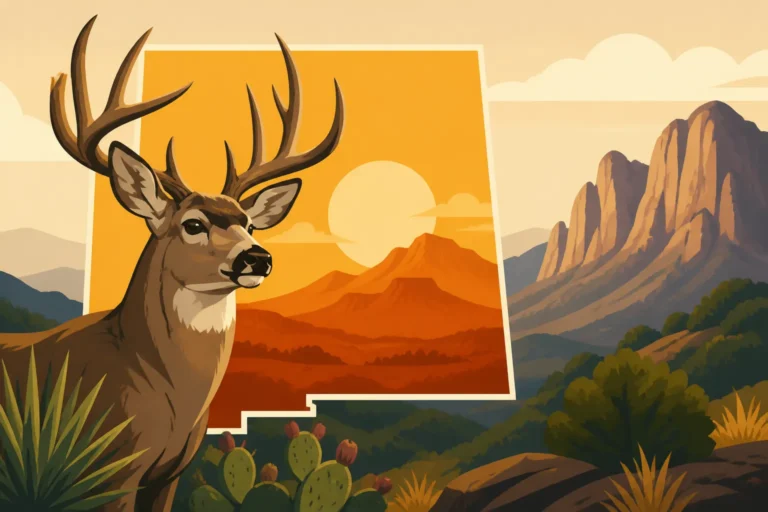
The Bootheel, stretching down into the southwestern corner of New Mexico, isn't your typical elk timber or high-country mule deer haunt. It's a land of sharp, volcanic peaks, vast desert flats, and a seemingly endless maze of arroyos and canyons. This is the domain of the Coues deer, a smaller, tougher subspecies of whitetail that thrives where other deer might struggle. Many hunters come here not just for the tag, but for the sheer difficulty and beauty of the hunt itself. It’s a true test of grit and patience.
Why the Bootheel is Unique for Coues
What truly sets the Bootheel apart for Coues deer isn't just the sheer number of animals, but the quality of the hunting experience. This is remote country. We're talking about areas that see far less pressure than many of the state's more accessible units. The terrain demands physical fitness and a willingness to get away from roads, which automatically weeds out a lot of the casual hunters. The "mountains" here are often more like broken rimrock and steep, brushy hillsides, making every stalk a strategic puzzle.
Think about the extreme temperature swings, the sharp rocks that test your footwear, and the limited water sources that dictate both deer movement and your own hydration strategy. This isn't a place where you're going to stumble upon a herd of deer in an open meadow. You'll earn every sighting, and every opportunity will feel like a hard-won victory. This uniqueness is precisely what draws many a dedicated hunter to endure the challenges of this demanding landscape.
The Elusive Nature of the "Grey Ghost"
Coues deer earned their nickname, the "grey ghost," for a reason that quickly becomes apparent to anyone who tries to hunt them. Their coloring, a subtle blend of grey and tan, allows them to vanish into the background of sun-drenched rocks and cholla cactus with unbelievable ease. You can be looking directly at a deer, turn your head for a second, and when you look back, it’s simply gone. They don't always bound away like a mule deer; often, they melt into the shadows, using every fold in the terrain, every mesquite bush, to become invisible.
Their habitat preferences contribute to this elusiveness. Coues deer are masters of the brush, preferring to stay hidden within the thick cover of oak brush, juniper, and various desert shrubs. They'll often bed on north-facing slopes to escape the brutal midday sun, always with an escape route planned. Understanding their natural inclination to evade detection is the first step in devising a successful hunting strategy in this environment. It's about outsmarting them, not outrunning them.
Essential Gear and Scouting for Bootheel Coues
Success in Coues country hinges on proper preparation and the right tools. This isn't a game of luck; it's a game of observation, patience, and precise execution. Without exceptional optics and a solid understanding of the terrain before you even set foot in it, you're fighting an uphill battle.
Optics: Your Best Friend in Coues Country
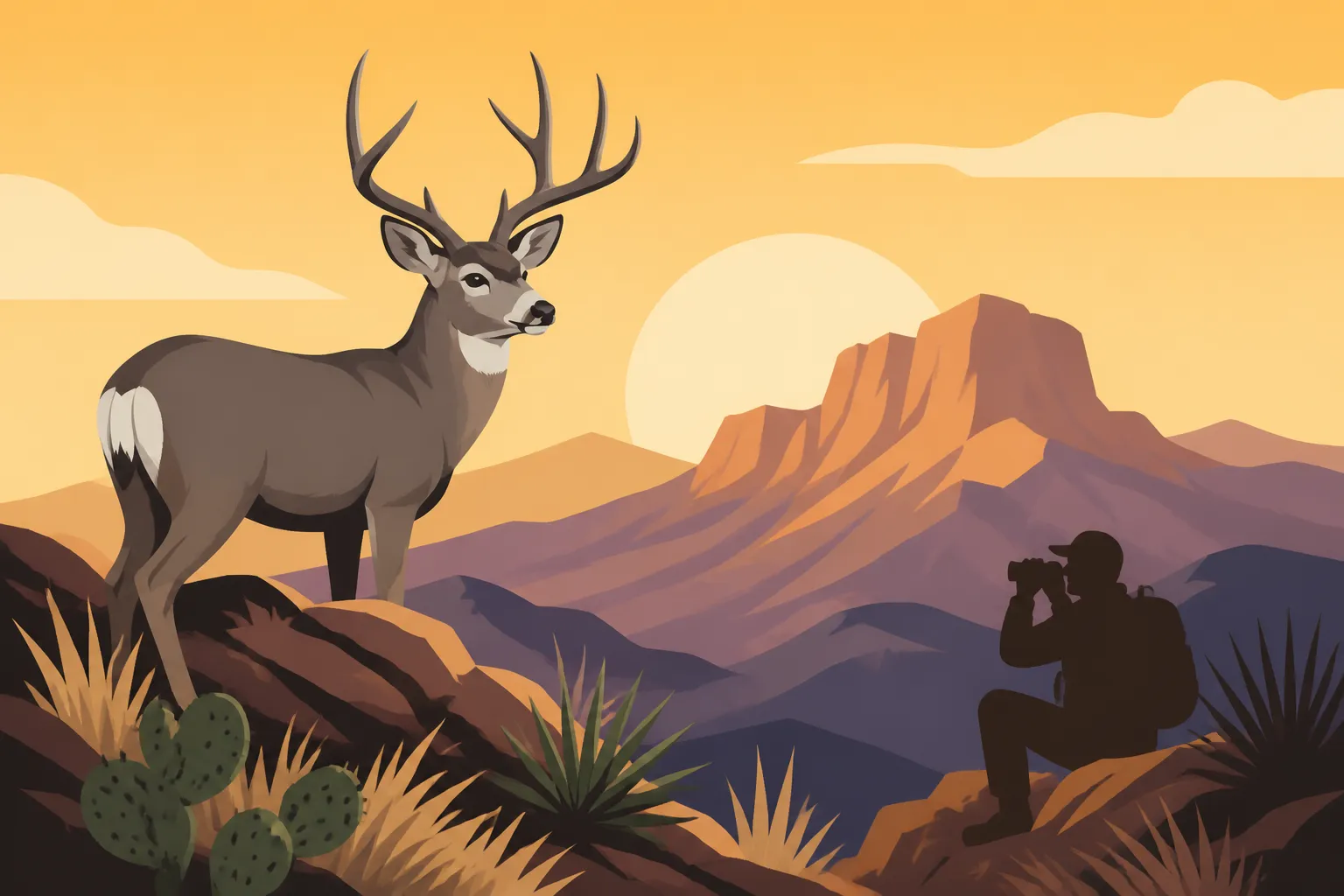
If there's one piece of gear you cannot compromise on when hunting Coues deer in the Bootheel, it's your optics. These deer are small, and the country is vast and broken. You'll spend 90% of your hunt behind glass, meticulously picking apart every hillside, shadow line, and clump of brush. A good pair of 10x or 12x binoculars with crisp, clear glass is non-negotiable for all-day viewing. But to really zoom in and confirm what you're seeing, a high-quality spotting scope (20-60x or 25-75x) mounted on a sturdy tripod is absolutely essential.
Effective glassing means breaking down the terrain into manageable sections. Start at the top of a ridge or mountain and work your way down, moving your optics slowly, inch by excruciating inch. Look for horizontal lines, the flick of an ear, a patch of hide that just doesn't quite match the rock. Don't just scan; truly grid glass the area. This method of Grid Glassing a Basin Without Missing Bucks can make all the difference in picking out a bedded deer. You'll spot deer that other hunters simply walk past because they aren't dedicating enough time and quality glass to the task.
E-Scouting and Boots-on-the-Ground Preparation
Before you ever pack your bags, your hunt for Bootheel Coues begins at home with detailed e-scouting. Tools like GoHunt offer incredible satellite imagery, topographic maps, and public/private land overlays that are invaluable for understanding your chosen unit. Start by identifying potential glassing knobs that offer expansive views of drainages, canyons, and brushy hillsides. Look for north-facing slopes, saddles, and benches where deer might travel or bed. Pay close attention to water sources, especially during dry periods, as these can be magnets for all desert game.
Once you've identified key areas from your computer, the next crucial step is E-Scouting a New Mexico Unit Before the Season, followed by some boots-on-the-ground scouting if possible. There's simply no substitute for walking the actual terrain, understanding how thermals move, identifying actual deer trails, and confirming your glassing positions. Even if you can't scout weeks ahead, arriving a day or two early to familiarize yourself with the immediate area can dramatically increase your odds. Remember, in this country, knowing where you're going and what to expect underfoot is half the battle.
Stalking Tactics and Shot Placement in Rugged Terrain
Once you've spotted your "grey ghost," the real test begins: the stalk. Unlike hunting in dense timber where close encounters are common, Coues hunting often involves long-range observations followed by arduous, tactical approaches. The terrain is unforgiving, and the deer are hyper-aware, meaning every step of your stalk needs to be calculated.
The Art of the Spot-and-Stalk
The spot-and-stalk method is king for Coues deer in the Bootheel. It typically unfolds in several critical phases. First, the spot: patiently picking out the deer with your optics. Second, the evaluation: assessing the deer's size (you'll need to develop an eye for Judging a Coues Buck in Southern New Mexico), its exact location, wind direction, and potential obstacles. Is it bedded? Feeding? Which direction is it looking? Third, the plan: mapping out your route to get within shooting range, considering cover, wind, and elevation changes.
Finally, the stalk itself. This is where most hunts are won or lost. Move slowly, deliberately, using every rock, bush, and fold in the terrain for concealment. Pay obsessive attention to the wind direction, which can swirl unexpectedly in canyons and broken country; learning to navigate these shifts is crucial when Playing Thermals on a Canyon Stalk. If the deer is bedded, be prepared to wait it out. Sometimes a multi-hour stalk is necessary to get into position, and patience is your most valuable asset. The "still hunting" technique, moving slowly through the brush, can also be effective in certain areas, particularly during the middle of the day when deer might be moving to or from bedding areas.
Making the Shot Count on a Small Target
Coues deer are small animals, often much smaller than hunters accustomed to Eastern whitetails or Western mule deer expect. This means your margin for error on a shot is significantly reduced. Shot placement becomes even more critical. Aim for the vital triangle just behind the shoulder, slightly lower than you might aim on a larger deer to account for their compact anatomy. Practice shooting from various field positions – kneeling, sitting, prone over your pack, or with shooting sticks – because you'll rarely get a perfect bench rest shot in this country.
Knowing your rifle and its capabilities is paramount. A crisp trigger, consistent ammunition, and a solid zero are non-negotiable. For the distances often encountered, understanding your Rifle Zero Distance for Canyon Country and how bullet drop affects your shot is essential. Carrying a rangefinder is a must, as judging distances accurately in broken, open country is notoriously difficult. A steady rest, whether from a bipod, shooting sticks, or a strategically placed backpack, will greatly improve your accuracy.
Seasons, Regulations, and Managing Expectations
Hunting Coues deer in New Mexico requires a good grasp of the state's regulations, which can differ from other deer species and regions. It also demands a realistic outlook on success, as these hunts are rarely easy.
Navigating New Mexico Coues Seasons
New Mexico offers various Coues deer seasons, typically including archery and rifle hunts. Archery seasons often fall in late August or early September, before the peak rut, and again later in the year. Rifle seasons usually occur later in the fall or early winter. While there's certainly an archery challenge, many hunters opt for rifle seasons due to the wide-open country and the often long distances involved. The weather during these later seasons can be cooler, which is a blessing in the desert.
It's vital to check the current New Mexico hunting regulations booklet for specific dates, unit boundaries, and tag allocations. The draw system can be competitive, so understanding how to apply and choosing units with reasonable odds is important. The peak of the Coues rut in New Mexico typically falls in December and January. Understanding When the Coues Rut Peaks can help you time your hunt for increased deer activity, although it also often means colder weather and potentially more demanding conditions.
Tagging and Field Care in Remote Locations
Once you've successfully harvested a Coues deer, the work isn't over. You'll need to immediately tag your animal according to New Mexico Game and Fish regulations. This usually means attaching your physical tag to the deer before moving it. Since you're likely in remote country, often miles from any road, rapid field dressing is crucial to preserve the meat. Desert temperatures can be surprisingly warm, even in winter, so quick cooling of the carcass is essential. This is where lessons on Field Dressing in Desert Heat become truly valuable.
Be prepared to pack your animal out, either whole (if it's a short distance and small deer) or quartered. This means having a sturdy pack frame and game bags on hand. Make sure you've brought enough water, not just for yourself, but potentially for rinsing blood from the meat and for the journey back to your vehicle. Double-check your license and tag requirements beforehand, perhaps using a resource like GoHunt to cross-reference current rules and avoid any issues. The goal is to bring home both a trophy and quality meat, and proper field care is the bridge between the two.
Coues Deer Gear Essentials
Here's a quick look at some essential gear you'll want to have when pursuing Coues deer in the Bootheel. This isn't exhaustive, but it covers the non-negotiables.
| Gear Category | Essential Items | Why It's Important |
|---|---|---|
| Optics | 10x-12x Binoculars, Spotting Scope (20-60x or more), Sturdy Tripod | Critical for spotting small, camouflaged deer in vast, broken terrain. |
| Navigation | GPS device (e.g., Garmin), Satellite Communicator, Topographic Maps, Compass, OnX Maps, GoHunt App |
Remote country means no cell service. Essential for safety and staying on track. |
| Footwear | Sturdy, broken-in hiking boots (mid-height to full), gaiters | Protection from sharp rocks, cactus, and long miles over uneven ground. Gaiters keep debris out. |
| Water | Hydration bladder, extra water bottles, purification tablets/filter | Desert environment, critical to carry sufficient Water You Must Carry on a Desert Day Hunt. |
| Clothing | Layering system (moisture-wicking base, insulating mid-layer, wind/waterproof outer shell), wide-brimmed hat | Adapt to extreme temperature swings, sun protection. |
| Shooting Aids | Shooting sticks/bipod, rangefinder | Stabilize your shot on small targets at varying distances. |
| Survival/Safety | First-aid kit, headlamp, fire starter, knife, signaling mirror, emergency blanket | Remote hunting means self-reliance; prepare for the unexpected. |
| Pack | Day pack for essentials, larger pack frame for meat extraction | Comfortably carry daily gear; essential for packing out your harvest. |
Disclaimer
This article is for general informational purposes only and does not constitute professional advice. Laws, prices and regulations vary by location and change over time. Consult a qualified professional for guidance on your specific situation.