Why Elk Numbers Vary Across the Gila
It's a common experience for hunters, isn't it? You might have a tag for a vast, renowned area like the Gila National Forest in New Mexico, brimming with the promise of elk, only to find some pockets are buzzing with activity while others feel eerily empty. This isn't just bad luck; it's a reflection of the intricate web of factors that dictate where elk choose to live, feed, and breed. This guide will explore the various reasons why elk numbers can fluctuate dramatically across different parts of the Gila, helping you understand these dynamics for more informed hunting decisions.
Understanding the Gila's Diverse Ecosystem
The Gila National Forest isn't a monolithic block of wilderness; it's a sprawling, incredibly diverse ecosystem ranging from high mountain peaks to deep canyons, dense timber to open parks. This varied landscape inherently creates a patchwork of habitat suitability, meaning that some areas are simply better at supporting elk than others. It's like a giant puzzle, and elk are constantly seeking the pieces that offer the best combination of food, water, and security.
Elevation and Terrain as Key Drivers
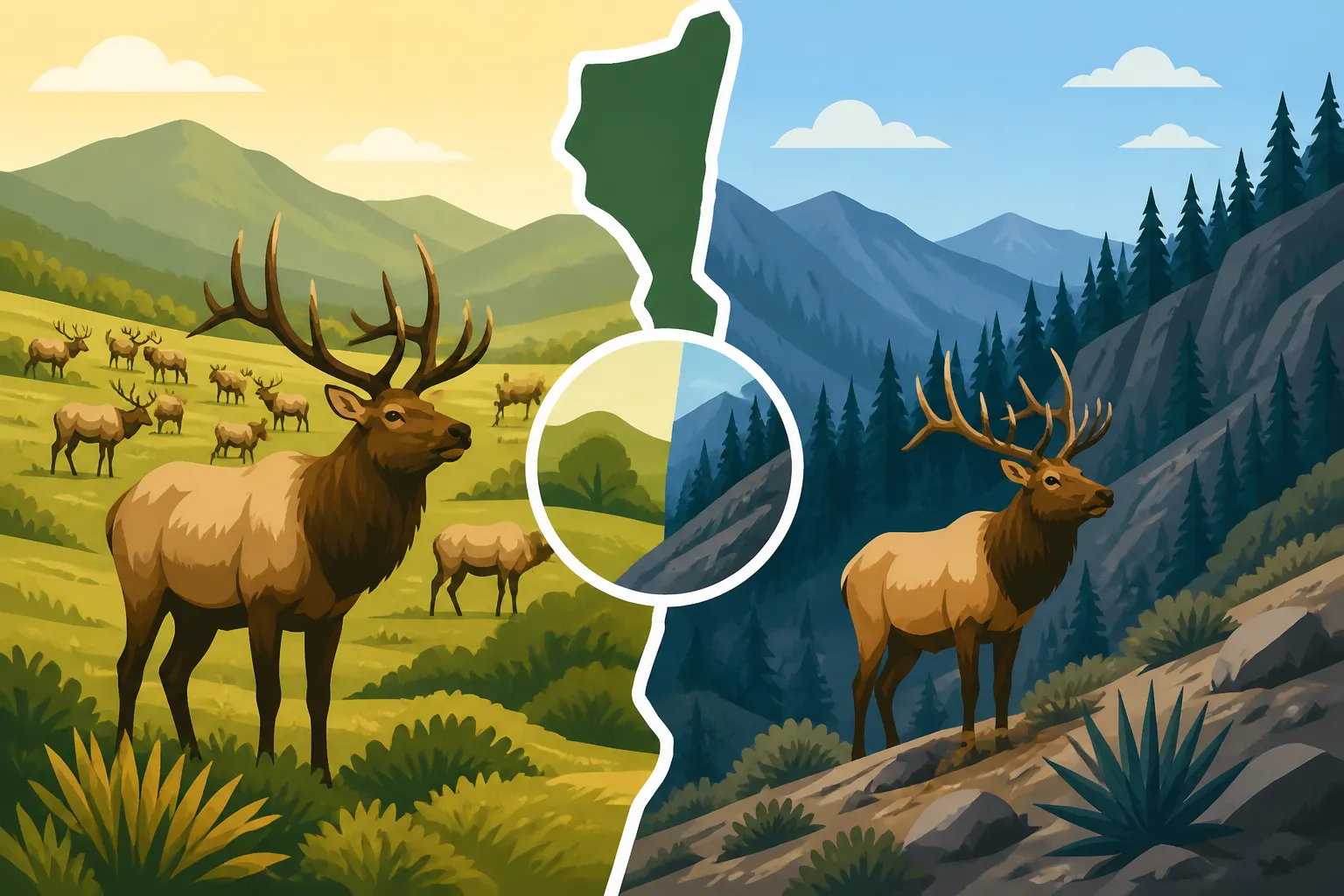
Within the Gila, elevation changes are dramatic, and with those changes come vastly different types of terrain and vegetation. You can go from arid desert foothills to lush riparian zones along a river, and then climb steeply into dense ponderosa pine or mixed conifer forests. Elk, being adaptable creatures, will utilize these different elevation bands throughout the year, but their densities will vary significantly based on what each offers at a given time. High-elevation meadows and timbered slopes might be magnets during the summer and early fall, providing abundant forage and cooler temperatures. However, as winter approaches and snow begins to accumulate, those same areas become much less hospitable, pushing elk down to lower elevations where forage is more accessible and temperatures are milder. This natural movement means that while an area might hold a lot of elk in September, it could be a ghost town by November. Hunting New Mexico From 4,000 Feet to 10,000 gives a good overview of this dynamic.
Canyon systems, characteristic of much of the Gila, also play a huge role. Deep, rugged canyons can act as natural highways for elk, providing cover and access to water, but they can also be difficult to traverse, pushing elk towards more accessible benches and parks within those canyons. The sheer ruggedness of some areas, while providing incredible sanctuary from human pressure, might not offer the consistent, high-quality forage necessary to support large, year-round populations, leading to more transient use.
The Critical Role of Water Sources
In an arid state like New Mexico, water is life, and that's especially true for large animals like elk. The distribution and reliability of water sources within the Gila are arguably one of the most significant factors influencing where elk concentrate. Perennial streams, springs, and even well-maintained stock tanks become crucial hubs, especially during dry periods or the warmer early seasons. An area with consistent, reliable water will almost always hold more elk than an equally vegetated area that lacks dependable hydration. Elk need to drink daily, and cows with calves are particularly reliant on proximate water sources.
Consider two seemingly similar canyon systems. One has a small, trickling spring at its head and a few seep tanks along its length. The other has only seasonal puddles that dry up after the monsoons. Even if the forage quality is comparable, the canyon with consistent water will attract and hold elk more reliably. Hunters who meticulously Finding Water in New Mexico's Dry Country understand this principle implicitly, knowing that focusing on these precious resources can significantly increase their chances. This isn't just about drinking; water also supports richer vegetation, creating a positive feedback loop for forage quality.
Habitat Quality and Forage Availability
Beyond just terrain and water, the actual quality and quantity of forage in different parts of the Gila directly impact elk numbers. Elk are grazers and browsers, and they need a consistent supply of nutritious food to thrive, especially cows raising calves and bulls trying to put on weight for the rut and winter. Not all vegetation is created equal, and not all parts of the Gila offer the same banquet.
Impact of Vegetation Type and Density
The Gila's diverse vegetation ranges from pinyon-juniper woodlands at lower elevations to ponderosa pine, mixed conifer, and even spruce-fir forests at higher altitudes. Each of these zones offers different forage options. For instance, open parks and meadows interspersed within ponderosa forests often provide excellent grasses and forbs, which are prime elk food. Conversely, very dense, unbroken stands of thick timber, while offering great cover, might have a sparse understory, making them less attractive as primary feeding grounds. Elk will use these dense areas for bedding and security but often move to more open areas to feed.
Areas that have experienced wildfires, depending on the intensity and recovery stage, can also become prime elk habitat. Post-fire landscapes often see a flush of new growth – grasses, forbs, and shrubs – that provide excellent forage for several years, temporarily shifting elk concentrations to these rejuvenated zones. This dynamic means that what was once a prime spot might become less productive over time, and a previously overlooked area could become an elk hotspot after a natural event. How Wildfire Changes Gila Elk Habitat delves deeper into this phenomenon.
Seasonal Forage Shifts and Nutritional Needs
Elk's nutritional needs change throughout the year, driving them to seek out different food sources. In spring and early summer, they need highly digestible, protein-rich green-up to recover from winter and support lactation for cows. By late summer and fall, they're focused on putting on fat reserves, so they'll seek out areas with abundant, energy-dense forage. This means an area rich in succulent forbs in June might not be their preferred feeding ground in October, when they might favor browse or more mature grasses.
This seasonal shift means that "elk country" is a moving target. A high-elevation basin that's lush with forage in August might be completely frozen and inaccessible in December, forcing elk to move to south-facing slopes at lower elevations where snow melts faster and browse is available. Understanding these seasonal shifts, often through careful E-Scouting a New Mexico Unit Before the Season and field observation, is key to predicting where elk numbers might be higher during your specific hunt dates. Tools like GoHunt can provide valuable insights into habitat types and help cross-reference with historical harvest data to identify patterns in forage use.
Human Pressure and Sanctuary
Elk are intelligent animals, and they quickly learn where they are safe and where they are not. Human activity, particularly hunting pressure, has a profound impact on their distribution, often driving them into harder-to-reach, more remote areas, even if those areas aren't always the most ideal in terms of forage.
Road Access and Wilderness Areas
The Gila is crisscrossed with forest roads, some maintained, some rugged two-tracks. Areas with easy road access, while convenient for hunters, tend to have lower elk densities during hunting season because elk move away from the disturbance. They learn to associate vehicle noise and human scent with danger. Conversely, true wilderness areas, or roadless blocks that require significant effort to access, often hold higher numbers of undisturbed elk. These areas act as sanctuaries where elk can live out their lives with less pressure. Getting Into New Mexico's Gila National Forest means understanding the trade-off between accessibility and animal density.
Hunters willing to put in the effort for a backcountry hunt will often find better success in these more remote zones. Even within areas with roads, elk will often retreat into the densest timber adjacent to roads, or drop into deep canyons that are difficult for hunters to navigate, only emerging at night or during very quiet periods. This means that two adjacent sections of land might have very different elk numbers simply because one is next to a frequently used road and the other is a half-mile walk through steep terrain.
Hunting Pressure and Elk Behavior
The sheer volume of hunters in certain units or popular areas can drastically alter elk distribution. On opening weekend, an area might be crawling with elk, but after a few days of heavy hunting pressure, those elk will often disperse, becoming more nocturnal, and seeking out the thickest cover they can find. This "educated elk" phenomenon is very real in the Gila. The same pressure affects different sexes of elk differently. Mature bulls, having survived multiple hunting seasons, are often the wariest, and will retreat to the deepest, most inaccessible parts of their range, leading to lower densities of trophy animals in easily hunted areas.
It’s not just about direct encounters; elk can sense human presence through scent and sound from a considerable distance. Even if you don't directly spook an animal, your presence in a general area contributes to the overall pressure. This often means that areas that were productive early in the season, or during years with fewer tags, might see drastically reduced elk numbers during later, more pressured hunts. This is a crucial factor to consider when planning your hunt and using resources like GoHunt to look at historical pressure maps or unit analysis.
Environmental Factors and Population Dynamics
Beyond immediate habitat and human influence, broader environmental factors and the inherent dynamics of the elk population itself play a long-term role in determining elk numbers across the Gila. These are often regional or even statewide issues that impact herd health and distribution.
Drought Cycles and Their Long-Term Effects
New Mexico is no stranger to drought, and prolonged dry periods can have devastating effects on elk populations and their distribution. Less rainfall means less forage, fewer reliable water sources, and overall poorer health for the herd. During severe droughts, elk numbers might decline across the board, but they will also concentrate more heavily around the few remaining reliable water sources and the lushest pockets of forage, abandoning areas that are simply too dry to support them.
The impact isn't just immediate. Chronic drought can lead to reduced calf survival rates, lower pregnancy rates in cows, and overall poorer antler growth in bulls, diminishing the long-term health and size of the herd. These effects can take years to recover from, even after rainfall returns. Hunters often notice this when comparing Why Fawn Ratios Predict Next Season or overall herd health over several years.
Disease and Predation
While less commonly discussed than habitat or pressure, disease outbreaks and predation can also influence local elk numbers. Chronic Wasting Disease (CWD), for example, is a concern in some areas and can lead to localized population declines. While the Gila hasn't seen widespread catastrophic disease outbreaks, it's always a factor wildlife managers monitor.
Predation by mountain lions and black bears is a natural part of the Gila ecosystem. While healthy elk herds can typically sustain a certain level of predation, localized concentrations of predators can put pressure on specific elk populations, particularly on calves. An area with a high density of lions might experience a slightly lower elk population, or at least a more scattered distribution as elk avoid known predator territories. Black Bear Density Across New Mexico and New Mexico Cougar Zones and Limits highlight the presence of these natural predators throughout the Gila.
Management Zones and Harvest Limits
Finally, how the New Mexico Department of Game and Fish manages the elk population in specific game units or zones can directly affect numbers. Harvest limits, tag allocations, and season structures are all designed to maintain healthy populations, but they also influence where and how many elk hunters encounter. For instance, some units might have more conservative tag numbers to allow for population growth or to promote trophy potential, leading to higher average elk numbers within those units compared to adjacent units with more liberal harvests.
The Gila is typically managed for robust elk populations, but nuances exist between units. Hunters often use tools like GoHunt to analyze New Mexico Elk Season Structure by Unit and harvest statistics, trying to decipher which management strategies lead to better hunting opportunities and, by extension, higher elk numbers in specific regions. It’s a constant balancing act between opportunity, herd health, and habitat capacity.
Conclusion
The variation in elk numbers across the Gila isn't random; it's a complex interplay of geography, ecology, human influence, and the dynamic nature of wildlife itself. From the distinct elevation bands and critical water sources to the ever-present pressure from hunters and the long-term effects of drought, every factor contributes to the patchwork of elk distribution. Understanding these dynamics arms you with the knowledge to look beyond the general reputation of the Gila and focus your efforts on the specific pockets of habitat most likely to hold elk during your hunt. It's about becoming a better observer, a more adaptable hunter, and a more knowledgeable steward of this incredible landscape.
Disclaimer
This article is for general informational purposes only and does not constitute professional advice. Laws, prices and regulations vary by location and change over time. Consult a qualified professional for guidance on your specific situation.