Does Applying With an Outfitter Improve Your Odds?
Anyone who has tried their hand at the New Mexico big game draw knows the deep ache of anticipation followed by the inevitable disappointment for most of us. You spend hours poring over hunt codes, dreaming of a Gila bull or a White Sands oryx, only to be met with that familiar "unsuccessful" message. It’s natural to wonder if there’s a secret handshake, an insider track, or some way to tip the scales in your favor. A common question that pops up is whether applying with an outfitter actually improves your odds of drawing that coveted New Mexico tag. This guide is going to peel back the layers on New Mexico's draw system, specifically looking at how the outfitter pool works and whether it can genuinely give you an edge.
Understanding New Mexico's Draw Pools
First, let's clear up a common misconception about how New Mexico allocates its precious big game tags. Unlike some states that might use a preference point or bonus point system, New Mexico operates on a pure lottery. What's absolutely crucial to understand is that the state doesn't just throw all applicants into one giant hat. Instead, it divides licenses into distinct pools, and each pool has its own unique set of draw odds. This is a fundamental concept that can be frustrating to grasp, especially when you feel like you're constantly coming up short.
The New Mexico Game and Fish Department slices up the pie into three primary allocations for most big game species. There's the largest piece, the resident pool, which typically gets the lion's share of tags. Then there’s a smaller, but very significant, outfitter pool, and finally, the smallest slice goes to the nonresident public draw pool. Each of these operates as a completely separate lottery. If you're a resident, you're competing against other residents. If you're a nonresident applying on your own, you're in that much smaller, highly competitive nonresident pool. It's like having three separate card games running simultaneously, and you can only sit at one table at a time. New Mexico Splits Every Hunt 84, 10 and 6 Percent is an essential read to truly grasp these divisions.
The 10 Percent Outfitter Allocation
Here's where the outfitter question really comes into play. New Mexico designates approximately ten percent of its total tags for the outfitter pool. This isn't a charity; it's a strategic move by the state to support its guiding industry and provide another avenue for hunters to access tags. When you apply through a licensed New Mexico outfitter, you're essentially entering a draw that is only for clients who have a valid, signed contract with one of these outfitters. You're not competing against the general resident public, nor are you in the notoriously tough nonresident general draw.
Imagine a hunt unit that has 100 elk tags available. Eighty-four of those tags typically go to New Mexico residents, ten go to the outfitter pool, and six go to nonresidents applying independently. If you're a nonresident, choosing to apply in the outfitter pool means you're no longer vying for those six tags against thousands of other nonresidents. Instead, you're competing for ten tags against a much smaller, albeit still competitive, group of outfitter clients. The theory, and often the reality, is that this smaller pool of applicants can lead to better statistical odds, especially for highly sought-after species or units. The 10 Percent New Mexico Outfitter Pool details this important distinction.
How the Outfitter Pool Changes Your Odds
So, does applying with an outfitter improve your odds? The direct answer is often yes, but it's crucial to understand why and that it's not a magic bullet. It's not because outfitters have some special pull or receive "preference points" that other applicants don't. It's purely a mathematical advantage derived from the smaller applicant pool.
Let's use a hypothetical scenario. Imagine a particular premium elk hunt in the Gila. In a given year, perhaps 5,000 residents apply for 84 tags, 1,500 nonresidents apply for 6 tags, and only 300 outfitter clients apply for 10 tags. Clearly, in this example, the odds of drawing one of those 10 outfitter tags (1 in 30) are significantly better than drawing one of the 6 nonresident tags (1 in 250). The less saturated the outfitter pool is for a particular hunt code, the more pronounced this statistical advantage becomes.
However, it's not a uniform improvement across all hunt codes. For some less popular hunts or species, the outfitter pool might be proportionally more competitive if fewer tags are available, or if a specific outfitter is exceptionally popular for that area. You always have to look at the numbers. But generally speaking, by removing yourself from the massive resident or nonresident public draw pools and entering a designated outfitter pool, you are statistically more likely to draw a tag. It's about drawing against fewer people for a dedicated allocation of tags. This specific mechanism is what allows Why the New Mexico Outfitter Pool Changes Your Odds to explain the potential benefits.
The Mechanics of Applying with an Outfitter
Venturing into the outfitter draw isn't as simple as just checking a box. There are specific, non-negotiable requirements that the New Mexico Department of Game and Fish (NMDGF) enforces to ensure the integrity of the process. You can't just list a friend who happens to be a guide, or put down an outfitter's name speculatively. This is a legally binding relationship with specific duties and responsibilities, both for you and the outfitter. Understanding these mechanics is vital before you even consider this route.
The core of it all lies in a signed contract. Without a legitimate, pre-existing agreement, your application simply won't be considered for the outfitter pool. This is a critical step that often catches first-time applicants by surprise. Beyond the contract, there are forms to fill out correctly, and a clear understanding of the outfitter's role in your hunt is paramount, especially the two-day accompaniment rule.
The Signed Contract: Your Ticket to the Pool
Before you even log into the NMDGF application portal, you must have a signed contract with a registered New Mexico outfitter. This isn't a casual verbal agreement; it's a formal, written document detailing the services the outfitter will provide, the hunt dates, the species, the unit, and the agreed-upon fees. This contract must be in place before the application deadline. The state uses this contract as proof of your commitment to a guided hunt. They want to see that you're genuinely engaging an outfitter, not just trying to exploit a loophole to get a better draw chance.
When you complete your online application, there will be a specific field where you enter your outfitter's license number. This number links your application directly to their business and the outfitter pool. If you omit this, or if you don't have a valid contract on file that can be verified, your application for the outfitter pool could be invalidated. It's crucial to ensure your chosen outfitter is licensed and in good standing. You can often vet outfitters through resources like BookYourHunt or GoHunt, which provide directories and sometimes reviews, helping you find reputable services. The New Mexico Guide-Client Contract Requirement is very explicit about this step.
What If You Don't Draw?
This is a common and very valid concern when you commit to a guided hunt, especially one that requires a significant deposit upfront. If you apply in the outfitter pool and are ultimately unsuccessful in the draw, what happens to your money?
Firstly, the application fee itself, which is a relatively small administrative charge to apply, is generally non-refundable across all New Mexico draw pools. That money is gone whether you draw or not. However, the much larger fee for the actual hunting license/tag is only charged if you are successful in the draw. So, if you don't draw, that substantial tag fee is never processed from your account. Refunds When You Fail to Draw in New Mexico explains this in detail.
Where it gets more complex is with your outfitter deposit. Most reputable outfitters require a deposit to secure your spot and cover their costs for assisting with the application process, scouting, and holding dates for you. If you don't draw, the terms regarding this deposit will be outlined in your signed contract. Some outfitters offer to roll your deposit over to the next year's application, allowing you to try again. Others might offer a partial refund, while some may retain a portion as a non-refundable booking fee. This is why reading the fine print of The Signed Guide-Client Contract New Mexico Requires before you sign is so incredibly important. Don't be afraid to ask direct questions about their refund and rebooking policies if you don't draw your desired tag.
Is the Outfitter Pool Always Better?
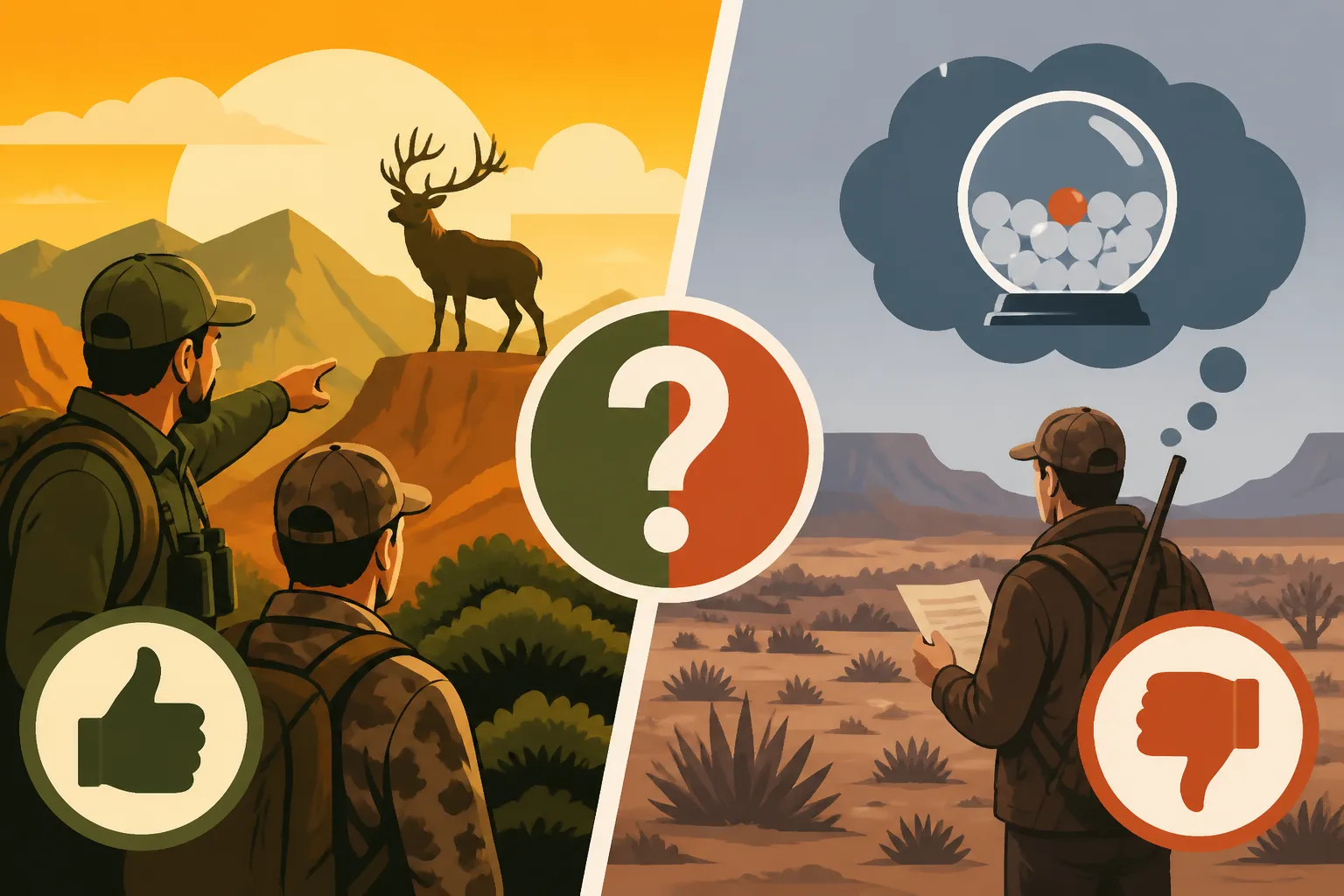
While the outfitter pool can offer better statistical odds for drawing a tag, it's not a universal truth nor a guaranteed path to success. The term "better odds" needs to be understood in context. It means you are drawing against a smaller number of applicants for a dedicated allocation of tags, but it doesn't mean every single hunt code will have drastically better odds in the outfitter pool compared to the nonresident general pool. In some very specific, highly desirable hunts, the outfitter pool itself might become quite saturated, diminishing the advantage.
Furthermore, New Mexico is renowned for its incredible big game, particularly trophy elk, and demand far outstrips supply across all pools. Even with "better odds" in the outfitter pool, you might still face a low percentage chance overall, especially for those truly once-in-a-lifetime hunts. It's a game of probabilities, and while you might shift the odds slightly in your favor, the lottery aspect always remains. Don't ever go into it thinking an outfitter application is a guarantee.
Analyzing Draw Statistics for the Outfitter Pool
The best way to truly assess whether the outfitter pool offers a tangible advantage for the specific hunt you're targeting is to meticulously review past draw statistics. The NMDGF publishes detailed draw results, usually broken down by resident, nonresident, and outfitter pools for each hunt code. This data is your most valuable tool.
When you look at these statistics, you'll want to compare the applicant-to-tag ratio for your chosen hunt code across the different pools. For example, if a resident pool shows 1,000 applicants for 10 tags (1:100), the nonresident public draw shows 500 applicants for 1 tag (1:500), and the outfitter pool shows 50 applicants for 1 tag (1:50), then yes, the outfitter pool clearly offers significantly better odds. However, if the numbers are closer, say 20 applicants for 1 tag in the nonresident pool versus 15 applicants for 1 tag in the outfitter pool, the difference might not be as dramatic. Checking New Mexico Draw Odds Before You Apply is a must-do homework assignment every year. Learn to decipher Reading New Mexico Hunt Draw Statistics to make the most informed decision possible for your application strategy.
Weighing the Costs Against the Odds
This is arguably the most significant factor to consider. Applying with an outfitter inherently means committing to a guided hunt, and guided hunts, especially for coveted species like elk or oryx in New Mexico, represent a substantial financial investment. While the draw odds might improve, you have to weigh that improvement against the cost.
A fully guided elk hunt in the Gila, for example, can run into many thousands of dollars. This cost covers the outfitter's expertise, logistics, food, lodging, horses, and often years of scouting. Even if you draw the tag, you're paying for the experience. For some hunters, this is exactly what they want – a hassle-free, expertly guided experience with improved odds. For others, particularly those on a tighter budget or who prefer a more DIY approach, the added cost might outweigh the perceived benefit of slightly better draw odds.
It's a personal decision, but it's one that should be made with a clear understanding of the financial commitment involved. Don't just focus on the draw odds; consider the entire hunting experience and its price tag. What a Guided New Mexico Elk Hunt Costs goes into much more detail on the financial side of things.
To help visualize the allocation and draw dynamic, here's a simple comparison:
| Feature | Resident Public Draw | Nonresident Public Draw | Outfitter Draw Pool (Nonresident & Resident) |
|---|---|---|---|
| Typical Tag Allocation | ~84% of available tags | ~6% of available tags | ~10% of available tags |
| Who Can Apply? | New Mexico residents only | Anyone (residents/nonresidents) | Clients with a signed outfitter contract |
| Competition Level | High for popular hunts, moderate for others | Very High (large applicant pool, few tags) | Potentially lower (smaller applicant pool, dedicated tags) |
| Draw Odds Impact | Baseline | Most difficult to draw | Can improve odds compared to nonresident public pool |
| Cost | Application fee + tag fee (if drawn) | Application fee + tag fee (if drawn) | Application fee + tag fee (if drawn) + outfitter fees/deposit |
| Requirements | Valid hunting license | Valid hunting license | Valid hunting license + signed outfitter contract + outfitter number on application |
In conclusion, the short answer to "Does applying with an outfitter improve your odds?" is generally yes, especially for nonresidents targeting highly competitive tags. This improvement stems from the fact that you're entering a smaller, dedicated draw pool (the 10% outfitter allocation) rather than the much larger and more saturated general public pools. However, it's not a free pass. It requires a significant financial commitment to a guided hunt and a formal contract with a registered outfitter. Always do your homework, crunch the numbers from past draw statistics, and weigh the potential improvement in odds against the overall cost and the kind of hunting experience you truly desire.
Disclaimer
This article is for general informational purposes only and does not constitute professional advice. Laws, prices and regulations vary by location and change over time. Consult a qualified professional for guidance on your specific situation.