What Preseason Scouting Reports Include
So, you’ve put down a deposit for a guided hunt in New Mexico, or maybe you’re just in the research phase, talking to various outfitters. One phrase that comes up often is "preseason scouting report." It sounds official, and it definitely should be helpful, but what does that actually entail? Many hunters feel a bit in the dark about what information they should expect from their outfitter before they arrive, wondering if it's just a quick rundown or a deeply researched document. This guide is here to shed some light on the typical, and indeed crucial, elements that a good preseason scouting report should include, helping you understand its value and giving you the confidence to ask the right questions to make sure you're as prepared as possible for your hunt.
The Foundational Elements: Maps, Access, and Topography
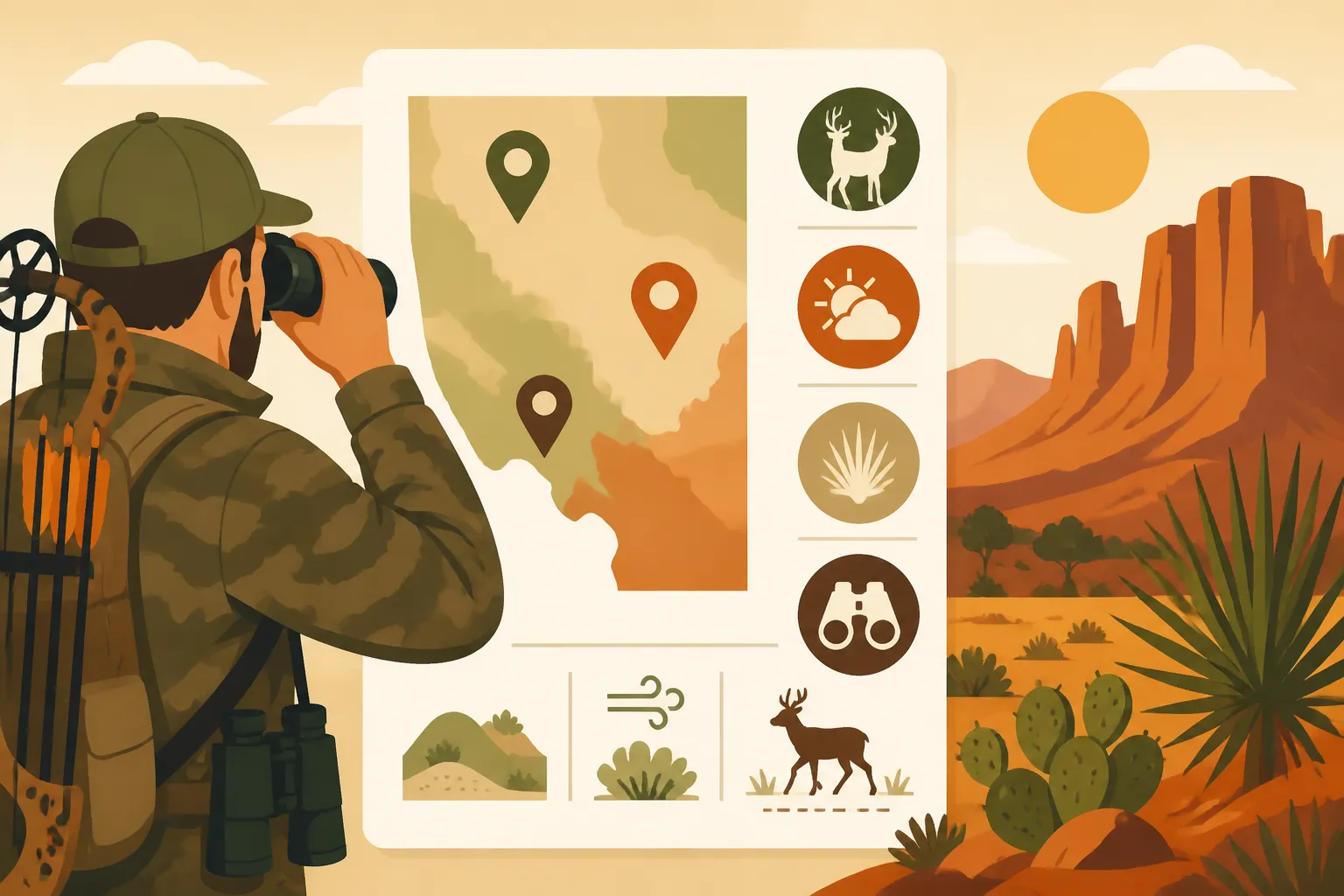
Before an outfitter can tell you where the biggest bull is bedding, they need to lay the groundwork of the hunting area itself. A solid preseason scouting report starts with a clear understanding of the geography, the lay of the land, and how you're going to move through it. This isn't just about looking at a satellite image; it's about boots-on-the-ground intelligence combined with detailed map analysis that goes far beyond what most DIY hunters can accomplish from home.
Detailed Terrain Analysis: Beyond the Satellite Image
Any reputable outfitter is going to provide you with an in-depth understanding of the terrain. This goes way beyond simply identifying mountains and valleys. They'll have studied topo maps and hiked the ground to point out specific benches, saddles, drainages, and ridge lines that might not be obvious on a flat map. For instance, in the Gila, understanding which side of a canyon catches the morning sun versus the afternoon shade can tell you a lot about where elk might be feeding or bedding at different times of the day. A good report will highlight these nuances, perhaps even including annotated maps or digital waypoints for key topographical features. It's about knowing where the natural funnels are, where game tends to cross, and where visibility is either excellent for glassing or completely broken for a close stalk. You might be interested in knowing about Hunting New Mexico From 4,000 Feet to 10,000 and how these varied elevations impact game movement.
They should detail the specific challenges the terrain presents: is it steep and rocky, making for difficult footing? Or is it more rolling ponderosa country with scattered oak brush? This information helps you physically prepare and select the right gear, from hiking boots to trekking poles. You'll understand if you're facing deep, dark canyons that will hold game or more open parks and meadows that demand long-range glassing. An outfitter's local knowledge often reveals subtle terrain features that act as natural game corridors or escape routes, details that are golden for anticipating animal movement.
Access Points and Travel Corridors: Getting In and Out
Knowing how to get into the hunting area and, perhaps more importantly, how to efficiently travel within it, is paramount. A preseason report should clearly outline all primary and secondary access points, whether that's via maintained forest roads, rough two-track trails, or designated wilderness trailheads. They should specify the condition of these roads – do you need a high-clearance 4×4, or is it accessible by a passenger car? This is particularly crucial if you're flying in and renting a vehicle. They'll know which roads might be seasonally closed or washed out, an unwelcome surprise if you find out on opening morning.
Beyond vehicle access, the report will often detail foot or horseback travel corridors. This includes established trails, but also less obvious game trails or routes through dense timber that their guides have identified as efficient ways to move silently. They might point out specific drainages that offer good cover for an approach, or ridge tops that provide excellent vantage points for glassing. For instance, knowing where to safely cross a river or navigate a particularly thick stand of timber can save valuable time and effort, not to mention keep you from getting turned around. Understanding Reading a Forest Service Road Map is a skill that complements this aspect of a scouting report perfectly, as you can visualize the access points they describe.
Understanding Unit Boundaries and Public vs. Private
New Mexico's hunting landscape often features a patchwork of public and private lands, which can be incredibly confusing for anyone not intimately familiar with the area. A comprehensive preseason scouting report will include detailed maps showing game management unit boundaries, as well as clear distinctions between public lands (like National Forest or BLM) and private property. This is vital for legal and ethical hunting. Outfitters will often highlight "checkerboard" areas where public and private lands intermingle, emphasizing where you can and cannot legally hunt or even walk.
The report should also detail any specific regulations tied to these land types. For example, some private lands might have special access rules, or certain areas might require a specific habitat stamp, like on federal lands. It's not uncommon for outfitters to have arrangements with landowners for crossing private ground to access otherwise landlocked public parcels. Such details would be highlighted in the report, ensuring you avoid inadvertent trespassing. A tool like GoHunt can provide excellent land ownership maps for your e-scouting efforts, but your outfitter’s report adds that crucial layer of on-the-ground verification and current conditions, especially when considering Reading a Land Ownership Layer Correctly.
Animal Movement and Activity: What They're Seeing on the Ground
This is often the most anticipated part of a preseason scouting report: where are the animals, and what are they doing? This section moves beyond static geography to dynamic, living information gathered from recent observation. It’s the closest you can get to being there yourself before you even set foot in the unit.
Fresh Sign and Active Areas: What the Animals Are Doing
An outfitter's scouting report should be brimming with information about fresh animal sign. This includes recent tracks, scat, rub lines, and scrapes. They'll indicate the specific locations where this sign has been observed, giving you a strong indication of where animals are currently active. For elk, this might mean detailing wallows that are being used, or fresh rubs on trees. For deer, it could involve specific feeding areas or bedding thickets. They'll also note the amount of sign – is it just a single track, or is there a consistent presence indicating a resident herd or group of animals?
More importantly, they'll interpret this sign. Are the rubs fresh and high, indicating a mature bull? Are there multiple sets of tracks of varying sizes, suggesting a cow-calf group? This contextual information is incredibly valuable. They might even include photos or video clips (with client permission, of course) of game animals observed during scouting, providing visual confirmation of the quality and quantity of animals in specific areas. Understanding Reading Fresh Elk Sign in Ponderosa Timber is crucial for interpreting this information.
Bedding and Feeding Patterns: Daily Routines
The real magic of a detailed scouting report lies in its ability to identify not just where animals are, but when and why. Outfitters spend countless hours observing to discern daily patterns. They'll note areas where animals are typically bedding down during the day, often on specific north-facing slopes for shade in early season, or south-facing slopes for warmth in later hunts. They'll also identify primary feeding areas, whether that's open meadows, specific types of browse, or agricultural fields bordering public land.
The report should ideally include information on how these patterns shift throughout the day and in response to weather. For example, in early archery season, elk might move from higher feeding grounds down to water sources mid-morning, then bed in dense cover before moving back out to feed in the evenings. Understanding these routines helps you strategize your approach, knowing when to be still and patient, and when to move. This detailed insight into animal behavior can mean the difference between seeing a few animals and being in position for a shot opportunity.
Identifying Key Game Trails and Rubs/Scrapes
Game trails are the highways of the woods, and an outfitter's report should detail the most active ones. These aren't just random paths; they are established routes animals use repeatedly, often connecting bedding areas to feeding grounds, or leading to water sources. Identifying major intersections or bottlenecks along these trails can reveal prime ambush locations or areas for setting up calling sequences.
Rubs and scrapes, particularly from deer and elk, are significant indicators of rutting activity and the presence of mature animals. A good report will not only tell you where these are located but also assess their freshness and intensity. A cluster of large, fresh rubs often signals a bull or buck is actively working that area, potentially holding does or cows nearby. This information can be critical for timing your hunt and focusing your efforts on areas where rutting activity is highest, especially if you're hoping to experience Bugling Bulls Through New Mexico's Mid-September Rut.
Habitat Conditions: Food, Water, and Cover
Animals need food, water, and shelter to survive, and the availability and quality of these resources directly influence where game will be found. A thorough preseason scouting report will dive into the current state of these vital habitat components, as they can fluctuate significantly from year to year based on rainfall and other environmental factors.
Water Sources: The Lifeblood of the Desert and Mountains
In New Mexico, water is often the single most limiting factor for big game, particularly in the drier southern units or during early season hunts. A scouting report absolutely must detail available water sources. This includes natural springs, seeps, stock tanks, and even temporary puddles from recent rains. They should specify which sources are reliable and which might dry up quickly. For instance, in the Chihuahuan Desert, knowing which stock tanks are holding water and actively being used can be a game-changer for finding deer or pronghorn. Your outfitter will know not just where the water is, but how animals are utilizing it, which is often tied to daily thermal patterns and security. This information is key to understanding Finding Water in New Mexico's Dry Country.
They'll also indicate if water sources are heavily pressured by other hunters or if they offer good cover for a hunter to set up. Sometimes, knowing where not to hunt due to excessive pressure is as valuable as knowing where to go. The report should help you understand the density of water sources across your hunting area and suggest strategies for hunting them effectively, such as observing from a distance or setting up an ambush point.
Forage Availability: What's on the Menu
Just like water, the availability and quality of forage dictate where animals will spend their time feeding. A scouting report will often describe the current forage conditions: are the grasses green and abundant, or dry and sparse? Are specific browse plants (like oak brush or cliffrose) showing heavy use? For elk, this might involve detailing specific meadows with good grass production, or areas where acorns are dropping. For deer, it could be particular shrubs or forbs they are targeting.
Outfitters often have a deep understanding of local plant life and how it influences animal diets throughout the season. They can tell you if a late monsoon season has resulted in lush, green feed, or if a dry summer means animals are concentrating around the few remaining nutritious food sources. This intel helps you focus your efforts on areas that are currently providing the best nutrition for game, preventing you from wasting time in depleted areas.
Weather Impact and Seasonal Shifts
While preseason scouting happens before your hunt, a good report will incorporate historical weather patterns and discuss how current weather might influence animal behavior. This isn't about predicting the weather for your hunt week, but rather understanding how temperature swings, recent rainfall, or even drought conditions have impacted the habitat and, consequently, the animals.
For example, an unseasonably warm early archery season will often push elk higher in elevation to find cooler temperatures and thicker timber during the day, altering their typical patterns. Conversely, an early cold snap or heavy snow can drive animals to lower elevations or south-facing slopes. The report might discuss how these shifts could affect bedding, feeding, and water use. This forward-thinking analysis prepares you for adapting your tactics to whatever conditions you encounter, rather than relying solely on "typical" patterns that might have been disrupted by weather anomalies. Preparing physically for elevation changes is also crucial, and you can learn more about it in Elevation Bands Worth Understanding.
Putting It All Together: How a Good Report Informs Your Hunt
A preseason scouting report isn't just a collection of facts; it's a strategic document that helps you, the hunter, mentally prepare and contribute to the hunt plan. It empowers you with knowledge, ensuring you arrive not just with gear, but with a foundational understanding of the environment and the animals you'll be pursuing.
Translating Data into Strategy
The real value of a scouting report comes when all these disparate pieces of information are woven into a coherent strategy. Your outfitter isn't just giving you raw data; they're giving you the benefit of their experience, translating observations into actionable plans. This might include:
- Suggested hunting zones: Based on fresh sign and animal activity, they'll highlight specific areas within your unit that have the highest current potential.
- Optimal times for activity: Knowing when animals are typically moving between bedding and feeding areas, or hitting water sources, helps you plan your morning and evening hunts.
- Preferred methods: The terrain and animal behavior might suggest that certain hunting methods – like spot and stalk in open country, still hunting timber, or setting up over a wallow – will be most effective.
- Contingency plans: A good report might even include backup areas or strategies in case primary spots are too pressured or conditions change unexpectedly.
This strategic overview helps you visualize the hunt, understand the "why" behind your guide's decisions, and collaborate more effectively as a team. It provides a roadmap, even if unforeseen circumstances require a detour.
What a Preseason Report Doesn't Guarantee
It's crucial to remember that while preseason scouting reports are incredibly valuable, they are not a crystal ball. They represent a snapshot in time, based on observations made weeks or even months before your hunt. Animals move, weather changes, and hunting pressure fluctuates. A report doesn't guarantee a trophy animal, nor does it guarantee you'll find animals exactly where they were seen during scouting.
The report is a foundation, a highly educated guess about where animals should be and what they should be doing. It minimizes the amount of "cold" scouting you have to do on your actual hunt, allowing you to focus your efforts more efficiently. However, flexibility and adaptability on your part are still paramount. Conditions on the ground on opening day might be different, and a good outfitter will be constantly adapting and re-scouting even as your hunt progresses. This is part of the challenge and excitement of hunting, and why you hire an expert who can react to real-time changes. Platforms like BookYourHunt allow you to research outfitters and their scouting practices, giving you a better idea of what to expect from different operations.
Maximizing Your Investment: Follow-Up Questions
To truly maximize the value of your outfitter's preseason scouting report, don't be afraid to ask follow-up questions. This isn't questioning their expertise, but rather engaging with the information to better prepare yourself. You might ask:
- "Given the recent rains, how do you expect water availability to change?"
- "Are there specific areas with heavy oak brush where we should focus for acorns?"
- "What kind of hunting pressure do you anticipate in the areas identified?"
- "Are there specific terrain features I should focus on in my physical training?"
A reputable outfitter will welcome these questions, as it shows you're engaged and serious about the hunt. It also gives them another opportunity to reinforce their knowledge and solidify your trust. Asking Questions Worth Asking Before You Book often includes inquiring about their scouting process and how they communicate those findings. Your understanding of their report will directly correlate with how effectively you can participate in and enjoy your New Mexico hunting adventure.
Disclaimer
This article is for general informational purposes only and does not constitute professional advice. Laws, prices and regulations vary by location and change over time. Consult a qualified professional for guidance on your specific situation.