Carcass Transport Rules After a CWD Detection
One of the most concerning aspects for any New Mexico hunter today is the reality of Chronic Wasting Disease (CWD). The stress of drawing a tag, successfully finding an animal, and making the shot is enough, but then you're faced with the added complexity of making sure you transport your harvest legally and ethically, especially if CWD has been detected in your hunt unit. This guide is here to walk you through New Mexico's specific carcass transport rules, ensuring you understand exactly what you need to do to avoid unknowingly spreading this disease and to comply with state regulations.
Understanding Chronic Wasting Disease and Its Impact on Hunting
Chronic Wasting Disease (CWD) is a topic that can easily cause anxiety among hunters, and for good reason. It’s a serious issue that impacts wildlife health and has a direct bearing on how we, as hunters, must operate in the field. Ignoring it isn't an option, especially with how crucial responsible hunting is to wildlife conservation.
What is CWD and How Does it Spread?
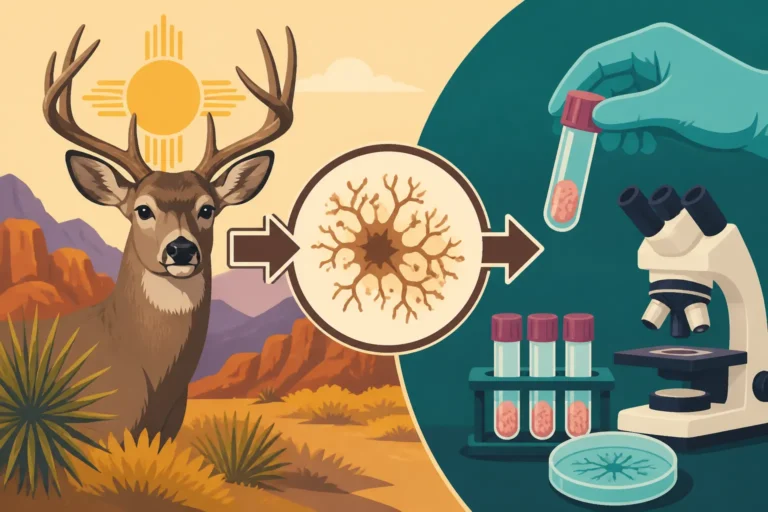
At its core, CWD is a neurological disease affecting deer, elk, and moose. It's caused by abnormal proteins called prions, which accumulate in the brain and other tissues, leading to a progressive deterioration of the animal's nervous system. Think of it as a slow, always fatal disease that ultimately leaves animals emaciated, disoriented, and often drooling, eventually leading to death. The scariest part about prions is their resilience; they are incredibly resistant to degradation and can persist in the environment for years, even decades.
These prions can be found in the brain, spinal cord, lymph nodes, spleen, and other tissues of an infected animal. The disease spreads through direct contact between animals, but also indirectly through environmental contamination. That means an infected animal shedding prions through saliva, urine, or feces can contaminate soil, plants, and even water sources, potentially infecting other animals that come into contact with those contaminated areas. This is precisely why managing the spread, particularly through human activity, becomes so vital. We don't want to unknowingly introduce CWD to a clean area, jeopardizing a healthy herd. New Mexico has designated certain areas as CWD-positive, primarily in the south-central parts of the state, but detection can occur anywhere.
Why Carcass Transport Rules Are So Critical
Now, let's talk about why you, the hunter, need to pay close attention to carcass transport rules. Imagine a scenario: you hunt a beautiful bull elk in a unit where CWD has been detected. You field dress it, load the whole carcass into your truck, and drive it five hours across the state to your home, passing through several other game management units, some of which might be CWD-free. If that elk carried CWD prions, any tissue, fluid, or bone fragments that might fall from your vehicle, or any parts you discard improperly along the way, could potentially contaminate a new area.
This is the nightmare scenario wildlife managers are trying to prevent. By restricting the transport of certain high-risk parts of an animal's carcass from areas where CWD has been detected, the New Mexico Department of Game and Fish (NMDGF) aims to contain the disease and prevent its spread to new areas. It's about minimizing the risk of physically moving prions from an infected zone to a clean one. Your compliance with these rules isn't just about avoiding a citation; it's a critical act of stewardship for New Mexico's wildlife.
Navigating New Mexico's Carcass Transport Regulations
The rules around carcass transport in New Mexico, especially concerning CWD, might seem a bit daunting at first, but they are designed with a clear purpose: to limit the geographical spread of the disease. Understanding what you can and cannot transport is key to a hassle-free hunting experience.
General Carcass Transport Rules in New Mexico
Generally speaking, when you harvest an animal in a unit not designated as CWD-positive, New Mexico's carcass transport rules are fairly straightforward. You can typically transport the entire carcass, as long as it's properly tagged and you comply with all other regulations, such as Evidence of Sex Requirements on a Carcass. However, even in seemingly "clean" units, the NMDGF encourages hunters to minimize the transport of high-risk parts like the brain and spinal cord, especially across unit boundaries.
The general guidance encourages hunters to process their animals as much as possible at the kill site or at a local processing facility near the hunt area. This means deboning meat, removing the skull cap, and ensuring hides are cleaned of excess tissue. This practice drastically reduces the volume of potential prion-carrying material being moved. It's not just good practice; it's a responsible way to handle your harvest and a good habit to build for any hunt.
Specific Rules for High-Prevalence or CWD-Detected Areas
This is where things get really specific and where your attention to detail matters most. If you are fortunate enough to draw a tag and harvest an animal in a game management unit (GMU) where CWD has been detected, or in a designated high-prevalence zone, the rules become much stricter regarding what can leave that unit.
Here's the breakdown of what parts of an animal are generally allowed to leave a CWD-positive unit in New Mexico:
- Deboned meat: This means skeletal muscle tissue that has been completely separated from the bone. This is the safest way to transport meat.
- Antlers: If the skull plate (the part of the skull that the antlers attach to) is completely removed and cleaned of all brain tissue and other soft tissue, antlers can be transported.
- Clean skull plate: Similar to antlers, if you want to keep the skull plate for taxidermy or a European mount, it must be completely free of brain and spinal cord tissue. Often, this requires a significant amount of cleaning and possibly boiling.
- Hides: Capes and hides are generally allowed, provided they are thoroughly cleaned of all meat and brain tissue.
- Teeth: Individual teeth are typically allowed, but not the entire skull or jawbone unless cleaned as above.
What is prohibited from leaving a CWD-positive unit includes:
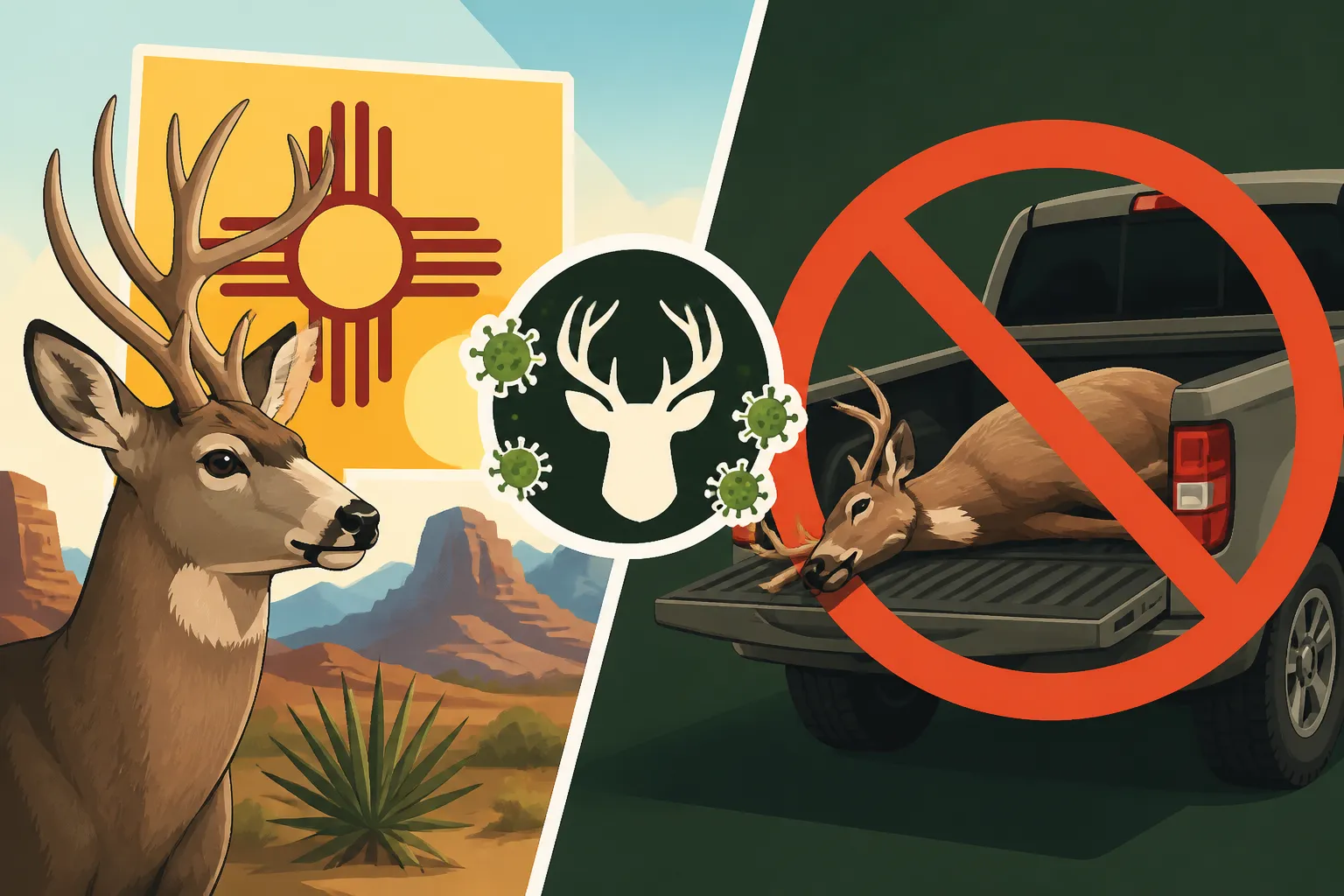
- Entire carcass: You cannot transport a whole or uneviscerated carcass out of a CWD-positive area.
- Brain tissue: This is a major carrier of prions.
- Spinal cord: Another significant carrier, usually found within the vertebral column.
- Eyes: These are also considered high-risk.
- Lymph nodes, spleen, tonsils: These tissues are known to accumulate prions.
- Head (unless cleaned): An uncleaned head cannot be transported.
- Vertebral column (spinal column): Unless the meat is fully deboned and separated, the spinal column is restricted.
It's imperative to consult the current NMDGF hunting proclamation or their website before your hunt, as specific units and regulations can change. Tools like GoHunt can provide valuable, up-to-date unit information and CWD status, helping you plan your hunt and field processing strategy accordingly. Knowing the CWD status of your chosen unit, which you can often find by checking hunt draw statistics on services like GoHunt, is a crucial step in preparing for your harvest.
Moving Carcasses Across State Lines
If you're a nonresident hunter or planning to hunt near a state border, the complexity increases. While New Mexico's rules dictate what leaves its borders, the state you are entering will have its own set of regulations regarding CWD carcass importation. Many states have very similar rules to New Mexico, requiring deboned meat, cleaned skull plates, and processed hides.
Always, and I mean always, check the regulations of any state you plan to transport game into. A quick call to their respective game and fish department or a visit to their official website will usually clarify their specific requirements. For instance, transporting a full deer carcass from a CWD-positive unit in New Mexico into, say, Arizona or Colorado, would almost certainly be illegal and could result in significant fines or loss of hunting privileges in both states. This is a common pitfall for many, so advanced planning is essential.
Practical Strategies for Hunters: Compliance and Preparation
Complying with CWD carcass transport rules boils down to preparation and knowing how to handle your animal efficiently in the field. It’s not just about what you do after the shot, but what you plan before you even head out.
Field Dressing and Processing in the Field
For many hunters, especially those in CWD-detected units, field processing becomes less of an option and more of a necessity. The goal is to leave all high-risk materials as close to the kill site as possible. This means getting comfortable with deboning an animal in the field.
Here's a simplified approach to field processing for CWD compliance:
- Field dress the animal: As usual, remove the viscera. This is the first step and can significantly lighten the load.
- Skin the animal: Carefully remove the hide. If you plan to keep the hide for a cape, ensure it's cut to avoid contact with high-risk tissues and then thoroughly cleaned of all meat and brain matter.
- Debone the meat: This is the most critical step. Using a sharp knife, carefully separate all skeletal muscle from the bones. You'll be left with boneless meat quarters or chunks that are safe to transport. Make sure to separate as much meat as possible from the rib cage, backbone, and pelvic bone. Pack this meat in game bags for cooling and transport. For more on this, check out Field Dressing in Desert Heat and Getting Meat Cooled on an Early Season Hunt.
- Handle the head: If you want to keep the antlers or skull, the skull cap needs to be removed. Saw or cut the skull just below the eye sockets and completely remove the brain and any attached soft tissues. The remaining skull cap with antlers attached can then be transported. If you want a full skull, it must be thoroughly cleaned, often boiled or pressure washed, until no brain or spinal cord tissue remains.
- Leave the rest: The spine, skull (if not cleaned), and other high-risk materials should be left at the kill site, or ideally, transported to a designated CWD disposal site or approved landfill if one is available nearby. Check the NMDGF regulations for specific disposal guidance for your unit.
This might sound like a lot of work, and it is, but it’s a non-negotiable step if you hunt in a CWD area and want to transport your harvest legally. Many experienced hunters find that deboning in the field is actually more efficient for packing out meat, especially on backcountry hunts.
Utilizing Professional Processors and Taxidermists
Sometimes, leaving all the processing to the experts is the best route. If you're hunting in or near a CWD zone, finding a local professional game processor or taxidermist can be a huge advantage.
- Professional Processors: A local processor will be well-versed in New Mexico's CWD regulations and can ensure your meat is deboned and prepared for transport in compliance with the law. They have the right tools and knowledge to handle the carcass safely and efficiently. Just be sure to communicate that your animal was harvested in a CWD-detected unit.
- Taxidermists: If you plan on a shoulder mount or European skull mount, coordinate with a local taxidermist who understands CWD rules. They can correctly remove and clean the skull plate or entire skull, ensuring it's free of all high-risk materials before you transport it.
Many hunters use services like GoHunt to research potential hunt units and regulations, but it's also a valuable resource for finding local services like processors and taxidermists in the areas they plan to hunt. Planning this out ahead of time saves a lot of headaches after a successful harvest.
Pre-Hunt Research and Tools
Preparation is truly your best defense against inadvertently breaking CWD transport rules.
- Read the Official Proclamation: Always start with the official NMDGF hunting proclamation for the current year. This document is the definitive source for all regulations, including CWD zones, sampling requirements, and carcass transport restrictions. You can often find this information by looking up Reading the New Mexico Rules and Info Booklet.
- Check Unit-Specific Status: Use online resources, including the NMDGF website, to check the specific CWD status of your hunt unit. This status can change, so verify it just before your hunt.
- Use Mapping and Research Tools: Platforms like GoHunt offer incredible resources for e-scouting and understanding unit boundaries, which is crucial for CWD planning. While GoHunt is excellent for general hunt planning and research like E-Scouting a New Mexico Unit Before the Season, it's always best to cross-reference with the NMDGF for the most current, hyper-specific CWD directives.
- Plan Your Route: If you're driving across the state, map out your route and know if you'll be passing through other CWD zones or clean areas. Plan for proper disposal or field processing before you leave the CWD-detected unit.
Broader CWD Considerations for Responsible Hunters
Beyond just transporting your carcass, being a responsible hunter in the age of CWD involves a few other important practices that contribute to overall wildlife health and disease management.
Mandatory Reporting and Testing
In some designated CWD units or during specific hunt seasons, New Mexico may require mandatory CWD testing or sampling of harvested animals. This isn't just a suggestion; it's a critical part of the state's CWD surveillance program. By participating, you provide vital data that helps wildlife biologists track the disease, understand its prevalence, and inform future management strategies.
If mandatory testing is required for your unit or species, you'll need to know Where New Mexico CWD Sampling Stations Are and understand How Chronic Wasting Disease Testing Works. Even if it's not mandatory, voluntary submission of samples is often encouraged. It gives you peace of mind and contributes to the collective understanding of the disease in New Mexico.
Disposal of Carcass Waste
Proper disposal of high-risk carcass parts is just as important as proper transport. If you've field-processed an animal in a CWD-detected unit, those brain, spinal cord, and other prion-carrying tissues need to be disposed of responsibly.
- Landfills: Many municipalities or counties have landfills that accept animal waste. This is often the preferred method as it contains the materials.
- Deep Burial: If you're in a remote area and a landfill isn't feasible, deep burial at the kill site can be an option, ensuring scavengers cannot access the remains. The NMDGF often provides specific depth requirements for burial.
- Never leave high-risk materials accessible to scavengers: Leaving a spine or head where other deer, elk, or scavengers can interact with it simply increases the risk of spreading prions further into the environment.
Always check current NMDGF guidelines for the most appropriate disposal methods for your specific hunt area.
Staying Informed with GoHunt and Official Channels
The landscape of wildlife management, especially concerning diseases like CWD, is dynamic. Regulations can change, new detection sites can emerge, and best practices can evolve. Therefore, making a habit of staying informed is crucial for any dedicated hunter.
Regularly checking the official New Mexico Department of Game and Fish website should be your primary source for the most accurate and up-to-date information. They will publish the latest proclamations, CWD detection maps, and any changes to carcass transport or sampling requirements. Complementing this, resources like GoHunt can be invaluable for their aggregated data and user-friendly interfaces, often providing quick access to unit-specific details and general hunting news. While GoHunt can streamline your research, always verify critical regulatory information directly from the NMDGF. By combining these resources, you can ensure you're always operating within the bounds of the law and doing your part to protect New Mexico's incredible wildlife heritage.
Disclaimer
This article is for general informational purposes only and does not constitute professional advice. Laws, prices and regulations vary by location and change over time. Consult a qualified professional for guidance on your specific situation.