Applying Under a New Mexico Outfitter Number
For many hunters dreaming of chasing elk, mule deer, or oryx in the stunning landscapes of New Mexico, the annual draw can feel like an insurmountable hurdle. With more applicants than available tags, especially for those coveted high-demand hunts, it’s easy to get frustrated and feel like the odds are stacked against you. But did you know there’s a specific pathway designed for hunters who partner with a licensed New Mexico outfitter? This comprehensive guide will walk you through everything you need to know about applying under a New Mexico outfitter number, helping you understand this unique system and if it's the right choice for your next hunt.
Understanding the New Mexico Outfitter Pool
New Mexico operates a unique draw system for its big game licenses, and part of that system includes a specific allocation for clients who apply with a licensed outfitter. It’s not just a simple bonus; it's an entirely separate pool of tags, and understanding how it works is key to making an informed decision about your application strategy.
What is the Outfitter Pool and Its Purpose?
The New Mexico Game and Fish Department (NMDGF) has set up three distinct pools for allocating big game hunting licenses. The largest pool, 84% of all available licenses, is reserved for New Mexico residents applying on their own. The second pool, at 6%, is for non-residents applying without an outfitter. Then, there's the third pool: the outfitter allocation, which comprises 10% of all licenses. This "outfitter pool" exists to support the state's outfitting industry, providing a dedicated avenue for clients who choose to hunt with a professional guide. It acknowledges the economic contribution outfitters make to the state and offers hunters a different set of odds.
This structure means that if you choose to apply with a New Mexico outfitter, you are competing only against other outfitter clients for that 10% share of tags, rather than the much larger non-resident general pool or resident pool. It’s a distinct pathway that many hunters, particularly non-residents, consider when trying to improve their chances of drawing a desirable tag, especially for species like elk or oryx where demand far outstrips supply. Understanding The 10 Percent New Mexico Outfitter Pool is fundamental to navigating the New Mexico draw.
How the 10% Allocation Works
When NMDGF conducts its draw, it first separates applications into these three pools. Your application, when submitted with a valid outfitter number, goes into the 10% pool. This pool is then drawn independently, with applicants vying for a portion of that specific allocation of licenses. It's not a matter of outfitters receiving tags directly; rather, their clients receive tags through this separate draw.
The key takeaway here is that the outfitter pool is entirely self-contained. The draw odds for a tag in the outfitter pool are determined by the number of applicants in that specific pool versus the number of tags allocated to it. This can lead to vastly different draw odds compared to the non-resident general pool, depending on the unit and species. It's a system designed to give those who invest in a guided hunt a more direct path to a tag, while still keeping the draw fair within its defined parameters.
Does Applying with an Outfitter Improve Your Odds?
This is the million-dollar question for many hunters, and the answer is nuanced. On paper, for a non-resident, applying through the outfitter pool can significantly improve your statistical chances compared to applying in the 6% non-resident general pool. The 10% allocation is larger than the 6% non-resident general pool, meaning more tags are available in the outfitter pool. If the number of applicants in the outfitter pool doesn't grow disproportionately, your odds can indeed be better. For example, if there are 100 elk tags for non-residents, 6 would go to the general pool and 10 to the outfitter pool. If the number of applicants in the 10% pool is lower than twice the number of applicants in the 6% pool, your odds are better there.
However, it's not a guaranteed golden ticket. More hunters are becoming aware of the outfitter pool's potential benefits, leading to increased competition within that 10%. While the absolute number of tags is higher, if the number of applicants also surges, the percentage chance of drawing could stabilize or even decrease in some units. To truly gauge if it improves your odds for a specific unit and species, you need to analyze the draw statistics released by NMDGF each year. Resources like GoHunt often compile and analyze this data, allowing you to compare draw odds across all three pools. So, while it offers a distinct advantage over the 6% non-resident general pool, it's essential to do your research for your target hunt. Understanding Does a New Mexico Outfitter Application Improve Odds? is critical for your planning.
The Application Process with an Outfitter
Once you've decided that applying under an outfitter number is the right strategy for you, the next step is understanding the mechanics of how to actually do it. It’s not simply a matter of checking a box; there are specific requirements and steps you need to follow to ensure your application is correctly processed within the outfitter pool.
Getting Your Outfitter Number
Before you even think about filling out your draw application, you absolutely must secure a licensed New Mexico outfitter. This isn't a "chicken or the egg" situation; the outfitter comes first. You cannot apply in the outfitter pool without a valid, signed guide-client contract and the outfitter's registration number. This number is typically a multi-digit numerical code that identifies the outfitter as currently licensed and registered with the state of New Mexico.
Your chosen outfitter will provide you with their official registration number. This isn't something you look up yourself; it's part of the formal agreement you make with them. Many hunters find reputable outfitters through online platforms like BookYourHunt, which allows you to browse various New Mexico operations and compare their offerings and availability. Once you've selected an outfitter and signed a contract, they will provide you with this crucial number. Without it, your application will simply be shunted into the general non-resident pool, defeating the purpose of hiring an outfitter for draw advantages.
Entering the Outfitter Information on Your Application
When you go to apply for your license through the NMDGF online system, you'll reach a section specifically asking if you are applying with an outfitter. This is where you will input the unique registration number provided by your licensed New Mexico outfitter. It's a critical step that flags your application for the 10% outfitter pool. Double-check that number for accuracy! A single digit off could mean your application is miscategorized, potentially costing you a shot at those coveted tags.
The NMDGF system is designed to be straightforward, but attention to detail is paramount. You'll enter the outfitter number in the designated field, confirming that you have a signed contract in place. The system won't verify the contract itself at the moment of application, but you are attesting that one exists. This is why getting the number from your outfitter, after your agreement is solid, is so important. For more guidance, see Where the Outfitter Number Goes on Your Application. Remember, the deadline for applications, including those with an outfitter, is typically in March, so plan well in advance of The March Deadline for New Mexico Applications.
Group Applications with an Outfitter
New Mexico allows hunters to apply as a group, which can be a fantastic way to coordinate a hunt with friends or family. When applying as a group within the outfitter pool, all members of the group must be applying with the same licensed outfitter. Each individual in the group will include the outfitter’s number on their respective application, and the group leader will link all applications together.
The benefit of a group application is that if one member of the group draws a tag, all members of that group draw a tag, assuming tags are available in the specific hunt code and preference order. However, if the group’s application is drawn and there aren't enough tags left for everyone in the group, no one in the group draws. This means group applications are treated as an "all or nothing" proposition. It’s a strategy that requires careful consideration of the unit's tag availability and the overall competitiveness of the hunt. Discuss this thoroughly with your outfitter to determine if a group application is the best strategy for your party.
The Outfitter-Client Contract and Field Requirements
Applying with an outfitter in New Mexico isn't just about inputting a number; it comes with specific contractual and in-field requirements that are mandated by the state. These rules are in place to ensure legitimate guided hunts and protect both the hunter and the outfitter.
The Mandated Guide-Client Contract
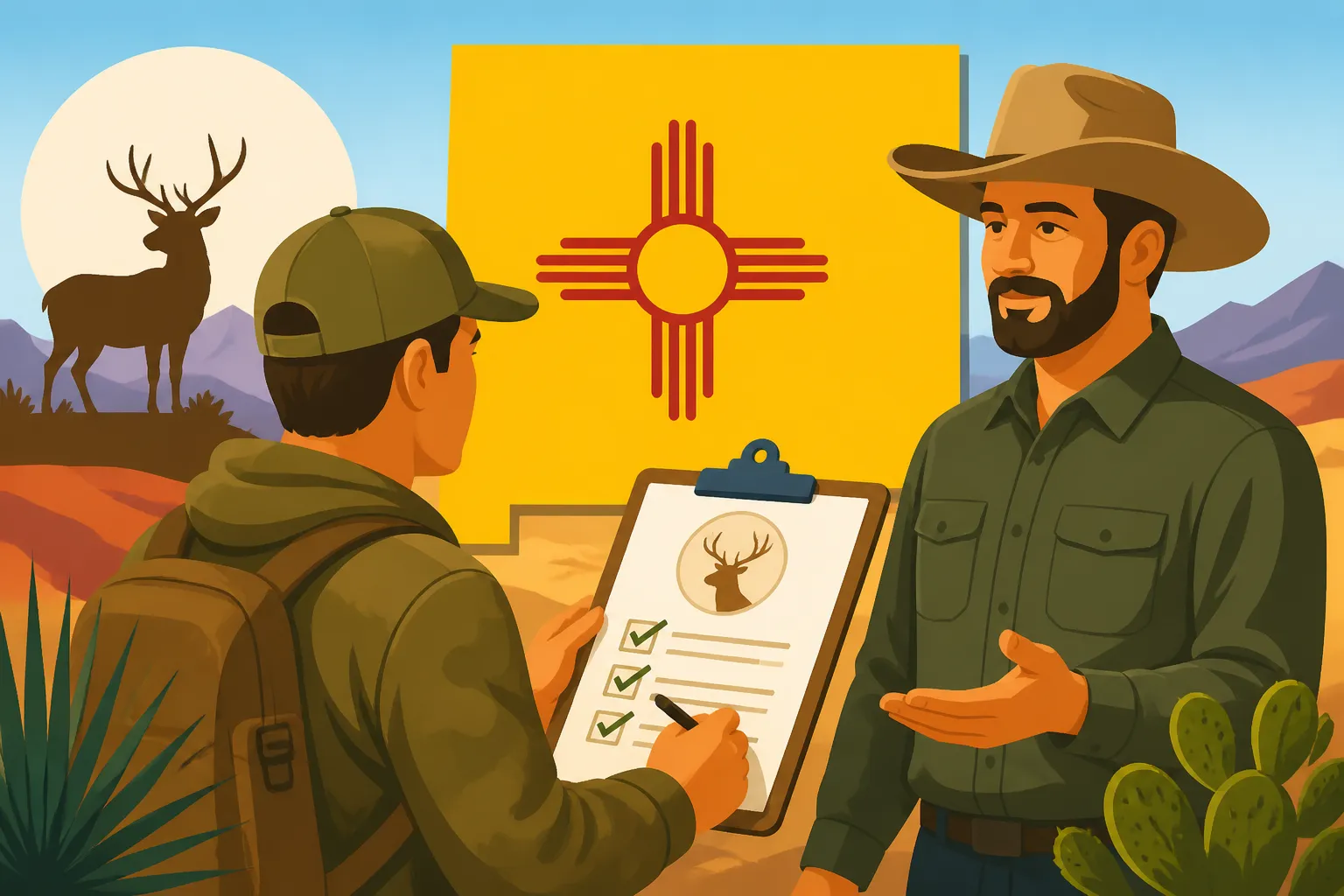
The cornerstone of applying under an outfitter number is the signed guide-client contract. New Mexico law requires that any client applying in the 10% outfitter pool must have a valid written contract with a currently licensed New Mexico outfitter before submitting their application. This isn't a handshake agreement; it's a formal, legally binding document. This contract should clearly outline the terms of your hunt, including dates, species, unit, services provided, fees, and cancellation policies. It must also include the outfitter's registration number.
This contract serves as proof of your legitimate intent to hunt with that outfitter. Should NMDGF audit your application, you must be able to produce this document. It's designed to prevent casual "outfitter number sharing" and ensure that the outfitter pool is utilized by genuine guided hunt clients. Always read this contract carefully, understand all its clauses, and keep a copy for your records. For full details on The New Mexico Guide-Client Contract Requirement, consult the official NMDGF regulations.
The Two-Day Accompaniment Rule
Another critical aspect of the New Mexico outfitter system is the "two-day accompaniment rule." If you draw a license through the outfitter pool, your contracted outfitter (or a registered guide working for that outfitter) must physically accompany you in the field for at least two days of your hunt. This isn't optional; it's a legal requirement designed to ensure that the outfitter provides actual guiding services for the tag drawn through their pool.
These two days don't necessarily have to be consecutive, nor do they have to be the opening days of your hunt, but they must occur during the official season dates for which your license is valid. This rule underscores the state's intention that the outfitter draw is for hunters who are genuinely hiring a guide, not just using an outfitter's number to boost draw odds without receiving services. Your outfitter will typically coordinate these two days with you as part of your hunt planning. You can learn more about New Mexico's Two-Day Accompaniment Rule Explained directly from the NMDGF resources.
What Happens If Your Outfitter Can't Attend?
Life happens, and sometimes, despite the best intentions, an outfitter might face an unforeseen circumstance that prevents them from fulfilling the two-day accompaniment rule. This is a serious issue because non-compliance can have consequences for both the hunter and the outfitter. If the contracted outfitter cannot personally accompany you, they are typically required to arrange for another registered guide under their outfitting business to fulfill the accompaniment.
It's crucial that any substitute guide is properly licensed and registered with the NMDGF as working for your primary outfitter. You should have a clear understanding with your outfitter about their contingency plans in case they cannot be present. The state's goal is to ensure that the services are rendered, even if it's not by the primary outfitter themselves. If the accompaniment requirement is not met, the NMDGF can take action, which might include invalidating your license or imposing penalties on the outfitter. This is why clear communication and a well-defined contract are absolutely essential when you are applying under an outfitter number.
Considering the Pros and Cons of an Outfitter Application
Choosing to apply under an outfitter number is a significant decision that involves both financial investment and strategic planning. It's important to weigh the potential benefits against the costs and commitments involved to determine if it's the right path for your New Mexico hunting aspirations.
Potential Benefits Beyond Draw Odds
While the potentially improved draw odds are a primary motivator for many, especially non-residents, the benefits of hiring a New Mexico outfitter extend far beyond just getting a tag. A good outfitter brings invaluable experience, local knowledge, and logistical support that can transform your hunt.
Consider the following:
- Expert Knowledge: Outfitters and their guides spend countless hours scouting specific units, understanding animal movements, water sources, and bedding areas. They know the terrain, the weather patterns, and how game reacts to pressure. This local expertise can be the difference between a frustrating trip and a successful one.
- Logistical Support: For backcountry hunts, especially for species like elk in the Gila National Forest, logistical challenges are immense. Outfitters provide horses or mules for packing in gear and packing out game, offer comfortable camp setups, and handle all the details that allow you to focus solely on hunting. This is particularly true for Gila country, which is known for its ruggedness. See Why New Mexico Gila Country Is Hard to Hunt Alone for more perspective.
- Safety and Preparedness: Hunting in New Mexico’s vast wilderness can be dangerous. Outfitters are equipped for emergencies, have communication devices, and know how to navigate the remote landscapes. Their presence adds a layer of safety and preparedness, which is especially comforting for those less familiar with the area.
- Access to Private Lands/EPLUS: Some outfitters have leases or relationships with private landowners, potentially offering access to exclusive hunting grounds that are otherwise inaccessible to public land hunters. This can be a huge advantage for specific types of hunts or units. Additionally, they may deal in New Mexico EPLUS Authorizations which offer another pathway to obtaining a tag outside the public draw.
| Aspect | Applying with an Outfitter | Applying Solo (Non-Resident) |
|---|---|---|
| Draw Pool | 10% Outfitter Pool | 6% Non-Resident General Pool |
| Draw Odds | Often statistically better for non-residents in competitive units | Lower for non-residents in competitive units |
| Cost | Significantly higher (outfitter fees + license) | Lower (license fees only) |
| Expertise/Guidance | Professional guides, local knowledge, scouting | Self-reliance, personal scouting, research |
| Logistics | Outfitter handles camp, pack animals, meals, etc. | Hunter handles all logistics, gear, and heavy lifting |
| Time Investment | Less personal pre-scouting time required | Significant personal time for planning, scouting, logistics |
| Accompaniment | Mandatory 2-day in-field accompaniment | No accompaniment requirements |
| Contract | Required guide-client contract | No contract needed |
The Financial Investment and Commitment
The primary "con" for many hunters considering the outfitter route is the significant financial investment. Hiring a reputable New Mexico outfitter, especially for a prime elk or quality mule deer hunt, is a substantial expense that goes far beyond the cost of the hunting license itself. What a Guided New Mexico Elk Hunt Costs can vary wildly, but it's important to be prepared for figures that can easily be in the several thousands of dollars, depending on the species, duration, and level of service (e.g., fully guided, semi-guided, drop camp).
This financial commitment means you're not just buying a potentially better chance at a tag; you're buying a service. You're committing to the outfitter's schedule, methods, and expectations. It's a partnership, and like any partnership, it requires trust and clear communication. If your budget is tight, or if you prefer a highly independent, do-it-yourself style of hunting, the outfitter route might not align with your preferences, regardless of the draw odds.
Comparing Outfitter Pool to General Draw
When deciding whether to apply in the outfitter pool or the general draw, it essentially comes down to a trade-off between cost and odds, coupled with your desired hunting experience.
For non-residents, the outfitter pool offers a larger share of tags (10% vs. 6%). This alone often translates to better draw odds for popular hunts, but it comes at the cost of hiring a professional service. The general draw is cheaper up front, but the odds are often much tougher, meaning you might apply for many years before drawing a coveted tag. How New Mexico Draw Odds Work Without Points can be frustrating, as every applicant theoretically has the same chance each year.
For residents, the calculation is different. With an 84% allocation, residents already have the best odds in the general draw. Applying in the outfitter pool for a resident only makes sense if they specifically desire a fully guided experience and are willing to pay for it, as the draw odds benefit for them might be minimal compared to their own resident pool.
Ultimately, the choice depends on your budget, your desire for a guided experience, your patience with the draw system, and how badly you want a specific tag. If drawing a tag this year for a trophy hunt is a top priority and you're prepared for the expense, the outfitter pool is a strong contender.
Finding and Vetting a New Mexico Outfitter
Once you’ve decided to apply with an outfitter, the next crucial step is finding the right one. This isn’t a decision to be taken lightly; a good outfitter can make your hunt, while a poor one can sour the experience. Diligence in research and vetting is paramount.
Where to Look for Reputable Outfitters
The search for a reputable New Mexico outfitter can begin in several places, each offering different avenues for discovery and vetting.
- Online Platforms: Websites like BookYourHunt offer extensive listings of outfitters, often with client reviews, hunt details, and contact information. These platforms can be a great starting point for browsing options, comparing services, and getting an initial feel for the market. GoHunt also provides valuable resources and insights into various outfitters and their specialties within specific units.
- Hunting Shows and Expos: Attending major hunting expos allows you to meet outfitters face-to-face. This provides an invaluable opportunity to ask questions, gauge personalities, and get a feel for their operation before committing. You can discuss hunt details, expectations, and their track record directly.
- Word-of-Mouth and Referrals: Personal recommendations from trusted hunting companions are often the most reliable. If you know someone who had a fantastic experience with a New Mexico outfitter, that's a strong endorsement. Don't be shy about asking fellow hunters about their experiences.
- State Game and Fish Department: The NMDGF can provide a list of licensed outfitters. While they won't endorse specific businesses, having a verified license is a fundamental requirement. Always cross-reference any outfitter you consider with the state's licensing body to ensure they are current and in good standing.
Key Questions to Ask Before Signing
Before you put down a deposit or sign any contract, you need to ask a lot of questions. Think of it as an interview process for someone who will be a critical part of your hunting success and safety. Here are some essential questions:
- Licensing and Insurance: "Are you currently licensed by the state of New Mexico? Can I see proof of your outfitter license and liability insurance?" This is non-negotiable.
- Experience in Specific Units/Species: "How much experience do you have guiding in [your target unit] for [your target species]? What is your typical success rate for this hunt?" Be wary of vague answers.
- References: "Can you provide me with a list of references from previous clients, preferably from the last 1-2 seasons, for the specific type of hunt I'm interested in?" A reputable outfitter will gladly provide these. Call every single one of them and ask detailed questions about their experience.
- What's Included/Excluded: "What exactly is included in the hunt price? Are meals, lodging, field dressing, caping, packing out game, and transportation from a local airport included? What about unforeseen costs like motel stays before or after the hunt?" Be crystal clear on all costs. Remember, What Outfitter Prices Almost Never Include are often your tags, licenses, and meat processing.
- Guide-to-Client Ratio: "What is your typical guide-to-client ratio on this hunt?" A lower ratio usually means more personalized attention.
- Physical Demands: "What are the physical demands of this hunt? What kind of terrain will we be covering? What level of fitness do you recommend?" This helps you prepare adequately, for instance, Preparing Physically for a High Elevation Hunt.
- Contingency Plans: "What happens if I draw a tag and you become unavailable? What is your policy for a wounded animal?"
- Success Rates and Expectations: "What are realistic expectations for success on this hunt? What constitutes a 'trophy' animal for your clients in this unit?" Understanding their definition of success and matching it to yours is important.
These questions, and many more like them, are crucial. For a comprehensive list, refer to Questions to Ask a New Mexico Outfitter.
Understanding Deposits and Cancellations
The financial aspect of booking with an outfitter is complex, and you need to thoroughly understand the terms related to deposits, payments, and cancellations. Most outfitters require a non-refundable deposit to secure your spot and begin the application process. This deposit might be 50% or more of the total hunt cost. The balance is typically due closer to the hunt date or upon drawing the tag.
Pay very close attention to the cancellation policy. What happens if you fail to draw a tag? Do you get your deposit back, or is it rolled over to the next year? What if you have to cancel for personal reasons? What if the outfitter has to cancel the hunt? These clauses should be clearly laid out in your guide-client contract. Some outfitters offer more flexible terms if you don't draw, while others have strict non-refundable policies. Always ensure these terms align with your comfort level and financial risk. It’s a good idea to discuss Refunds When You Fail to Draw in New Mexico directly with the outfitter before committing any funds. Knowing the Booking Before New Mexico Draw Results Land policies is especially important.
Disclaimer
This article is for general informational purposes only and does not constitute professional advice. Laws, prices and regulations vary by location and change over time. Consult a qualified professional for guidance on your specific situation.