How Biologists Count a Desert Big Game Herd
As hunters, we often find ourselves wondering just how many animals are out there. We pore over draw odds, analyze harvest reports, and sometimes feel like we have a pretty good handle on a unit, but the sheer scale of New Mexico's landscapes, especially the vast desert areas, makes it incredibly difficult to truly grasp herd numbers. It can be frustrating when tag numbers fluctuate, or when a seemingly healthy population yields fewer opportunities. That's where wildlife biologists come in; they're the ones working tirelessly behind the scenes, employing a variety of methods to get the most accurate count possible, which directly influences our hunting seasons and opportunities.
Why Accurate Herd Counts Matter to Hunters
It’s easy to look at a handful of deer or oryx in the field and assume you know the health of a population, but that's rarely the full picture. Wildlife biologists aren't just counting animals for the sake of it; their meticulous work is the bedrock of sustainable hunting and effective conservation. For us, the hunters, these numbers are profoundly important because they shape our seasons, our opportunities, and even the future quality of our hunts.
Understanding Tag Allocation
Perhaps the most direct impact of biological herd counts on hunters is in the allocation of tags. When you see the number of elk, deer, or oryx tags available for a particular unit, those figures aren't pulled out of thin air. They're the result of careful analysis of population data. If biologists determine a herd is stable or growing, there might be room to increase tag numbers. Conversely, if a population is struggling due to drought, disease, or other factors, tag numbers might need to be reduced to ensure the herd's long-term viability. It can be a tough pill to swallow when you're hoping for a specific tag, but these data-driven decisions are made to prevent overharvesting and safeguard the resource for generations to come. It’s all about finding that delicate balance between opportunity and conservation, and it starts with a good head count.
Predicting Future Hunt Quality
Beyond just the number of tags, herd counts give biologists crucial insights into the health and structure of a population, which can predict future hunt quality. For instance, they look at fawn-to-doe ratios for deer or calf-to-cow ratios for elk. A high ratio indicates a healthy breeding population and good recruitment into the herd, suggesting strong future hunting prospects. A low ratio, however, can be a red flag, pointing to potential issues like poor habitat, high predation, or severe weather impacts. Biologists use this information to make recommendations for management strategies, like habitat improvement projects or Predator Management and Deer Recovery, aiming to ensure there are mature animals and robust populations available for hunters in the years to come. This forward-thinking approach means the hunts we enjoy today are the result of careful planning based on past and present herd dynamics.
Conservation and Management Efforts
At a broader level, accurate herd counts are indispensable for overall conservation and management efforts. These numbers help biologists identify trends, understand migration patterns, and assess the impact of environmental changes, like habitat loss or climate shifts. This data then informs decisions on where to focus habitat restoration, how to manage water sources in arid regions – like those discussed in Water Development Projects Built for Wildlife – and even whether special hunts are needed to address population imbalances. Without these fundamental counts, management would be largely guesswork, risking the health of our wildlife populations. From Water Sources That Concentrate Desert Game to broader landscape-level planning, these counts guide every significant decision. Hunters are often direct beneficiaries of these efforts, as healthy, well-managed herds provide more consistent and higher-quality hunting experiences.
Common Methods for Counting Desert Big Game
Counting animals across New Mexico's vast and often unforgiving desert landscape is far from a simple task. It requires a combination of technology, tireless effort, and a deep understanding of animal behavior. Biologists employ several key methods, each with its own advantages and challenges, to get the most accurate picture of our desert big game herds.
Aerial Surveys: Eyes in the Sky
When it comes to covering huge swaths of open country quickly, aerial surveys are often the go-to method for biologists. Picture a fixed-wing plane or, more commonly, a helicopter, flying systematic transects over a unit, with trained observers looking for animals. This method is incredibly efficient for species that tend to inhabit open terrain and are less prone to seeking dense cover, like New Mexico's pronghorn or oryx. For instance, to get a handle on the unique Oryx on White Sands Missile Range, flying over the expansive military range offers the best chance to spot these large, conspicuous animals. Similarly, for the Pronghorn on the Eastern Plains Units, an aerial perspective can reveal large groups that would be almost impossible to count from the ground.
The pros are clear: you can cover immense distances in a short period, and with specialized equipment, even count animals in areas that are otherwise inaccessible. However, it's not without its drawbacks. Aerial surveys are costly, demanding significant resources for fuel and flight time. They are also heavily dependent on weather conditions; strong winds or poor visibility can ground a survey for days. And while great for open-country species, identifying and accurately counting desert mule deer in areas with broken rimrock, dense mesquite, or thick juniper can be a real challenge from above. Animals can be surprisingly good at using what little cover is available to disappear.
Ground Surveys: Boots on the Dirt
While less glamorous than flying, ground surveys are a critical component of herd counting, especially for species that prefer more broken or timbered habitat within the desert ecosystem, or for filling in gaps left by aerial efforts. This method involves biologists and technicians physically traversing designated routes, either by vehicle along established roads or on foot through specific transects. Think of it as putting "boots on the dirt" to get a more intimate look at the landscape and its inhabitants.
One common technique involves driving established routes at specific times, often during dawn or dusk, when many big game animals are most active. Observers systematically scan the terrain, identifying and counting animals encountered. For more reclusive species or areas with dense vegetation, walking surveys are employed, though these are much slower and more labor-intensive. The main advantage of ground surveys is the level of detail they allow; biologists can often get better age and sex ratios, and even observe behavioral patterns. They are also less expensive than aerial surveys on a per-hour basis, though they cover far less ground. However, they are limited by access and terrain. Covering New Mexico's vast, rugged desert units on foot is a monumental task, and animals in low densities can be easily missed. It often requires a large team and a significant time commitment to achieve meaningful results.
Waterhole Counts: A Desert Staple
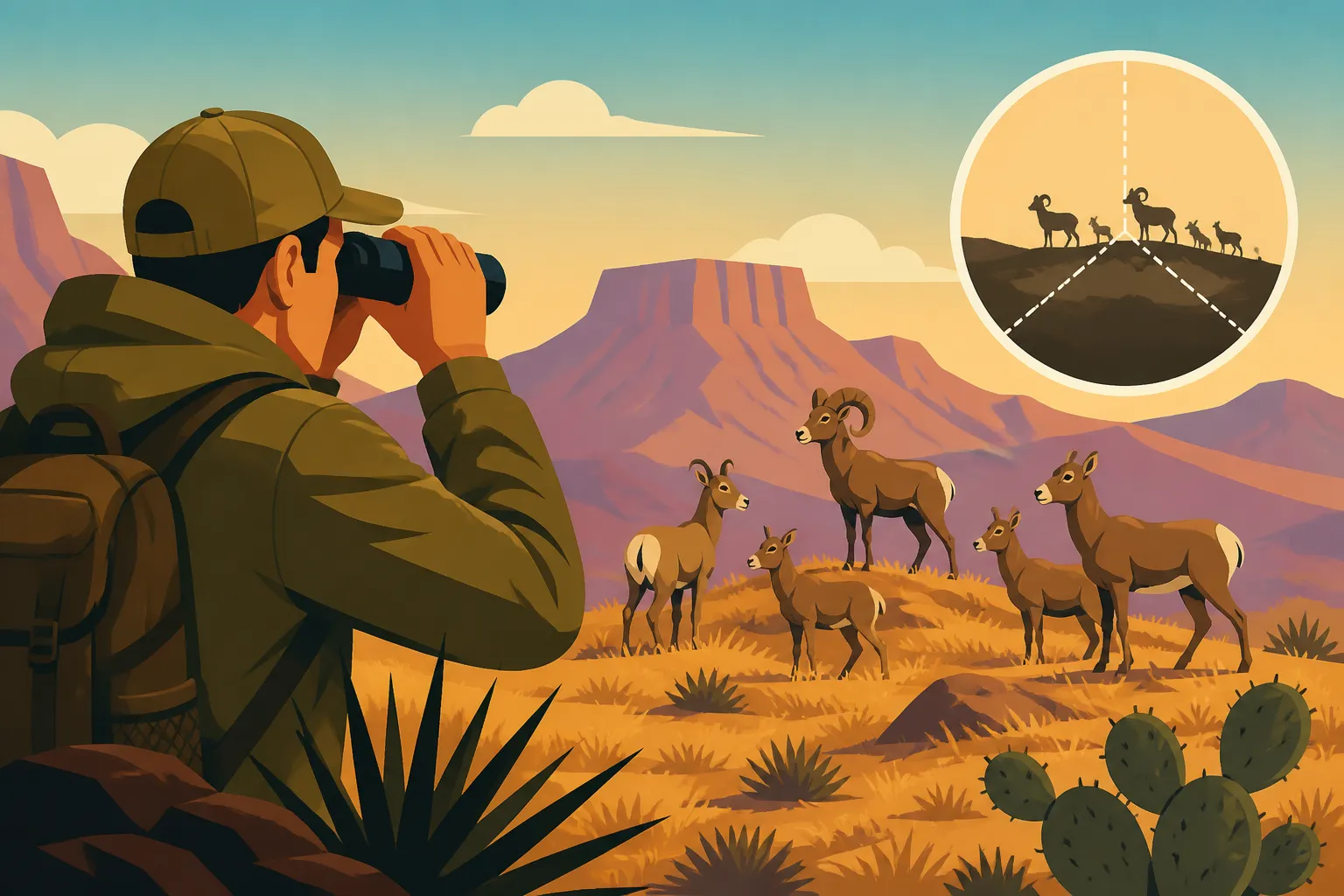
In arid environments like much of New Mexico's desert, water is life, and animals are often drawn to it. This predictable behavior makes waterhole counts a particularly effective and economical method for assessing herd populations, especially during dry periods when natural water sources are scarce. Biologists will select key water sources – be it a natural spring, a guzzler, or a stock tank (which you might identify by Finding Stock Tanks on a Unit Map) – and establish observation points. They'll then spend days, sometimes even weeks, quietly observing and counting animals as they come to drink.
The beauty of waterhole counts lies in their simplicity and the valuable data they can yield. Not only do they provide an estimate of the overall population size, but they are excellent for gathering composition data: how many bucks, does, and fawns are visiting, or bulls, cows, and calves. This insight into the herd's reproductive success and age structure is vital for management. However, this method isn't foolproof. Its effectiveness can be severely impacted by environmental factors, particularly monsoon rains. If significant rain falls, animals disperse across the landscape, no longer needing to concentrate at a few waterholes, making counts less reliable. Human disturbance can also skew results, as wary animals might avoid a water source if they detect a presence. Despite these challenges, sitting water remains a classic and highly effective technique for understanding How Biologists Count a Desert Big Game Herd.
Technological Advancements in Herd Monitoring
While boots on the ground and eyes in the sky remain foundational, the world of wildlife biology is constantly evolving, embracing new technologies to refine herd counts and gain deeper insights into animal behavior. These advancements help biologists piece together a more comprehensive and accurate picture of our desert big game.
Remote Cameras and Trail Cameras
Just like hunters use trail cameras to pattern deer, biologists employ remote cameras extensively for monitoring wildlife. These motion-activated cameras are strategically placed at game trails, water sources, or feeding areas, silently capturing images or videos of passing animals. While they don't provide a direct, absolute count across an entire unit, they are invaluable for estimating relative abundance, presence/absence, and especially for gathering composition data for more elusive species. For instance, a biologist might place a series of cameras in a desert mule deer unit to estimate buck-to-doe ratios or fawn recruitment over time.
The beauty of trail cameras lies in their non-invasive nature and their ability to collect data 24/7 without human presence. This allows for detailed observation of nocturnal habits or shy animals that would otherwise avoid direct human contact. Biologists can analyze thousands of images to identify individual animals (if they have distinct markings), track their movements, and understand how different species interact with their environment. While not a standalone counting method for large-scale population estimates, they are an incredibly powerful tool for supplementing traditional surveys, providing fine-grained detail that might otherwise be missed. Hunters need to be aware of Trail Camera Rules on New Mexico Public Land when using these tools themselves.
GPS Collaring and Telemetry
One of the most profound technological leaps in wildlife monitoring has been the advent of GPS collaring and telemetry. Imagine being able to track the exact movements of an animal, day and night, for months or even years. That's what GPS collars allow. Biologists capture a representative sample of animals – often using safe darting techniques – and fit them with collars that transmit GPS coordinates. This data is then sent to satellites or downloaded directly, providing a wealth of information.
For desert big game, GPS collaring is transformative. It allows biologists to map out precise home ranges, identify crucial migration corridors, pinpoint preferred habitats, and understand how animals use different landscapes throughout the year. For example, understanding Where Elk Winter in the High Country or how desert mule deer navigate between different water sources becomes much clearer. Beyond movement, these collars can provide insights into survival rates by signaling when an animal stops moving. While not a direct counting method in itself, the data gathered from collared animals helps biologists refine their survey efforts, understand population dynamics, and model how factors like drought or development might impact a herd. This information ultimately feeds into the management strategies that protect the species we love to hunt. Platforms like GoHunt, for example, often synthesize publicly available data – much of which originates from these biological studies – to give hunters a better understanding of game distribution and patterns within units. This shows how foundational biological research becomes the basis for hunter-focused tools.
DNA Sampling and Genetic Analysis
In recent years, DNA sampling has emerged as a cutting-edge, non-invasive method that helps biologists estimate population sizes and even understand genetic health. Instead of capturing an animal, biologists can collect biological samples left behind in the environment, such as scat (feces), hair, or urine. Each sample contains DNA unique to an individual animal.
By collecting and analyzing numerous samples from a given area, biologists can identify how many unique individuals contributed to those samples. Using statistical models, they can then estimate the total population size without ever seeing or handling every single animal. This is particularly useful for cryptic or widely dispersed species where traditional visual counts are extremely difficult. Beyond population estimation, genetic analysis can reveal patterns of genetic diversity, relatedness within a herd, and even identify disease resistance. While this method can be labor-intensive in terms of sample collection and expensive in laboratory analysis, it offers an incredibly detailed and less intrusive way to gather crucial demographic information about desert big game herds, providing a deeper understanding of population health beyond just a head count.
The Challenges of Counting Desert Animals
Anyone who has spent time hunting in New Mexico's deserts knows it's a land of extremes and vastness. These very characteristics, while making for incredible hunting adventures, also present significant hurdles for biologists trying to accurately count big game herds. It's a testament to their dedication that they get as close as they do.
Vast and Rugged Terrain
New Mexico's desert units are not flat, barren expanses. They are often characterized by sprawling mesas, deep arroyos, jagged rimrock, and dense stands of mesquite, cholla, and juniper. This Chihuahuan Desert Units landscape, while beautiful, is incredibly difficult to navigate and observe comprehensively. Trying to count every mule deer or oryx across tens of thousands of acres of broken ground, where animals can disappear behind a single mesquite bush or into a shallow draw, is a monumental undertaking.
The sheer scale means that ground surveys are slow and often limited in coverage, while aerial surveys struggle with animals that quickly duck into cover. This ruggedness also poses logistical challenges, making it difficult to access remote areas for survey work or to set up observation points. The animals themselves are adept at using this terrain to their advantage, becoming nearly invisible to even the most seasoned observer. This constant game of hide-and-seek means biologists are always battling the land itself in their quest for accurate numbers.
Environmental Variables
The desert environment is dynamic and often unpredictable, and these fluctuations have a profound impact on animal distribution and behavior, which in turn makes consistent counting a nightmare. Drought, a perennial concern in New Mexico, can concentrate animals around dwindling water sources, potentially leading to inflated counts in those specific areas, while the rest of the unit might seem empty. Conversely, when the monsoon rains hit – as discussed in How Monsoon Rain Affects Antler Growth – animals disperse widely, finding water and forage in previously dry areas. This makes them incredibly difficult to locate and count, as they are no longer bottlenecked into predictable patterns.
How Drought Affects Desert Deer Numbers is a critical factor influencing overall herd health and distribution. A severe drought might lead to lower fawn survival rates or a reduction in overall body condition, making it harder for animals to thrive, and thus affecting population sizes. These environmental variables mean that a count taken in one year under specific conditions might look vastly different from a count taken in another year, even if the underlying population trend is stable. Biologists have to account for these shifts, often by conducting surveys at consistent times of year or adjusting their methodologies to compensate for environmental differences.
Cryptic Behavior and Camouflage
Desert animals are masters of survival, and a key part of that survival is blending into their surroundings and exhibiting cryptic, elusive behavior. Take the desert mule deer, for example; their tawny coats melt into the sandy washes and rocky outcrops, making them incredibly difficult to spot, even at close range. An oryx, despite its size, can stand motionless for extended periods, appearing like just another light-colored rock in the vast, open landscape.
This natural camouflage and inherent shyness mean that many desert big game species are experts at avoiding detection. They will often freeze, lie down, or quietly slip away long before a survey team or even a low-flying aircraft gets close enough for a positive identification. This makes obtaining accurate counts particularly challenging, as a significant percentage of the population might simply go unobserved. Biologists must employ techniques that account for this "sightability bias," using correction factors based on previous studies or by employing methods that don't rely solely on direct visual contact. It’s a constant battle against the animals’ natural defenses, reminding us just how wild and untamed these desert dwellers truly are.
In the end, counting desert big game herds in New Mexico is a monumental, multifaceted task. It’s a combination of old-school field craft and cutting-edge technology, all undertaken with the goal of ensuring healthy, sustainable populations for the future. The next time you apply for a tag or head out into the vast desert, take a moment to appreciate the complex work that goes into managing these incredible animals; it’s directly influencing the opportunities we all cherish.
Big Game Counting Methods Comparison
| Method | Description | Key Species | Pros | Cons |
|---|---|---|---|---|
| Aerial Surveys | Fixed-wing planes or helicopters fly systematic transects over units. | Pronghorn, Oryx | Covers vast areas quickly; good for open country. | Costly; weather-dependent; poor for dense cover. |
| Ground Surveys | Biologists traverse routes by vehicle or foot; direct observation. | Mule Deer, Elk | Detailed observation; better age/sex ratios; lower cost than air. | Slower; limited coverage; labor-intensive; difficult in rugged terrain. |
| Waterhole Counts | Observation points set near crucial water sources; animals counted as they drink. | Oryx, Deer, Elk | Effective in arid regions; good for composition data; economical. | Affected by rain (dispersion); human disturbance a factor. |
| Remote Cameras | Motion-activated cameras capture images/video; non-invasive. | Deer, Bighorn, Elk | Non-invasive; 24/7 data; good for shy species; relative abundance. | Doesn't provide absolute counts; processing data can be time-consuming. |
| GPS Collaring | Animals fitted with collars transmitting GPS coordinates. | Elk, Deer, Bighorn | Tracks movement, habitat use, survival; informs survey design. | Invasive (capture required); expensive equipment and deployment. |
| DNA Sampling | Collection of scat, hair, or urine for genetic analysis. | Bear, Cougar, Deer | Non-invasive; identifies individuals; estimates population size. | Labor-intensive collection; expensive lab analysis. |
Disclaimer
This article is for general informational purposes only and does not constitute professional advice. Laws, prices and regulations vary by location and change over time. Consult a qualified professional for guidance on your specific situation.