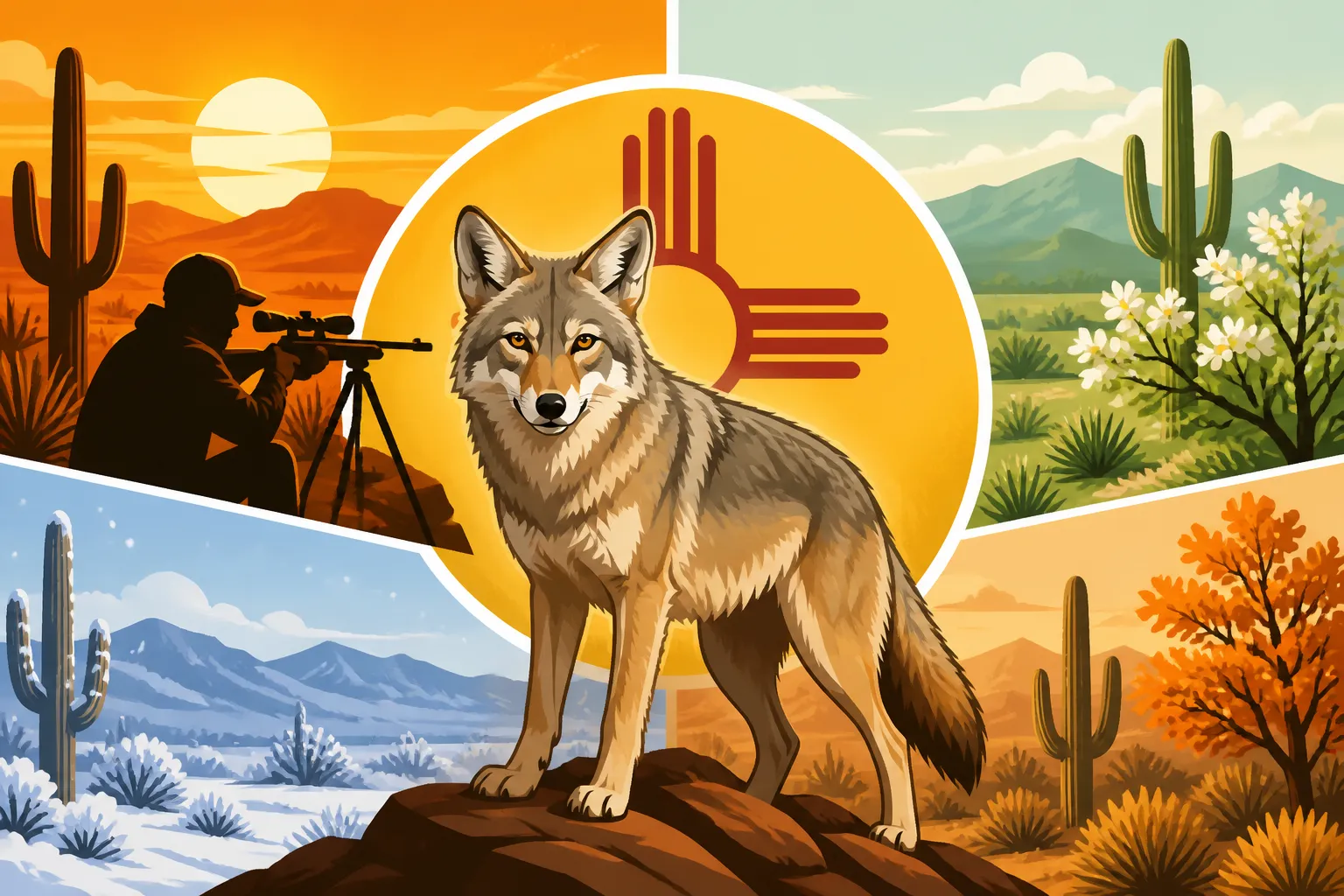
Hunting Coyotes Year Round in the Desert
There’s a unique kind of challenge that comes with hunting coyotes in the vast, unforgiving expanses of the New Mexico desert. It's not just about the shot; it's about understanding an animal that thrives where others struggle, and mastering tactics that stand up to constant pressure and extreme conditions. This guide is here to walk you through everything you need to know to pursue coyotes successfully, ethically, and safely throughout the entire year in our rugged desert landscape.
The Unique Challenge of Desert Coyotes
Coyotes are incredibly intelligent and adaptable animals, and the New Mexico desert is a testament to their resilience. Unlike some game species with defined seasons, coyotes offer a year-round hunting opportunity, which brings both freedom and unique tactical considerations. You’re not just hunting an animal; you're often hunting a phantom that seems to materialize and vanish with the desert wind.
Why Coyotes Thrive in Arid Environments
It might seem counterintuitive for a predator to flourish in an environment that often appears barren, but coyotes have a suite of adaptations that make them perfectly suited to the New Mexico desert. They are opportunistic feeders, meaning their diet is incredibly diverse. They’ll take advantage of anything from rabbits and rodents to insects, fruits, and even carrion. This broad menu ensures they can find sustenance even when traditional prey is scarce. Their ability to go for extended periods without free-standing water, often getting moisture from the prey they consume, is another key to their success. They also possess incredible stamina and can cover vast distances, moving between patchy cover and open ground with ease.
Beyond their physical traits, coyotes in the desert are masters of stealth and survival. They learn quickly, especially when encountering human pressure. A coyote that's been called in once and survived is a much wiser animal, and these experiences accumulate, making them increasingly wary. This constant learning curve is what makes them such a captivating and frustrating quarry. Understanding their daily patterns – often moving during the cooler parts of the day, particularly dawn and dusk – and how they utilize every scrap of terrain for cover is paramount. The sparse vegetation, while challenging for concealment, also means that a well-placed hide and precise calling can be incredibly effective when executed flawlessly.
Year-Round Opportunity and Its Implications
One of the most appealing aspects of coyote hunting in New Mexico is that there’s no closed season. This open invitation to hunt 365 days a year means consistent opportunities, but it also means coyotes are under constant pressure in many areas. This leads to a population that is often very "call shy" or incredibly cautious. What works in one area might be entirely ineffective just a few miles down the road, depending on local hunting pressure. You’ll find that early season hunts, say in late summer, present different challenges than a mid-winter hunt. The cooler temperatures of fall and winter often mean coyotes are more active during daylight hours, making them potentially more visible. However, they also have thicker coats and are more reliant on specific food sources, which can influence their responses to calls.
The year-round nature also means you need to be acutely aware of seasonal changes in vegetation, water sources, and other game animals. During fawning or denning season for other species, coyotes will be hyper-focused on those food sources. Knowing these cycles can give you an edge in choosing the right calls and locations. The lack of a season also means it’s crucial to know and respect all general hunting regulations, especially regarding public land access, private land boundaries, and potential fire restrictions. Tools like E-Scouting a New Mexico Unit Before the Season can be invaluable for understanding the lay of the land, identifying potential access points, and noting land ownership before you ever set foot in the field, helping you avoid frustrating surprises or unintended trespass issues.
Essential Gear for Desert Coyote Hunting
Preparing for a desert coyote hunt means more than just grabbing a rifle. The vast, open nature of New Mexico’s arid lands, combined with the extreme temperatures and the cunning of your quarry, demands a thoughtful approach to gear. Having the right tools won't guarantee success, but it will certainly tilt the odds in your favor and, most importantly, keep you safe and comfortable.
Optics for Spotting and Ranging
In the desert, your eyes are your most important tool, and good optics extend their reach exponentially. You'll spend a lot of time glassing, often covering huge swaths of terrain to spot a coyote moving or coming into a call.
- Binoculars: A quality pair of 10×42 or 12×50 binoculars are non-negotiable. They need to be clear, comfortable to hold for extended periods, and able to perform in varying light conditions, from the harsh midday sun to the dim light of dawn and dusk. Lightweight yet robust is key, as you'll be carrying them for miles. When you're Grid Glassing a Basin Without Missing Bucks, the same principles apply to picking out a coyote.
- Spotting Scope: For serious long-range scanning and confirming targets, a spotting scope (perhaps a 20-60x or 22-45x) mounted on a sturdy tripod is incredibly useful. This allows you to scrutinize distant ridges, brush lines, and canyon bottoms without having to move, conserving energy and reducing your scent footprint. It’s perfect for those vast, open areas where a coyote might be a mile out before you ever see it clearly.
- Rangefinder: A laser rangefinder is absolutely critical in the desert. Distances can be incredibly deceiving in open country with sparse vegetation, making it hard to judge a 300-yard shot from a 400-yard shot. Knowing the exact distance to your target, as well as to potential landmarks around your calling setup, allows you to make precise adjustments for bullet drop and wind, significantly improving your chances of a clean harvest.
Firearm and Ammunition Choices
Choosing your firearm and ammunition for desert coyotes boils down to striking a balance between accuracy, terminal performance, and minimal pelt damage if you plan to save the hide.
- Rifle Caliber: Popular choices include the .223 Remington, .22-250 Remington, and .204 Ruger. These calibers offer flat trajectories, sufficient energy for coyotes, and readily available ammunition. For those looking for a bit more punch or hunting in extremely windy conditions, a .243 Winchester can also be an excellent option, though it might cause more pelt damage with certain bullet types. What’s critical is choosing a caliber you can shoot accurately and consistently out to the distances you anticipate.
- Rifle Type: A bolt-action rifle is often preferred for its inherent accuracy, especially when making longer shots. A semi-automatic rifle, like an AR-15 platform in .223/5.56mm, offers quick follow-up shots which can be advantageous if multiple coyotes respond or if you miss your initial shot. The most important factor is reliability and how well you shoot it. A good quality scope with appropriate magnification (e.g., 3-9x or 4-16x) is also essential.
- Ammunition Selection: For coyotes, you generally want a bullet that expands rapidly upon impact to ensure quick, humane kills without over-penetration that could lead to runners. Varmint-specific bullets, often with thin jackets and soft points or polymer tips, are designed for this purpose. If pelt preservation is a high priority, some hunters experiment with specialized "frangible" or "match-grade" bullets, but always prioritize ethical killing power. When it comes to Rifle Zero Distance for Canyon Country, consider the typical ranges you'll be shooting across the desert flats.
Calling and Decoy Strategies
Coyote hunting is often a game of deception, and your calling and decoy setup are the heart of that strategy.
- Electronic Callers: These are incredibly versatile and almost a necessity for serious coyote hunters. Modern e-callers come pre-loaded with a vast array of sounds – distress cries from rabbits, fawns, and birds, as well as coyote vocalizations like howls, barks, and challenges. The ability to control volume and switch sounds remotely allows you to adapt to a coyote's response in real-time, often without moving a muscle. The sheer variety of sounds allows you to tailor your approach to the specific time of year and region.
- Mouth Calls: While e-callers offer convenience, mouth calls (like diaphragm calls, open-reed calls, and howlers) provide an intimate connection to the hunt. They require practice but allow for nuanced sounds and immediate adjustments that an e-caller can't quite replicate. Carrying a few different types of mouth calls is a good backup, or even a primary method for close-quarters setups where an e-caller might be too obtrusive.
- Motion Decoys: A motion decoy, often simulating a wounded rabbit or a small rodent, can be a game-changer. Coyotes key in on movement, and a decoy provides a visual focal point, diverting their attention from your hidden position. This can buy you precious seconds as they approach, allowing you to get into a shooting position without being detected. Placement is key: position it far enough from you (20-40 yards) to draw attention away, but close enough to be effective.
Strategies for Success in New Mexico's Deserts
Hunting coyotes in the New Mexico desert isn't just about showing up with a rifle and a call. It's an intricate dance of strategy, observation, and adaptability. The very landscape dictates how you move, where you set up, and how you interact with your quarry. Mastering these strategies is what turns a hopeful outing into a successful hunt.
Reading the Landscape and Approach
Before you even think about calling, you need to understand the ground you're walking on. The desert, while seemingly flat and open, is full of subtle contours, arroyos, and small rises that can make or break a setup.
- Topographic Awareness: Utilize mapping tools like GoHunt to study satellite imagery and topographic maps well before your hunt. Look for natural funnels, pinch points, washes, and elevated positions that offer good visibility while allowing for a concealed approach. Coyotes often travel along natural cover or drainage systems. Knowing these travel corridors is key. Identifying patches of thicker brush, juniper, or mesquite that could hold coyotes, or offer them cover as they approach, is vital.
- Wind Direction is Everything: This cannot be stressed enough. Coyotes have an incredible sense of smell. Always approach your calling location and set up with the wind in your face or quartering. Even a slight shift in wind can carry your scent for hundreds of yards, alerting any approaching coyote. Be mindful of thermals, especially during dawn and dusk. As the air warms, thermals rise; as it cools, they fall. This can cause scent to swirl unexpectedly. Reading Wind in a Deep Gila Canyon might be about elk, but the principles of how topography influences air currents are universal and apply equally to smaller game in the desert.
- Concealed Approach: Your approach to the setup is just as important as the setup itself. Move slowly, quietly, and stay in the shadows or behind terrain features as much as possible. Avoid silhouetting yourself on ridges. A coyote might already be watching before you even get set up, especially in heavily hunted areas. Parking your vehicle out of sight and walking in a considerable distance can also reduce suspicion.
Setting Up Your Calling Stand
Once you’ve identified a promising spot, your setup determines whether a coyote commits or hangs up just out of range.
- Visibility and Concealment: You need a spot that offers good visibility for you to spot incoming coyotes, but also excellent concealment to hide your presence. This might be behind a rock outcrop, in a thick patch of brush, or using the shadow of a small hill. Ideally, you want to be able to see downwind to catch coyotes circling to get your scent. Keep your silhouette broken up against the background.
- Shot Lanes and Backdrops: Clear shooting lanes are paramount. Trim any small branches or tall weeds that might deflect a bullet. Be mindful of your backdrop – you don't want to be shooting towards a road, private property, or other hunters. Always have a safe shooting direction. Consider the sun's position as well; having the sun at your back puts the coyote at a disadvantage, making it harder for them to see you.
- Decoy and E-caller Placement: Place your e-caller 30-50 yards upwind of your position. This draws the coyote’s attention and scent towards the call, away from you. If using a motion decoy, place it near the e-caller, again creating a focal point away from your hide. This setup gives the coyote something to focus on, allowing you to remain still and prepare for the shot. Remember to always have your rifle ready and pointed in the direction you expect the coyote to appear.
Adapting to Seasonal Changes
Coyote behavior isn't static; it shifts with the seasons, and your tactics need to evolve with them.
- Summer Heat: During the scorching New Mexico summer, coyotes are largely nocturnal. Your best chances will be during the first hour or two after sunrise and the last hour before sunset. Midday hunts are generally unproductive and dangerous due to extreme heat. Focus on areas near known water sources, even small ones like guzzlers or stock tanks, as coyotes will be seeking them out. Distress calls are often effective, as coyotes are always looking for an easy meal during lean times. Remember Heat Management on an Early Season Hunt for your own safety too.
- Fall Transition: As temperatures begin to drop in the fall, coyotes become more active during daylight hours. This is also a time when pups are becoming more independent, and territorial disputes can increase. Incorporate more coyote vocalizations, like howls and challenge barks, into your calling sequence, in addition to distress sounds. Coyotes might be more willing to investigate new territories or respond to perceived threats.
- Winter Months: Winter is often considered prime coyote hunting season. Their coats are thicker (great for pelts!), and they are often more desperate for food, making them more responsive to calls. They'll also be more visible against bare ground or light snow. This is an excellent time to use long-range howls to locate packs and then move in with distress calls. Their breeding season often starts in late winter, so using female invitation howls can also be highly effective.
Respecting the Resource and Ethical Considerations
Year-round coyote hunting in the vast New Mexico desert offers incredible opportunities, but with that freedom comes a responsibility to uphold ethical hunting practices and respect the land and its wildlife. It's about more than just pulling the trigger; it’s about being a responsible steward of the natural world we cherish.
Public Land Access and Regulations
New Mexico boasts millions of acres of public land, including vast tracts of BLM and National Forest ground, that are open to coyote hunting. However, knowing the rules is paramount.
- Land Ownership: Always know precisely whose land you are on. Use reliable mapping apps (like those found on GoHunt, for instance) with land ownership layers to ensure you are on public ground or have explicit permission to hunt private property. New Mexico Holds Over 30 Million Acres of Public Hunting Land, but these lands often checkerboard with private parcels. Accidentally trespassing is a serious offense and can jeopardize future hunting access for everyone.
- General Regulations: While coyotes often fall under different rules than big game, you must still adhere to general hunting regulations. This includes legal shooting hours (usually half-hour before sunrise to half-hour after sunset), weapon restrictions, and any requirements for hunter education, especially for younger hunters. Be aware that some state-managed lands or special areas might have their own specific rules or prohibitions regarding firearms or types of hunting. The New Mexico Hunter Education Requirement applies to most hunters, so ensure you're compliant.
- Motorized Vehicle Use: Public lands often have restrictions on motorized vehicle use. Stick to designated roads and trails. Driving off-road to pursue or retrieve coyotes is generally illegal and can cause significant environmental damage. Plan your retrieves; sometimes, a long walk is the only ethical and legal option.
Heat Management and Water in the Desert
Hunting in the desert, particularly during the warmer months, can be genuinely dangerous if you don't take proper precautions. Your safety and the ethical handling of any harvested animal are closely linked to managing the heat.
- Personal Hydration: Carry far more water than you think you’ll need. A gallon per person per day is a minimum, and more is better, especially if you're hiking. Dehydration can set in rapidly in the dry, hot air, leading to disorientation, heat exhaustion, or even heatstroke. Electrolyte supplements can also be a lifesaver.
- Dressing for the Desert: Lightweight, breathable clothing that covers your skin to protect from the sun is essential. Wide-brimmed hats and sunglasses are also non-negotiable. Avoid cotton, which holds moisture and can chafe. Opt for synthetics or merino wool that wick moisture away.
- Game Care: If you harvest a coyote and plan to keep the pelt, heat is your enemy. Field dressing quickly and getting the hide cooled down as soon as possible is critical to prevent hair slippage. A cooler with ice can be vital, even for coyotes, especially if temperatures are high. Don't underestimate how quickly a pelt can degrade in the New Mexico sun.
Understanding Coyote Behavior and Impact
Coyotes play a vital role in the desert ecosystem, and understanding their impact can inform your hunting strategy and foster a greater appreciation for the species.
- Ecological Role: Coyotes are apex predators in many desert environments, helping to control populations of rodents, rabbits, and even deer fawns. While sometimes viewed as nuisances, especially by livestock owners or those managing big game herds, their presence is a natural part of the ecosystem. Hunting them year-round is primarily a management tool to help balance populations and can reduce pressure on other species.
- Hunting as Management: For many, coyote hunting isn't just a recreational pursuit but a form of wildlife management. Reducing coyote numbers can temporarily benefit prey species or lessen depredation on livestock. However, coyotes are incredibly prolific, and their populations are resilient, often bouncing back quickly even after intense hunting pressure.
- Ethical Considerations: Always strive for a quick, clean kill. This means taking responsible shots within your effective range and practicing with your chosen firearm and ammunition. Avoid shooting at running animals or takingHail Mary shots. If you wound an animal, make every effort to track and recover it. This respect for the animal, even a predator, is a cornerstone of ethical hunting.
Coyote Hunting in New Mexico: Quick Reference
Here’s a snapshot of common calibers and their typical effective range for coyote hunting, along with considerations for each.
| Caliber | Bullet Weight (Grains) | Typical Velocity (fps) | Effective Range (yards) | Notes |
|---|---|---|---|---|
| .204 Ruger | 32-40 | 3800-4225 | 300-400+ | Extremely flat trajectory, minimal recoil, excellent for open country. Light bullet susceptible to wind. |
| .223 Remington | 40-77 | 2800-3200 | 300-400 | Very popular, affordable ammo, good for various bullet weights. Good all-around choice. |
| .22-250 Remington | 35-60 | 3600-4000 | 400-500+ | Higher velocity than .223, very flat shooting. Can be harder on barrels with high volume shooting. |
| .243 Winchester | 55-100 | 3000-3700 | 400-500+ | More powerful, less affected by wind. Can cause more pelt damage with lighter bullets. Good for dual-purpose (coyote/deer). |
Remember, these ranges are estimates and depend heavily on shooter skill, specific rifle, ammunition, and environmental conditions like wind. Always practice to know your own effective range.
Hunting coyotes year-round in the New Mexico desert is a truly unique experience, one that tests your patience, skill, and understanding of the wild. By respecting the land, understanding the animal, and preparing yourself with the right gear and knowledge, you can enjoy countless hours in pursuit of this cunning predator. Each successful setup is a testament to your adaptability and dedication to the craft, and even the unsuccessful ones offer invaluable lessons. So grab your gear, check the wind, and immerse yourself in the challenge that New Mexico's desert coyotes offer.
Disclaimer
This article is for general informational purposes only and does not constitute professional advice. Laws, prices and regulations vary by location and change over time. Consult a qualified professional for guidance on your specific situation.