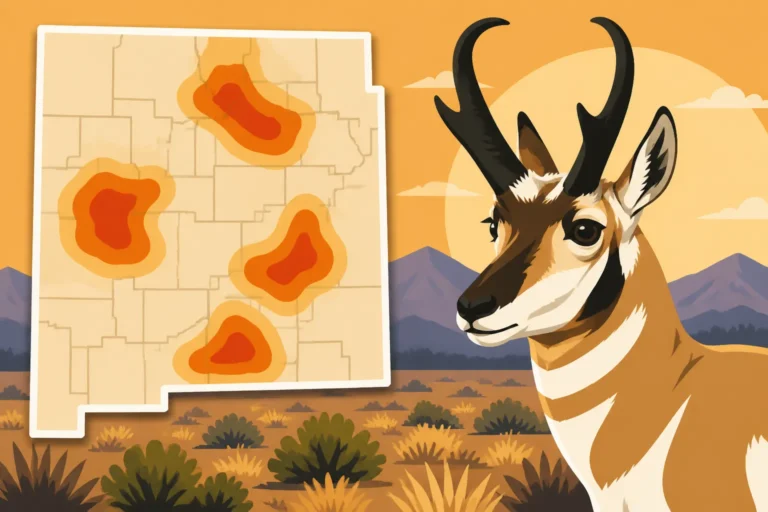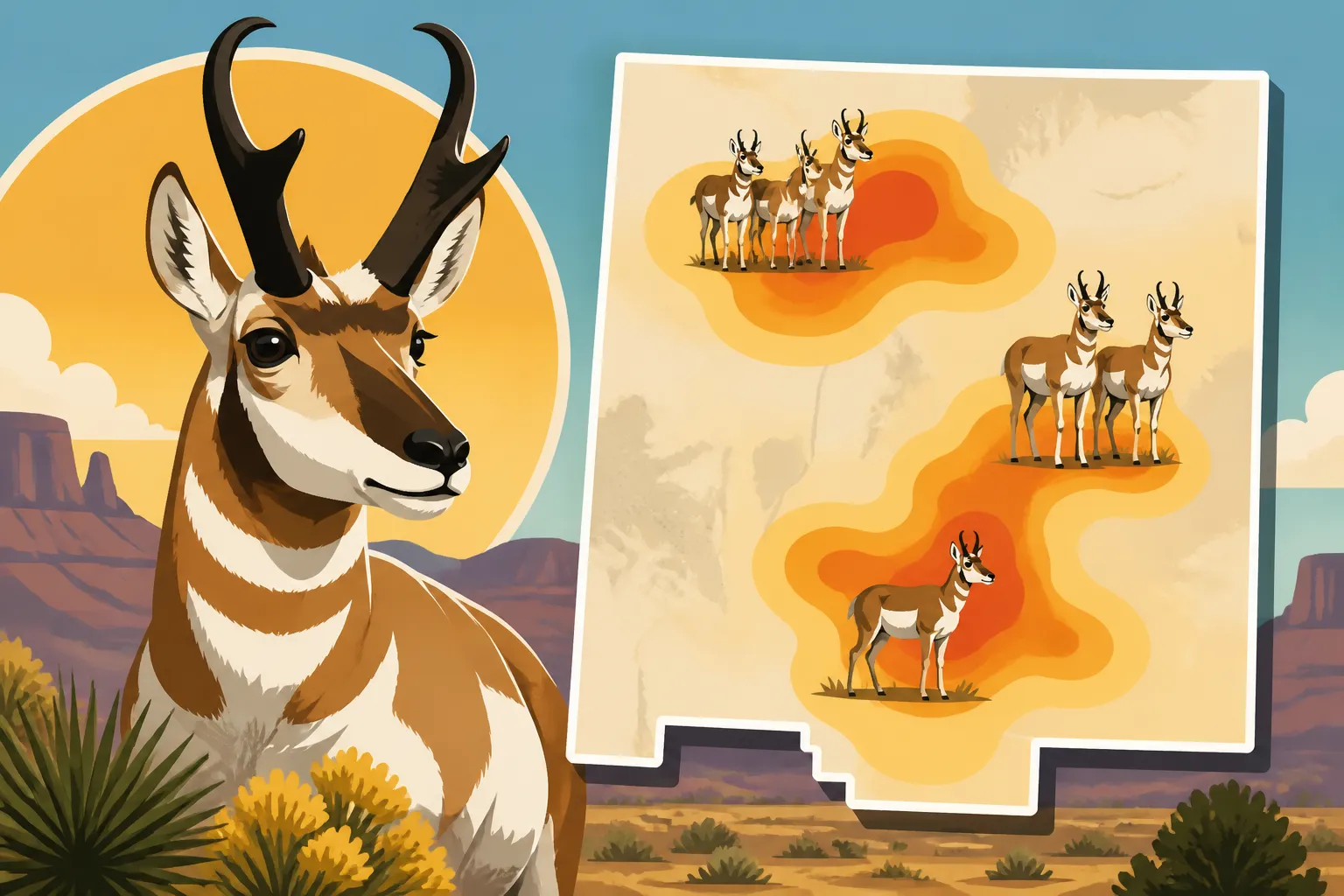
Where New Mexico Pronghorn Concentrate
Figuring out where to even begin looking for pronghorn in New Mexico can feel like trying to find a needle in an impossibly large haystack. These incredible animals, often called speed goats, live up to their name by ranging across vast, open landscapes, making it incredibly challenging to pin down their favorite spots. It’s not like hunting elk in timber where you can focus on specific bedding areas or wallows. Pronghorn are always on the move, and their chosen habitats are expansive. This guide is here to unravel the mystery, showing you precisely where New Mexico's pronghorn concentrate and how to effectively find them, turning those endless plains into a manageable hunting ground.
Understanding What Makes Good Pronghorn Habitat
Before you can truly understand where New Mexico’s pronghorn like to hang out, you first need to get inside their heads a little, or at least understand what drives their survival needs. These animals are uniquely adapted to their environment, and their concentrations are directly tied to very specific habitat features. It's not just about open space; it's about the right kind of open space.
The Critical Role of Open Grasslands and Prairies
Pronghorn are creatures of the open plains, and for good reason. Their incredible eyesight—often compared to an 8x binocular—is their primary defense mechanism. They need vast, unobstructed views to spot predators from miles away. This means they naturally gravitate towards expansive grasslands, prairies, and sagebrush flats where dense timber or rugged mountains are largely absent. In New Mexico, this preference often points to the eastern half of the state, where the landscape opens up significantly.
It's not just the visibility, though. These wide-open spaces also provide their preferred forage. Pronghorn are not grazers in the same way cattle or elk are; they are primarily browsers. They meticulously select specific plants, favoring forbs (broad-leafed plants) and shrubs over grasses, though they will consume grass, especially when it’s green and lush. A healthy pronghorn habitat, therefore, is a mosaic of diverse vegetation, not just a sea of uniform grass. When you're glassing, look for those subtle variations in plant life – patches of sagebrush, bitterbrush, or various wildflowers that might be invisible to the untrained eye but scream "dinner" to a pronghorn. The lack of tall vegetation also means fewer hiding spots for mountain lions or coyotes, giving the pronghorn a crucial advantage.
Water Sources and Adaptive Forage Preferences
While many associate pronghorn with arid environments, they do need water, but perhaps not in the way you might imagine for other big game. They are remarkably adapted to desert life and can often go for extended periods without drinking free water, instead obtaining much of their hydration from the plants they eat. Succulent forbs and cacti can provide a surprising amount of moisture. However, don't let this fool you into thinking water sources are irrelevant. During drier periods or in particularly arid units, knowing Water Sources That Concentrate Desert Game becomes absolutely critical.
These animals will certainly visit stock tanks, natural springs, and even riverbeds when available, especially during hot summer months or when forage is dry. These spots become undeniable magnets. However, their dietary adaptability means they can thrive in areas where other species might struggle. This is why you might find them in areas with seemingly sparse water. Their diet is incredibly varied, including things like sagebrush, rabbitbrush, various cactuses, and even some agricultural crops when they can access them. This flexibility is a huge part of their success story in New Mexico's diverse, often harsh, landscapes.
Terrain Features That Offer Subtle Advantages
Even though pronghorn prefer wide-open spaces, that doesn't mean they live on billiard-table-flat ground. Far from it. They expertly use subtle changes in topography to their advantage. Gently rolling hills, shallow draws, and broad washes provide crucial cover from the wind, breaks in visibility for temporary concealment, and even ambush points for predators. These features are also where you'll often find slight variations in vegetation, offering more diverse food sources.
When you're trying to locate them, don't just scan the horizons for black dots. Train your eyes to pick out those subtle rises or depressions. A pronghorn might be bedded just on the backside of a small knoll, invisible until you change your angle. This is where meticulous The Grid Glassing Method, Step by Step truly pays off. They use these small elevation changes to break up their silhouette, making them incredibly difficult to spot against the vast backdrop, even with their contrasting colors. Understanding these subtle terrain preferences is key to predicting where they might bed down during the heat of the day or travel between feeding areas.
New Mexico's Prime Pronghorn Territories
Now that we understand what pronghorn look for, let's talk about where in New Mexico you're most likely to find them. The state is vast and varied, but certain regions consistently hold higher concentrations and offer better hunting opportunities. It’s not a secret that the eastern side of the state is where the majority of the action happens for these unique big game animals.
The Expansive Eastern Plains
When anyone talks about pronghorn in New Mexico, their mind immediately jumps to the eastern plains. And for good reason! This region, stretching from the Texas border west towards the foothills of the Sangre de Cristos, is the quintessential "antelope country." It's characterized by vast, unbroken grasslands, expansive agricultural fields (especially dryland farming), and rolling topography. Units like 42, 43, 44, 45, 46, and 47 are often at the top of every pronghorn hunter's wish list.
These units boast massive tracts of private ranch land, which means that while the populations are strong, access can sometimes be challenging. However, there are also significant portions of State Trust Land and even some scattered Bureau of Land Management (BLM) acreage where hunters can find public access. The key here is research and preparation, often leveraging tools for E-Scouting a New Mexico Unit Before the Season to identify those crucial public parcels surrounded by private ground. The pronghorn on these plains are accustomed to the wide-open nature and are often found in larger herds, making glassing an essential part of the hunt. During the rut in late September and early October, the plains come alive with bucks rounding up their harems, offering exciting opportunities for spot-and-stalk hunting.
Central and West-Central Plateau Regions
While the eastern plains get most of the attention, don't overlook the central and west-central plateau regions. Areas like the San Agustin Plains, located primarily in Unit 13 and stretching into parts of Unit 17, and other units west of the Rio Grande like 20, 21, and 22, also hold viable pronghorn populations. The terrain here can be a bit more broken than the eastern plains, with more juniper, pinyon, and sagebrush mixed into the grasslands. This provides a different kind of challenge and a different aesthetic for the hunt.
The pronghorn here tend to be a little more scattered, often found in smaller herds, and might utilize the more undulating terrain for cover more frequently. This can make them a bit tougher to spot initially, but also sometimes offers better opportunities for a stalk, as the terrain itself can hide your approach. These units often have a higher percentage of public land, including extensive BLM and National Forest grasslands, which can be appealing for DIY hunters looking to avoid private land access issues. While the populations might not be as dense as the far eastern plains, these areas offer quality hunting and a genuine feeling of remote Western adventure.
Southern Desert Grasslands
Further south, into New Mexico's Chihuahuan Desert influence, you'll still find pockets of pronghorn. Units like 23, 24, 25, and even parts of 26 can hold good numbers, particularly in the vast, rolling grasslands that punctuate the desert ranges. The habitat here is typically drier, with sparser vegetation, more creosote, and mesquite mixed with various desert grasses. The pronghorn in these regions are incredibly tough and well-adapted to the harsh conditions.
Hunting these southern units often requires a different strategy. The game can be more spread out, and the heat, especially during early season hunts, can be a significant factor. Staying hydrated and managing your exertion is paramount. Think about Heat Management on an Early Season Hunt if you draw one of these tags. While densities might not rival the eastern plains, these hunts can be incredibly rewarding, offering a unique desert hunting experience. The populations here are managed carefully, and drawing a tag in these units can be a real privilege.
Key Units for Pronghorn Hunting
So, you've decided New Mexico is where you want to chase pronghorn. Great choice! Now, let's get down to the brass tacks: which units should you be focusing on? This isn't just about where the animals live; it’s about where you have the best chance of drawing a tag and having a successful hunt.
High-Density Units and Navigating the Draw Odds
New Mexico's draw system is famously tough, and for highly sought-after species like pronghorn, it can be especially competitive. The units with the highest pronghorn concentrations and historically excellent harvest success rates are, predictably, the hardest to draw. These include many of the eastern plains units like Unit 42, Unit 47, and Unit 43. These units consistently show strong numbers and often produce impressive bucks.
When you're strategizing for the draw, it's crucial to consult the New Mexico Pronghorn Draw Odds. These statistics, published annually by the New Mexico Department of Game and Fish (NMDGF), provide invaluable insight into your chances. While applying for a premium unit is tempting, don't be afraid to put in a second or third choice for units with slightly higher draw odds but still good pronghorn populations. Sometimes, choosing a unit with a slightly lower density but better access or fewer applicants can significantly increase your chances of success. Platforms like GoHunt offer excellent tools for analyzing these draw odds and making informed application choices, helping you find that sweet spot between quality and probability.
Public Versus Private Land Access
One of the biggest frustrations, and indeed, a critical challenge for pronghorn hunters in New Mexico, is access. While the eastern plains boast the highest concentrations, much of this prime habitat is located on private ranch land. This often means securing permission from landowners, which can be time-consuming and sometimes costly, or pursuing hunts offered by outfitters who have leased access. It’s a reality that can be disheartening for DIY public land hunters.
However, it's not impossible to find public land opportunities. New Mexico has extensive tracts of State Trust Land and Bureau of Land Management (BLM) properties. A valid New Mexico hunting license acts as your easement to hunt on State Trust Land, which is a fantastic benefit. The trick is identifying these public parcels, especially those that aren't landlocked by private property. This requires diligent e-scouting with tools that show land ownership boundaries, coupled with physical scouting to ensure you can legally access the ground. Some central and west-central units tend to have a higher percentage of publicly accessible land, potentially offering a more straightforward DIY experience. Always respect private property boundaries and seek permission if there's any doubt. Getting written permission is always the safest bet.
Spotlight on Specific Productive Units
Let's dive into a couple of units that consistently offer good pronghorn hunting, acknowledging the draw difficulty inherent to them.
Unit 47 (Northeastern Plains): This unit is a classic example of prime Pronghorn on the Eastern Plains Units. It's characterized by expansive grasslands, dryland wheat fields, and gently rolling hills. Pronghorn populations here are typically robust, and the open terrain makes for excellent glassing opportunities. However, a significant portion is private, so identifying public access points or securing landowner permission is paramount. The quality of bucks here can be exceptional, making it a highly desirable tag, but also one of the toughest to draw.
Unit 42 (East-Central New Mexico): Another jewel of the eastern plains, Unit 42 offers similar habitat to Unit 47 with strong pronghorn numbers. It shares the same challenges regarding private land access, but the rewards can be substantial. Hunters who put in the effort to scout thoroughly and secure access often find themselves in excellent pronghorn country. The open nature of this unit means you’ll be doing a lot of glassing, so make sure your optics are up to snuff.
Unit 13 (San Agustin Plains Area): Moving west, Unit 13 offers a different flavor of pronghorn hunting. The San Agustin Plains are vast, high-altitude grasslands framed by mountains, and they hold a solid population of pronghorn. While not as high-density as some eastern units, the public land access (largely BLM and National Forest) is generally more extensive. The terrain can be a bit more broken with scattered stands of pinyon and juniper, which can sometimes aid in stalks but also makes spotting them initially a bit harder. This unit provides a fantastic experience for those looking for a DIY public land hunt.
Here’s a quick overview of some key units and their general characteristics for pronghorn:
| Unit Number | General Location | Primary Terrain Type | Public Land Access | Draw Difficulty (General) | Notes |
|---|---|---|---|---|---|
| 42 | East-Central | Rolling Grasslands, Farms | Moderate | High | High density, excellent trophy potential. |
| 43 | Northeastern | Open Plains, Agriculture | Moderate | High | Consistent numbers, often good buck quality. |
| 47 | Northeastern | Grasslands, Croplands | Moderate | High | One of the best for trophy bucks. |
| 13 | West-Central (San Agustin) | High-Altitude Grasslands | High | Medium-High | Good public access, unique mountain views. |
| 20 | Central-West | Sagebrush Flats, Grass | Moderate | Medium | More broken terrain, smaller herds. |
| 21 | Central-West | Mixed Grassland, Junipers | Moderate | Medium | Decent public land opportunities. |
Scouting and Locating Pronghorn Effectively
Drawing a New Mexico pronghorn tag is just the first step. The real challenge, and the real fun, begins with finding these incredibly alert animals in their vast habitats. It’s a game of patience, optics, and smart strategy.
Leveraging E-Scouting Before You Go
Before you even pack your truck, the most productive scouting happens right from your computer or tablet. Modern mapping applications are absolutely revolutionary for pronghorn hunting. Services like GoHunt, OnX Hunt, or BaseMap allow you to analyze a unit's terrain, land ownership, and potential hotspots in incredible detail. Look for:
- Expansive Grasslands and Prairies: Identify large, open areas with minimal tree cover. These are your primary search zones.
- Water Sources: Mark all visible stock tanks, natural springs, and even intermittent drainages. Even if pronghorn don’t need to drink daily, these are undeniable attractants, especially in arid areas.
- Subtle Topography: Identify rolling hills, shallow draws, and prominent ridges. These are key for finding bedded animals or planning a stalk.
- Land Ownership: Crucially, differentiate between private, State Trust, and BLM lands. This dictates where you can legally hunt and where you need to seek permission. Don't waste time e-scouting private ground you can't access unless you plan on knocking on doors or booking an outfitter.
By spending hours virtually "walking" the unit, you can narrow down vast tracts of land to a handful of promising areas, saving you valuable time and fuel in the field. Think about potential travel corridors between feeding and bedding areas, and try to anticipate how the animals might move throughout the day based on the available cover and resources.
Mastering Field Scouting and Glassing
Once you're actually in the field, your best friend for pronghorn hunting will be your optics. Good quality binoculars (10x-15x) and a powerful spotting scope (20-60x or higher) on a stable tripod are non-negotiable. Pronghorns are often spotted at extreme distances, sometimes a mile or more away, and Optics Power for New Mexico's Open Country is absolutely essential for not only spotting them but also for Field Judging a Pronghorn Buck From Distance.
Find a vantage point that offers wide, expansive views of the country you've identified during your e-scouting. Get comfortable, set up your tripod, and methodically Grid Glassing a Basin Without Missing Bucks. Start close and work your way out, slowly sweeping the landscape. Don't rush. Take breaks. Your eyes will fatigue, and you'll miss animals if you're not disciplined. Look for movement, subtle color changes, or the distinct profile of a pronghorn. They can disappear remarkably well in plain sight, especially when bedded.
Consider the time of day. Early mornings and late evenings are typically when pronghorn are most active, feeding and moving. Mid-day often finds them bedded, often on a slight rise where they can still maintain vigilance over their surroundings. Pay extra attention to any areas with diverse forage or proximity to water during these active periods.
Reading Sign and Understanding Pronghorn Behavior
While pronghorn don't leave the kind of obvious sign an elk or deer might, there are still clues to their presence and recent activity. Look for tracks in dusty roads or around water sources. Droppings can indicate consistent feeding or bedding areas. Pay attention to vegetation, especially forbs and shrubs, that show signs of browsing.
Understanding their behavior is also crucial. Pronghorns are notoriously curious. While this curiosity can sometimes be used to your advantage during a stalk, their vigilance is legendary. They are herd animals, and there's almost always one pair of eyes scanning for danger. When you spot a herd, observe their behavior. Are they relaxed and feeding? Are they skittish and frequently looking up? How are they interacting with each other, especially during the rut when bucks are actively chasing does?
Knowing when The Elk Rut Peaks in New Mexico (a different species, but illustrates the importance of timing) helps understand behavior patterns. For pronghorn, the rut typically peaks in late September into early October. During this time, bucks become very active, chasing does, establishing dominance, and often being less cautious than usual. This can create excellent opportunities, but also means they are constantly on the move, requiring quick decision-making and efficient stalking.
Factors Influencing Pronghorn Distribution
Pronghorn might seem like static creatures once you find them in a particular area, but their distribution across the landscape is constantly influenced by a variety of factors. Understanding these dynamics can give you a significant edge in predicting where they'll be and why.
Weather and Seasonal Movements
New Mexico's climate swings wildly, from scorching summer heat to harsh winter freezes, and these extremes directly impact where pronghorn are found. How Drought Affects Desert Deer Numbers also applies to pronghorn, as prolonged dry spells can severely reduce the availability of palatable forage and free water sources. In such conditions, pronghorn will concentrate around remaining green-ups, active stock tanks, or irrigated fields if accessible.
Conversely, mild winters might allow them to remain dispersed across higher elevation or more exposed areas for longer. Heavy snowfalls, however, will push them down to lower elevations, into areas with less snow accumulation, or into agricultural lands where they can access food. These movements aren't always dramatic migrations like those of elk, but rather subtle shifts within their home range as conditions dictate. Always check weather forecasts and recent precipitation levels for your unit – they can tell you a lot about where to start looking.
Land Use and Agricultural Impacts
The way humans use the land significantly shapes pronghorn distribution. In many of New Mexico's eastern plains units, vast tracts of agricultural land are interspersed with native grasslands. Pronghorn are adaptable and will often utilize these farm fields, particularly for dryland wheat, alfalfa, or even sunflower fields, for forage. These cultivated areas can become major attractants, especially when natural forage is scarce or dry.
However, agricultural fences, particularly net wire or woven wire fences, can pose significant barriers to pronghorn movement. Unlike deer and elk, pronghorn prefer to crawl under fences rather than jump over them. A fence that is too tight to the ground can effectively block access to prime habitat or water, funneling animals into areas where they can easily pass. Understanding these fencing patterns from your e-scouting can help you predict travel corridors and bottlenecks. Grazing pressure from cattle can also influence pronghorn distribution; heavily grazed pastures might have less preferred forage, pushing pronghorn to other areas. Conversely, moderate grazing can sometimes promote the growth of forbs that pronghorn favor.
Predator Pressure and Human Activity
Pronghorn are perpetually on alert, and both natural predators and human activity play a role in where they choose to concentrate. Major predators include coyotes, bobcats, and increasingly, mountain lions, especially in more broken or rugged terrain. If a particular area experiences heavy predator pressure, pronghorn herds may become more skittish and move to areas where they feel more secure, often more open and expansive spaces where their speed and eyesight give them an advantage.
Human activity, including ranching operations, oil and gas development, and even recreational use of public lands (like off-roading or camping), can also influence their movements. Areas with frequent human disturbance might see pronghorn shifting to more remote or less-trafficked regions. This is why targeting less accessible public land parcels, or scouting away from main roads, can sometimes lead to finding less pressured animals. Being aware of these pressures helps you anticipate where pronghorn might seek refuge or avoid, even in seemingly ideal habitat.
Conservation and Management Efforts
New Mexico’s pronghorn populations don't just thrive on their own; they are carefully monitored and managed by the New Mexico Department of Game and Fish (NMDGF). These conservation efforts are crucial for maintaining healthy herds and ensuring sustainable hunting opportunities for future generations.
New Mexico Game and Fish Initiatives
The NMDGF employs a variety of strategies to manage pronghorn, much like they do for other big game species. This includes annual aerial surveys to estimate population numbers, assess herd health, and determine fawn-to-doe ratios, which are vital indicators for future population trends. These surveys inform harvest quotas and tag allocations, ensuring that hunting pressure remains sustainable. For those interested in the nitty-gritty, reviewing Where New Mexico Publishes Harvest Data and Reading a Herd Unit Management Plan can provide a deeper understanding of the biological science behind the draw.
The department also works on disease monitoring, particularly for issues that could impact herd health. They manage habitat projects aimed at improving forage availability, enhancing water sources, and reducing barriers to pronghorn movement, such as modifying fences to be pronghorn-friendly. These proactive measures are essential in mitigating the impacts of drought, land use changes, and other environmental pressures. Their goal is to maintain robust and resilient pronghorn populations across suitable habitats in New Mexico.
Habitat Improvement and Restoration
A significant part of pronghorn conservation focuses on habitat. Because pronghorn rely so heavily on healthy grasslands and sagebrush ecosystems, efforts to improve and restore these areas are paramount. This can involve reducing invasive species that outcompete native forage, implementing prescribed burns to promote new growth and enhance plant diversity, or even reseeding areas with native grasses and forbs.
Partnerships with private landowners, federal agencies like the BLM and Forest Service, and conservation organizations like the Rocky Mountain Elk Foundation or Western Landowners Alliance are critical in these efforts. Many of New Mexico's pronghorn live on private property, so collaborating with ranchers on grazing management practices and habitat enhancements on their lands has a massive impact. Projects aimed at improving Water Sources That Concentrate Desert Game are also vital, ensuring that pronghorn have access to reliable hydration, especially during prolonged dry periods. These ongoing efforts ensure that the unique landscapes pronghorn call home remain vibrant and productive, allowing these incredible animals to continue to thrive across New Mexico.
Disclaimer
Please remember that hunting regulations, seasons, and unit boundaries can change. Always consult the official New Mexico Department of Game and Fish (NMDGF) proclamation for the most current and accurate information before planning any hunt. This guide is for informational purposes only and should not replace official sources.