Persian Ibex in New Mexico’s Florida Mountains
The very thought of hunting Persian ibex in New Mexico's rugged Florida Mountains ignites a fire in the hearts of hunters, but let's be honest, it's also a quest fraught with immense physical and mental challenges. This isn't your average whitetail stroll; it's a brutal, exhilarating dance with one of North America's most elusive and awe-inspiring big game animals. This guide is here to unravel the mysteries of this unique hunt, offering a realistic, in-depth look at what it truly takes to pursue these magnificent creatures on their home turf.
The Journey of Persian Ibex to New Mexico's Florida Mountains
Imagine transplanting a species from the far-off mountains of Iran to the arid, jagged peaks of southern New Mexico. It sounds like a storyline from an adventure novel, but that's precisely the incredible origin story of the Persian ibex population that now calls the Florida Mountains home. This wasn't a casual decision; it was a deliberate, ambitious conservation effort by the New Mexico Department of Game and Fish (NMDGF) in the late 1960s. The goal was to introduce a new, challenging big game animal for hunters, while also utilizing habitat that wasn't ideal for native species.
Why the Florida Mountains Were Chosen for Ibex Introduction
The selection of the Florida Mountains wasn't arbitrary; it was a carefully calculated move based on geological and ecological suitability. The NMDGF saw a striking resemblance between the steep, rocky, sparsely vegetated slopes of the Florida Mountains and the native habitat of Persian ibex in the Middle East. These mountains, rising sharply from the Chihuahuan Desert floor near Deming, offered the kind of vertical escape cover and rugged terrain that ibex thrive in, protecting them from predators and providing the elevation they prefer. They're an island range, effectively isolated, which helped with containing the population and preventing dispersal into less suitable areas. The foresight to choose this particular, somewhat isolated, and incredibly challenging environment has paid off, creating a truly unique hunting experience found nowhere else in the Lower 48.
Early Management and Population Growth
The initial introduction involved releasing several groups of Persian ibex, sourced from a herd in Arizona, into the Florida Mountains. The early days were critical, as wildlife biologists meticulously monitored the transplanted animals to assess their adaptation, reproduction rates, and overall health. Despite the harsh desert environment, the ibex proved remarkably resilient, quickly establishing themselves and beginning to reproduce. Their natural hardiness and ability to navigate extreme vertical terrain gave them a significant advantage. Within a few decades, the population had grown sufficiently to allow for limited hunting opportunities. The success of this introduction is a testament to the animal's adaptability and the dedication of the NMDGF in creating and managing this unique hunting resource. Without these foundational efforts, the thrill of a Florida Mountains ibex hunt would simply not exist. For more on the specifics of their arrival, you might be interested in How Ibex Were Introduced to New Mexico.
Current Status and Conservation Efforts
Today, the Persian ibex herd in the Florida Mountains is considered well-established and healthy, albeit managed very conservatively. The NMDGF continues to monitor the population through aerial surveys and ground observations, ensuring that harvest quotas align with sustainable population levels. These are not large herds spread across vast landscapes; they are concentrated in the incredibly steep and broken country of the Florida Mountains. Conservation efforts focus on maintaining habitat integrity, managing for potential diseases, and carefully regulating hunting pressure to ensure the long-term viability of this special herd. Hunters play a vital role in these conservation efforts, not just through license fees, but also by adhering to strict regulations and reporting harvest data, which helps biologists make informed decisions about the future of this truly extraordinary game animal.
The Unique Challenge of Hunting Ibex in the Florida Mountains
Hunting Persian ibex in New Mexico's Florida Mountains isn't just a hunt; it's an expedition into an unforgiving, awe-inspiring landscape that will test every fiber of your being. Forget everything you know about typical deer or elk hunting; this is a completely different beast, both literally and figuratively. The Florida Mountains are a fortress, and the ibex are its masters.
Extreme Terrain and Elevation
The Florida Mountains don't gradually rise; they explode from the desert floor, presenting an almost vertical world of rock, scree, and sparse vegetation. You'll be navigating incredibly steep ascents and descents, often on loose, unstable footing. Trails are few and far between, and much of the travel is akin to mountaineering, requiring handholds, careful foot placement, and a healthy respect for gravity. While the overall elevation isn't as high as the Rocky Mountains, the constant, dramatic elevation changes within the range are brutal. You'll often start your day at a lower elevation, say around 4,500 feet, and quickly climb thousands of feet to reach the ibex's preferred haunts in the upper reaches, sometimes pushing past 7,000 feet. This constant up and down, often with heavy gear, will quickly reveal any weaknesses in your physical conditioning. This isn't merely about walking; it's about scrambling, climbing, and sometimes crawling through truly punishing terrain, making Preparing Physically for a High Elevation Hunt absolutely critical, even at these "lower" elevations.
Unpredictable Weather and Temperatures
Desert mountains are notorious for their wild temperature swings, and the Florida Mountains are no exception. Depending on the season, you could start your day in frigid pre-dawn temperatures, only to be baking under a scorching sun by midday. Early season hunts can be brutally hot, demanding meticulous attention to hydration and heat management. Late season hunts, especially in winter, can bring unexpected snow, ice, and biting winds, turning already treacherous footing into a truly dangerous proposition. You need to be prepared for everything, from blistering heat that demands you carry excessive amounts of water – truly, Water You Must Carry on a Desert Day Hunt is no joke here – to sudden cold fronts that can chill you to the bone. Proper layering, robust rain gear, and a keen eye on the forecast are non-negotiable. The weather adds another layer of complexity to an already demanding hunt, punishing the unprepared and adding an element of raw survival to the experience.
The Elusive Nature of the Ibex
Persian ibex are built for this terrain, and they use it to their absolute advantage. Their keen eyesight, incredible agility, and natural camouflage make them masters of concealment. They can seemingly vanish into the rocky landscape, blending seamlessly with their surroundings. Once spotted, closing the distance for a shot is a monumental task. They are constantly moving, often in small, scattered groups, making it difficult to predict their next move. Their escape routes are almost always vertical, allowing them to ascend sheer rock faces with astonishing speed, leaving a hunter scrambling far below. Getting within bow range is a feat that very few accomplish, and even rifle hunters will find themselves making long, difficult shots. The ibex's survival instincts are finely tuned, and they've evolved in an environment where constant vigilance is the key to life. This means you, the hunter, must match that vigilance, often glassing for hours on end, then executing a flawless, physically exhausting stalk.
Understanding Ibex Behavior and Habitat
To successfully hunt Persian ibex, you must first become a student of their ways. These animals are a product of their environment, and their behavior is intimately tied to the brutal yet beautiful landscape of the Florida Mountains. Understanding their daily patterns, social dynamics, and what drives their movements is paramount to even having a chance at a successful hunt.
Daily Movement and Feeding Habits
Ibex are primarily diurnal, meaning they are most active during the day, though their activity peaks often coincide with dawn and dusk to avoid the harshest midday sun or to take advantage of cooler temperatures. They are browsers and grazers, adapting their diet to the sparse vegetation available in their rocky, desert mountain home. You'll often find them nibbling on mountain mahogany, various forbs, and grasses that manage to cling to life in the crevices and sheltered slopes. Their feeding habits are cautious; they move deliberately, constantly scanning their surroundings.
During the cooler parts of the day, especially early morning and late afternoon, they'll typically be on open slopes or benches, moving slowly as they feed. As the sun climbs higher, they'll seek out shade, often bedding down on north-facing slopes, under rock overhangs, or in deep canyons where they can escape the intense heat. Observing these patterns is crucial for planning your approach. You need to know when they're most likely to be moving and when they're likely to be bedded, providing an opportunity for a careful stalk. This often means spending long hours observing from a distance, just waiting for the right moment.
Social Structure and Herd Dynamics
Persian ibex exhibit a fascinating social structure that influences where and how you might find them. Adult males, or "billies," often form bachelor groups for much of the year, usually consisting of two to five animals. These groups tend to be found higher up in the most rugged, inaccessible terrain, constantly vying for dominance and growing those impressive scimitar-shaped horns. They are often solitary in old age, but even then, they prefer the company of other males.
Females, or "nannies," along with their young, form larger mixed herds. These nursery groups can range from a few individuals to more than a dozen. While they also prefer steep terrain, nannies are generally found at slightly lower elevations or on less extreme slopes compared to the most reclusive billies. During the rut, typically in late fall and early winter, the billies will descend from their high strongholds to join these nanny herds, at which point the mountains come alive with the sounds of clashing horns as males compete for breeding rights. Understanding these seasonal and social dynamics can help you focus your efforts. If you're after a trophy billy, you'll likely need to go higher and be prepared for more extreme terrain, whereas finding nannies might be a good starting point to locate a bachelor group during the rut.
Preferred Habitat and Water Sources
The Florida Mountains, with their dramatic elevation changes and a mix of rocky slopes, sparse scrub, and occasional pockets of timber, provide ideal ibex habitat. They thrive in the steepest, rockiest areas, using the verticality for safety. You'll find them congregating around rocky outcrops, rimrock edges, and deep canyon systems. These areas offer both protection and vantage points, allowing them to spot potential threats from afar. Their impressive agility on these sheer cliffs is truly something to behold.
Water is a critical, often limiting, resource in this arid environment, and it significantly influences ibex movements. While ibex are incredibly efficient at extracting moisture from the plants they eat, they still need to drink, especially in hotter months. They will travel to known springs, seeps, or man-made guzzlers. Identifying these water sources on your map and understanding their proximity to good bedding and feeding areas can be a game-changer. These areas often act as natural funnel points, providing excellent spots for patient observation. However, they are also sensitive areas, and ethical hunters must always respect the wildlife and the fragile ecosystem, ensuring minimal disturbance around these vital resources.
Scouting and Preparation for an Ibex Hunt
Successfully hunting Persian ibex hinges as much on meticulous preparation before the hunt as it does on your actions in the field. This isn't a hunt you can simply show up for and expect to succeed. The Florida Mountains demand respect, foresight, and a rigorous approach to scouting and physical conditioning.
E-Scouting the Florida Mountains
Long before you set foot in the Florida Mountains, your hunt begins from behind a screen. E-scouting is absolutely indispensable for an ibex hunt. Start with high-quality satellite imagery and topographical maps. Programs like GoHunt or OnX Hunt are invaluable, allowing you to pour over every ridge, canyon, and rock formation. Look for dark timber pockets, north-facing slopes, and areas with significant vertical relief – these are prime ibex bedding and escape zones. Pay close attention to prominent terrain features like distinct peaks, saddles, and drainages that can serve as navigation points or potential travel corridors for the animals.
Identify potential access points, parking areas, and possible routes to glassing vantage points. Look for subtle benches or shelves on steep faces where ibex might feed or bed. Mark potential water sources, even small seeps, as these can be magnets in dry periods. By thoroughly understanding the topography, you can identify areas that offer both concealment and lines of sight, helping you plan your approach and escape routes. Remember, a single good glassing knob identified during e-scouting can save you days of unproductive hiking in the field. Also, make sure to check New Mexico Ibex Draw Odds before you even start dreaming too much!
Physical Conditioning and Training Regimen
I cannot stress this enough: an ibex hunt is a physical marathon, not a sprint. The Florida Mountains will humble even the fittest individuals if they're not specifically trained for this kind of extreme, vertical punishment. Your training regimen needs to be intense and focused on endurance, strength, and agility. Incorporate exercises that mimic mountain hunting: long hikes with a loaded pack, stair climbing, lunges, and squats. Don't just walk on flat ground; find hills, steep trails, or even stadium stairs and punish yourself with ascents and descents.
Practice hiking with the boots you intend to wear, broken in and comfortable. Consider wearing your full hunting pack, loaded with water and gear, during your training hikes to simulate the actual weight you'll be carrying. Focus on strengthening your core, legs, and ankles – these are critical for stability on unstable terrain. High-intensity interval training (HIIT) can also be beneficial for improving cardiovascular fitness and replicating the bursts of energy needed for quick climbs or retrieves. Start your conditioning months in advance, gradually increasing intensity and duration. Being physically prepared won't just increase your odds of success; it will dramatically improve your safety and enjoyment of the hunt.
Pre-Season Reconnaissance and Glassing
If at all possible, conduct some pre-season reconnaissance. Even a day trip can be incredibly enlightening. Hike into areas you've identified during e-scouting to verify access, evaluate terrain difficulty, and confirm potential vantage points. This allows you to calibrate your maps and satellite imagery with real-world conditions. During this recon, spend time glassing. Even if you don't see ibex, you'll learn a tremendous amount about how light and shadows play on the mountain, where the animals might prefer to bed, and how challenging the approaches truly are.
Identify natural funnels, potential bedding areas, and feeding zones. Get a feel for the prevailing wind patterns in the canyons. This hands-on experience, even if brief, is invaluable. If you can't go in person, talking to hunters who have experience in the Florida Mountains is the next best thing. Read forums, watch videos, and gather as much intel as possible. Combine this with your e-scouting to build a comprehensive plan, marking key waypoints for potential spike camps, water caches, and emergency exits. Remember, being prepared means having a plan A, B, and C for every scenario the mountain might throw at you.
Essential Gear for Florida Mountains Ibex Hunting
Venturing into the Florida Mountains for ibex demands a very specific and robust gear list. This isn't the place to skimp or bring untested equipment. Every item needs to be reliable, functional, and suitable for the extreme conditions you'll face. The right gear won't guarantee a trophy, but the wrong gear can absolutely guarantee a miserable, or even dangerous, hunt.
High-Quality Optics and Tripod
Your optics setup is arguably the most critical component of your ibex hunting arsenal. These animals are masters of camouflage in a vast, broken landscape. You'll spend the vast majority of your hunt behind glass.
- Spotting Scope: A high-power spotting scope (20-60x or even 27-80x) is non-negotiable. Look for one with excellent light transmission and sharp resolution, like a Kowa or a high-end Vortex. It needs to be able to resolve fine details at extreme distances, allowing you to pick out an ear flick or a horn tip against a cluttered backdrop.
- Binoculars: A good pair of 10x or 12x binoculars (Zeiss, Swarovski, Maven) are your primary scanning tool. They need to be comfortable for all-day use and have a wide field of view to cover ground quickly.
- Tripod: Both your spotting scope and binoculars (if you have an adapter) must be mounted on a sturdy, lightweight tripod. Freehand glassing simply won't cut it for the hours of meticulous searching required. A carbon fiber tripod is a worthy investment, reducing weight without sacrificing stability. Setting up a Tripod Setup for Glassing From a Ridge correctly can save your neck and your patience. You'll be using The Grid Glassing Method, Step by Step to systematically break down the vastness, and a tripod is essential for that.
Durable Footwear and Layered Clothing
Your feet will take a beating, and your clothing needs to adapt to dramatic temperature swings.
- Boots: Invest in high-quality, stiff-soled mountain hunting boots with excellent ankle support. Brands like Kenetrek, Crispi, or Schnee's are popular for a reason. They need to be waterproof, breathable, and provide superior traction on loose rock and steep angles. Break them in thoroughly before the hunt – blisters will ruin your hunt faster than anything.
- Socks: Multiple pairs of wool or synthetic blend socks are essential. Bring varying thicknesses to layer as needed and change them frequently to prevent blisters.
- Base Layers: Moisture-wicking merino wool or synthetic base layers are key for regulating body temperature. They'll keep you warm when it's cold and help wick sweat away when you're exerting yourself.
- Mid-Layers: Fleece or puffy jackets provide insulation for chilly mornings and evenings.
- Outer Shell: A durable, waterproof, and windproof outer jacket and pants are critical for protection against sudden storms or biting winds at elevation. Lightweight but tough materials are preferred to avoid snags on sharp rocks. Layering for Gila Temperature Swings is a concept that directly applies to the Florida Mountains as well.
Backpack, Hydration, and Navigation
These items are your lifeline in the backcountry.
- Backpack: A capable hunting pack, preferably 30-50 liters, is needed to comfortably carry optics, water, food, extra layers, and potentially pack out meat. Look for one with good load distribution and a robust frame. Brands like Kifaru, Stone Glacier, or Mystery Ranch are excellent choices.
- Hydration System: A minimum of 3-4 liters of water capacity is a must, whether in a bladder, bottles, or a combination. Consider bringing a water filter or purification tablets for refilling from reliable sources if available, but always know Water You Must Carry on a Desert Day Hunt due to its scarcity.
- Navigation Tools: A reliable GPS device (like a Garmin inReach or a handheld unit) loaded with your e-scouted waypoints, coupled with a downloaded map on your smartphone (using GoHunt or OnX Hunt), is non-negotiable. Always carry a physical map and compass as a backup, and know how to use them. Cell service is unreliable at best.
- Emergency Kit: First-aid kit, headlamp with extra batteries, fire starter, space blanket, cordage, and a small multi-tool are vital. You are often hours, if not a full day, from help.
Strategies for a Successful Ibex Stalk
Actually getting within shooting range of a Persian ibex in the Florida Mountains is a masterclass in patience, calculated risk, and physical prowess. This is where all your preparation culminates, and every decision can make or break your hunt. It's a grueling test of will, but the rewards are immeasurable.
Patient Glassing and Locating Ibex
The first, and often longest, phase of any ibex hunt is relentless glassing. You simply cannot effectively hunt these animals by still-hunting or blindly walking. Find a high vantage point that allows you to survey vast expanses of the mountainside. Set up your spotting scope and binoculars on a sturdy tripod and systematically break down the terrain using The Grid Glassing Method, Step by Step. Look for subtle movements, a flash of white, a horizontal line where there should be vertical, or the distinct shape of an ibex horn.
Be patient. Ibex often appear to materialize out of thin air. They might be bedded in the shade, completely hidden, and only reveal themselves when they stand up to stretch or feed. Spend hours, literally, picking apart every rock, every shadow. Early morning and late afternoon are typically the best times, as the animals are more active. Once you spot an animal, don't immediately rush in. Observe their behavior, direction of travel, and assess if it's a billy you want to pursue. Try to locate the entire group, as there are often more eyes than you initially see. This initial observation phase will dictate your entire stalk.
Executing a Spot and Stalk Approach
Once an ibex or a group has been located, the real work begins: the stalk. This is where your e-scouting and physical conditioning truly come into play. Just as with Spot and Stalk Tactics for Barbary Sheep, which share similar mountainous habitats, the principles are the same: analyze the terrain, wind, and the animals' current position and predicted movement.
- Plan Your Route: Use your maps and satellite imagery to meticulously plan your approach. Look for terrain features that offer concealment – ridges, drainages, rock formations, and pockets of scrub. Avoid skylining yourself. Always have an escape route or a fallback position in mind.
- Mind the Wind: Ibex have an excellent sense of smell. The fickle mountain winds can swirl and change direction rapidly, especially in deep canyons. Constantly monitor the wind using a wind checker. One wrong gust can blow your entire stalk.
- Move Slowly and Stealthily: Your movements must be excruciatingly slow and deliberate. Take one step at a time, checking your footing and the ground ahead for loose rocks or noisy debris. Watch the ibex for any signs of alarm; if they pick up their heads, freeze.
- Utilize Cover: Stick to the shaded sides of ridges, the bottom of draws, or behind any natural structure that breaks up your outline. The goal is to remain completely undetected until you are in a shooting position. This might mean crawling on your hands and knees for significant distances.
- Be Prepared for Verticality: Your stalk will almost certainly involve significant vertical climbing or traversing steep slopes. Be comfortable with exposure and understand that sometimes, the only way to get closer is to go up or down an impossibly steep face.
- Patience at the Finish: Once you're nearing your target, the final approach often requires the most patience. Wait for the animal to be in a good, settled position, broadside, and unaware. If they are feeding or looking away, use that window to close the last few yards.
Patience and Persistence
Ibex hunting in the Florida Mountains is not for the faint of heart. You will be tested, physically and mentally. There will be stalks that blow up, often through no fault of your own – a sudden wind shift, a rockslide, or an unseen animal busting you. There will be long, arduous climbs that yield no sightings. You'll likely face setbacks, exhaustion, and moments of doubt.
The key to success is unwavering patience and persistence. Don't get discouraged by failed attempts. Each blown stalk is a learning experience. Analyze what went wrong, adapt your strategy, and get back to glassing. The hunters who ultimately succeed are those who can endure the physical grind, maintain their mental focus, and keep putting one foot in front of the other, day after day, until an opportunity finally presents itself. It's a grind, but it's a grind that, when successful, delivers an unparalleled sense of accomplishment.
Judging an Ibex in the Field
When you finally spot an ibex after countless hours of glassing and grueling climbs, the adrenaline will surge. But before you commit to a stalk or squeeze the trigger, you need to make a quick, accurate assessment of the animal. Distinguishing a trophy billy from a younger male or even a nanny is crucial for ethical hunting and for ensuring you meet the legal requirements of your tag. This skill comes with practice and a keen eye for specific physical characteristics.
Horn Length and Curl
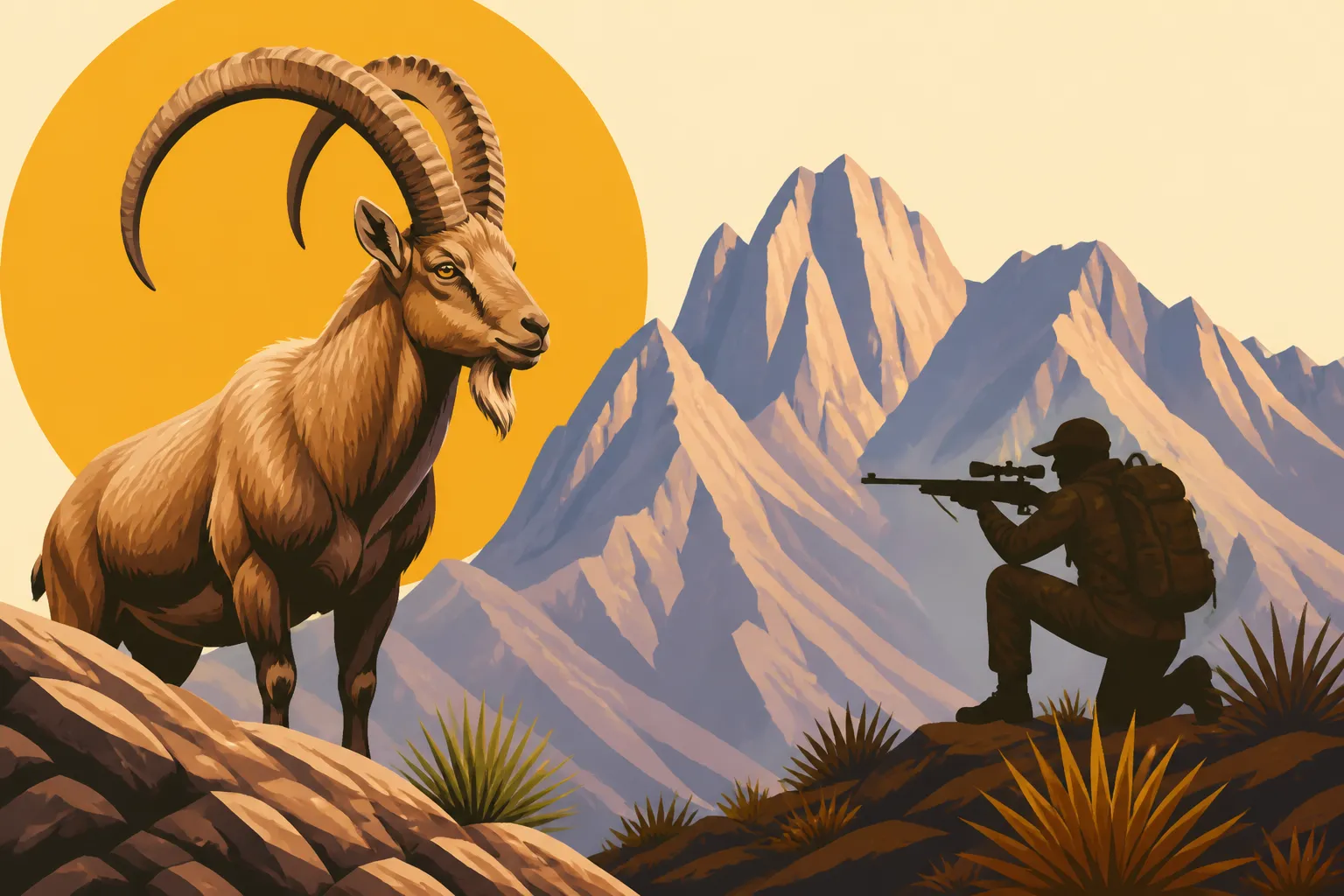
The most prominent feature for judging an ibex, especially a male, is its horns. Persian ibex are renowned for their magnificent, scimitar-shaped horns that sweep upward and backward in an impressive arch.
- Length: A mature billy will have horns that are noticeably long, often appearing to extend well past its back when viewed from the side. Young males will have shorter, thinner horns that might only reach the animal's shoulders or flank. A truly exceptional trophy will have horns approaching the 40-inch mark, with some exceeding it. Use environmental cues for estimation – if the horns appear as long as the animal's body, it's a good start.
- Mass and Annulations: Pay attention to the mass or thickness of the horns, especially at the base. Older billies will have thicker, more heavily ridged horns with prominent annulations (growth rings) that are close together, indicating years of growth. Younger animals will have smoother, thinner horns.
- Curl: The sweep and tightness of the curl are also indicators of age and maturity. Older billies often have a more pronounced, tighter curl, while younger animals' horns might be straighter or less developed in their curve.
It's helpful to practice field judging by looking at photos or videos of various ibex before your hunt. This mental preparation can make a big difference when the moment of truth arrives. For specific nuances of Judging an Ibex in the Florida Mountains, pay close attention to the unique horn characteristics of this subspecies.
Body Size and Age Indicators
While horns are the primary indicator, body size and other physical attributes can help confirm your assessment of an ibex's age and trophy potential.
- Body Size: Older billies are considerably larger and more muscular than younger males or nannies. They'll have a more robust, blocky build, especially in the chest and shoulder area. Young males will appear lankier and less developed.
- Muzzle and Face: Mature billies often have a more grizzled, greyish muzzle, especially around the face, compared to the darker, more uniform coloration of younger animals. This is similar to how you might judge an old mule deer buck.
- Mane: Adult males develop a distinct, dark mane that runs down their spine, often extending onto their chest. This mane becomes more prominent and darker with age. Nannies and young males will have a much less developed or absent mane.
- Beard: Mature billies also typically sport a noticeable dark beard on their chin, which can be quite long and shaggy in older specimens.
Distinguishing Males from Females
It's absolutely critical to be able to distinguish males from females, as your tag will specify whether you can harvest a ram (male) or either sex. While both sexes of Persian ibex have horns, there are very clear differences:
- Horn Size and Shape: Nannies have much smaller, thinner, and less dramatically curved horns compared to billies. Their horns are shorter, rarely extending much beyond their ears, and lack the heavy mass and pronounced annulations of a mature male.
- Body Size: Nannies are significantly smaller and more slender in body size than adult billies.
- Coloration: While both sexes share a generally brownish-tan coat, billies tend to have darker markings, especially the dark mane and beard. Nannies generally have a more uniform, lighter coloration.
- Behavior: During non-rut periods, nannies are almost always found in larger, mixed-age groups with young, while adult billies tend to be in bachelor groups or solitary, often in more extreme, higher terrain.
Here's a quick reference table to help visualize these differences:
| Feature | Male Ibex (Billy) | Female Ibex (Nanny) |
|---|---|---|
| Horns | Long, thick, scimitar-shaped, prominent annulations, often over 30 inches | Shorter, thinner, straighter, less prominent annulations, typically under 15 inches |
| Horn Mass | Heavy at the base, considerable mass | Thin throughout, lighter mass |
| Body Size | Large, muscular, blocky build | Smaller, more slender, graceful build |
| Mane | Distinct, dark mane along spine and chest (prominent with age) | Little to no mane |
| Beard | Present, can be long and shaggy (prominent with age) | Absent |
| Muzzle Color | Often grizzled/greyish with age | Darker, more uniform |
| Social Group | Bachelor groups or solitary; joins nannies during rut | Mixed herds with young |
| Preferred Terrain | Highest, most rugged, extreme vertical | Steep but often slightly lower or less extreme slopes |
Practice using your optics to observe these details from a distance. The ability to quickly and accurately judge an ibex in the field is a testament to your preparation and will ultimately lead to a more successful and ethical hunt.
New Mexico Ibex Draw Odds and Application Strategy
Drawing a New Mexico ibex tag is like winning a small lottery. These are among the most coveted and difficult tags to acquire in the state, largely due to the limited population and the once-in-a-lifetime nature of the hunt. Understanding the draw odds and having a solid application strategy is crucial for even getting a chance at this incredible experience.
Understanding the Low Draw Odds
The reality of New Mexico ibex tags is that the draw odds are incredibly low. We're talking single-digit percentages, often less than 1% for non-residents and not much higher for residents. The NMDGF issues a very small number of tags each year, typically between 15 and 30, depending on herd health and management objectives. These hunts are highly prized, leading to thousands of applicants competing for a handful of tags. There are no preference points or bonus points in New Mexico, meaning every applicant, new or old, has the same mathematical chance in the draw. This can be both frustrating and encouraging – frustrating because your loyalty doesn't improve your odds, but encouraging because you truly have an equal shot every year you apply.
The application period typically runs from late January to mid-March, with results usually posted in late April. You can check New Mexico Ibex Draw Odds on the NMDGF website or through resources like GoHunt to see the historical success rates for specific hunt codes. It’s a sobering reality, but one that emphasizes the trophy quality and unique challenge that an ibex tag represents.
Application Strategy and Hunt Choices
Despite the low odds, a thoughtful application strategy can maximize your chances. New Mexico allows you to list multiple choices on your application, and how you order those choices matters.
- Be Realistic and Diverse: While you might dream of the prime October ram tag, it's often the hardest to draw. Consider applying for various hunt codes, including those that might have slightly better odds, even if they aren't your absolute first choice. Sometimes, a muzzleloader or archery tag, while more challenging in the field, might offer a marginal bump in draw success compared to a rifle tag.
- Group Applications: New Mexico allows group applications, typically up to four hunters. If one person in the group draws, everyone draws a tag. This means you all put in the same hunt choices in the same order. This can slightly improve your group's chance of drawing a tag, but it won't individually improve your personal odds within the draw pool. However, if you are a party of two, for example, your "group" now has two chances at drawing if both apply for the same tag, so it doubles the individual applications for that specific code.
- Research Hunt Codes: The NMDGF "Rules and Information" booklet is your bible. Carefully read Reading a New Mexico Hunt Code Before You Apply to understand the species, weapon type, season dates, and unit for each option. Some units might be open for multiple weapon types or different dates.
- Consider Off-Range or Youth Hunts: Occasionally, specific "off-range" ibex hunts become available outside the main Florida Mountains herd, often related to depredation or isolated populations. These are rare but might offer different odds. Additionally, New Mexico offers youth-only hunt codes for certain species, and while often not specifically for ibex, it’s worth noting that New Mexico Youth-Only Hunt Codes exist as another avenue for younger hunters. Always consult the most current regulations.
The Once-in-a-Lifetime Opportunity
One of the most significant factors influencing ibex tags is that they are generally considered a "once-in-a-lifetime" hunt in New Mexico. This means that if you are fortunate enough to draw and harvest an ibex (specifically a ram), you may not apply for another ram tag in the Florida Mountains again. This regulation is designed to spread out the opportunity among many hunters and to prevent excessive pressure on the limited population. There can be exceptions for nanny tags, or specific depredation hunts, but for the trophy bull, it’s usually a one-and-done deal.
This "once-in-a-lifetime" status elevates the significance of the hunt. It means that if you draw, you need to go all-in on preparation, training, and effort, because this might be your one shot at this truly unique experience. It adds immense pressure, but also immense value to the tag itself. Every year, dedicated hunters like you put in for this tag, understanding that the odds are long, but the dream of a Florida Mountains ibex is worth every penny of the application fee and every ounce of effort. Make sure you understand How New Mexico Draw Odds Work Without Points to fully grasp the system you're navigating.
Disclaimer
Hunting in New Mexico involves inherent risks. This article provides general information and should not be considered a substitute for official regulations, professional guidance, or personal due diligence. Always consult the current New Mexico Department of Game and Fish regulations booklet before planning or undertaking any hunting activity. Safety, ethical conduct, and respect for wildlife and habitat are paramount.