Barbary Sheep on New Mexico Canyon Rims
The rugged canyons and rimrock country of New Mexico hold a unique and incredibly challenging big game animal that often surprises those unfamiliar with our state's diverse wildlife: the Barbary sheep. These incredibly resilient and elusive creatures, often called aoudad, aren't native to North America, but they've carved out a tough existence in some of our most unforgiving landscapes. If you've ever felt the frustration of glassing endless country only to have an animal disappear like smoke, or the sheer physical demand of climbing steep, broken terrain, then you're ready to understand the Barbary sheep hunt. This guide will take a deep dive into everything you need to know about pursuing these magnificent animals, from their history in New Mexico to the tactics and gear that will give you a fighting chance.
The Unexpected Inhabitant: Understanding Barbary Sheep in New Mexico
New Mexico is known for its iconic elk and mule deer, but the Barbary sheep offers a completely different, often more arduous, hunting experience. These animals thrive in country that makes most other species turn tail, presenting a unique set of challenges and rewards.
A History of Introduction: How Aoudad Came to New Mexico
It's a common misconception that Barbary sheep are native to the American West, but their roots actually lie across the Atlantic. These tenacious animals hail from the arid, mountainous regions of North Africa, where they are known as aoudad. Their introduction to New Mexico was a deliberate effort, primarily driven by game propagation initiatives. Back in the 1950s, the New Mexico Department of Game and Fish (NMDGF) brought Barbary sheep to the state, seeing their potential to thrive in the harsh, rugged canyonlands that were largely unused by other big game species. The idea was to establish a new, challenging game animal for hunters.
Initially, some Barbary sheep were released into fenced areas, but others were let loose directly into public lands, specifically areas like the Canadian River Canyon system in northeastern New Mexico and the Red River area further west. They quickly demonstrated their incredible adaptability. This isn't lush forest or rolling plains; this is steep, broken country characterized by rimrock, deep arroyos, and sparse vegetation. It's a landscape that demands toughness, and the Barbary sheep proved they had it in spades. They didn't just survive; they thrived, establishing self-sustaining populations in a relatively short amount of time. Over the decades, their numbers grew and spread, cementing their place as a formidable and sought-after big game species in our state. You can learn more about how Barbary sheep were first introduced to the state in our guide on How Aoudad Took Hold in New Mexico.
Identifying Barbary Sheep: Distinctive Features and Behavior
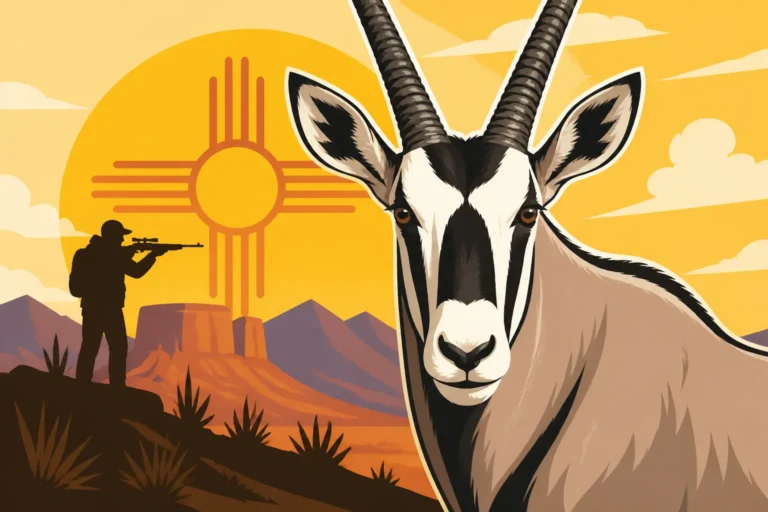
Spotting a Barbary sheep, especially at a distance in their natural habitat, can be tricky. They blend remarkably well with the sandstone cliffs and scrub brush. However, once you get a closer look, their distinctive features become apparent. Both sexes carry impressive, heavy, ridged horns that sweep backward and then curve inward. These horns can grow quite long, especially on mature rams, often reaching lengths of 25-30 inches, though some exceptional animals can exceed that. They have a sandy brown to reddish-brown coat that provides excellent camouflage against the desert and canyon backdrop.
One of their most striking features is the long, flowing mane of hair that extends from their throat down their chest and forelegs. This "chaps" gives them a shaggy, wild appearance, particularly on mature males. Barbary sheep are solidly built animals, larger than a typical mule deer buck, with adult rams often weighing between 200-300 pounds. They are incredibly agile, capable of navigating precipitous cliffs and rocky ledges with ease, making even the most seasoned mountain goat hunter gasp. Their behavior is equally suited to their environment. They are highly wary and possess exceptional eyesight, often spotting hunters long before they are seen. They typically live in herds, with older, dominant rams sometimes forming bachelor groups or ranging solo. When alarmed, they can disappear into the rugged terrain with astonishing speed, using their incredible climbing ability to gain inaccessible vantage points.
Where Barbary Sheep Roam: Key Habitats and Units
If you're thinking about hunting Barbary sheep in New Mexico, forget the idea of flat ground or dense timber. These animals are true denizens of the vertical world. Their preferred habitat is characterized by steep, rugged canyons, mesas, and mountainous areas with plenty of rimrock, broken terrain, and escape cover. They are found across several distinct regions of the state, each offering its own unique challenges and beauty.
Some of the most well-known areas for Barbary sheep include the Canadian River Canyon system in units like Unit 44, which stretches across northeastern New Mexico, and the Ute Creek area. These vast canyon networks provide the perfect combination of steep slopes for escape and protection, along with pockets of vegetation for forage. Further south, you'll find healthy populations in the rough country of the Guadalupe Mountains and the rougher areas of the Lincoln National Forest in southeastern New Mexico, particularly in units like 30 and 32. The ruggedness of these units cannot be overstated; they demand significant physical exertion and a keen eye for spotting animals in seemingly impossible places. Other areas like the San Andres National Wildlife Refuge also hold Barbary sheep, though hunting opportunities there are extremely limited and highly controlled. When you're looking at a map, zoom in on areas that look like crumpled paper – that's where the aoudad will be.
The Challenge of the Canyons: Barbary Hunting Tactics
Hunting Barbary sheep is not for the faint of heart. It's a grueling test of physical endurance, mental fortitude, and patience. Success often hinges on a combination of meticulous glassing, stealthy stalking, and precise shooting in demanding conditions.
Mastering the Glassing Game: Locating Elusive Rams
In the vast, broken country Barbary sheep call home, your optics are your most valuable tool. You'll spend hours, perhaps even days, behind your glass, systematically dissecting every rock face, every shadow, and every patch of scrub. High-quality binoculars, preferably 10x or 12x, are essential for initial scanning, but a good spotting scope (20-60x or even an 80x) mounted on a sturdy tripod is non-negotiable for identifying and evaluating Barbary sheep at extreme distances. Remember, these animals are masters of camouflage, and what might look like a rock outcrop could easily be a bedded ram. For open country hunting, considering your Spotting Scope Power for Open Country is critical for making those long-distance calls.
The key to successful glassing for Barbary sheep is patience and a methodical approach. Don't just sweep the landscape randomly. Pick apart the terrain in small, manageable sections, using a grid glassing method. Start from the bottom of a canyon and slowly work your way up to the rim, or vice versa. Focus on areas with broken terrain, ledges, and rocky outcroppings where they prefer to bed or feed. Look for anything that seems out of place – a horizontal line in a vertical world, a patch of slightly different color, or the glint of a horn in the sunlight. A common mistake is to only look for whole animals; often, you'll only catch a glimpse of an ear, a horn tip, or a rump. It's a game of inches and keen observation.
Stalking the Rimrock: Approaching Wary Barbary Sheep
Once you've spotted a Barbary sheep, the real challenge begins: the stalk. This isn't like stalking through the timber for an elk; you're often dealing with open, steep, and rocky terrain where cover is scarce. The Barbary's exceptional eyesight and hearing mean you'll need to be incredibly careful with every step. Planning your approach is critical. Look for draws, ridges, and shadowed slopes that can offer concealment. Use the topography to your advantage, keeping out of sight as much as possible. This often means taking a longer, more circuitous route that puts you in a better position for a shot.
The wind is always a major factor, especially in canyon country where thermals can shift dramatically throughout the day. Early mornings often see thermals pulling air down into the canyons, while midday sun can reverse them, causing air to rise. Reading the wind in a deep canyon is an art form, and misjudging it can ruin a perfectly executed stalk. You'll need to move slowly, deliberately, and be prepared to wait for hours if necessary for the animals to move into a more favorable position or for the wind to stabilize. Getting within comfortable shooting range of a wary Barbary ram in this environment is one of the most satisfying feats in Western hunting. For a successful stalk, you'll need to consider Closing on a Barbary Ram in Broken Rimrock and how to use the terrain to your advantage.
Shot Placement and Gear for Tough Animals
Barbary sheep are incredibly tough animals, renowned for their resilience and ability to absorb a hit. This means shot placement is absolutely critical, and you'll want to be prepared with appropriate gear. Their bone structure is dense, and their musculature is thick, particularly around the shoulders and chest. A poorly placed shot can result in a lost animal and a lot of heartbreak in country that is already incredibly difficult to navigate.
For rifle hunters, a caliber capable of delivering significant energy downrange is recommended. Think calibers like .270 Win, .30-06, .300 Win Mag, or 7mm Rem Mag. The most important factor, however, is not just the caliber but the bullet construction. You want a well-constructed, controlled-expansion bullet that can penetrate deep and retain its weight, even if it hits heavy bone. Premium bullets like Nosler AccuBond, Barnes TTSX, or Hornady ELD-X are excellent choices. Practice shooting at varying distances and, crucially, at angles. You'll rarely get a perfectly broadside, flat-ground shot in Barbary country. Understanding uphill and downhill shot compensation is vital.
Archery hunters face an even greater challenge. Getting within bow range of a Barbary ram demands supreme stealth and patience. Broadhead requirements are similar to other big game in New Mexico, focusing on sharp, sturdy, and well-designed heads that ensure maximum penetration. Solid fixed-blade broadheads are often preferred for their reliability. Regardless of your weapon, practice, practice, practice. Know your limits and stick to them. It's far better to pass on a marginal shot than to wound an animal and face the daunting task of tracking it through a maze of rimrock.
Navigating the Application Process and Seasons
Hunting Barbary sheep in New Mexico is primarily a draw-based system, meaning you'll need to apply for a tag. Understanding the application process, season dates, and license requirements is crucial for anyone hoping to pursue these animals.
Understanding New Mexico's Draw System for Barbary Sheep
New Mexico operates a lottery-style draw system for many of its big game species, including Barbary sheep. Unlike some other Western states, New Mexico does not have a preference point or bonus point system. This means that every applicant, whether it's their first time applying or their tenth, technically has the same chance of drawing a tag in any given year. This can be both a blessing and a curse. On one hand, it means you don't have to wait years to build up points. On the other, it means luck plays a significant role, and draw odds can be challenging, especially for prime units.
When applying, you'll enter your choices for specific units and hunt dates, listed as "hunt codes" in the New Mexico Department of Game and Fish (NMDGF) regulations. It’s vital to understand Reading a New Mexico Hunt Code Before You Apply to ensure you're applying for the correct hunt. The tags are allocated in three main pools: 84% for residents, 10% for residents applying with a New Mexico registered outfitter, and 6% for non-residents. While the outfitter pool does increase your odds as a resident, it's not a guaranteed tag. For non-residents, the 6% pool makes Barbary tags particularly coveted. Many hunters utilize resources like GoHunt, which compiles and analyzes draw odds from previous years, to help strategize their applications. This data can provide valuable insight into which units might offer slightly better chances or what kind of commitment you're looking at in terms of difficulty. You can dive deeper into New Mexico Barbary Sheep Draw Odds to help plan your application.
Key Season Dates and Hunt Structures
New Mexico offers various Barbary sheep seasons, generally categorized by weapon type: archery, muzzleloader, and any legal weapon (rifle). The specific dates will vary slightly year to year, so always consult the most current NMDGF rules and information booklet. Generally, Barbary sheep seasons can run in the fall and even into the winter months.
- Archery Seasons: These typically occur earlier in the fall, often in September or October. Archery hunting adds another layer of challenge, requiring hunters to get incredibly close to these wary animals. While challenging, the quiet nature of archery hunting can allow for more stealthy approaches in some areas.
- Muzzleloader Seasons: Muzzleloader hunts are usually scheduled in the mid-fall, offering a bridge between archery and rifle seasons. They demand a different skill set, including careful preparation of your firearm and a solid understanding of its limitations.
- Any Legal Weapon (Rifle) Seasons: These are the most common and often the longest seasons, typically running from late fall through winter. Rifle hunts provide hunters with the advantage of longer-range shots, which can be critical in the expansive, open Barbary country.
Some units may also offer over-the-counter (OTC) Barbary sheep tags, though these are rare and typically found in areas with lower populations or more difficult access. These OTC opportunities are usually for either-sex animals and can provide a way to hunt Barbary without going through the draw, but expect intense pressure or extremely rugged terrain. It’s always important to check the current regulations for the specific season dates, as they can shift. For instance, knowing when New Mexico Barbary Sheep Season Dates fall is essential for planning.
License Requirements and Fees
Before you can even apply for a Barbary sheep tag in New Mexico, there are a few foundational requirements you need to meet. First and foremost, you'll need a current New Mexico Game Hunting License. For non-residents, this is a significant upfront cost that is non-refundable, regardless of whether you draw a tag or not. This license is required for all big game applications.
In addition to the base hunting license, you'll also need to purchase a Habitat Management and Access Validation (HMAV) and, if you plan to hunt on federal lands (which many Barbary units include), a Habitat Stamp. The HMAV helps fund access to and management of public and private lands for hunting and fishing, while the Habitat Stamp specifically supports wildlife habitat projects on federal lands. The cost of these items, along with the application fee for Barbary sheep, contributes to the overall expense of trying for a tag. It’s worth noting that fees for hunting licenses and stamps in New Mexico saw their first increase in 20 years with Senate Bill 5, so ensure you check the most up-to-date pricing. You can find detailed information on the costs involved in New Mexico Application Fees Per Species and The New Mexico Habitat Stamp for Federal Land. It's crucial to factor these costs into your budget well before the application deadline, which is typically in March.
Essential Gear and Physical Preparation for Aoudad
Barbary sheep hunting is not a casual stroll through the woods. It's a full-on expedition, demanding not only the right mindset but also the right gear and a body prepared for extreme exertion.
Footwear and Clothing for Rugged Terrain
Your feet are your most important asset when hunting Barbary sheep. You'll be traversing rocky, uneven, steep, and often treacherous terrain for miles on end, frequently off-trail. Investing in high-quality, sturdy hiking or mountaineering boots is non-negotiable. Look for boots with excellent ankle support to prevent twists and sprains, a stiff sole for stability on rocky surfaces, and aggressive traction for gripping loose scree and steep slopes. Waterproofing is also a huge plus, as you might encounter unexpected rain, snow, or wet crossings, even in arid regions. Brands like Kenetrek, Schnee's, and Lowa are popular choices among serious mountain hunters for a reason. Break them in well before your hunt – new boots on a Barbary hunt are a recipe for blisters and misery.
For clothing, layering is key. New Mexico's desert and mountain environments can experience dramatic temperature swings, from freezing mornings to scorching afternoons, especially in the early and late seasons. You'll want a system that allows you to add or shed layers easily to regulate your body temperature. Start with a moisture-wicking base layer to manage sweat, add an insulating mid-layer for warmth (fleece or lightweight puffy), and top it with a durable, breathable, and ideally windproof/water-resistant outer shell. Look for tough fabrics that can withstand abrasive rock and thorny brush. Quiet fabrics are also important, as you'll often be moving through close-quarters terrain during a stalk. Don't forget durable hunting pants that offer flexibility and abrasion resistance.
Optics, Packs, and Other Crucial Equipment
As mentioned, optics are paramount. Beyond your binoculars and spotting scope, a quality rangefinder is essential for precise shot placement in undulating terrain. Knowing your exact distance, especially at angles, can make or break a shot. A reliable GPS device or a smartphone app like onX Maps is also critical for navigation. Cell service is often non-existent in Barbary country, so download offline maps and understand how to use your device effectively. A small, lightweight satellite messenger or inReach device can be a literal lifesaver for emergency communication.
Your pack will be your constant companion, carrying all your essentials. For day hunts, a comfortable 30-45 liter pack will suffice. If you're planning an overnight spike camp, you'll need a larger pack (50-70 liters) with a good internal or external frame capable of carrying heavy loads, including potentially packing out meat. Look for packs with good weight distribution, comfortable shoulder straps, and a robust hip belt. Don't forget plenty of water – more than you think you'll need. Water sources can be few and far between, and dehydration is a serious risk. Always carry a water filter or purification tablets as a backup. Headlamps, first-aid kits, fire starters, knives, and extra batteries round out the essentials.
Building Your Body for the Climb
This cannot be stressed enough: Barbary sheep hunting is intensely physical. It involves navigating steep ascents, precarious descents, and long distances over uneven ground. If you're not in good physical condition, you'll suffer, your hunt will suffer, and your chances of success will plummet. The phrase "vertical athlete" comes to mind.
Your training regimen should focus on building endurance, leg strength, and cardiovascular fitness. Start several months before your hunt. Incorporate activities like:
- Hiking with Weight: Load up your hunting pack with 30-50 pounds and hike steep trails or stairs. This simulates the actual hunting conditions and builds specific muscle groups.
- Incline Walking/Running: Treadmill workouts at a high incline are excellent for building leg and lung endurance.
- Stair Climbing: Running or walking stairs for extended periods will strengthen your quads and glutes, crucial for steep ascents and descents.
- Core Strength: A strong core helps with balance and stability on uneven terrain, reducing the risk of falls.
- Flexibility: Stretching and yoga can help prevent injuries and improve your range of motion.
Don't neglect acclimatization if you're coming from a lower elevation. If possible, arrive in New Mexico a few days early to allow your body to adjust to the higher altitudes you might encounter. Hydration starts days before your hunt, not just the morning of. And be mindful of heat, especially during early season hunts. Proper Heat Management on an Early Season Hunt is critical to avoid heatstroke and maintain performance. The fitter you are, the more enjoyable and successful your hunt will be.
Ethical Considerations and Conservation
As hunters, we are stewards of the land and its wildlife. This responsibility extends to ethical conduct, proper game care, and an understanding of conservation efforts, especially when it comes to an introduced species like the Barbary sheep.
Respecting the Resource: Fair Chase and Responsible Hunting
Ethical hunting practices are paramount, particularly when pursuing a challenging animal like the Barbary sheep in unforgiving terrain. Fair chase means giving the animal a reasonable chance to escape and adhering to the spirit of the hunt, not just the letter of the law. This includes taking ethical shots within your effective range, whether with a rifle or bow. Don't push your limits, especially on an animal as tough as a Barbary. If the shot isn't clean, if the animal is too far, or if you can't guarantee a quick, humane kill, it's better to pass and live to hunt another day.
Minimizing disturbance to other wildlife and the environment is also a key part of responsible hunting. Stick to designated trails or existing game trails when possible, and practice Leave No Trace principles. Pack out everything you pack in, including spent shell casings, food wrappers, and anything else you bring. Leave the landscape as pristine as you found it, or better. Respect private property boundaries and always have written permission if you need to cross private land to access public hunting areas. These animals deserve our utmost respect, and our actions as hunters reflect on the entire hunting community.
Meat Care in Harsh Conditions
Harvesting an animal in remote, rugged, and often warm Barbary sheep country presents unique challenges for meat care. Barbary sheep meat is generally lean and delicious, but it can spoil quickly if not handled properly. Your first priority after a successful harvest is to field dress the animal as quickly as possible. Removing the entrails helps the carcass cool down rapidly, which is crucial in warm temperatures. Skinning the animal immediately also aids in cooling.
If you're in a very warm environment, you might need to quarter the animal and get the meat into game bags immediately. High-quality, breathable game bags are essential for protecting the meat from dirt, flies, and debris while allowing air circulation. If you're backpacking, you'll need to figure out how to get the quarters out of the canyon and to a cooler as soon as possible. Carrying plenty of water for rinsing off meat and keeping hands clean is also important. In hot conditions, consider bringing a few small, reusable ice packs to place inside game bags, or scout ahead for shady, cool spots to temporarily hang meat if you can't extract it immediately. Remember, proper meat salvage is not just ethical; it's a legal requirement in New Mexico.
Barbary Sheep Population Management and Future Outlook
The presence of Barbary sheep in New Mexico is a complex conservation topic. While they offer a challenging hunting opportunity, their status as a non-native species means their management often involves balancing hunting pressure with potential ecological impacts. The NMDGF actively manages Barbary sheep populations, primarily through regulated hunting seasons. This helps to control their numbers, ensuring they don't overpopulate and compete excessively with native species like mule deer or, more critically, native bighorn sheep.
There's ongoing research and monitoring to understand the full impact of Barbary sheep on New Mexico's ecosystems. For example, concerns exist about potential competition for forage and water sources with native species, especially during drought years. There's also the risk of disease transmission to native bighorn sheep populations, although this is more commonly associated with domestic sheep. The future outlook for Barbary sheep hunting in New Mexico likely involves continued adaptive management, with biologists monitoring populations and habitat conditions to adjust harvest quotas and season structures as needed. Hunters play a vital role in this management by participating in the draw, reporting their harvests, and adhering to regulations, ensuring a healthy balance for all wildlife in the state.
Planning Your Barbary Sheep Adventure
A successful Barbary sheep hunt doesn't start with pulling the trigger; it begins long before, with meticulous planning, scouting, and preparation.
Scouting Strategies: E-Scouting and Boots-on-the-Ground
Effective scouting is the bedrock of any successful Barbary sheep hunt. These animals live in vast, rugged landscapes, and simply showing up on opening day without a plan is a recipe for frustration. Start with comprehensive e-scouting from the comfort of your home. Utilize satellite imagery tools like Google Earth, onX Maps, or other mapping platforms. Look for key features:
- Rimrock and Cliffs: Identify areas with steep, broken terrain, ledges, and prominent rock faces where Barbary sheep prefer to bed and seek refuge.
- Water Sources: Pinpoint any stock tanks, springs, or ephemeral water sources, as these can concentrate animals, especially in arid units.
- Access Points and Roads: Map out potential trailheads, two-track roads, and routes that will allow you to access the country you want to hunt. Pay attention to seasonal road closures.
- Escape Routes: Look for natural funnels, saddles, or less-steep canyons that Barbary sheep might use to escape pressure.
Once you have a few promising areas identified through e-scouting, if possible, try to conduct some boots-on-the-ground scouting. This is invaluable. Walk the terrain, get a feel for the scale and difficulty, identify glassing points, and look for actual sign like tracks, droppings, and rubs. Even a few days of pre-season scouting can dramatically increase your chances of success. If a full scouting trip isn't feasible, spend even more time e-scouting, studying contour lines, and identifying potential travel corridors and bedding areas from above. Using a tool like onX layers for New Mexico public land can help identify ownership and access.
Hiring an Outfitter or Going DIY
Deciding whether to hire an outfitter or go it alone (DIY) is a major decision for a Barbary sheep hunt, largely driven by experience, budget, and desired level of challenge.
- DIY Hunt: For experienced backcountry hunters, a DIY Barbary hunt offers the ultimate challenge and reward. It requires extensive e-scouting, physical fitness, self-reliance, and a deep understanding of navigation and survival in remote areas. The cost is significantly lower, limited to licenses, gear, and travel expenses. The satisfaction of a self-guided success is immense. However, the learning curve can be steep, and success rates for DIY hunters are generally lower than for guided clients due to the sheer difficulty of finding and harvesting these animals.
- Hiring an Outfitter: If you're less experienced in rugged mountain hunting, have limited time for scouting, or simply want to maximize your chances, a guided Barbary sheep hunt is a strong option. Outfitters bring local knowledge, expertise in tracking and spotting, and often access to prime hunting areas. They handle logistics like camp setup, meals, and game retrieval. This comes at a significant financial investment. You'll need to research reputable outfitters who specialize in Barbary sheep, ask for references, and thoroughly vet them. Understand exactly what their services include and what they don't. For non-residents, applying with an outfitter also improves your draw odds in New Mexico's special allocation pool. You can learn more about Vetting a New Mexico Outfitter Before You Send a Deposit and the typical New Mexico Barbary Sheep Guided Hunt Pricing.
Dealing with Unexpected Challenges
No matter how well you plan, things can and often do go wrong in the backcountry. Barbary sheep hunting, by its very nature in wild, remote places, amplifies these possibilities. Be prepared for:
- Weather Changes: Rapid shifts from warm sunshine to cold rain, snow, or even hail are common. Carry rain gear and extra warm layers even if the forecast looks clear.
- Vehicle Issues: Access roads can be rough. Flat tires are a real possibility. Carry a full-size spare, a jack, and tools for minor repairs.
- Getting Lost: Even with GPS, it's possible to get disoriented in confusing terrain. Always carry a physical map and compass as a backup and know how to use them. Mark your route on your GPS regularly.
- Injuries: A slip or fall on rocky terrain can lead to serious injury. Carry a comprehensive first-aid kit and know how to use it. If hunting alone, a satellite communication device is essential for calling for help.
- Water Scarcity: Water sources can dry up or be hard to find. Carry more water than you think you need, and always have a purification method.
Resilience and a problem-solving mindset are critical. Don't panic when things go sideways. Take a deep breath, assess the situation, and rely on your training and preparedness. Having a solid emergency plan in place, including letting someone know your itinerary and expected return time, is non-negotiable for a Barbary sheep hunt. This isn't just a hunt; it's a wilderness expedition.
Disclaimer
Please remember that hunting regulations, fees, and season dates can change. Always consult the most current New Mexico Department of Game and Fish (NMDGF) official regulations and information booklet before planning and participating in any hunt. This guide is for informational purposes only and should not be considered a substitute for official NMDGF publications or professional guidance.