Oryx Is New Mexico’s Strangest Big Game Animal
Hunting oryx in New Mexico isn't just another big game pursuit; it's an adventure into the truly unexpected, often leaving hunters scratching their heads about how these magnificent African antelope ended up thriving in the Chihuahuan Desert. The frustration of drawing one of these highly coveted tags is real, and once you have it in hand, understanding the nuances of the hunt, from navigating military lands to field dressing in the scorching desert sun, can feel overwhelming. This comprehensive guide will pull back the curtain on everything you need to know about pursuing New Mexico's most unique big game animal, from its unlikely origins to tactics, gear, and post-harvest care.
The Unlikely History of New Mexico's Oryx
The story of how oryx came to call the New Mexico desert home is as fascinating as the animal itself. It's a tale of ambitious conservation, scientific experiment, and a thriving population that now presents a truly unique hunting opportunity in North America. Forget everything you thought you knew about traditional Western big game; the oryx plays by its own rules here.
Origin Story: From Africa to the Tularosa Basin
The scimitar-horned oryx, native to the arid lands of North Africa, was facing severe population declines in its natural range during the mid-20th century, largely due to habitat loss and overhunting. This dire situation spurred biologists and wildlife managers to consider innovative conservation strategies. New Mexico, with its vast tracts of seemingly empty desert, particularly the Tularosa Basin, bore a striking resemblance to the oryx's native habitat. The idea was simple, yet audacious: introduce a self-sustaining population of these majestic animals to a new environment to ensure their survival.
In 1969, the New Mexico Department of Game and Fish (NMDGF) embarked on this ambitious project, releasing a small number of oryx onto the White Sands Missile Range (WSMR). This controlled, isolated environment was chosen specifically because it mirrored the oryx's natural habitat – wide-open, arid plains, punctuated by sparse vegetation and rugged hills. The hope was that these animals would adapt, reproduce, and ultimately flourish, providing a conservation success story and, eventually, a unique hunting opportunity. It was a bold move, and one that has certainly paid off in terms of population numbers. For those curious about the specifics, delving into the story of How Oryx Were Introduced to New Mexico can offer even greater appreciation for this unique endeavor.
The Grand Vision: Why New Mexico Introduced Oryx
The primary driver behind the introduction of oryx was conservation, plain and simple. Biologists recognized the intrinsic value of the species and the potential for New Mexico to provide a sanctuary. However, beyond conservation, there was a secondary, equally important goal: to create a new big game hunting resource for the state. New Mexico is renowned for its elk and mule deer, but the oryx offered something entirely different – a challenging hunt for a truly exotic species without the need for an international trip.
The idea was to establish a healthy, huntable population that would generate revenue through license sales, which could then be reinvested into wildlife management programs across the state. This model, where hunting supports conservation, is a cornerstone of wildlife management in North America, and the oryx program quickly became a prime example. The introduction wasn't just about saving a species; it was about enriching New Mexico's wildlife landscape and diversifying its hunting opportunities, offering something that no other state could quite match.
Population Growth and Management Challenges
From those initial small releases, the oryx population exploded. The animals found the New Mexico desert to their liking, with abundant forage, minimal natural predators, and a vast, undisturbed landscape. Their numbers grew far beyond initial projections, expanding their range beyond the confines of the White Sands Missile Range. While this was a conservation success, it also presented new management challenges. Oryx are large, hardy animals, and their foraging habits can compete with native species, particularly pronghorn and mule deer, for resources like water and sparse vegetation.
This rapid expansion led to the need for careful population control, primarily through regulated hunting seasons. The NMDGF continually monitors the herd's health and distribution, adjusting tag allocations to maintain a balance between a thriving oryx population and the well-being of the broader ecosystem. This ongoing management ensures that the oryx remain a sustainable hunting resource, even as their presence reshapes the desert landscape. It's a delicate balance, but one that the state has largely managed with great success, creating a robust and challenging hunting opportunity for those lucky enough to draw a tag.
Understanding Oryx Biology and Behavior
Hunting oryx isn't like hunting deer or elk; these animals are built for survival in some of the world's harshest environments, and their biology reflects that. To have any chance of success, you need to understand what makes them tick, how they interact with their environment, and what makes them such formidable quarry.
Physical Characteristics: Built for the Desert
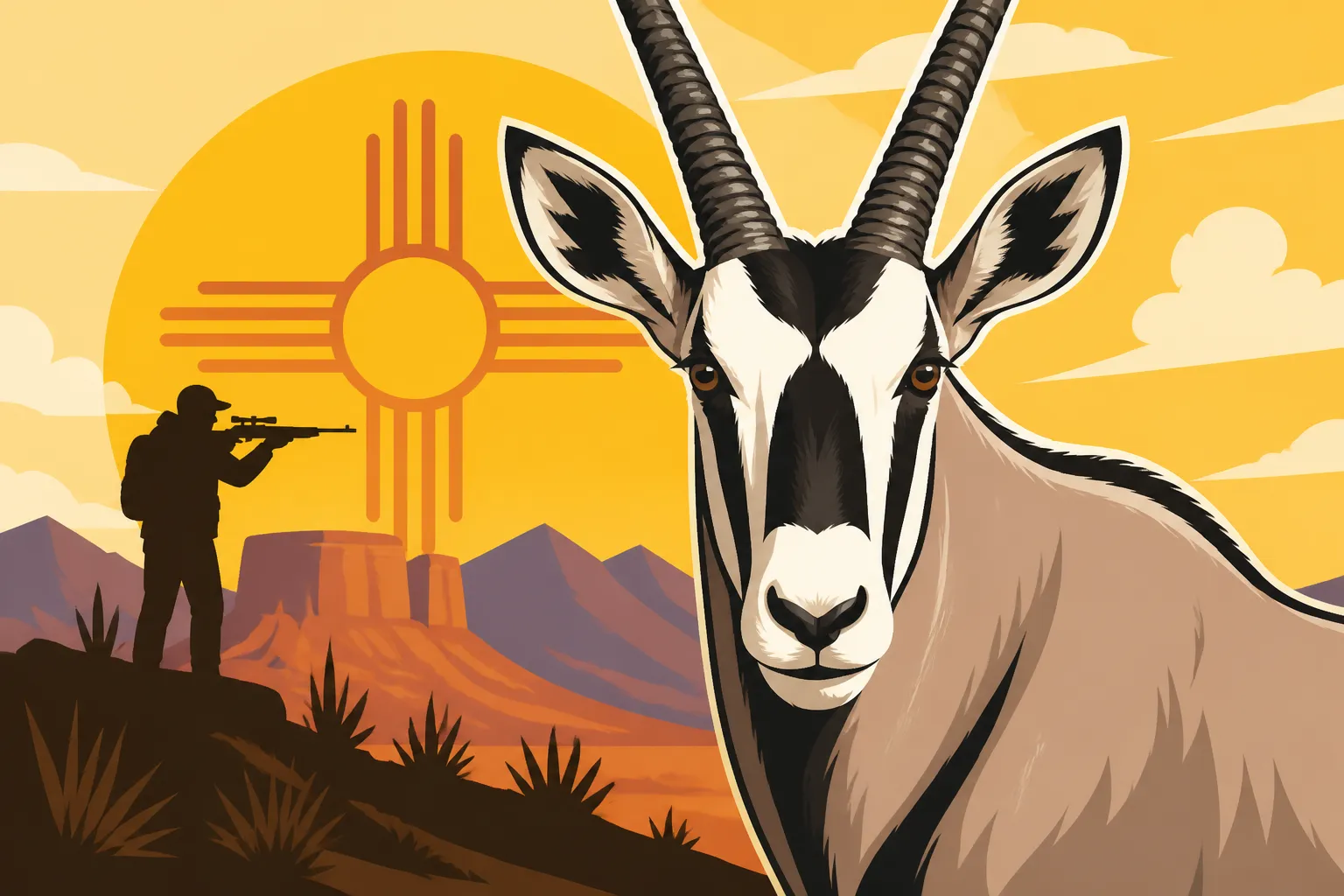
The scimitar-horned oryx, also known as the gemsbok (though technically a different species, the terms are often used interchangeably by hunters due to their similar appearance and adaptations), is a magnificent animal. Standing nearly 4 feet tall at the shoulder and weighing between 400 to 500 pounds for a mature bull, they are substantial creatures. Their most striking feature, however, is their impressive, spear-like horns. Both sexes grow horns, which can reach lengths of 30 to 45 inches, sometimes even longer. The common question, Do Both Oryx Sexes Carry Horns?, is a resounding "yes," and this makes field judging a bit more nuanced than with deer or elk where antlers are typically male-specific. These horns are incredibly sharp and are used for defense against predators and for sparring among themselves.
Beyond their horns, oryx possess several remarkable adaptations for desert life. Their coats are a stunning blend of white, fawn, and dark markings, providing excellent camouflage against the desert's varied palette. Perhaps most impressively, they can go for extended periods without drinking free water, extracting moisture from the plants they eat. They also have a specialized circulatory system that allows them to cool the blood flowing to their brains, enabling them to remain active even during the hottest parts of the day when most other animals seek shade. These physiological traits make them incredibly resilient and challenging to find and pursue in the vast, open desert.
Social Structure and Daily Routines
Oryx typically live in herds that can range from a handful of animals to several dozen, though larger groups are more common in areas with good forage or water. These herds are often mixed, containing both males and females of various ages. Dominant bulls will fiercely defend their territory and breeding rights, often engaging in impressive, horn-clashing battles. Unlike many other big game species, oryx don't have a distinct rut period tied to a specific season; they can breed year-round, which means you might encounter calves at any time of the year.
Their daily routine is dictated by the sun and the need for food and water, though water isn't always a daily necessity. They are primarily grazers and browsers, feeding on grasses, shrubs, and succulents. During the hottest parts of the day, especially in summer, they often seek out sparse shade provided by mesquite or acacia trees, or even bed down in the open, relying on their camouflage and keen senses. Early mornings and late evenings are generally their most active feeding times. Understanding these patterns is crucial for hunters, as it dictates when and where you're most likely to spot them.
Oryx Senses and How They Elude Hunters
If you've heard anything about hunting oryx, you've probably heard about how incredibly difficult they are to stalk. A big part of this challenge comes from their phenomenal senses. Their eyesight is legendary; they can spot movement from an incredible distance in the wide-open desert. Even a slight silhouette or an unnatural reflection can send them scattering. Add to this their acute sense of smell, which can detect human scent carried on the slightest breeze. The desert thermals and unpredictable crosswinds make a direct approach a constant battle.
Their hearing, while perhaps not as widely praised as their sight, is also excellent. The sheer quietness of the desert amplifies any foreign sound, whether it's a crunch of a boot on gravel or the whisper of gear rubbing together. This combination of powerful senses, coupled with their natural wariness and ability to quickly cover ground, makes them incredibly elusive. Many a hunter has spent hours executing a perfect stalk only to have an oryx seemingly vanish into thin air, proving just how well these animals are designed to survive in their stark environment.
New Mexico's Oryx Hunting Opportunities
Getting an oryx tag in New Mexico is often described as a once-in-a-lifetime opportunity, and for good reason. These tags are incredibly difficult to draw, making the application process itself a significant hurdle. Understanding the different hunt types and the draw system is paramount to even having a chance at pursuing these desert giants.
The Draw System: Applying for a Coveted Tag
New Mexico manages its oryx hunts through a highly competitive draw system. There are no over-the-counter tags; every oryx tag is awarded through the state's lottery. Unlike some other Western states, New Mexico doesn't use a preference point system, meaning every applicant, whether it's their first time applying or their twentieth, theoretically has the same chance in the random draw. This can be both a blessing and a curse; you don't build points over time, but you also have a legitimate shot every year. Checking New Mexico Oryx Draw Odds before applying is a common practice, with resources like GoHunt offering valuable insights into past year's statistics to help you make informed choices.
Applicants select their hunt choices by specific hunt codes, which dictate the unit, weapon type, and season dates. The application period typically closes in mid-March, so it's critical to have your choices finalized and submitted well in advance. For non-residents, the cost of an application and the eventual tag can be substantial; for instance, a non-resident oryx tag runs $1,623, as highlighted in A Nonresident New Mexico Oryx Tag Runs $1,623. This high cost, coupled with the low odds, means that drawing an oryx tag is a significant financial and emotional investment. It’s not a hunt you take lightly.
Once-in-a-Lifetime Hunts vs. Off-Range Opportunities
New Mexico offers two primary categories of oryx hunts: "Once-in-a-Lifetime" (OIAL) hunts, which are almost exclusively conducted on the White Sands Missile Range, and "Off-Range" hunts, which occur on surrounding public and private lands outside of WSMR. The OIAL hunts on WSMR are exactly what they sound like – if you draw one, you cannot draw another WSMR oryx tag for the rest of your life. These are considered the premier hunts, offering access to areas with historically higher concentrations of oryx and often bigger bulls. The vast, controlled environment of WSMR provides a unique hunting experience that is unparalleled.
Off-range hunts, while not carrying the OIAL restriction, are often significantly more challenging. Oryx on off-range units are typically in smaller, more dispersed herds and face more hunting pressure. However, these tags are often slightly easier to draw and allow hunters to reapply for subsequent off-range opportunities. Both types of hunts offer a chance at a magnificent animal, but the strategies and expectations for each can differ dramatically. Understanding the nuances of these different hunt categories is key to making the right choice on your application.
Understanding Hunt Codes and Season Dates
Navigating the New Mexico Department of Game and Fish (NMDGF) regulations and hunt codes can be a bit of a maze, especially for new applicants. Each hunt opportunity is designated by a unique hunt code that specifies the Game Management Unit (GMU), the legal weapon type (e.g., archery, muzzleloader, any legal weapon), and the specific season dates. For oryx, these details are particularly important as they can significantly impact your hunting experience and success rate.
Oryx seasons vary widely depending on the unit and hunt type. White Sands Missile Range hunts typically have very specific dates, often concentrated around a few days, as detailed in New Mexico White Sands Oryx Hunt Timing. You'll find short, intense hunts, often limited to just Why a New Mexico Oryx Season Runs Three Days to minimize disruption to military operations. Off-range hunts might have longer windows, sometimes spanning weeks, offering more flexibility but also covering more expansive and often less accessible terrain. It's crucial to meticulously study the current year's proclamation or use a tool like GoHunt's tag research section to ensure you're applying for the hunt code that best suits your schedule, preferred weapon, and hunting style. Misunderstanding a hunt code could lead to applying for a hunt that doesn't align with your expectations, which is the last thing you want for such a rare tag.
The White Sands Missile Range Hunt Experience
Drawing a White Sands Missile Range (WSMR) oryx tag is like winning a golden ticket to a truly one-of-a-kind hunting adventure. It's an opportunity to hunt a thriving exotic species within a highly restricted, vast military reservation. However, this unique access comes with its own set of rules, regulations, and potential complications that every hunter needs to be aware of.
Navigating Military Protocols and Access
Getting onto the White Sands Missile Range isn't as simple as driving through a public land gate. It's an active military installation, and security protocols are stringent. Hunters who draw a WSMR tag must undergo a thorough background check and receive specific clearance to access the range. This process can take time, and it's essential to follow all instructions from the NMDGF and WSMR personnel precisely. You'll typically be required to attend an orientation briefing, where you'll learn about specific safety rules, off-limits areas, and emergency procedures. Access points are limited, and you'll often have to check in and out daily, sometimes with vehicle inspections. Understanding Getting Onto White Sands Missile Range involves more than just a map; it's about respecting and adhering to strict military guidelines.
Driving is restricted to designated routes, and venturing off-road, even for game retrieval, is strictly prohibited without explicit permission. There are often checkpoints and military patrols, and hunters must always be courteous and cooperative. The landscape itself is vast and often unmarked, making navigation challenging, so a reliable GPS unit with pre-loaded maps and an understanding of the military's designated hunting zones are absolutely critical. This isn't a place for casual exploration; it's a serious hunt in a serious environment, and adherence to protocol is non-negotiable.
Unique Terrain and Hunting Challenges on WSMR
The White Sands Missile Range is a sprawling expanse of Chihuahuan Desert, characterized by rolling hills, dry washes, sparse scrub brush, and, of course, the iconic white gypsum dunes for which it's named. While the dunes themselves are often off-limits to hunting, the surrounding terrain offers fantastic habitat for oryx. The challenges here are multifaceted: the sheer scale of the landscape, the often-featureless terrain that makes stalking difficult, and the oryx's uncanny ability to blend in and disappear.
Visibility can be both a blessing and a curse. You can glass for miles, but so can the oryx. Finding an animal from a distance often means initiating a long, calculated stalk across open ground, using every small dip, wash, and clump of vegetation for cover. The ground can be rough, with sharp rocks, thorny bushes, and loose sand, demanding durable footwear and physical stamina. The weather is another factor; days can be scorching hot, even in the cooler months, requiring constant hydration and heat management. The lack of distinct terrain features to break up movement makes closing the distance on an oryx a true testament to a hunter's skill and patience.
Contingencies: What Happens If Your Hunt Is Cut Short
One of the unique realities of hunting on an active military installation like White Sands Missile Range is the potential for unforeseen interruptions. Military operations always take precedence over hunting. This means that, even if you've drawn a coveted tag and planned your entire trip around it, your hunt can be unexpectedly delayed, rescheduled, or even cut short due to missile tests, training exercises, or other military activities. This possibility is something every WSMR oryx hunter must mentally prepare for, as detailed in What Happens If Military Operations Shorten Your Hunt.
While the NMDGF and WSMR personnel do their best to schedule hunts to minimize conflict, the nature of military operations means that flexibility is key. In most cases, if a hunt is disrupted, you might be offered an alternative date or a different section of the range, but there's no guarantee. It's crucial to stay informed through official channels and be prepared to adapt your plans on the fly. This uncertainty adds another layer of challenge and requires a patient, understanding mindset from hunters. Despite this, the opportunity to hunt such a remarkable animal in such a unique setting remains an experience highly sought after by hunters.
Off-Range Oryx Hunting Tactics and Challenges
While the White Sands Missile Range hunts get a lot of attention, there are also excellent opportunities to hunt oryx on the surrounding public and private lands. These "off-range" hunts present their own set of unique challenges and demand different tactics compared to the more controlled environment of WSMR.
Spot and Stalk Strategies in Open Desert
Off-range oryx hunts typically take place across vast expanses of BLM land, State Trust Land (which your hunting license serves as an easement to access, as detailed in A New Mexico License Is Your State Trust Land Easement), and occasional private ranches. The terrain here can vary from flat, sagebrush-dotted plains to rugged, rocky hills and mesas. The primary tactic for off-range oryx is undoubtedly the spot-and-stalk. You'll spend countless hours glassing, searching for those tell-tale white bodies or the distinctive horn silhouettes against the muted desert backdrop.
Once an animal or herd is spotted, the real work begins. The sheer openness of the terrain means cover is often minimal, forcing hunters to use every slight depression, wash, or sparse clump of mesquite to their advantage. A successful stalk often involves covering significant distances on foot, sometimes crawling or belly-crawling for hundreds of yards, all while keeping the wind in your favor and avoiding detection by the oryx's keen eyesight. This isn't a quick hunt; it demands patience, physical endurance, and exceptional stealth. You’ll quickly learn that a good pair of knee pads is your best friend.
Glassing Techniques for Elusive Herds
Effective glassing is perhaps the single most critical skill for off-range oryx hunting. These animals are masters of camouflage and can appear and disappear as if by magic in the subtle folds of the desert landscape. Hunters need high-quality optics – powerful binoculars (10x-15x are common) and a good spotting scope on a sturdy tripod are indispensable. Forget scanning casually; this is a methodical, grid-patterned approach to picking apart every square foot of terrain.
Finding a good vantage point, often a low ridge or hill, is the first step. Then, using your binoculars, methodically scan the landscape, looking for anything that seems out of place: a patch of white that isn't a rock, a horizontal line that could be a back, or the distinctive dark markings of an oryx. Once you spot something, switch to your spotting scope to confirm and evaluate the animal. Focus on shadows, areas where animals might be bedded, and feeding lanes. It's often a game of patience, sitting for long periods, letting your eyes adjust, and slowly picking up details as the light changes. Remember, oryx can appear to be merely rocks or stumps until they move, so diligence is key. Tools like those found in GoHunt's gear reviews can certainly assist in choosing the right optics for such a demanding environment.
Water Sources: A Key to Finding Off-Range Oryx
While oryx are incredibly adept at surviving without free-standing water for extended periods, they still need to drink, especially in the hotter months or during prolonged dry spells. As such, water sources can become critical focal points for off-range hunting. Identifying stock tanks, natural springs, and even guzzlers (man-made water collection devices) on your maps can provide valuable clues to where oryx might concentrate or travel.
However, don't expect animals to be constantly at water, nor should you assume they will be there at predictable times. Oryx are wary, and they will often approach water cautiously, particularly in areas with hunting pressure. Setting up an ambush directly on a water source can be challenging due to the open nature of the terrain, but scouting these areas for fresh tracks and sign can certainly help narrow down their travel patterns. Focus on the approach and departure routes to and from water, looking for fresh droppings or tracks that indicate recent activity. Sitting water for deer and antelope is a common tactic in New Mexico, and while oryx are different, understanding their movements around water is still a valuable piece of the puzzle.
Preparing for Your Oryx Hunt
Drawing an oryx tag is just the beginning; the real preparation starts once that notification hits your inbox. This isn't a casual weekend hunt. The demanding terrain, the resilience of the animal, and the logistics involved require careful planning in terms of gear, physical conditioning, and weapon choice.
Gear Essentials: Optics, Footwear, and Hydration
Given the vast, open nature of oryx country, high-quality optics are non-negotiable. Invest in the best binoculars (10x-15x) and spotting scope (20-60x or higher) you can afford. A sturdy tripod is equally important for steady glassing, allowing you to pick apart distant landscapes for hours without fatigue. Without top-tier glass, spotting a camouflaged oryx at range is incredibly difficult, making the hunt significantly harder.
Footwear is another critical component. You'll be doing a lot of walking, often over rocky, uneven, or sandy ground. Durable, comfortable, well-broken-in hiking boots with good ankle support are essential. Consider boots that can handle both heat and rough terrain. Given the potential for long stalks and hours spent on your knees, kneepads can also be a game-changer. Hydration is paramount in the New Mexico desert. Even in cooler months, the arid air will dehydrate you quickly. Plan to carry significantly more water than you think you'll need – often 2-3 liters per person for a half-day hunt, or even more if you're venturing far from your vehicle. A quality hydration pack is a good investment, as are electrolyte supplements. You should also carry a map, compass, and a reliable GPS device, as getting disoriented in the vast, often featureless desert is a real risk.
Physical Conditioning for Desert Terrain
Many hunters underestimate the physical demands of an oryx hunt. While you might not be climbing thousands of feet of elevation like in an elk hunt, the constant walking over uneven ground, combined with the extreme heat and low humidity, can be utterly exhausting. A successful oryx hunt often involves miles of hiking, sometimes with a heavy pack if you’re successful.
Start a physical training regimen months before your hunt. Focus on cardiovascular endurance – walking, jogging, or rucking with weight – and leg strength. Practice hiking in your chosen boots to break them in and identify any hot spots. While the preparation for Preparing Physically for a High Elevation Hunt might differ in specific exercises, the core principle of building stamina and strength is the same. Don't neglect flexibility and core strength either, as awkward crawls and long periods of glassing can strain your body. The better your physical condition, the more ground you can cover, the more comfortably you can stalk, and the more likely you are to capitalize on an opportunity when it arises.
Weapon Choice and Shot Placement Considerations
Oryx are incredibly tough animals. They are powerfully built, and their vital organs are well-protected by dense muscle and bone. This means that weapon choice and, more importantly, precise shot placement are critical for a clean, ethical kill. For rifle hunters, a caliber in the .300 magnum range (.300 Win Mag, .300 WSM) or similar, like a .7mm Rem Mag, is generally recommended. Use well-constructed, heavy-for-caliber bullets designed for deep penetration and controlled expansion. While a .30-06 or .270 can certainly take an oryx, shot placement must be absolutely perfect, and follow-up shots should be prepared for.
Bowhunting oryx is arguably the ultimate challenge. The animal's keen senses, combined with the open terrain, make getting within bow range (typically 40-60 yards) extremely difficult. For bowhunters, a heavy arrow and a stout broadhead (fixed blade or a robust mechanical) are essential to ensure adequate penetration through their thick hide and bone. Regardless of weapon, aim for the shoulder or a broadside lung shot. Avoid angling shots that might catch the gut. Oryx can cover ground quickly when wounded, making tracking in the desert incredibly tough. Practice shooting from various field positions, including prone, and be proficient out to 300-400 yards with a rifle, as longer shots are common in the open country.
Ethical Considerations and Post-Harvest
Successfully harvesting an oryx is an incredible accomplishment, but the responsibility doesn't end there. Proper field care, adherence to regulations, and respectful handling of the meat are crucial, especially given the challenging desert environment.
Carcass Care in Extreme Heat
One of the biggest post-harvest challenges with an oryx is managing the meat in the desert heat. Even on cooler days, temperatures can quickly rise, and an animal as large as an oryx generates a lot of internal heat. The mantra here is speed and cleanliness. As soon as the animal is down, begin field dressing immediately to remove the internal organs and allow the carcass to cool. Skinning the animal quickly is also highly recommended to facilitate cooling. If possible, quarter the animal and get the meat into game bags that allow air circulation.
Even with these steps, the heat can be a formidable adversary. Having a plan for Getting Meat Cooled on an Early Season Hunt is absolutely vital. This might mean having coolers packed with ice ready at your vehicle, or even considering bringing large tarps to create temporary shade. Some hunters even bring small, portable battery-powered fans to circulate air around the meat bags. The goal is to reduce the meat temperature as rapidly as possible to prevent spoilage. Oryx meat is considered excellent table fare, so proper care ensures you get to enjoy the fruits of your hard-earned labor. For those wondering, Is Oryx Meat Worth Eating?, the answer is an emphatic yes!
Mandatory Reporting and Evidence of Sex
Like all big game animals in New Mexico, harvested oryx are subject to specific tagging and reporting requirements. Immediately after harvesting an oryx, you must attach your tag to the carcass as specified by the NMDGF regulations. This typically means affixing it to the horn or leg and ensuring it is validated.
Additionally, New Mexico has specific "evidence of sex" requirements for oryx. Since both sexes carry horns, and the regulations might differentiate between male and female harvest in some hunts, you might be required to leave a specific part of the carcass naturally attached to the meat until it reaches final processing. This often involves leaving the skull cap and horns attached, or sometimes a portion of the hide showing gender identification, for inspection if requested by a game warden. Always consult the current year's NMDGF hunting proclamation for the exact rules to avoid any issues. Ignorance of the law is not an excuse, and game wardens take these regulations very seriously.
The Incredible Flavor of Oryx Meat
Beyond the trophy horns and the challenging hunt, one of the most rewarding aspects of harvesting an oryx is the meat. Oryx meat is truly exceptional – lean, tender, and with a mild, slightly sweet flavor that many compare to a cross between venison and beef, often even superior to elk. Because oryx are not native to North America, and their diet consists of desert vegetation, the meat rarely carries the strong "gamey" flavor that some wild game can possess.
The lean nature of the meat means it can dry out quickly if not cooked properly, so care should be taken during preparation. Slow-cooking methods like braising or stewing work wonderfully for tougher cuts, while tenderloins and backstraps are fantastic grilled or pan-seared. Many hunters consider oryx to be one of the finest-tasting big game animals available, making the entire hunting experience even more worthwhile. Don't let any of it go to waste – proper field care and thoughtful preparation will ensure you enjoy every delicious bite.
Disclaimer
Please remember that hunting regulations, fees, and season dates are subject to change annually. Always consult the most current New Mexico Department of Game and Fish hunting proclamation before planning your hunt or submitting applications. This guide is for informational purposes only and does not supersede official state regulations.