Getting Onto White Sands Missile Range
For many hunters, the thought of drawing an Oryx tag in New Mexico is exciting enough, but landing one on the White Sands Missile Range adds an entirely new layer of complexity and exhilaration. It’s a completely unique experience that requires strict adherence to military protocols, specialized preparation, and a deep understanding of the unusual logistics involved. This guide will walk you through the entire process, from application to navigating the range itself, so you can transform that coveted tag into a successful hunt.
The Unique Experience of Hunting White Sands Missile Range
Hunting on the White Sands Missile Range (WSMR) isn't your typical public land adventure. It's an opportunity to pursue trophy Oryx in a landscape unlike any other, but it comes with a strict set of rules and a unique rhythm dictated by military operations. Many hunters dream of this tag, not just for the chance at a magnificent Oryx, but for the sheer novelty and challenge of hunting within an active military installation. The range is enormous, spanning vast tracts of Chihuahuan Desert, alkali flats, and rugged mountains, providing diverse habitat for these majestic, introduced animals.
Why WSMR Hunts Are So Different
First off, let's talk about why hunting here feels completely different. Unlike heading out to a national forest or BLM parcel, you're entering an active, high-security military installation. This isn't just a place where wildlife roams; it's where critical national defense tests are conducted. This means everything from entry to exit, and especially your movements while on the range, are tightly controlled. The sense of freedom you might associate with other public land hunts is replaced with a highly structured, supervised environment. It's a trade-off many are willing to make for the exceptional opportunity to pursue Oryx in prime habitat.
The sheer scale of the White Sands Missile Range is astounding, covering approximately 3,200 square miles across parts of Otero, Sierra, Socorro, and Doña Ana counties. This immense area provides expansive, low-pressure habitat for Oryx, contributing to the health and size of the herds. However, only specific areas are opened for hunting, and these areas can change based on military activity. This uncertainty, while a minor frustration, is part of the deal. Hunters quickly learn that flexibility and respect for the military’s primary mission are paramount. To understand the broader context of these unique hunts, it helps to know How Oryx Were Introduced to New Mexico.
Primary Species: The Magnificent Oryx
While other small game might exist, the White Sands Missile Range is synonymous with Oryx hunting in New Mexico. These large, striking African antelope were introduced to the state in the late 1960s and have thrived in the arid, desert environment, especially on the missile range. They are incredibly tough animals, perfectly adapted to the harsh conditions, making for a challenging hunt. Both male and female Oryx grow impressive horns, and because the sexes are often difficult to distinguish at a distance, successful hunters are usually thrilled with any mature animal. This means you don't always have to worry about "bull" versus "cow" like you might with elk or deer; a large Oryx with long, symmetrical horns is a prized trophy regardless of sex.
The hunts are typically well-managed, leading to a high success rate for those who draw a tag. However, "success" often means simply harvesting an Oryx, not necessarily a Boone and Crockett record. The challenge lies not just in finding an Oryx, but in navigating the landscape, making a clean shot, and adhering to all the range-specific rules. It’s an adventure that tests your physical endurance, patience, and ability to follow instructions under pressure. You can dive deeper into the specifics of Oryx on White Sands Missile Range to get a better feel for the animal and its habitat there.
Applying for a White Sands Oryx Tag
The application process for a White Sands Oryx tag, while following the general New Mexico Game and Fish draw procedures, has its own nuances that make it particularly competitive and unique. It’s crucial to understand these details to maximize your chances of drawing this highly sought-after tag. Given the informational intent, this section won't be a sales pitch for a specific brand, but it's worth noting that resources like GoHunt can be invaluable for analyzing draw odds and strategizing your application.
Decoding the Hunt Codes
When you're poring over the New Mexico Department of Game and Fish (NMDGF) Rules and Information Booklet, you'll notice specific hunt codes designated for the White Sands Missile Range. These codes are critical. They indicate not only the species (Oryx, of course) but also the specific hunt period and, importantly, that the hunt takes place within WSMR boundaries. It's easy to get lost in the sea of hunt codes, so always double-check the "Description" column in the hunt proclamation for "WSMR" or "White Sands" to ensure you're applying for the correct opportunity.
These hunts are usually very limited, often with only a handful of tags available for each specific season window. This exclusivity is part of what makes them so desirable. Understanding Reading a New Mexico Hunt Code Before You Apply is foundational for any New Mexico draw, but especially critical for these unique WSMR hunts to ensure you’re not accidentally applying for an off-range tag if your heart is set on the missile range experience.
Draw Odds and Application Strategy
Let's be blunt: the draw odds for White Sands Oryx tags are tough. Very tough. These are some of the most difficult tags to acquire in New Mexico, primarily due to the limited number of permits issued each year and the high demand from both resident and nonresident hunters. New Mexico doesn't operate on a preference point system, meaning every applicant, from first-timer to seasoned veteran, theoretically has the same chance each year. While this is great for new applicants, it also means there's no way to build up points to guarantee a tag down the road.
To give yourself the best possible shot, a solid application strategy is vital. This usually involves:
- Researching Past Draw Odds: Look at the NMDGF draw statistics from previous years. Websites like GoHunt compile and present this data in an easy-to-digest format, allowing you to see which hunt codes had slightly better (or worse) odds.
- Considering Hunt Dates: Some hunt dates might be slightly less popular than others. For example, a hunt scheduled for a weekday or during a less ideal weather window might have marginally better odds than a prime weekend hunt.
- Group Applications: While not directly improving your individual odds, applying as a group can be a strategy if multiple people want to hunt together. If the group draws, everyone in the group gets a tag. However, if even one person in the group doesn't meet eligibility or has issues, the entire group's application can be jeopardized.
- Second and Third Choices: New Mexico allows you to list multiple choices on your application. For WSMR Oryx, it's wise to fill all your choices, but understand that your best chance is always with your first choice. Draws are typically run sequentially by choice, and drawing on a second or third choice for a high-demand hunt like WSMR Oryx is exceedingly rare. Knowing New Mexico Oryx Draw Odds can help temper expectations and guide your choices.
Key Dates and Deadlines
Like all New Mexico big game draws, the White Sands Oryx application adheres to strict deadlines. The application period typically opens in late January and closes in mid-March. Specifically, all New Mexico big game applications, including those for WSMR Oryx, usually close on March 18th at 5 p.m. MT. Missing this deadline by even a minute means you're out of luck for the entire year. It’s an unforgiving system, so marking your calendar is non-negotiable.
Once the application period closes, the wait begins. Draw results are typically posted in late April or early May. This can feel like an eternity, especially when you’re eagerly anticipating the outcome of such a high-stakes application. If you're successful, you'll usually receive an email notification, and your credit card will be charged for the full tag amount. Remember that When New Mexico Posts Draw Results is a highly anticipated event for hunters across the state and beyond.
Here's a quick look at the application timeline:
| Event | Typical Timeline | Details |
|---|---|---|
| Application Period Opens | Late January | NMDGF website opens for online applications. |
| Application Deadline | March 18th, 5:00 PM MT | Strict deadline for all big game applications, including WSMR Oryx. |
| Draw Results Posted | Late April – Early May | NMDGF announces successful applicants via email and updates online accounts. |
| Tag Purchase/Payment | Immediately upon draw results | Your credit card is charged for the tag fee. Ensure funds are available. A Nonresident Oryx Tag Pricing in New Mexico is substantial, so be prepared for the charge. |
| Mandatory Orientation | Weeks/Days before hunt | Specific dates communicated by WSMR; usually in person at the range. |
| Hunt Period | Varies by hunt code | Specific dates for your drawn tag. Check When White Sands Oryx Hunts Are Scheduled for general timing. |
Navigating Strict Access Protocols for WSMR
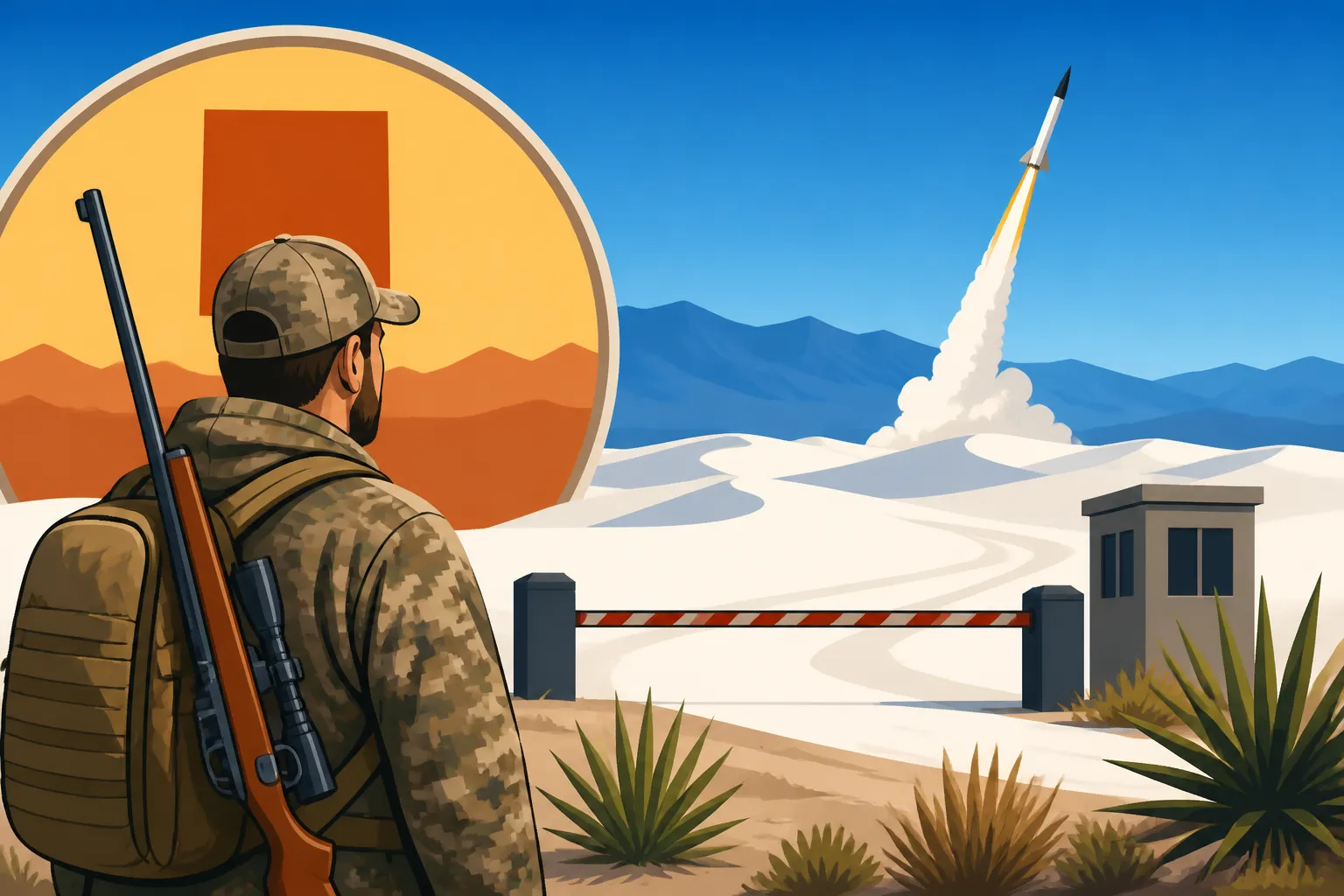
Drawing a White Sands Oryx tag is just the first step. The real challenge, and perhaps the most distinctive aspect of this hunt, begins when you have to gain access to an active military base. This isn't a simple drive through an open gate; it involves rigorous security, mandatory briefings, and a highly structured approach to everything you do on the range.
Security Clearances and Background Checks
Once you've drawn a tag, the White Sands Missile Range will initiate its own set of procedures. This typically involves submitting personal information for a background check. You'll need to provide details like your full legal name, date of birth, Social Security number, and potentially other identifying information. This is standard protocol for accessing any secure military installation. Be prepared for this step, and ensure all information provided is accurate and consistent with your government-issued identification. Any discrepancies can cause significant delays or even revocation of your access.
It’s crucial to respond promptly to all requests from WSMR security personnel. They operate on a strict timeline, and delays on your part can jeopardize your ability to complete the necessary clearance before your hunt date. This process is non-negotiable; if you don't pass the background check or fail to provide the required information, you won't be allowed onto the range, regardless of holding a valid NMDGF tag.
Mandatory Orientations and Escorts
Every hunter, and any accompanying non-hunting guests, must attend a mandatory orientation briefing. These briefings are held in person at the missile range, usually a few days or weeks before the actual hunt dates. These aren't just a formality; they are critically important for your safety and the security of the installation. During the orientation, you will be briefed on:
- Safety Protocols: This includes identifying unexploded ordnance (UXO), what to do if you encounter military personnel or equipment, and general range safety.
- Designated Hunting Areas: Maps will be provided, and boundaries explained in detail. Straying outside these areas is strictly prohibited and can lead to severe consequences.
- Communication Procedures: How to contact range personnel in case of an emergency or if you encounter issues.
- Rules of Engagement: Specific regulations regarding vehicle use, shot placement, tagging, and carcass handling unique to WSMR.
- Emergency Procedures: What to do in case of medical emergency, lost hunter, or range closure due to military operations.
Furthermore, many WSMR Oryx hunts require an escort, at least for initial entry and guidance within specific zones. You won't simply be handed a map and told to drive off into the desert. Range personnel or designated volunteers often lead groups of hunters to their designated starting points and may periodically check in throughout the hunt. This is for your safety and to ensure compliance with all regulations. Respect their authority and follow their instructions without question. This is where the unique aspect of these hunts truly comes into play; it’s a privilege to be there, and that privilege comes with strict adherence to the rules.
Designated Hunting Areas and Boundaries
As mentioned, you will be confined to specific, pre-determined hunting areas on the range. These areas are chosen to minimize conflict with military operations and to provide good hunting opportunities. Maps provided at the orientation will clearly delineate these zones. It is your responsibility to understand and stay within these boundaries. GPS units with mapping capabilities like those provided by GoHunt can be incredibly helpful here, especially if you can load the specific WSMR hunting unit boundaries. However, always prioritize the official maps and instructions given during your briefing.
Straying outside a designated hunting area, even unintentionally, can lead to your hunt being terminated, loss of your tag, and potentially legal repercussions. Remember, you're on a military installation, not just public land. This strict enforcement of boundaries means you need to be constantly aware of your location. The desert landscape can look uniform, making it easy to become disoriented, so reliable navigation tools and careful attention to your surroundings are paramount. Be aware that Why a White Sands Hunt Can Be Cut Short is a very real possibility if military operations require it, further emphasizing the need to respect designated zones and stay flexible.
Preparing for Your White Sands Hunt
Successfully drawing a White Sands Oryx tag is a monumental achievement, but the real work begins long before you set foot on the range. Proper preparation is paramount, not only for increasing your chances of success but, more importantly, for ensuring your safety and compliance with the stringent regulations of an active military installation.
Gear Requirements and Restrictions
Hunting on WSMR, especially for Oryx, demands reliable and appropriate gear. Given the vast, open, and often rugged desert terrain, long-range shooting capabilities are often beneficial, so a rifle that can consistently perform at extended distances is a common choice. Calibers like .270, .30-06, 7mm Rem Mag, or .300 Win Mag are popular, paired with quality optics. Ensure your rifle is zeroed precisely and you are proficient with it at various ranges. Unlike many other hunts, you might find yourself taking a longer shot than anticipated due to the open country and the wariness of Oryx.
However, specific restrictions apply. For instance, fully automatic weapons, tracer ammunition, and certain types of high-explosive rounds are strictly prohibited. While this might seem obvious, it's essential to confirm all weapon and ammunition restrictions during your orientation briefing. Beyond your weapon, consider:
- Optics: High-quality binoculars and a spotting scope are indispensable for locating Oryx in the vast landscape. GoHunt users often discuss optimal optics for similar open-country hunts.
- GPS/Mapping Device: Crucial for navigation and staying within designated hunting areas. Load your maps beforehand.
- Plenty of Water: This is the desert. You cannot carry too much water, even in cooler months. Assume no readily available water sources.
- First-Aid Kit: Comprehensive and easily accessible for emergencies.
- Sun Protection: Wide-brimmed hat, sunscreen, sunglasses are a must.
- Robust Vehicle: High-clearance 4×4 is highly recommended, as roads can be rough and sandy.
- Recovery Gear: Shovel, tow strap, air compressor, tire patch kit are smart additions for desert travel.
- Game Processing Supplies: Knives, gloves, game bags, and a cooler with plenty of ice are essential for field dressing and meat preservation, especially if temperatures are warm.
Safety Briefing Specifics
The mandatory safety briefing isn't just a formality; it's a critical component of your White Sands hunting experience. You'll receive information that goes beyond standard hunting safety. The most significant point of emphasis is typically the danger of unexploded ordnance (UXO). The range has been used for testing for decades, and while areas are cleared, the potential for encountering UXO always exists. The rule is simple: Do not touch, approach, or disturb any unfamiliar metallic objects or debris. Mark its location (using GPS if possible) and report it immediately to range personnel. Your life, and the lives of others, depend on following this rule.
You'll also be briefed on what to do if military operations commence during your hunt. This could involve being instructed to move to a safe zone, stop all activity, or even an early termination of the hunt. This is a very real possibility, and it's something you must be mentally prepared for. It's important to understand What Happens If Military Operations Shorten Your Hunt. The military's mission takes precedence, and hunters must comply instantly and without argument.
Accommodations and Logistics Near the Range
White Sands Missile Range is a vast and relatively remote area. There are no on-range accommodations for hunters. This means you'll need to arrange lodging in nearby towns. Depending on which entrance you're using or which section of the range you're hunting, common base towns include Alamogordo, Las Cruces, or even Truth or Consequences.
- Alamogordo: Located east of the range, this town offers a good selection of hotels, restaurants, and supplies. It's often the most convenient access point for hunts on the eastern side of WSMR.
- Las Cruces: To the south, Las Cruces is a larger city with more amenities but might involve a longer drive to the range gates, depending on your hunt unit.
- Truth or Consequences: Further north, this option is less common for WSMR access but could be relevant for some northern sections or if you're combining your trip with other activities.
Booking your accommodations well in advance is highly recommended, especially during popular hunting seasons or if your hunt coincides with a local event. Remember, you’ll be coming and going from the range each day, so consider the commute time to your hunting unit. Factor in time for travel to and from the range gates, security checks, and any daily briefings that might be required. The logistical planning for a White Sands hunt is as crucial as the hunting itself, demanding careful attention to detail for a successful and safe experience.
Disclaimer
Hunting is an inherently risky activity. This guide provides general information and should not replace official regulations, safety briefings, or professional advice. Always consult the most current New Mexico Department of Game and Fish regulations and White Sands Missile Range specific rules before planning any hunt. Adhere strictly to all military personnel instructions while on the range.