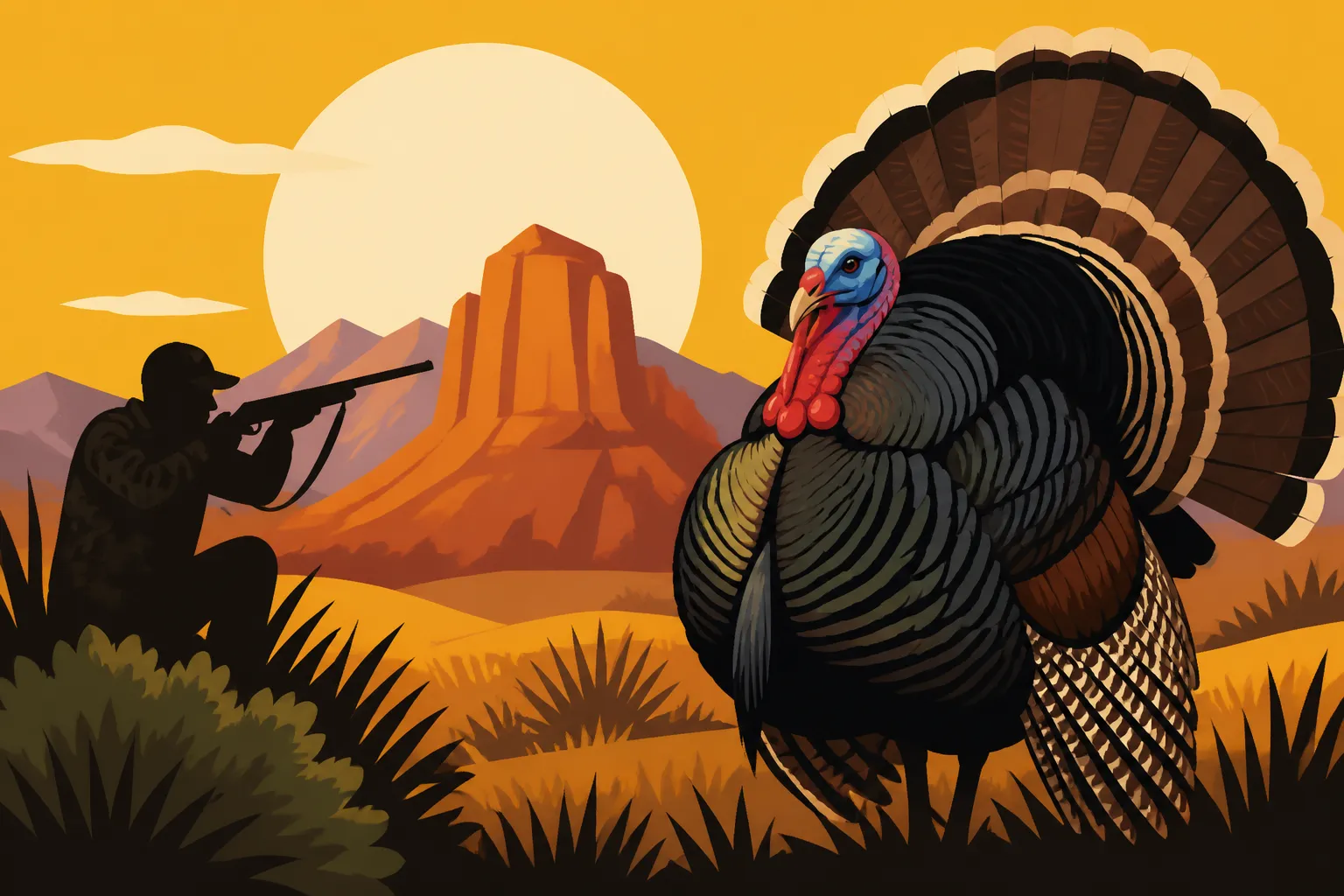
New Mexico Turkey Season Dates
It can be incredibly frustrating trying to keep track of all the hunting regulations and season dates in New Mexico. Just when you think you've got a handle on the nuances of deer or elk seasons, you decide to pursue turkeys, and suddenly you're faced with a whole new set of dates, units, and rules. This guide is here to untangle the complexities of New Mexico's turkey season dates, helping you understand when and where you can chase gobblers across our diverse landscapes.
Understanding New Mexico's Turkey Hunting Structure
Hunting turkeys in New Mexico isn't a one-size-fits-all endeavor. We're fortunate to have three distinct subspecies of wild turkey across the state: the Merriam's, the Rio Grande, and the Gould's. Each subspecies tends to inhabit different regions, which in turn influences the season dates and specific unit regulations. Generally, New Mexico offers both a vibrant spring season, primarily focused on toms and jakes, and a more limited fall season, where "any turkey" tags are often available. This dual structure means hunters have opportunities throughout the year, but also requires careful attention to the specific hunt codes and dates for their chosen area.
The landscape itself plays a huge role in turkey hunting. Merriam's turkeys, for instance, are classic high-country birds, often found in the ponderosa pine forests and mixed conifer stands of our northern and western mountains, like the Carson National Forest or the Gila National Forest. Rio Grande turkeys, on the other hand, prefer the riparian corridors, cottonwood bottoms, and plains units of eastern and central New Mexico, thriving along rivers like the Pecos or the Canadian. The rare Gould's turkey is found only in the extreme southwestern bootheel, making it a truly unique and limited opportunity. These geographical differences are often reflected in how the season dates are structured by the New Mexico Department of Game and Fish (NMDGF).
Before you even start scouting, your first step should always be to consult the current year's official New Mexico Hunting Rules and Info Booklet. While I'll provide general dates here, these can shift year to year due to wildlife management decisions, population trends, or even environmental factors. A resource like GoHunt can also be invaluable for cross-referencing these dates and ensuring you have the most up-to-date information for your specific hunt code.
Navigating New Mexico's Spring Turkey Season Dates
The spring turkey season is undoubtedly the most popular time for gobbler enthusiasts in New Mexico. The sound of a thunderous gobble echoing through the timber at dawn is what many of us live for. These seasons are generally structured to align with the birds' breeding cycle, targeting mature toms and jakes.
Typically, the spring season kicks off in mid-April and runs through mid-May, offering several weeks of prime hunting. However, it's not a blanket opening across the entire state. Different units, or groups of units, will have slightly staggered dates. For example, some units might open a week earlier than others to manage pressure or account for variations in spring green-up and gobbler activity. This is why paying close attention to the specific unit you plan to hunt is paramount. You might find a unit in the northern mountains, say around Chama or Taos, opening a bit later than a unit further south in the Gila.
General Spring Season Framework
For spring turkey hunting, most units will follow a statewide general season structure, but with unit-specific openings and closings. You'll often see specific dates listed for designated Game Management Units (GMUs). For instance, in a given year, you might see the spring season run from April 15th to May 15th in many western units, while some eastern units might have slightly different bookends. The bag limit for spring season is typically one bearded turkey per license year, though always double-check the current proclamation for any changes. It's an exciting time to be in the woods, with the vibrant energy of spring and the intense courtship rituals of the turkeys unfolding around you.
The focus during spring is almost entirely on calling birds in, using a variety of yelps, clucks, and purrs to entice a gobbler into range. Decoys are also a popular tool. This style of hunting demands patience, a good ear, and the ability to remain completely still. Remember that during these early season hunts, proper heat management on an early season hunt can be critical, especially in the more southern units where temperatures can rise quickly even in spring.
Special Unit Considerations
Some specific units might have unique regulations or slightly different dates for spring turkey. For instance, the renowned Gila National Forest, covering vast portions of Units 15, 16, and 17, is a prime Merriam's turkey destination and generally aligns with the statewide spring dates, but always requires verification. In contrast, units on the eastern plains, like those around Clovis or Portales, which hold Rio Grande turkeys, might see slightly different season windows to account for their distinct habitat and breeding patterns.
It's not uncommon for the NMDGF to make slight adjustments to these windows based on current flock health or previous harvest data. Utilizing online mapping tools from services like GoHunt can help you overlay unit boundaries with land ownership and check specific dates, which is a lifesaver when planning a hunt across unfamiliar territory. This allows you to visually confirm your intended hunting area's regulations down to the smallest detail, avoiding any unwelcome surprises in the field.
Exploring New Mexico's Fall Turkey Season Dates
While spring gets all the glory, New Mexico does offer a fall turkey season, though it's generally much shorter, more limited in scope, and often less popular. The fall season is a different beast entirely. Instead of calling in lovesick gobblers, fall hunting often involves locating flocks, busting them up, and then calling the scattered birds back together.
Fall seasons typically occur later in the year, usually in October or November, and sometimes even into December. These dates can be highly unit-specific and are often much shorter than the spring hunts, sometimes only lasting a week or two. The bag limit in fall is also typically more restrictive, usually one turkey (of either sex) per license year, provided you haven't already filled your spring tag.
Fall Season Timing and Tactics
A typical fall turkey season might run for a week or two in early November in certain units. These hunts are often "any legal weapon," meaning rifles, shotguns, and bows are generally permitted, unlike the typical shotgun/archery only restrictions of spring. The strategy shifts from enticing a breeding tom to locating and dispersing a flock. Once scattered, the goal is to set up quickly and use assembly calls – soft yelps and clucks – to draw the lonely birds back to your position.
The fall season provides an opportunity to hunt when the weather is often cooler and the fall foliage can make for a beautiful backdrop. However, turkeys can be much harder to locate and call in the fall, as they are not driven by the same breeding instincts. Scouting New Mexico State Trust Land Fourteen Days Out or other public lands before the fall season can be particularly effective for locating roost sites and feeding areas. This pre-season intelligence is crucial for increasing your odds of success.
Regional Variations in Fall Opportunities
Not all units that have a spring season will necessarily have a fall season. Fall turkey hunts are often concentrated in units with robust turkey populations, primarily in areas with good Merriam's populations in the mountains. Units in the Gila National Forest or the northern forests are more likely to have fall seasons than many of the eastern plains units where Rio Grandes reside.
It’s imperative to consult the NMDGF proclamation annually for fall turkey dates. Some years might even see no fall season in certain areas if populations are low or if specific management objectives are in place. This is where diligent research pays off. Remember to check not just the season dates, but also the legal shooting hours and blaze orange in New Mexico requirements for fall hunts, as these might differ from spring, especially if other big game seasons are open concurrently.
Licensing, Bag Limits, and Important Regulations
Understanding the season dates is only one part of the equation; you also need to make sure you're properly licensed and adhering to all other regulations to ensure a legal and ethical hunt.
License Requirements and Fees
To hunt turkey in New Mexico, you'll need a current New Mexico Game Hunting License, in addition to a turkey license. For non-residents, this involves purchasing a Nonresident New Mexico Game Hunting License, plus the specific turkey license. Residents, of course, have different pricing. The cost for these licenses can vary, so always check the current fee schedule. Remember that New Mexico Application Fees Per Species are usually non-refundable application fees for draw hunts, but turkey licenses are generally over-the-counter purchases.
Youth hunters also have specific provisions, so if you're planning a trip with a younger hunter, look into programs like Which Species a Mentored Youth May Hunt in New Mexico or confirm the New Mexico Mentored Youth Can Hunt Two Years Before Certifying rules. It's a fantastic way to introduce the next generation to the outdoors, but requires careful attention to the details.
Bag Limits and Evidence of Sex
As mentioned, the standard bag limit for spring turkey is typically one bearded turkey per license year. For fall hunts, it's generally one turkey of either sex, provided you haven't already harvested one. It’s critical to keep the evidence of sex on a harvested bird until it's processed or reaches its final destination. For bearded turkeys, this typically means leaving the beard attached to the carcass. For fall birds where sex is open, it might mean leaving a wing or the head attached. Always consult the regulation booklet for the precise legal requirements.
Beyond bag limits, be aware of other critical rules such as Baiting and Trail Camera Rules in New Mexico. Baiting for turkey is generally prohibited, and while trail cameras are legal, their use must conform to specific guidelines. Being well-versed in these rules ensures you stay on the right side of the law and maintain the integrity of the hunt.
Weapon Restrictions and Ethics
Most spring turkey seasons are restricted to shotguns, bows, and crossbows. Rifles are generally prohibited during spring turkey seasons to prevent accidental harvest of other game and to maintain fair chase. In the fall, as noted, "any legal weapon" is often allowed, but again, always verify. Minimum Bow Draw Weight for Big Game and Broadhead Requirements for Bowhunting also apply to turkeys if you're using archery equipment, ensuring a clean and ethical harvest.
Hunting ethically goes beyond just legality. It means respecting the land, the animals, and other hunters. This includes everything from proper field dressing in desert heat to understanding how to handle a wounded animal. Always retrieve game from private land in New Mexico with proper permission, even if the animal was shot on public land.
| Season Type | Typical Dates | Bag Limit (Per License Year) | Common Weapon Type | Primary Strategy |
|---|---|---|---|---|
| Spring | Mid-April to Mid-May | 1 Bearded Turkey | Shotgun, Archery | Calling, Decoys |
| Fall | October/November | 1 Turkey (Either Sex) | Any Legal Weapon | Locate, Scatter, Recall |
This table provides a general overview, but you absolutely must consult the current New Mexico Hunting Rules and Info Booklet for the exact dates and regulations for the year you plan to hunt. Websites and apps like GoHunt are excellent supplemental tools, but the official NMDGF proclamation is the ultimate authority.
The Importance of Thorough Planning and Scouting
Turkey hunting, whether in spring or fall, demands good planning. Simply knowing the season dates isn't enough; you need to know where the turkeys are and how to access those areas.
E-scouting a New Mexico unit before the season is a game-changer. Tools like satellite imagery and topographical maps can help you identify potential roosting areas (tall trees near water), feeding grounds (oak thickets for acorns, open fields for insects), and travel corridors. Look for terrain features that might concentrate birds or offer good setups for calling. Pay attention to water sources and ethics in desert hunting, as turkeys, like all game, are often tied to water, especially in drier environments.
Once you've done your digital homework, boots-on-the-ground scouting is invaluable. This could mean driving forest roads, hiking into potential turkey country, and looking for physical sign like tracks, droppings, and scratch marks. Listening for gobbles at dawn or dusk in the weeks leading up to the season can confirm the presence of birds and give you an idea of their preferred roosting locations.
Remember that hunting New Mexico From 4,000 Feet to 10,000 feet means you could be encountering turkeys in a vast array of elevations and habitats. Merriam's will be in the higher, more rugged country of the Gila or the Sangre de Cristos, while Rio Grandes will stick to the river bottoms and agricultural fringes. Knowing where Merriam's Turkey hold in high timber versus where Rio Grande Turkey on New Mexico's plains are found will dictate your entire approach and choice of unit.
Always be prepared for the unexpected, especially regarding weather. New Mexico's spring can be volatile, with warm days quickly turning to cold, windy conditions. Fall, too, can bring significant temperature swings. Having the right gear, and mentally preparing physically for a high elevation hunt if you're chasing Merriam's, will make a huge difference in your comfort and success.
In the end, chasing turkeys in New Mexico is a deeply rewarding experience, full of beautiful scenery and exhilarating moments. By thoroughly researching the New Mexico Turkey Season Dates, understanding the regulations, and putting in the effort to scout, you'll significantly increase your chances of calling in a majestic gobbler.
Disclaimer
Please be aware that hunting regulations, including season dates, bag limits, and licensing requirements, are subject to change by the New Mexico Department of Game and Fish. The information provided in this guide is for general informational purposes only and should not be considered a substitute for the official annual hunting proclamation. Always consult the current year's New Mexico Hunting Rules and Info Booklet or the NMDGF website before planning or engaging in any hunting activities.