Why the Outfitter Pool Requires a Contract
The New Mexico big game draw can feel like an intricate dance, especially when you start looking into the various application pools. One aspect that often throws hunters for a loop is the requirement for a signed guide-client contract when applying through the outfitter pool. It's not just a suggestion; it's a hard rule that can make or break your application, and understanding why it's there and how to fulfill it is absolutely essential for anyone hoping to draw a coveted New Mexico tag this way.
Understanding New Mexico's Outfitter Draw Pool
Navigating the New Mexico draw can be a challenge, even for seasoned hunters. You've probably heard whispers about different draw pools, and the outfitter pool is one of the most talked-about, and often misunderstood, avenues to drawing a tag. It's not a shortcut, but it is a distinct path with its own set of rules, chief among them being the necessity of a formal contract.
The Purpose Behind the Outfitter Allocation
First, let's talk about why this pool even exists. New Mexico, unlike many other Western states, dedicates a specific portion of its total tags to applicants who apply with a licensed outfitter. This is part of the state's broader strategy for managing its wildlife resources while also supporting its local businesses. Specifically, the state allocates a generous ten percent of every hunt to outfitters and their clients. This means that for every 100 tags issued in a given hunt code, ten of those are set aside for those who apply with a registered New Mexico outfitter. This allocation system, which also includes 84 percent for residents and 6 percent for non-residents, is a unique aspect of hunting in the Land of Enchantment.
The rationale behind this isn't just to boost the outfitting industry, though that's certainly a benefit. It's also about promoting tourism and providing opportunities for hunters who might not have the time, experience, or equipment to tackle a challenging New Mexico hunt on their own. Outfitters often provide a full-service experience, from guiding and scouting to handling logistics in rugged terrain, like the vast Gila National Forest. By setting aside tags for guided hunts, the state essentially incentivizes a different kind of hunting experience, one that can be more accessible and successful for many.
How the Outfitter Pool Differs from the Public Draw
It's crucial to understand that applying through the outfitter pool isn't just applying for the same tag with a guide; it's a completely separate drawing with different dynamics. When you apply as a public hunter, you're in the general draw, competing against thousands of others for those 84% resident or 6% nonresident tags. In this draw, there are no preference points, so every applicant starts on equal footing each year, which means that first-time New Mexico applicants have even odds.
However, when you apply through the outfitter pool, you're in a smaller, more exclusive drawing, vying for those 10% of tags. While it's a smaller pool, it doesn't automatically mean easier odds. The number of applicants in the outfitter pool can vary widely by hunt code and species, sometimes leading to better odds, sometimes not significantly different. What's absolutely vital, though, is that to be considered for this pool, you must have a valid guide-client contract in place. This isn't just a formality; it’s a commitment, both from you and from the outfitter, that you intend to participate in a guided hunt should you draw the tag. This commitment is formalized by the requirement to apply under an outfitter number.
The Critical Role of the Guide-Client Contract
The contract isn't just a piece of paper; it's the lynchpin of your application in the outfitter pool. Without it, your application won't even be considered for that 10% allocation. It's the official documentation that proves your intent to hire a licensed New Mexico outfitter for your hunt.
Why the Contract Is Legally Required
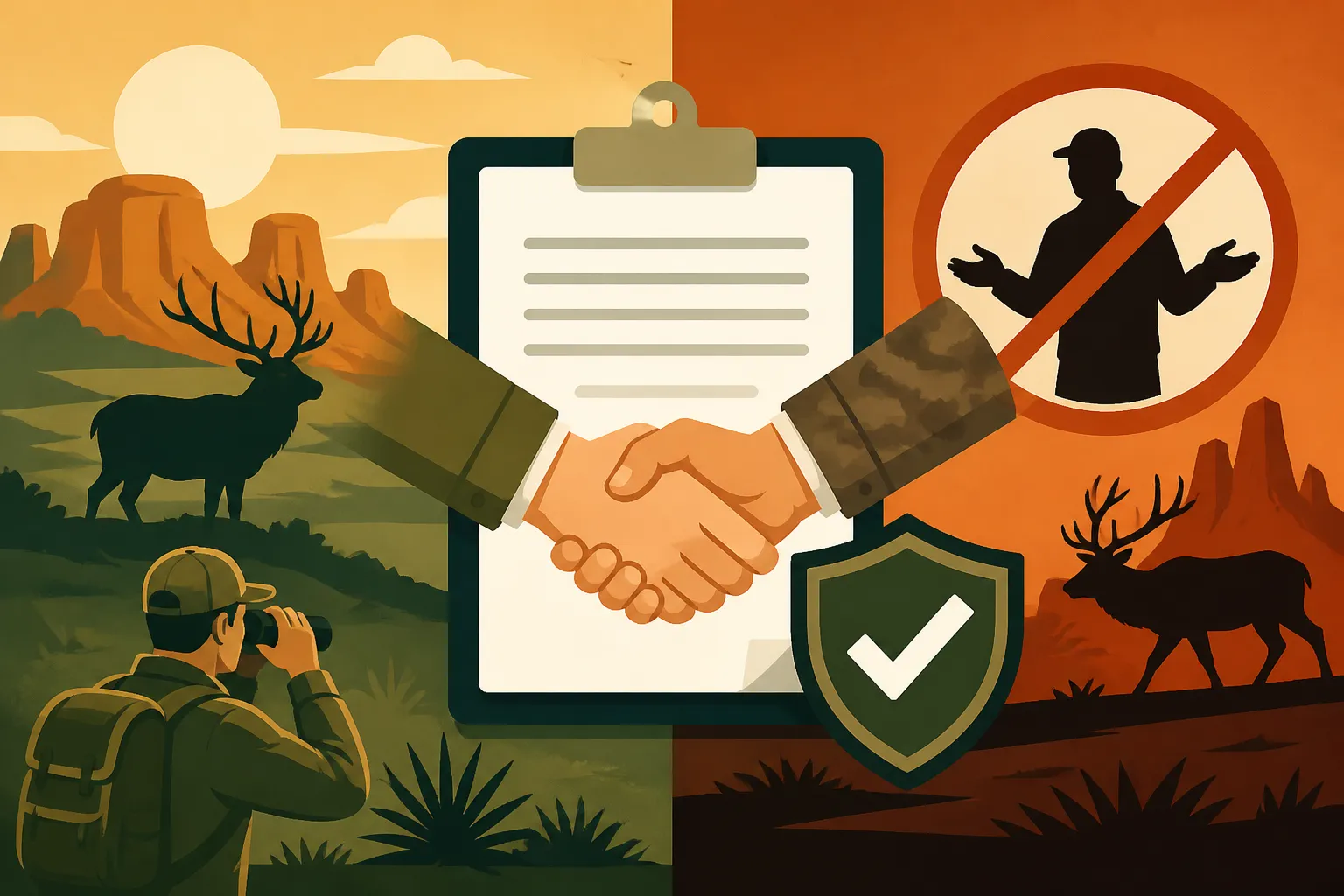
The New Mexico Department of Game and Fish (NMDGF) has this requirement in place for several important reasons. Firstly, it establishes a clear legal relationship between you, the hunter, and the outfitter. This isn't a handshake agreement; it's a formal, binding document. It ensures that the state's outfitter pool system is being utilized as intended – to facilitate guided hunts. If the state didn't require a contract, anyone could simply list an outfitter's number, draw a tag, and then choose to hunt on their own, circumventing the spirit of the allocation.
Secondly, the contract acts as a safeguard for both parties. For the outfitter, it's a commitment from the client, outlining payment terms, services provided, and expectations. For the client, it outlines what they are paying for, the duration of the hunt, and other critical details, protecting their investment. This transparency is crucial when dealing with significant sums of money and valuable hunting opportunities. The rules around the New Mexico Guide-Client Contract requirement are quite specific and leave little room for ambiguity. It must be signed and submitted with your application, demonstrating a legitimate agreement between you and a licensed outfitter.
Key Elements of a Valid New Mexico Guide-Client Contract
A valid New Mexico guide-client contract is far more than just a signature and a price. It's a detailed document that should clearly articulate the terms of your agreement. Here are some of the critical elements you should expect to see, and meticulously review, in any contract:
- Outfitter License Information: The contract must include the outfitter's legal business name, physical address, and most importantly, their valid New Mexico outfitter license number. This proves they are legally authorized to operate in the state.
- Client Information: Your full legal name, address, and contact details.
- Hunt Details: Specifics about the hunt you're applying for, including the species (e.g., elk, mule deer), the hunt code (a critical alphanumeric identifier like ELK-1-101), and the dates of the season. Make sure these match your application exactly.
- Services Provided: A clear outline of what the outfitter will provide. This can range from fully guided hunts with meals and lodging to drop camps where they simply pack you in and out. Be sure to understand if specific services like trophy care or meat processing are included or extra.
- Cost and Payment Schedule: The total cost of the hunt, the deposit amount required, the due dates for subsequent payments, and the accepted payment methods.
- Cancellation and Refund Policy: This is paramount, especially regarding what happens if you fail to draw a tag. Will your deposit be refunded? Rolled over to next year? Applied to a different hunt? What if you draw, but then need to cancel? Understanding these terms upfront is vital. Some outfitters offer refunds when you fail to draw in New Mexico, while others might retain a booking fee or offer a credit.
- The Two-Day Accompaniment Rule: New Mexico state law mandates that a licensed outfitter or a registered guide employed by the outfitter must accompany you for a minimum of two days during your hunt if you draw a tag through the outfitter pool. The contract should acknowledge this. This rule ensures the guided experience is legitimate, not just a way to access a different tag pool.
- Liability and Waivers: Standard clauses that outline responsibilities and risks associated with hunting.
- Signatures and Dates: Both the outfitter (or an authorized representative) and the client must sign and date the contract.
Before you even consider signing, it's highly recommended to read a New Mexico hunt code before you apply so you know exactly which hunt you're agreeing to. Any discrepancies could invalidate your agreement or lead to major headaches down the line.
Ensuring Your Contract Meets Requirements
Once you've settled on an outfitter and received their contract, don't just sign it blindly. You need to ensure it meets the NMDGF requirements. The contract, or at least proof of its existence and details, must be submitted with your draw application by the specified deadline. The NMDGF reviews these documents to ensure compliance. If your contract is incomplete, lacks crucial details, or if the outfitter isn't properly licensed, your application could be rejected, and you'd miss out on the draw entirely.
A good step is to verify the outfitter's license with the NMDGF directly before signing anything or sending a deposit. This simple check can save you a lot of grief. Additionally, confirm that the hunt code and species listed on the contract match what you intend to apply for in the draw. When the application period for big game opens, typically in late January, you'll need all this information ready before the March application deadline.
Practical Implications for Hunters Applying Through an Outfitter
The decision to apply through the outfitter pool carries significant practical considerations that go beyond just securing a tag. It affects your timeline, your finances, and your overall hunting experience.
Navigating the Application Process with an Outfitter
The first hurdle is timing. Unlike the public draw where you can fill out your application right up until the deadline, applying through an outfitter requires an earlier commitment. You need to research, contact, and secure a contract with an outfitter well in advance of the NMDGF's March 18th application deadline. This means often booking around New Mexico's March deadline, sometimes even booking a year or more out, especially for highly sought-after hunts like Gila elk.
Once you have your contract, the outfitter will provide you with their registered outfitter number. This is a crucial piece of information you'll enter on your online application with the NMDGF. When you enter this number, the system identifies your application as part of the outfitter pool. It's paramount to ensure the outfitter number is correct, and that the hunt codes on your application match those specified in your contract. Mistakes here can result in your application being moved to the general public draw, or even rejected, essentially wasting your chances and application fees. The NMDGF also outlines specific rules regarding what the Outfitter Draw asks of applicants, so familiarizing yourself with these is important.
What Happens If You Don't Draw a Tag
This is where the refund and cancellation policy in your contract becomes critically important. Many hunters apply through an outfitter with the hope of increasing their odds, but there's never a guarantee of drawing a tag. If you don't draw, you'll want to know what happens to your deposit.
Most reputable outfitters understand the draw system and will have clear policies:
- Full Refund: Some outfitters will fully refund your deposit if you're unsuccessful in the draw. This is ideal, but might come with a non-refundable booking fee.
- Partial Refund/Credit: Others might offer a partial refund, retaining a small administrative fee, or offer a credit towards a future hunt or a different species.
- Rollover: A common practice is to allow you to roll over your deposit to apply with them again the following year. This keeps you in their system for another chance.
Always clarify these terms before signing the contract. For example, if you book an outfitter for a New Mexico elk hunt and don't draw, knowing whether you get your substantial deposit back, or if it's held for a future attempt, can heavily influence your financial planning. Understanding how New Mexico draw odds work without preference points emphasizes that every year is a new roll of the dice, making the financial terms of your contract even more important.
Beyond the Draw: The Accompaniment Rule
Even if you successfully draw a tag through the outfitter pool, your obligations and the outfitter's don't end there. New Mexico law requires that your outfitter, or a registered guide working for them, accompanies you for a minimum of two days in the field. This isn't just a suggestion; it’s a legal mandate that ensures the integrity of the outfitter draw.
What counts as accompaniment? It means the outfitter or guide must be physically present with you, actively guiding. This doesn't mean they just drop you off and pick you up; they need to be actively engaged in the hunt with you, providing guidance, tracking, and assistance. The specific rules regarding how many days a New Mexico outfitter must accompany you are clear, and if this requirement is not met, both you and the outfitter could face penalties.
What if your New Mexico guide cannot attend due to unforeseen circumstances? Reputable outfitters will have contingency plans in place, often utilizing other registered guides on their team. The contract should address such situations, or at least your communication with the outfitter should confirm how they handle these potential issues. The entire point of the outfitter pool is a guided experience, and the NMDGF takes the accompaniment rule seriously.
Maximizing Your Chances and Protecting Your Investment
Engaging with an outfitter for a New Mexico hunt can be a fantastic way to experience some of the West's best big game opportunities. However, it requires diligence and careful planning to ensure it's a positive experience.
Vetting Your Chosen Outfitter
Before you sign any contract or send a deposit, thoroughly vet your outfitter. This isn't just good practice; it's essential for protecting your significant investment and ensuring a quality hunt.
Here’s a checklist of things to do:
- Verify Licensure: Confirm their outfitter license is current and in good standing with the NMDGF.
- Ask for References: Speak to previous clients, specifically those who hunted the same species and unit you're interested in. Ask about the outfitter's communication, their guiding style, the quality of their gear, and their transparency regarding expectations. Questions to ask a New Mexico outfitter should include things like success rates, guide-to-client ratio, and what specific challenges to expect in the unit.
- Review Their Online Presence: Check their website, social media, and read independent reviews. Be wary of outfits with little online footprint or overwhelmingly negative feedback.
- Understand Their Experience: How long have they been guiding in New Mexico? Are they familiar with your specific hunt unit and the animal you're pursuing?
- Clarify All-Inclusive vs. A La Carte: Understand exactly what the price includes (e.g., lodging, food, transportation during the hunt, field dressing, initial meat care) and what it doesn't. Costs like taxidermy, meat processing, and tips are almost always extra.
There are excellent resources out there to help you. Platforms like GoHunt offer detailed draw odds and unit information, which can help you verify what an outfitter tells you about a particular area. Vetting a New Mexico outfitter before you send a deposit is a step that should never be skipped.
Understanding the Financial Commitment
A guided hunt through the outfitter pool is a significant financial investment. The tag cost itself is considerable, and the outfitter fees add substantially to that. For example, a fully guided New Mexico elk hunt can range from several thousand to over ten thousand dollars, depending on the unit, duration, and level of service.
Outfitter Pool vs. Public Draw: A Quick Comparison
| Feature | Public Draw Applicant | Outfitter Pool Applicant |
|---|---|---|
| Tag Allocation | 84% Resident / 6% Nonresident | 10% of total tags (all applicants, resident or non-res) |
| Draw Odds | Vary by hunt code, no preference points, even odds | Separate odds, can sometimes be better, sometimes similar |
| Contract Required | No | Yes, a signed guide-client contract with NMDGF |
| Guide Required | No | Yes, minimum two days accompaniment by outfitter/guide |
| Application Fees | Species-specific, non-refundable | Same species-specific fees, non-refundable |
| Booking Timing | Can apply closer to deadline (March 18) | Must book outfitter well in advance of deadline |
| Total Cost | Tag cost + travel/gear | Tag cost + outfitter fees + travel/gear |
Beyond the base fees, remember to factor in:
- Application Fees: Non-refundable fees you pay to NMDGF for each species you apply for.
- License Fees: The general game hunting license required to even apply for big game.
- Habitat Management & Access Validation (HMAV) and Habitat Stamp: Required for hunting specific lands.
- Travel Costs: To and from New Mexico.
- Tips: Standard practice to tip your guide and camp staff.
- Meat Processing & Shipping: If you're successful.
- Taxidermy: If you harvest a trophy.
It's a comprehensive expense, so be sure you have a clear understanding of the full financial picture before you commit.
Resources for New Mexico Hunters
In today's digital age, there are incredible tools available to help you make informed decisions. Websites like GoHunt provide invaluable data on draw odds, unit information, and harvest statistics that can help you assess the viability of different hunt codes and outfitters. They often break down draw success rates for both public and outfitter pools, giving you a clearer picture of your actual chances. Using such resources can help you refine your choices and discuss specific hunt codes with your prospective outfitter. The NMDGF website is also your official source for regulations, unit maps, and licensed outfitter lists. Utilize these tools to your advantage.
Choosing to hunt New Mexico through the outfitter pool is a fantastic opportunity for many, but it's a path paved with specific requirements. The guide-client contract isn't just a formality; it's a legal cornerstone designed to protect all parties and ensure the integrity of the state's outfitter allocation. By understanding its purpose, meticulously reviewing its contents, and diligently vetting your outfitter, you can navigate this process with confidence and significantly increase your chances of a successful and rewarding hunt in New Mexico.
Disclaimer
This article is intended for informational purposes only and does not constitute legal advice. Hunting regulations, fees, and requirements in New Mexico can change. Always consult the official New Mexico Department of Game and Fish website and current year's hunting proclamation for the most accurate and up-to-date information before planning any hunt.