Holding for Wind Across a Deep Canyon
There’s almost nothing more frustrating for a New Mexico hunter than finally getting that bull or buck in your crosshairs, perfectly ranged, only to feel that maddening gust of wind whip through the canyon. It makes your heart sink, doesn't it? You’ve put in the time, drawn a coveted tag, and now, Mother Nature is throwing a curveball that could easily lead to a missed shot or, worse, a wounded animal. This guide is all about tackling that exact challenge, breaking down how to read, predict, and most importantly, compensate for those tricky canyon winds when every shot counts in New Mexico's rugged landscapes.
The Unpredictable Nature of Canyon Wind
Hunting in New Mexico often means hunting broken, undulating terrain, and nothing complicates a shot more than the unpredictable dance of wind in deep canyons. What might feel like a gentle breeze at your shooting position can be a hurricane 300 yards away, or, conversely, a swirling eddy that defies all logic.
Understanding Thermals and Crosswinds
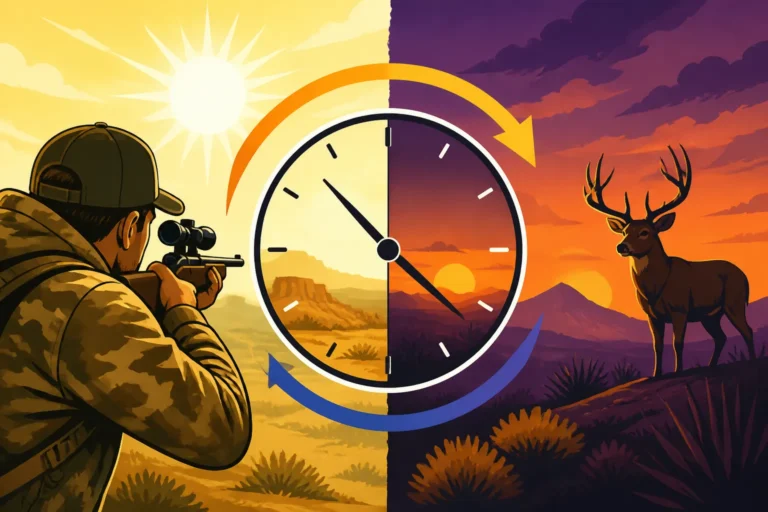
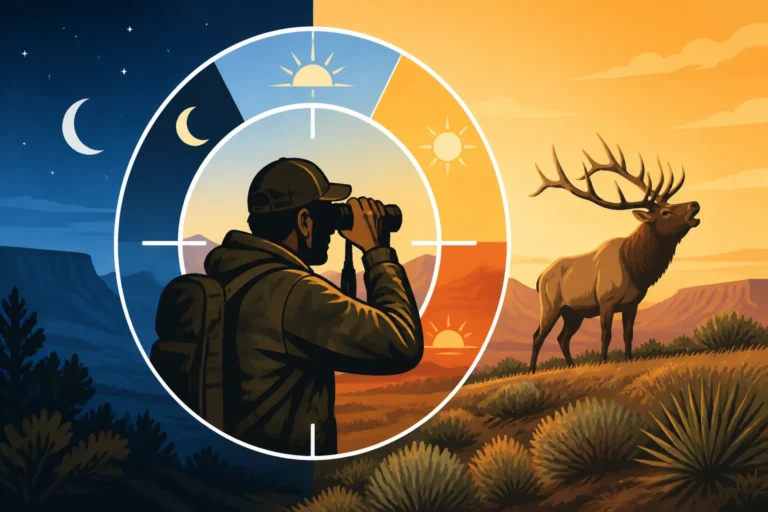
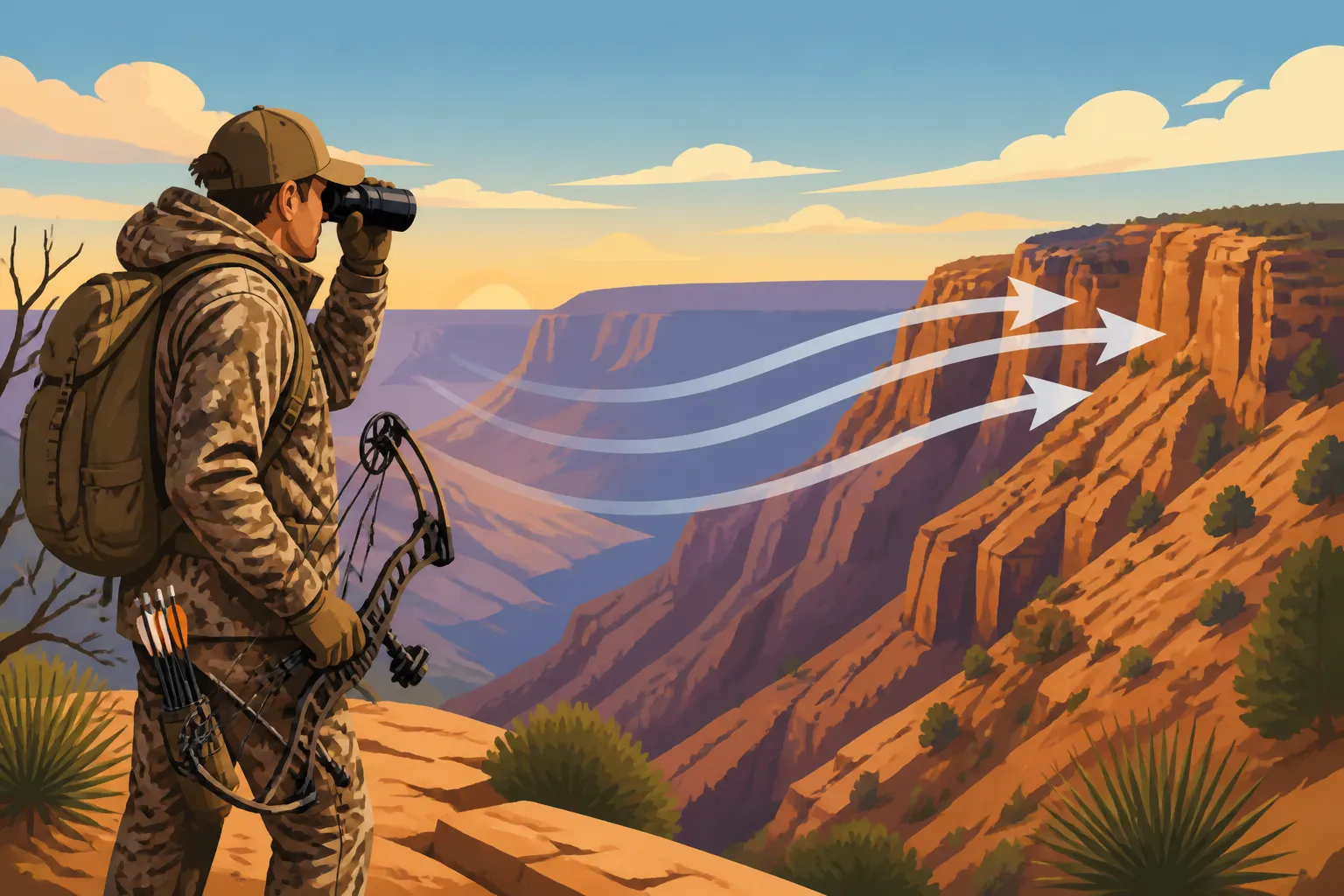
Anyone who's spent a fair amount of time in New Mexico's mountains, especially units like those in the Gila National Forest or the Sacramento Mountains, knows the rhythm of the thermals. These are the localized winds driven by temperature differences. As the sun rises and heats the earth, air in the canyons begins to rise, creating an up-canyon thermal drift. This is usually what you'll encounter through the late morning and early afternoon. Conversely, as the sun begins to set, the air cools, becoming denser, and starts to flow down-canyon. This thermal reversal often happens as the evening sets in, usually an hour or two before dark.
But here’s the kicker: these thermals don't operate in a vacuum. They constantly interact with larger, prevailing weather-pattern winds. Imagine a strong west wind blowing over a ridge. As it hits the canyon, it can create all sorts of turbulence, swirling down into the canyon, pulling against or even overriding the natural thermal flow. The canyon walls themselves, along with side draws, benches, and thick stands of timber, act like natural funnels, baffles, and accelerators for the wind. What might be a steady crosswind on an open ridge transforms into a baffling, multi-directional force within the confines of a deep draw. Learning to anticipate these shifts is crucial. For more on this, you might find our article on Playing Thermals on a Canyon Stalk incredibly useful.
Why Wind Matters More in Canyons
The primary reason wind is such a potent adversary in canyon country is simply physics. When you’re shooting across a void, a bullet is exposed to the wind for a longer duration than a shot taken along a flat ridge. A small amount of wind over a long distance, especially when that wind is changing in direction and velocity across the bullet’s flight path, can result in significant deflection.
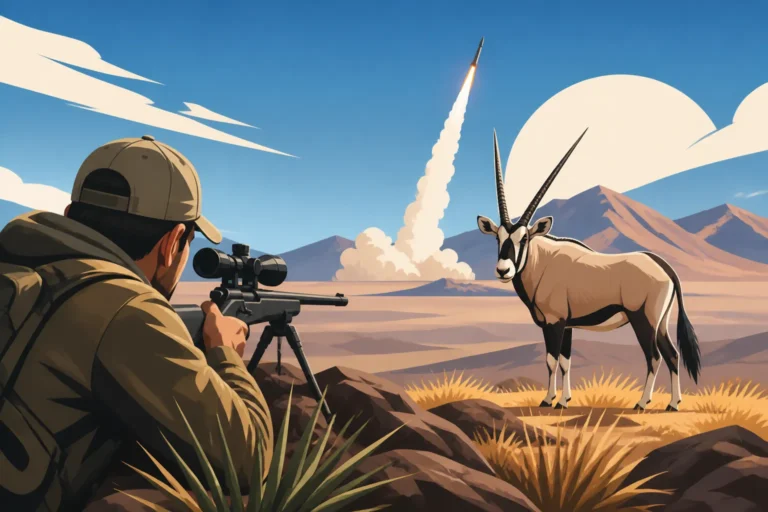
Consider a typical New Mexico canyon shot. You spot a mule deer buck across a deep ravine, maybe 400 yards away. At your position, the wind might feel calm, or perhaps a slight breeze. But that bullet, traveling for close to half a second or more, will encounter all the microclimates and currents swirling within that canyon. A 10 mph crosswind can easily push a bullet several inches off target at 300 yards, and that impact only grows exponentially with distance. When you factor in swirling winds that might push it left for 100 yards, then right for another 100, the calculation becomes incredibly complex. This uncertainty not only affects bullet trajectory but also plays havoc with a hunter's confidence, making that critical shot even more nerve-wracking. The psychological burden of wind can be as challenging as the ballistic one.
Reading the Wind: Tools and Techniques
Knowing wind is present is one thing; accurately reading its speed and direction across a canyon is another beast entirely. It’s a skill honed over many hours in the field, often through frustrating trial and error.
Using Environmental Cues
Before you even reach for a gadget, your eyes and ears are your best wind detection tools. Start by observing the mirage. Those shimmering heat waves rising off the ground, especially on warm days, can tell you a lot. If the mirage is leaning consistently in one direction, that indicates a consistent crosswind. If it's boiling straight up, the air is relatively calm. If it's twisting and turning like a confused snake, you're dealing with serious turbulence.
Next, look at the vegetation. How are the leaves on the juniper trees swaying? Are the tall grasses on the opposite hillside bending? Do the distant piñon pines look ruffled? Even the smallest telltales, like the barely perceptible shiver of leaves on a distant aspen, can give you clues. Toss a pinch of fine dirt or dust into the air and watch its drift, but remember this only tells you the wind at your immediate location. For deeper insights into this, check out our piece on Reading Wind in a Deep Gila Canyon.
Technology and Practical Aids
While environmental cues are essential, modern tools can certainly supplement your observations. A handheld wind meter, like those from Kestrel, can give you precise readings of wind speed and direction at your position. However, the limitation here is obvious: it only tells you what the wind is doing right where you are standing. It can't tell you if there’s a microburst in the middle of the canyon or a complete reversal at the target. Still, knowing the wind at your firing point is a crucial piece of the puzzle.
Many experienced hunters also carry a small bottle of "wind checker" powder or, more naturally, a handful of milkweed seeds. A gentle squeeze of the bottle or a toss of the seeds will release a cloud of fine particles that float on the air, making even the lightest breeze visible. This is invaluable for detecting subtle changes in direction or strength right before you squeeze the trigger.
When you're trying to figure out how wind will behave over varying terrain and distances, resources like GoHunt can be incredibly helpful for e-scouting. By studying detailed topographic maps and understanding where elevation changes rapidly or where saddles and draws might funnel air, you can start to form a mental picture of potential wind corridors and eddies before you even step foot in the field. While it won't replace on-the-ground observation, it's a powerful preparatory tool.
Holding for Wind: Practical Shooting Strategies
Once you’ve done your best to read the fickle canyon wind, the next step is to actually apply that information to your shot. This is where practice and a deep understanding of your rifle and bullet truly pay off.
Estimating Wind Speed and Direction
This is often the hardest part because you’re trying to average out a complex, dynamic system. Start by establishing a base wind speed at your position. Then, observe how that speed changes as you scan across the canyon toward your target. Is the vegetation moving faster or slower halfway across? Is the mirage leaning more or less?
A common technique is to break the shot into thirds or quarters and estimate the average wind speed and direction for each segment. For example, if you have a 400-yard shot, you might estimate a 5 mph full-value crosswind for the first 100 yards, a 10 mph quarter-value headwind for the next 200, and a 3 mph tailwind for the last 100. This is an oversimplification, of course, but it forces you to think critically about the bullet’s entire flight path, rather than just what you feel at the muzzle. Ultimately, you'll need to arrive at a single "effective" wind value and direction to apply to your ballistics. This often involves a bit of educated guesswork and relying on your experience in similar conditions.
Applying Wind Holds and Adjustments
There are two primary ways to compensate for wind:
- Dialing your scope: If your scope has exposed turrets, you can adjust your windage (horizontal adjustment) based on your ballistic data. This is often the most precise method, assuming you have a solid wind estimate. You'll need to know your bullet's ballistic coefficient, muzzle velocity, and the distance to the target. Ballistic apps, some of which are integrated into platforms like GoHunt, can quickly calculate these adjustments for you. You'd typically input your estimated wind speed and direction, and the app tells you how many clicks to move your scope’s windage turret.
- Holding off (Kentucky Windage): This involves holding your reticle to the left or right of the animal, effectively "aiming into" the wind. This is faster than dialing, which can be critical on a quickly developing shot, but it requires a very strong understanding of your rifle's trajectory and your reticle's subtensions. Many modern scopes have windage hash marks on the horizontal stadia, which makes this method much more practical. For instance, if your ballistic calculator tells you the bullet will drift 8 inches left, and your reticle has 1 MOA (Minute of Angle) marks, and at 400 yards 1 MOA is roughly 4 inches, you'd hold 2 MOA to the right of your target.
Here’s a simplified example of how wind drift might look for a common hunting caliber, assuming a full-value (90-degree) crosswind:
| Caliber | Bullet Weight (gr) | Muzzle Velocity (fps) | Range (yds) | 5 mph Wind Drift (inches) | 10 mph Wind Drift (inches) | 15 mph Wind Drift (inches) |
|---|---|---|---|---|---|---|
| 6.5 Creedmoor | 143 ELD-X | 2700 | 300 | 3.8 | 7.6 | 11.4 |
| 400 | 7.1 | 14.2 | 21.3 | |||
| .308 Win | 180 AccuBond | 2600 | 300 | 4.6 | 9.2 | 13.8 |
| 400 | 8.8 | 17.6 | 26.4 | |||
| .30-06 Sprg | 180 Partition | 2800 | 300 | 4.1 | 8.2 | 12.3 |
| 400 | 7.8 | 15.6 | 23.4 |
Note: These are approximations and will vary based on specific bullet design, ballistic coefficient, and atmospheric conditions. Always verify with your own rifle and ballistic data.
It’s also important to remember your Rifle Zero Distance for Canyon Country. If you’re zeroed at 200 yards, understanding how your bullet drops and drifts at longer ranges, even without wind, is fundamental before you even consider wind holds. For hunters chasing elk, having a good all-around caliber is important, and you can learn more about that in our guide, Best All-Around Caliber for Gila Elk.
Practicing for Canyon Wind
There's simply no substitute for practice when it comes to shooting in wind. You can read all the articles and watch all the videos, but until you get behind your rifle and send rounds downrange in actual windy conditions, it's just theory. Find a range where you can shoot at varying distances, preferably one that offers some natural wind challenges, even if it's not a true canyon.
Set up targets at 200, 300, and 400 yards. Use a wind meter, toss some dust, and practice estimating the wind. Then, apply your holds or dial your scope and see where your shots land. Pay attention to how your bullet reacts, especially at the longer distances. Practice cold bore shots, as your first shot of the day in the field will always be a cold bore. Focus on consistent fundamentals: breath control, trigger squeeze, and follow-through. Wind can exacerbate any flaws in your technique. Developing a solid Building a Practice Routine Before Opener is a great way to ensure you're ready when the season arrives.
When to Take the Shot (Or Pass)
Sometimes, the best shot is the one you don't take. This is a tough pill to swallow after hours, days, or even weeks of hard hunting, but it's a cornerstone of ethical hunting.
Ethical Considerations and Confidence
As hunters, we have an absolute ethical responsibility to make a clean, humane kill. If you are not confident in your ability to place that bullet precisely where it needs to go – and wind is a huge factor in that confidence – then passing on the shot is the only responsible decision. It’s a gut check, a moment where you weigh desire against capability.
Don't let "buck fever" or the pressure of the moment override your judgment, especially when wind is involved. Those swirling gusts, the distant animal, the ticking clock of legal shooting hours – it all adds up. Take a deep breath, re-evaluate, and be honest with yourself about your skill level and your equipment's limitations in those specific conditions.
Waiting for a Lull or Better Position
Patience, my friend, is truly a virtue in canyon hunting. Often, the wind will come in gusts and lulls. Instead of forcing a shot during a peak gust, try to wait for a moment of relative calm. It might only be a few seconds, but those seconds of steadier air can make all the difference. Keep your rifle shouldered, your breathing controlled, and your crosshairs steady, waiting for that window of opportunity.
If waiting isn't an option or the wind simply refuses to cooperate, consider a different approach. Can you reposition yourself? Sometimes moving just 50 yards can get you out of a direct wind tunnel, or into a more sheltered spot. Can you close the distance? Every yard you cut off the shot reduces the bullet’s exposure to wind and minimizes its effect. Don't be afraid to put the stalk back on, even if it feels risky. Moving in for a closer shot, perhaps by Using Draws and Benches to Close Distance, can significantly increase your chances of success. Or, if the terrain allows, you might be able to use natural cover to approach, as discussed in Terrain That Hides an Approach at 10,000 Feet. Sometimes, a little extra effort to How Far to Stalk a Bedded Mule Deer can turn an iffy shot into a high-percentage one.
Disclaimer
Please note: Hunting regulations and laws can change. Always consult the most current New Mexico Department of Game and Fish regulations prior to any hunting activity. This content is for informational purposes only and does not constitute legal advice.