What Makes a Weapon Primitive Under the Rules
The world of hunting regulations can sometimes feel like a labyrinth, especially when you start diving into specific weapon categories like "primitive weapons." It’s frustrating when you're just trying to prepare for your hunt, and the rules seem to change or have subtle nuances depending on the state, or even the specific unit within a state. In New Mexico, understanding what truly qualifies as a primitive weapon is crucial, not just for staying legal, but for ensuring you’re applying for the right tags and preparing your gear correctly for those unique, challenging seasons. This guide aims to pull back the curtain on those often-confusing regulations, helping you confidently navigate New Mexico's primitive weapon rules.
Deciphering the "Primitive" Label in New Mexico Hunting
When New Mexico Game and Fish talks about "primitive weapons," they're not just throwing around an old-fashioned term. It signifies a specific commitment to a style of hunting that emphasizes simplicity, skill, and often, a closer connection to historical hunting methods. This isn't about making things needlessly difficult, but rather about preserving a certain challenge and tradition in the field.
The Guiding Principle: Simplicity and Challenge
At its heart, the primitive weapon designation in New Mexico is about embracing a higher degree of hunter skill and a more fundamental approach to taking game. Think about it: fewer technological assists, more reliance on woodcraft, tracking, and getting closer to your quarry. This philosophy isn't just about weapon limitations; it’s about the spirit of the hunt itself. It’s why hunters often seek out these seasons—they crave that deeper challenge. It means less reliance on high-tech optics or lightning-fast reloading, pushing you to become a more patient and proficient hunter. For many, it's a way to step back from the modern complexities and engage with the wilderness on a more personal level.
The Two Main Branches: Muzzleloaders and Archery Equipment
Broadly speaking, New Mexico categorizes primitive weapons into two primary branches: muzzleloaders and certain types of archery equipment. Each of these branches has its own very specific set of rules and limitations that define what is, and isn't, allowed during a primitive hunt. It's not enough to simply have a muzzleloader; it needs to meet certain criteria. The same goes for bows—not just any bow will do. We'll dive into the granular details of each, because missing even a small requirement could invalidate your hunt. It's often during these specific primitive weapon windows that you might encounter fewer hunters, particularly in coveted areas like those designated for a Primitive Weapons Hunting in New Mexico's Unit 15.
Muzzleloader Specifics for Primitive Seasons
Let's talk about muzzleloaders, because this is where many of the specific "primitive" rules come into play. It's not just about loading from the front; there are critical distinctions in how the powder is ignited, what kind of projectile you can use, and perhaps most debated, what kind of sighting system is permissible.
Ignition, Powder, and Loading Requirements
For a muzzleloader to qualify as a primitive weapon in New Mexico, it generally must be an open-sighted, single-shot firearm that is loaded from the muzzle. This means no breech-loading systems, even if they're otherwise "muzzleloader" caliber. The ignition system is also key: percussion caps, flintlock, or 209 primers (shotgun primers) are typically allowed, but generally, the primer must be exposed, not fully enclosed by a bolt action that makes it function more like a modern rifle. Loose powder or pellets are typically the propellant, rather than self-contained cartridges. The idea is to stick to the older, more deliberate loading process that takes time and focus, adding to the challenge. You’ll also need to be aware of the minimum caliber requirements, which can differ by species. For example, knowing the Muzzleloader Caliber Minimums for Elk is non-negotiable if you're chasing bulls in the high country.
Scopes and Other Sight Limitations
This is perhaps the biggest point of contention and confusion for many new to primitive muzzleloader hunting. In New Mexico's primitive weapon seasons, the use of magnified optics, or scopes, on a muzzleloader is generally not permitted. This is a critical departure from many "any legal weapon" muzzleloader seasons, where a scope is perfectly legal. During primitive hunts, you're restricted to open sights, which include iron sights, fiber optic sights, or peep sights. The goal here is to limit the effective range of the weapon and increase the demand for marksmanship at closer distances. This restriction forces you to get closer to the animal, enhancing the "primitive" experience. Always double-check the current regulations, as these rules can sometimes see minor tweaks from year to year, but the no-scope rule for primitive muzzleloader hunts has been a steadfast standard. So, if you're wondering Can You Use a Scope on a Muzzleloader?, the answer is usually no for primitive seasons.
Projectile Types and Bore Diameter
New Mexico regulations specify not only how you load your muzzleloader but also what you load into it. Generally, you're looking at lead bullets, sabots with lead projectiles, or conical bullets. Jacketed bullets, like those used in modern cartridge rifles, are typically prohibited. The projectile must be loaded from the muzzle and pushed down onto the powder charge. There are also minimum bore diameter requirements that often depend on the species you're hunting. For deer, it might be .40 caliber or larger, while for elk, it’s usually .50 caliber or larger. Always consult the official New Mexico Hunting Rules & Information booklet for the precise and most current specifications, as these can make or break your compliance. Websites like GoHunt often have excellent resources that can help you double-check these specifics against your planned hunt code.
Archery Equipment: What Qualifies as Primitive
Archery, at its core, feels primitive, right? You're using a stick and a string to propel an arrow. But even within archery, New Mexico makes distinctions for what counts as a "primitive weapon" in certain designated seasons. These rules primarily focus on the type of bow, the arrows, and the broadheads.
Bow Types: Traditional, Compound, and Crossbow Rules
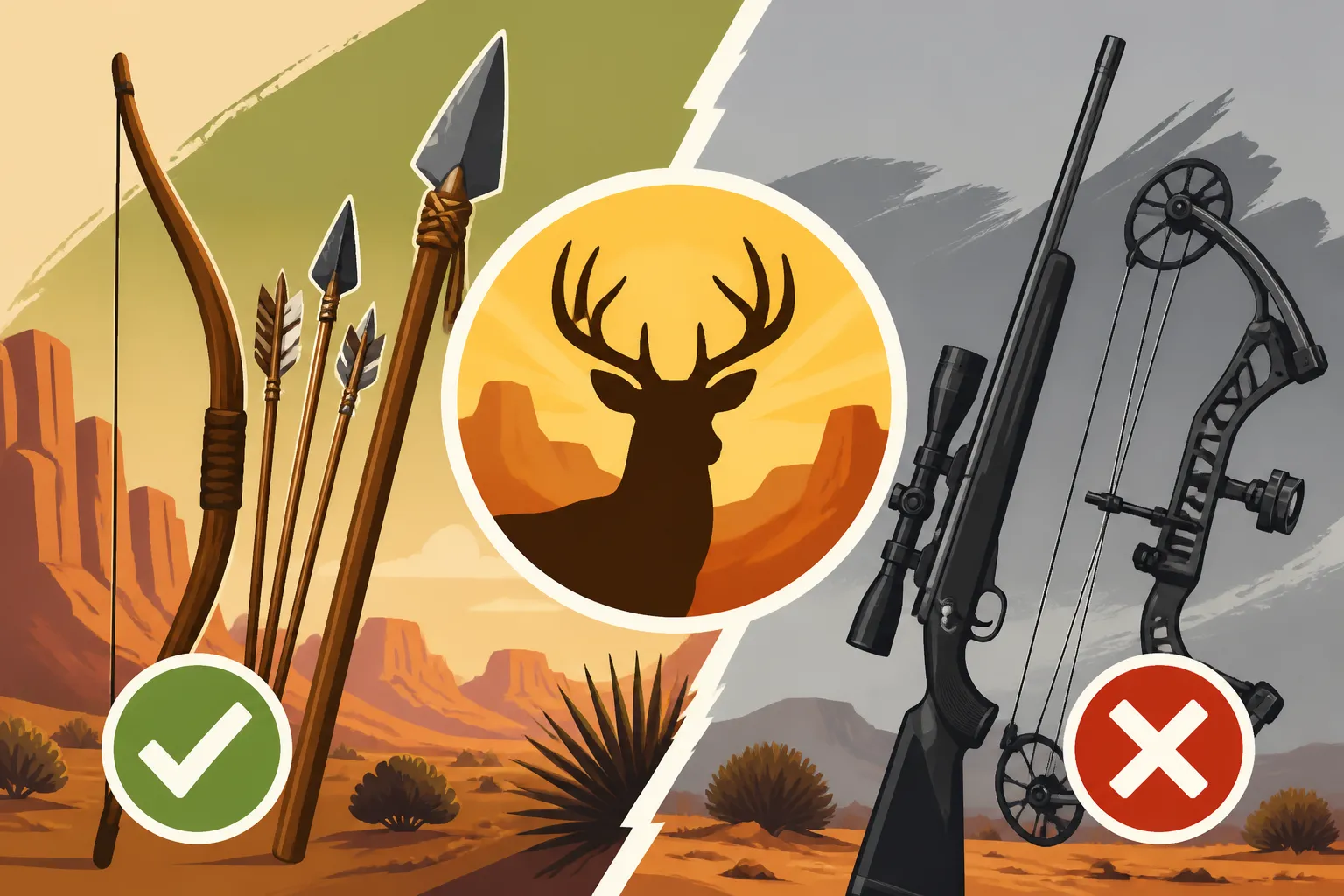
When it comes to bows for primitive archery seasons, the definition leans heavily into traditional equipment. This usually means longbows and recurve bows with no mechanical advantage (like let-off cams). However, New Mexico’s "primitive weapon" designation primarily applies to muzzleloader hunts. For archery-specific seasons, the rules usually allow any legal bow, which includes compound bows, as long as they meet minimum draw weight and let-off regulations. The term "primitive archery" might be applied more loosely in common parlance, but legally, New Mexico often separates these.
A significant point of confusion often revolves around crossbows. While many states classify crossbows as archery equipment, New Mexico has specific rules. Generally, crossbows are not legal for big game hunting in New Mexico unless you possess a mobility-impaired hunter permit, or are hunting specific private land or designated areas. So, if you're thinking about a true primitive hunt, a traditional or compound bow (for standard archery seasons) is your path, but a crossbow is almost certainly out unless you meet those specific exceptions. For more on this, you might want to read up on Are Crossbows Legal for Big Game?.
Arrow and Broadhead Regulations
Regardless of whether you're in a general archery season or a designated "primitive" season (which, again, often refers to muzzleloaders more than bows), arrow and broadhead rules are universal for archery. Your arrows must be at least 20 inches long. When it comes to broadheads, New Mexico requires broadheads with at least two cutting edges and a minimum cutting diameter of 7/8ths of an inch. Mechanical or expandable broadheads are legal, provided they meet these minimum cutting diameters both closed and when expanded. This is a relief for many modern bowhunters who prefer the flight characteristics of expandable heads.
However, it's always critical to ensure your broadhead is razor-sharp and designed for ethical harvest. Don't cheap out here; a good broadhead can make all the difference. For more detailed insights, checking out articles like Broadhead Requirements for Bowhunting can be incredibly helpful.
Draw Weight and Let-Off Considerations
For any legal bow in New Mexico, there are minimum draw weight requirements. For big game, your bow must have a minimum draw weight of 40 pounds. This ensures enough kinetic energy to deliver a lethal blow to larger animals like elk and deer. While there isn't a maximum draw weight, most hunters wouldn't be able to handle anything too extreme anyway.
Let-off, which is the percentage of weight reduced at full draw on compound bows, is also regulated. New Mexico allows up to 80% let-off. This means that if your bow has a 70-pound draw weight with 80% let-off, you'd only be holding 14 pounds at full draw, allowing for more stability and precision when aiming. These regulations are designed to provide a fair chase while still allowing for modern archery equipment within general archery seasons. For more on what your bow needs to be able to do, consider reading up on Minimum Bow Draw Weight for Big Game.
Navigating Primitive Weapon Hunts in Practice
Understanding the rules on paper is one thing, but applying them in the field and planning your hunt effectively is another challenge entirely. New Mexico's primitive seasons offer unique opportunities but demand careful preparation.
Understanding Hunt Codes and Unit Restrictions
New Mexico uses a system of "hunt codes" to delineate specific seasons, weapon types, and units. When you apply for a tag, you’ll be choosing a hunt code like "E-1-100" or "D-2-215," where the letters often indicate species (E for Elk, D for Deer), and the numbers denote the weapon type, unit, and season dates. It's absolutely vital to look for hunt codes specifically designated as "muzzleloader" or "primitive weapon." Not all muzzleloader seasons are "primitive" in the sense of the strict rules discussed above (e.g., no scopes). Some muzzleloader hunts fall under "any legal weapon" if their dates overlap with rifle seasons or if they are simply a separate muzzleloader season without the primitive restrictions. This is where the minutiae matter.
You’ll find that certain units, particularly those with a strong history of promoting fair chase and challenging hunts, might have more primitive-only opportunities. Places like Unit 15, for example, are renowned for their primitive weapon seasons. Understanding these specific codes is your first step to a legal and successful hunt, and resources like GoHunt can simplify decoding these complex hunt codes. Don't just assume; always confirm what a specific hunt code permits. Learning how to read a Reading a New Mexico Hunt Code Before You Apply is an invaluable skill.
Checking Your Gear Before the Season
Once you've drawn a primitive weapon tag, don't wait until the last minute to ensure your gear is compliant. Practice with your open sights! If you're used to a scope, switching to irons can be a significant adjustment in accuracy and effective range. Shoot your muzzleloader extensively with the exact powder charge and projectile you plan to use. Learn its trajectory inside and out. For archery, ensure your bow is tuned, your broadheads are sharp, and your arrows are flying true.
Imagine getting into a prime hunting spot in a designated Primitive Weapons Units in New Mexico, only to realize your muzzleloader scope isn't legal, or your bow's draw weight is under the minimum. That's a heartache no hunter wants to experience. Take the time, well before your hunt, to thoroughly check every piece of equipment against the current year's regulations. A quick call to the Game and Fish Department with specific questions is never a bad idea.
Benefits and Challenges of Primitive Weapon Hunting
Choosing to hunt with primitive weapons brings both unique benefits and considerable challenges. On the upside, these seasons often have lower hunter density compared to "any legal weapon" rifle hunts, offering a more solitary experience in the field. There's a profound satisfaction that comes from successfully harvesting an animal with a weapon that demands greater skill and closer ranges. It’s a truly immersive experience that connects you to the roots of hunting.
However, the challenges are real. The limited range of muzzleloaders with open sights means you have to be exceptional at stalking and closing the distance. Archery hunts, while not strictly "primitive weapon" in the same way, demand similar skills of stealth and precision. You'll spend more time scouting, learning terrain features, and practicing wind reading. For example, Reading Wind in a Deep Gila Canyon becomes even more critical when you need to be within 100 yards of an animal instead of 300. This increased difficulty is exactly why many hunters pursue primitive opportunities—it’s about the journey and the intense effort required, not just the harvest.
Here's a quick comparison of common weapon types and their primitive status:
| Weapon Type | Primitive Hunt Legal? | General Season Legal? | Key Restrictions for Primitive Hunts (if applicable) |
|---|---|---|---|
| Flintlock Muzzleloader | Yes | Yes | Open sights only, loaded from muzzle, loose powder |
| Percussion Cap Muzzleloader | Yes | Yes | Open sights only, loaded from muzzle, loose powder/pellets |
| In-Line Muzzleloader (209 Primer) | Yes | Yes | Open sights only, loaded from muzzle, loose powder/pellets |
| Muzzleloader with Scope | No | Yes (in certain "any legal weapon" muzzleloader seasons) | Not allowed in primitive seasons |
| Longbow/Recurve Bow | Yes (Archery Seasons) | Yes (Archery Seasons) | Minimum draw weight, broadhead rules, no scopes |
| Compound Bow | Yes (Archery Seasons) | Yes (Archery Seasons) | Minimum draw weight, broadhead rules, no scopes |
| Crossbow | No | No (unless mobility-impaired or specific land permits) | Generally prohibited for big game |
| Rifle/Shotgun | No | Yes (Any Legal Weapon Seasons) | Not considered primitive |
Remember, this table is a general overview; specific hunt codes can always have unique stipulations, so always refer to the official New Mexico Game and Fish regulations. GoHunt also provides an excellent platform to check these regulations for specific units and seasons.
In New Mexico, the term "primitive weapon" is a designation that brings with it a specific set of rules, particularly for muzzleloaders, designed to uphold a challenging, traditional style of hunting. While archery, with its focus on close-range skill, certainly embodies a primitive spirit, the legal "primitive weapon" hunt codes usually carry strict requirements for muzzleloaders regarding sights, loading, and ignition. Understanding these nuances isn't just about avoiding a citation; it's about fully embracing the unique experience these hunts offer. So, read those regulations, check your gear, and prepare for a rewarding challenge in the Land of Enchantment!
Disclaimer
Please note: Hunting regulations can change frequently. While I strive to provide accurate and up-to-date information, it is always your responsibility to consult the current official New Mexico Department of Game and Fish hunting proclamation and regulations booklet before planning or undertaking any hunt. This article is for informational purposes only and should not be considered legal advice.