The Gila National Forest as New Mexico Elk Country
The Gila National Forest. Just the name conjures images of massive bull elk bugling in steep canyons and dense timber. For many hunters, it's the ultimate proving ground, a place of wild beauty and challenging terrain that promises the experience of a lifetime. But that legendary status also comes with a hefty dose of reality: the Gila can be brutal, unforgiving, and utterly overwhelming if you're not prepared. People often dream of this hunt, only to arrive and find themselves lost in a sea of pines, struggling with elevation, or simply unable to locate the elk they came for. This guide is here to cut through the romanticized notions and give you a realistic, deeply informative look at what it truly takes to hunt elk in New Mexico's iconic Gila National Forest. We'll dive into the terrain, the tactics, the preparation, and the mindset you need to turn that dream into a successful, rewarding reality.
Why the Gila National Forest is Legendary Elk Country
The Gila National Forest isn't just a big chunk of land; it's a cornerstone of American wilderness, home to some of the most sought-after elk hunting in the West. It boasts over 3.3 million acres, making it the largest national forest in New Mexico, and within its boundaries lies the Gila Wilderness – the world's first designated wilderness area. This immense size and protected status create a sanctuary where elk can grow old, wise, and incredibly challenging to hunt, which is exactly why New Mexico Elk Are Why the Gila Draws Everyone.
The Gila Wilderness: A Hunter's Proving Ground
The heart of the Gila's allure lies in its vast wilderness areas, specifically the Gila Wilderness and the Aldo Leopold Wilderness. These are places where motorized travel is strictly prohibited, meaning no ATVs, no dirt bikes, and no easy roads into prime habitat. You're looking at foot or horseback access only, often for many miles. This remoteness naturally filters out a lot of casual hunters, leaving the deep country to those willing to put in the immense effort. It's an arena where your physical conditioning, navigation skills, and mental fortitude are tested to their limits, but the rewards—like encountering truly undisturbed elk—can be phenomenal.
The sheer scale of these wilderness areas means that elk can find refuge in places few humans ever reach. They aren't constantly pressured by vehicles or people every mile of road. This freedom allows them to establish natural patterns, often in areas far from any trailhead. It demands a different kind of hunting, one where you must learn to read the land, find forgotten game trails, and anticipate movements that aren't influenced by daily human intrusion. The challenges are real, but so is the profound sense of accomplishment when you penetrate deep into their domain.
Unrivaled Habitat for Trophy Bulls
The Gila's diverse landscape provides ideal conditions for elk to thrive, and crucially, to grow big antlers. From high-elevation ponderosa pine forests and mixed conifer stands to steep canyons carved by ancient rivers, the habitat offers everything a bull needs: abundant feed, secure bedding areas, and countless hiding spots. The blend of dark timber, open parks, and rugged topography allows for a mosaic of cover and forage that supports a healthy, mature elk population. This isn't flat, open country where elk are easily spotted; it's a three-dimensional chess game where bulls can vanish into draws or melt into the trees with incredible ease.
The rich volcanic soils, combined with summer monsoons and winter snow, contribute to robust vegetation growth, providing high-quality nutrition year-round. This is a critical factor in antler development and overall herd health. The historical management practices, which have emphasized sustainable populations and quality hunting experiences, have further cemented the Gila's reputation. It’s no wonder serious hunters from across the country apply for these coveted tags, hoping to punch a tag on a bull that has truly earned its size, making it a prime location for Why New Mexico's Gila Grows Big Bulls.
Understanding Gila Elk Behavior and Habitat
To successfully hunt elk in the Gila, you need to think like an elk. This means understanding their seasonal movements, their daily patterns, and how they utilize the forest's varied terrain. The Gila isn't uniform; elk behavior will shift dramatically depending on the specific unit, the elevation, the time of year, and even daily weather patterns.
Seasonal Movements and Elevation Bands
Elk in the Gila are constantly on the move, driven by forage availability, water sources, and hunting pressure. In the early archery seasons, often in September, elk can still be found at higher elevations, enjoying lush summer feed in the cooler temperatures. As hunting pressure mounts and temperatures drop into October and November, they tend to move to mid-elevations, seeking out areas with good cover and still-accessible forage. Later in the season, particularly with heavy snow, they'll often descend to lower-elevation winter ranges, sometimes moving into piñon-juniper zones or more open country where snow depth is less prohibitive and browse is more accessible.
Understanding these elevation bands is crucial for effective scouting and hunting. You might be targeting a specific unit, but within that unit, elk could be anywhere from 4,000 feet to 10,000 feet depending on the conditions. This dynamic requires flexibility and a willingness to adapt your strategy. Knowing how to hunt Hunting New Mexico From 4,000 Feet to 10,000 means being prepared for drastically different conditions and terrain features within a single hunt.
The Role of Water Sources
Water is life in the arid West, and the Gila is no exception. While the higher elevations might have consistent springs and small creeks, lower and mid-elevation areas often depend on sporadic seeps, stock tanks, and intermittent drainages. During dry periods, water sources become absolute magnets for elk. A single, reliable water hole can concentrate animals from a large surrounding area. Learning to identify these sources, both on your map and in person, is paramount. Elk will often bed near water or travel to it in the early morning or late evening.
However, water sources can also be high-pressure areas. Hunters often key in on them, so if you're planning to sit a wallow or a tank, be aware that other hunters might have the same idea. Smart hunters will focus not just on the water source itself, but on the trails leading to and from it, looking for sign, and considering ambush points along those travel corridors. Always approach water sources carefully, paying attention to the wind, as elk are highly vigilant when slaking their thirst.
Bedding Areas and Feeding Patterns
Gila elk utilize a variety of areas for bedding and feeding. Bedding often occurs in dense cover – thick timber, brushy hillsides, or deep, secluded canyons – where they feel secure from predators and hunters. These spots typically offer good visibility downhill and thermals that carry their scent uphill, giving them an advantage. During the day, they will often move between these secure bedding grounds and feeding areas, which can be open parks, clearings, or south-facing slopes that get good sun exposure.
Identifying these patterns is key. Scouting involves not just finding elk, but understanding why they are there and what they are doing. Are they moving from a high-elevation bedding area down to a mid-elevation feeding ground in the evening? Are they spending the heat of the day in a north-facing timber pocket before moving to a sunny slope to browse? Using tools like onX Hunt can help you visualize these transitions, marking potential bedding spots (dense cover, steep slopes) and feeding areas (open parks, meadows). Understanding these daily routines allows you to intercept them, rather than just chasing blindly.
Key Units and Access Points within the Gila
The Gila National Forest is segmented into numerous game management units, each with its own character, access challenges, and elk concentrations. While they all fall under the "Gila" umbrella, hunting Unit 15 is vastly different from hunting Unit 17 or Unit 22. Knowing these differences can dramatically influence your draw success and hunting experience.
Unit 15: The Gila's Crown Jewel
Unit 15 often earns the moniker "the finest in the Gila," and for good reason. It's known for producing some truly exceptional bulls, often with impressive scores. However, the catch is that Unit 15 is a primitive weapons unit. This means you're limited to archery, muzzleloader (specific types), or crossbows (for qualified hunters), significantly upping the challenge. This primitive restriction, while intimidating, also contributes to the quality of the bulls, as they experience less pressure from long-range rifle hunters. The terrain is rugged, characterized by steep canyon systems, dense timber, and open, grassy parks. Access is often difficult, requiring significant hiking, horseback riding, or pack trips deep into the wilderness. What Makes New Mexico Unit 15 the Gila's Finest is a topic many hunters dream of experiencing.
Hunting Unit 15 demands physical stamina and a commitment to backcountry travel. You'll likely spend days hiking into remote areas, establishing spike camps, and living off your pack. The reward for this effort, however, can be an encounter with a mature bull in truly wild country. Success here isn't just about shooting an elk; it's about embracing the entire wilderness experience.
Units 16A and 16D: Classic Wilderness Elk Hunting
Units 16A and 16D are also legendary within the Gila, offering classic high-country elk hunting. These units are large, rugged, and encompass significant portions of the Gila Wilderness. They are well-known for their strong elk populations and the potential for trophy-class animals. Like Unit 15, access is often challenging, with many miles of trails leading into roadless backcountry. New Mexico Units 16A and 16D Elk Reputation is something whispered around campfires and draw forums every year.
Hunting these units requires similar preparation to Unit 15: solid navigation skills, excellent physical condition, and a willingness to spend days away from any vehicle. They offer a mix of timbered ridges, deep canyons, and occasional open meadows. These units are popular for good reason, so expect company at trailheads, especially during popular archery or early muzzleloader seasons. The sheer size of the country, however, means that if you're willing to walk far enough, you can often find unpressured pockets of elk.
Exploring Other Gila Units: 17, 22, and Beyond
While 15, 16A, and 16D get a lot of attention, other Gila units like Unit 17, 22, and even parts of 23 and 24, also offer excellent elk hunting opportunities. Unit 17, for instance, encompasses parts of the Aldo Leopold Wilderness and can produce some fantastic bulls, often in equally challenging terrain. These units might have slightly better road access in certain areas compared to the core wilderness, but they still demand serious effort. Each unit has its own nuances, from the dominant tree species to the typical elevation bands where elk prefer to reside.
When considering these other units, always research the public land percentage and the access points thoroughly. Some units might have more checkerboarded private land, which can complicate access and require careful map reading to avoid trespass. Using mapping apps like onX Hunt becomes indispensable here, showing property boundaries, public land designations, and trails. Don't be afraid to look beyond the most famous units; often, incredible experiences can be found by those willing to explore slightly less pressured areas.
| Gila Unit | Primary Terrain Type | General Access Difficulty | Noteworthy Features |
|---|---|---|---|
| Unit 15 | Deep canyons, heavy timber, open parks | Very High (Primitive Weapon Only) | Potential for massive bulls, true wilderness |
| Unit 16A | Rugged mountains, mixed conifer, high mesas | High (Backcountry required) | Consistent elk numbers, trophy potential |
| Unit 16D | Steep canyons, Ponderosa forests, volcanic rock | High (Backcountry required) | Remote feel, good bull-to-cow ratio |
| Unit 17 | High peaks, Aldo Leopold Wilderness, Ponderosa | High (Backcountry required) | Less pressure than 15/16, but challenging |
| Unit 22 | Lower elevation, piñon-juniper, broken mesas | Moderate (Some roads, still rugged) | Good for later season, sometimes less dense elk |
Planning Your Gila Elk Hunt: Logistics and Preparation
A successful Gila elk hunt is won long before you ever step foot in the forest. It demands meticulous planning, rigorous physical training, and a deep understanding of what you're getting yourself into. This isn't a casual weekend trip; it's an expedition.
Physical Conditioning: The Ultimate Test
The Gila will challenge you physically in ways few other hunting areas can. You'll be traversing steep, broken terrain, often at elevations ranging from 7,000 to over 10,000 feet. Throw in a heavy pack, unpredictable weather, and potentially packing out hundreds of pounds of meat, and you quickly realize why physical fitness is non-negotiable. Many hunters underestimate this aspect, leading to exhaustion, injuries, or simply giving up on prime hunting ground because they can't reach it. Altitude Preparation for a Gila Elk Hunt is a real concern, especially for those coming from sea level.
Your training regimen should include plenty of cardiovascular work (running, hiking, stair climbing) and strength training, especially focusing on your core, legs, and back. Crucially, train with the pack you intend to hunt with, gradually increasing the weight. Hike steep hills or stairs for hours with 40-60 pounds in your pack. The goal isn't just to be able to hike in; it's to be able to hike in, hunt hard all day, and still have the energy to hike out with an animal. Don't neglect flexibility and recovery, as your body will take a beating.
E-Scouting and Map Study
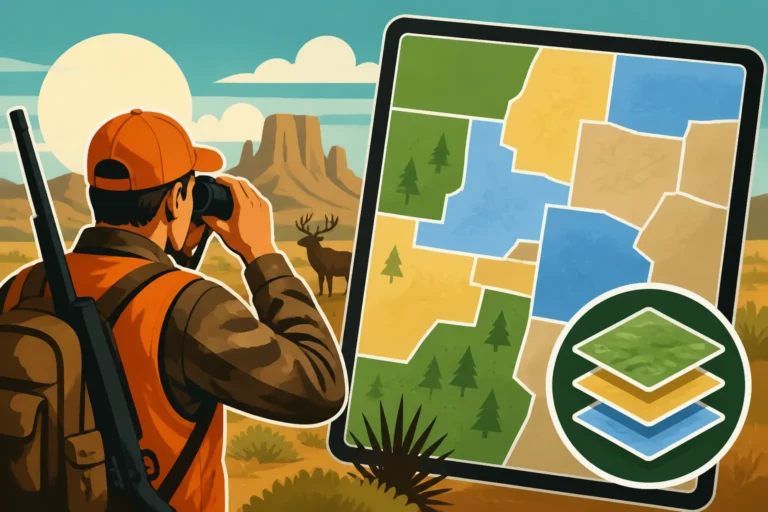
Before you even leave your living room, you should be intimately familiar with your chosen Gila unit. Modern tools like onX Hunt or GoHunt provide invaluable satellite imagery, topo maps, and land ownership layers. Spend hours poring over these maps, identifying potential glassing points, water sources, bedding areas, and travel corridors. Look for subtle terrain features like benches, saddles, and drainages that might funnel elk movement. Note trailheads, roads, and potential camp spots. E-Scouting a New Mexico Unit Before the Season can save you countless hours of unproductive hiking once you're on the ground.
Cross-reference your e-scouting with physical maps (USGS topo maps or Forest Service maps) and a compass. Technology can fail, so a solid understanding of traditional navigation is vital. Pay close attention to unit boundaries, especially where public and private lands intersect. Mark potential hunting zones, escape routes, and rendezvous points. This deep dive into the maps will give you a mental blueprint of the country, allowing you to hit the ground running, even if you're unfamiliar with the area.
Gear Preparation: Beyond the Basics
Hunting the Gila demands a robust and reliable gear list. This isn't the place to skimp on quality. Beyond your weapon, good optics are paramount: high-quality binoculars (10×42 or 10×50 are popular) and a spotting scope if you plan to cover vast amounts of country from a vantage point. A durable, comfortable pack that can handle heavy loads is non-negotiable. Layered clothing is essential, as temperatures can swing wildly from freezing mornings to warm afternoons, especially during early seasons. A reliable water filtration system, ample water storage, and emergency supplies (first-aid kit, fire starter, shelter) are critical.
Don't forget communication. Cell service is non-existent in much of the Gila Wilderness. A satellite messenger or satellite phone is highly recommended for emergency contact. Practice with all your gear before your hunt, from setting up your tent in the dark to using your water filter. Every piece of equipment should be familiar and functional.
Hunting Strategies for the Gila National Forest
The Gila presents diverse hunting scenarios, and your strategy will need to adapt to the season, the terrain, and the elk's behavior. Whether you're chasing bugles in September or still-hunting through timber in November, a well-thought-out approach is essential.
Archery Season: Bugles and Stalks
New Mexico's archery elk season, typically in September, often coincides with the peak of the rut, offering the thrilling opportunity to call in bugling bulls. This is a highly dynamic hunt, often involving aggressive calling and close-range encounters. Focus on areas with good timber cover interspersed with meadows or open parks where elk feed and challenge each other. Learning to read Bugle Timing Through New Mexico's Rut can make or break your hunt. Locator bugles at dawn and dusk can help pinpoint elk, but be ready to move quickly and quietly once you get a response.
Stalking in the Gila requires immense patience and skill. The terrain can be noisy with dry leaves, broken branches, and loose rocks. Always pay attention to wind direction; thermals will typically rise in the morning and fall in the evening, so plan your approaches accordingly. Having a two-man calling setup, where one hunter calls and another moves in ahead to shoot, can be incredibly effective when dealing with call-shy bulls or heavily pressured areas.
Muzzleloader and Rifle Seasons: Patience and Glassing
Later seasons, including muzzleloader and rifle hunts, often mean cooler temperatures and less vocal elk. While bugles can still happen, especially in early muzzleloader hunts, you'll generally transition to more traditional spot-and-stalk or still-hunting tactics. This is where patience and glassing prowess truly shine. Identify high vantage points early in the morning or late in the evening and systematically grid-glass vast expanses of country. Look for subtle movements, flicking ears, or patches of hide in the timber.
Once elk are located, a slow, deliberate stalk is often necessary. The Gila's broken terrain offers natural cover, but it also creates swirling winds and challenging footing. Take your time, use terrain to your advantage, and constantly check the wind. Still-hunting through prime bedding areas, moving slowly against the wind and stopping frequently to scan, can also be productive. These later seasons often require more deliberate hiking to cover ground, but the elk tend to be less spread out than during the rut.
Reading Wind in Gila Canyons
One of the biggest frustrations and challenges in the Gila is its notoriously unpredictable wind. The deep canyons and varying elevations create microclimates where thermals and crosswinds can switch direction in an instant. This makes it incredibly difficult to keep your scent out of an elk's nose, and getting busted by wind is a common hunter's lament. Reading Wind in a Deep Gila Canyon isn't just a suggestion; it's a survival skill for your hunt.
To combat this, you need to become obsessed with wind indicators. Carry a small squeeze bottle with unscented powder or puff balls and constantly check the wind from multiple angles. Plan your approaches to take advantage of predictable thermals (rising in the morning, falling in the evening). However, be prepared for those moments when the wind swirls unexpectedly. Sometimes, the best strategy is to wait for the wind to settle or to reposition entirely rather than risk blowing out an entire drainage of elk.
Navigating Public and Private Land in the Gila
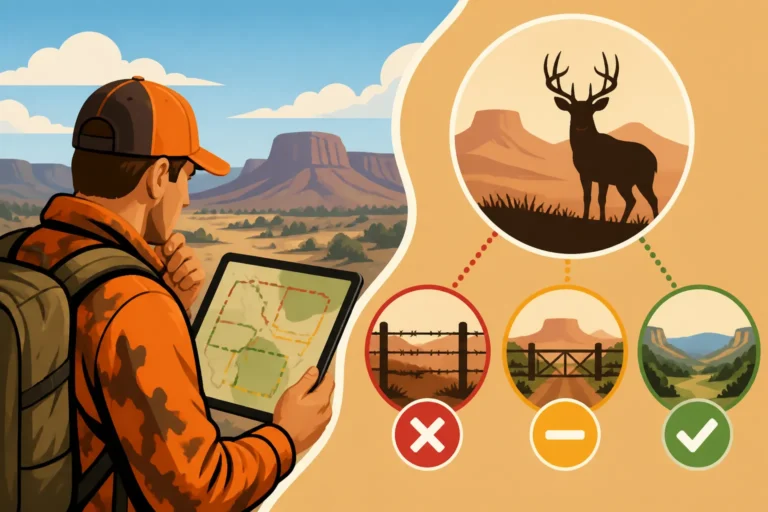
The Gila National Forest, while predominantly public land, isn't a solid block. Like much of the West, it's a patchwork of different land ownerships, including federal lands (National Forest, BLM), state trust lands, and private inholdings. Navigating these boundaries is crucial to avoid trespass and ensure a legal, ethical hunt.
Understanding Land Ownership Maps
Before you ever leave home, invest in a reliable mapping system that clearly delineates land ownership. onX Hunt is a widely used and highly effective tool for this, providing detailed satellite imagery overlaid with property boundaries, showing National Forest, BLM, State Trust Land, and private parcels. GoHunt also offers robust mapping features. Spend time studying these maps for your specific unit, noting any private ranchland or state land that might block access to public ground or lie within your hunting area.
It's common to find small private parcels or old mining claims deep within the National Forest, often unmarked by fences or signs. Without a detailed map, you could easily wander onto private property unknowingly. Always know where you are, and if there's any doubt about a boundary, err on the side of caution. Trespassing, even accidental, can lead to fines, confiscation of your animal, and loss of hunting privileges.
Accessing State Trust Land
New Mexico State Trust Land is a unique aspect of hunting in the state. While it's state-owned, it's managed to generate revenue for public institutions, not primarily for recreation. However, your New Mexico hunting license grants you an easement for access to most State Trust Land for hunting purposes, which is a major benefit. A New Mexico License Is Your State Trust Land Easement is an important distinction. This means you don't need additional permits for hunting on these parcels during established seasons.
However, there are specific rules. You generally cannot scout State Trust Land more than 14 days before a hunt, and camping restrictions may apply. Always check the specific rules and regulations for State Trust Land, as they can differ from National Forest rules. Just like with private land, use your mapping app to identify State Trust Land boundaries and ensure you are in compliance. While generally open to hunters, these lands often lack developed access points and can be quite remote.
Respecting Private Land and Inholdings
Private land within or adjacent to the Gila National Forest demands the utmost respect. Many ranches operate here, and they are critical partners in wildlife management. Never assume you can cross private land to access public land without explicit, written permission from the landowner. Written Permission Is Required to Cross Private New Mexico Ground. This isn't just a courtesy; it's the law. Many public land parcels are effectively "landlocked" by private holdings, making them inaccessible to the general public.
If you plan to hunt near private land, make every effort to identify its boundaries accurately. Fences can be unreliable, and posted signs might be sparse. If you do encounter a landowner, be polite, respectful, and prepared to show your maps to prove you are on public ground. Building good relationships with landowners can sometimes open doors for access or simply prevent misunderstandings. Never take anything for granted when it comes to private property.
Essential Gear and Equipment for Gila Elk Hunting
Beyond your weapon and basic clothing, certain gear items are absolutely critical for a safe, effective, and ethical elk hunt in the Gila. This is a wilderness environment, and preparation is key to both success and survival.
Optics: Your Eyes in the Wilderness
The Gila is vast, and good optics are your most important scouting tool. High-quality binoculars (10×42 or 10×50 are standard) are essential for scanning timber, checking distant clearings, and identifying elk sign. For truly expansive views across canyons and mountainsides, a spotting scope (15-45×60 or 20-60×80) mounted on a sturdy tripod becomes invaluable. It allows you to pick apart distant ridges and analyze animals from afar, saving you countless miles of walking.
Choosing the right optics is a balance of power, weight, and clarity. You want optics that perform well in low light, are waterproof, and are rugged enough to withstand the rigors of backcountry hunting. Don't skimp here; your ability to find elk often hinges on the quality of your glass. Practice using your optics before the hunt, especially learning how to quickly acquire targets and effectively grid glass large areas.
Navigation and Communication
As mentioned, cell service is rare to non-existent in much of the Gila. Your navigation tools need to be robust. A GPS unit or a smartphone with a reliable offline mapping app (like onX Hunt) is critical. Always carry a backup, whether it's a second device or traditional map and compass skills. Knowing how to use these tools in conjunction can be a lifesaver. Mark your camp, water sources, and any key terrain features.
For communication, a satellite messenger (like a Garmin inReach or Zoleo) or a satellite phone is highly recommended. These devices allow you to send and receive text messages or emergency SOS signals when you're far beyond cell range. They offer peace of mind for both you and your loved ones back home. Don't rely solely on a hunting partner for communication; everyone in your group should have a way to signal for help if separated or injured.
Meat Care and Packing Out
Harvesting an elk in the Gila is often only half the battle; getting the meat out is the other, equally demanding challenge. You need to be prepared for field dressing, quartering, and packing out hundreds of pounds of meat, often many miles from the nearest road. This means carrying game bags, a sharp knife, a bone saw, and a sturdy frame pack. Packing an Elk Out of the Gila Alone is a monumental task, but with the right gear and strategy, it's achievable.
Consider the temperatures. If you're hunting in early September, heat can be a major factor in meat spoilage. Know how to properly quarter an animal, get it cooled as quickly as possible, and protect it from flies. You might need to make multiple trips, so plan your route, water sources, and energy reserves accordingly. A good frame pack with a meat shelf is indispensable for hauling heavy loads over rugged terrain. Practice loading weight into your pack during your training hikes so you're familiar with how it feels and balances.
Respecting the Wilderness and Ethical Hunting Practices
Hunting in the Gila National Forest isn't just about pursuing elk; it's about being a responsible steward of a precious wilderness resource. Ethical conduct and adherence to Leave No Trace principles are paramount.
Leave No Trace Principles
The Gila Wilderness owes its pristine nature to a commitment to minimizing human impact. As hunters, we have a responsibility to uphold these principles. This means:
- Plan Ahead and Prepare: Research the area, pack appropriately, and know the regulations.
- Travel and Camp on Durable Surfaces: Stick to established trails, or travel cross-country on rock or dry grass. Camp away from water sources.
- Dispose of Waste Properly: Pack out everything you pack in, including all trash, food scraps, and even gut piles should be dispersed away from trails and water.
- Leave What You Find: Don't disturb historical artifacts or natural features.
- Minimize Campfire Impacts: Use established fire rings, keep fires small, and ensure they are completely out. In many areas, especially during dry periods, fires may be prohibited entirely.
- Respect Wildlife: Observe animals from a distance and avoid disturbing them.
- Be Considerate of Other Visitors: The wilderness is shared. Be quiet and courteous to other hunters, hikers, and campers.
Adhering to these principles ensures that the Gila remains wild and beautiful for future generations of hunters and outdoor enthusiasts.
Ethical Shot Placement and Meat Salvage
Every hunter hopes for a clean, quick kill. However, in the heat of the moment or challenging conditions, things don't always go as planned. Always strive for ethical shot placement to ensure a humane harvest. Know your effective range, practice diligently with your weapon, and only take shots you are confident in making. If you make a less-than-ideal shot, dedicate yourself to tracking and recovering that animal, no matter how long or difficult it becomes. It's your responsibility as a hunter.
New Mexico also has strict meat salvage requirements for big game animals. This means you must make a reasonable effort to recover and preserve all edible portions of the animal. Waste not, want not. This ensures that every animal harvested contributes to the table and is not left to rot in the field. Be prepared with the necessary gear (game bags, knives, pack) to quickly and efficiently process your animal and get the meat cooled, especially on early season hunts when temperatures can be high.
Respecting Regulations and Fellow Hunters
New Mexico Game and Fish regulations are in place to manage wildlife populations and ensure fair chase. Understand and follow all rules regarding seasons, bag limits, weapon restrictions, and tagging requirements. Ignorance of the law is not an excuse. Familiarize yourself with every aspect of your specific hunt code before you head out. Reading a New Mexico Hunt Code Before You Apply is a habit every serious hunter should adopt.
Beyond the written rules, remember the unwritten code of ethics that governs hunting. Be respectful of other hunters you encounter. Give them space, avoid encroaching on their setups, and offer help if someone is in need. The Gila is big enough for everyone, but courtesy goes a long way. Ultimately, your actions reflect on the entire hunting community, and upholding high ethical standards is crucial for the future of our sport.
Disclaimer
This article is for general informational purposes only and does not constitute professional advice. Laws, prices and regulations vary by location and change over time. Consult a qualified professional for guidance on your specific situation.