Where Mule Deer Range in Northern Units
Finding mule deer in New Mexico’s vast northern units can feel like searching for a needle in a very large, very wild haystack. Hunters often grapple with the sheer scale of the landscape, trying to pinpoint those elusive pockets where big bucks thrive, far from pressure. This guide is here to unravel the mysteries of northern New Mexico’s mule deer habitat, offering insights into where these magnificent animals prefer to live and how you can increase your odds of finding them.
Understanding Northern New Mexico's Mule Deer Habitat
Northern New Mexico is a tapestry of rugged mountains, high plateaus, and deep canyons, vastly different from the open plains or desert lowlands of the southern part of the state. This diverse terrain creates specific habitat preferences for mule deer, and understanding these is crucial for any hunter. The deer here aren't just any deer; they're resilient animals adapted to elevation, timber, and often, challenging conditions.
The High Country Preference
Mule deer in northern New Mexico often gravitate towards the higher elevations, particularly during the milder months. Think about the Sangre de Cristo Mountains, the Jemez, and parts of the Carson National Forest and Santa Fe National Forest. These areas offer a mosaic of dark timber, usually ponderosa pine, Douglas fir, and spruce, interspersed with aspen groves and open meadows. The timber provides crucial cover from predators and harsh weather, while the aspen and meadows are rich feeding grounds. Deer thrive on the browse found in these areas – forbs, shrubs, and young aspen sprouts.
When you're looking at a topographic map, focus on the areas that show significant elevation changes, often above 8,000 feet, especially in the units that climb into the higher ranges. These are the places where deer can escape the summer heat and find consistent forage. They'll use south-facing slopes in the cooler mornings for bedding and feeding, then often move to north-facing slopes or thick timber for shade as the day progresses. It’s a constant game of seeking thermal advantage and food.
Transition Zones and Water Sources
While high country is great, mule deer are masters of using transition zones—those edges where different habitats meet. This could be where dense timber gives way to a sagebrush flat, or where a steep canyon rim overlooks a more open basin. These edges provide both food and security, allowing deer to quickly duck into cover if disturbed. Look for drainages and saddles that connect different elevation bands, as these are natural travel corridors. Deer will often utilize these areas to move between bedding and feeding sites, or when pressured.
Water is, of course, a critical element, even in the higher elevations. Natural springs, seeps, and seasonal snowmelt puddles become magnets for deer, especially during dry spells. In some areas, stock tanks developed for cattle also become vital water sources for wildlife. Learning to identify these water points on a map and then checking them out during your preseason scouting can be a game-changer. Deer won't stay far from a reliable drink, especially in the warmer early seasons. You might want to brush up on Water Sources and Ethics in Desert Hunting, as many of those principles apply even in the mountains during dry times.
The Impact of Fire and Logging
Northern New Mexico’s forests are dynamic, constantly shaped by natural events like wildfire and human activity like logging. Both can have profound, albeit different, impacts on mule deer habitat. Recent wildfires, while devastating in the short term, often create fantastic new forage in the years that follow. The burning opens up the canopy, allowing sunlight to reach the forest floor, stimulating the growth of nutrient-rich forbs and shrubs that deer crave. Deer will often move into these regenerated areas, finding both food and new pockets of cover as smaller trees grow back.
Conversely, aggressive logging operations can initially displace deer, but selective thinning or clear-cutting can also create valuable edge habitat. Areas with a mix of regenerating clear-cuts and mature timber can be highly attractive. When you're researching a unit, pay attention to recent fire maps or Forest Service logging plans. These details can highlight areas that, while looking devastated initially, might be deer magnets a few seasons later. E-scouting tools, like those found on GoHunt, can often provide updated satellite imagery that shows these habitat changes, giving you a serious advantage before you even set foot on the ground.
Key Northern Units for Mule Deer
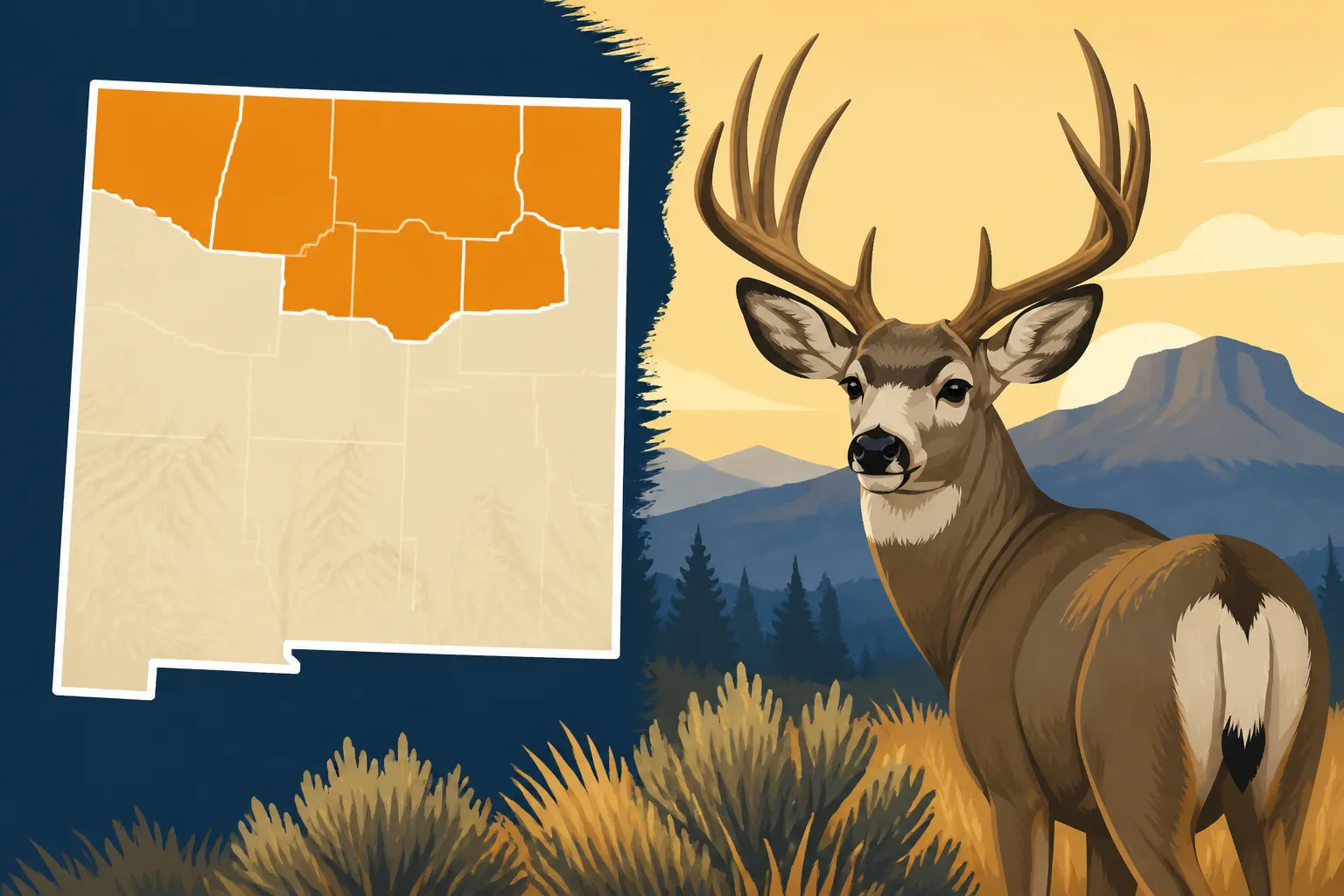
New Mexico's northern half boasts several units renowned for their mule deer populations and the potential for mature bucks. Each unit, however, has its own character and hunting challenges, making research and preparation essential.
Carson National Forest Units
The Carson National Forest, stretching across north-central New Mexico, includes several units that are prime mule deer country. Units like 4, 5A, 5B, 6A, and 6B are often mentioned for their deer hunting opportunities. These units are characterized by vast expanses of timber, rugged mountains, and deep canyons carved by ancient rivers. In the higher elevations, you'll find thick stands of pine and aspen, providing excellent cover and forage. The terrain can be incredibly steep and demanding, requiring hunters to be in top physical condition.
Deer in these units often rely on the dense cover, particularly the north-facing slopes, for bedding during the day. They'll venture out into smaller meadows or south-facing clearings to feed during dawn and dusk. Access can be a challenge, with many areas requiring significant hiking or even packing in on horseback. But for those willing to put in the effort, the reward can be a truly wild hunting experience. You can find more specific information on hunting these areas by looking into Hunting the Carson High Country.
Santa Fe and Pecos Wilderness Areas
South of the Carson, the Santa Fe National Forest (units like 43, 44, 45) offers similar, if not even more rugged, high-country mule deer hunting. A significant portion of this forest encompasses the Pecos Wilderness Area, a land of soaring peaks, alpine lakes, and dense forests. Hunting here means embracing a true backcountry experience. Motorized vehicles are prohibited, so expect to hike or ride horses deep into the wilderness. The deer here are often less pressured due to the difficulty of access, making it a dream for those seeking solitude and a genuine fair-chase hunt.
The Pecos Wilderness is characterized by elevation bands that range from ponderosa pine forests at lower elevations to spruce-fir and eventually alpine tundra higher up. Mule deer utilize all these zones depending on the season, with higher country offering excellent summer range and critical wintering grounds at lower elevations when snow becomes deep. Understanding these elevation dynamics is key. Consider reading up on Hunting New Mexico From 4,000 Feet to 10,000 to get a better sense of how deer use different elevations throughout the year.
High-Altitude Plateaus and Mesas
Beyond the immediate mountains, northern New Mexico also features expansive high-altitude plateaus and mesas that hold mule deer. These areas, often characterized by juniper and piñon pine interspersed with sagebrush and grama grass, offer a different kind of hunt. While not as dramatic as the alpine peaks, these mesa tops and their associated canyons can be very productive, especially during the later seasons. Deer often utilize the broken country, finding cover in the piñon-juniper thickets and feeding on the abundant browse.
One notable area, though more famous for elk, is the general vicinity of the Valle Vidal in the Carson National Forest. While the Valle Vidal itself has special rules and focuses on elk, the surrounding high country and adjacent units can hold good mule deer numbers. These plateau environments require different glassing strategies than dense timber. Long-range glassing from vantage points, covering vast areas methodically, becomes paramount. GoHunt's mapping features can help you identify these large, open landscapes and potential travel corridors between mesas.
Strategies for Locating Northern Mule Deer
Finding mule deer in northern New Mexico isn't about luck; it's about smart planning, diligent scouting, and adaptable hunting tactics. The terrain demands a thoughtful approach, combining modern tools with timeless woodsmanship.
E-Scouting and Topographic Mapping
Before you ever leave home, your e-scouting game should be strong. This is where tools like GoHunt really shine. Start by deeply analyzing topographic maps, looking for key features that mule deer prefer: north-facing slopes for bedding, south-facing slopes for sun exposure (especially in late season), saddles and ridges as travel corridors, and benches or flats where deer might feed. Identify potential water sources like springs or stock tanks. Pay close attention to terrain that offers both feed and cover nearby.
Beyond topography, use satellite imagery to identify different vegetation types, recent burns, or logging activity. Look for areas with a mosaic of habitat. A high-quality mapping application can allow you to mark waypoints for potential glassing points, bedding areas, and escape routes. By e-scouting a New Mexico unit before the season, you can narrow down vast amounts of public land into manageable chunks, giving you a much more focused approach once you're on the ground. Don't forget to check the land ownership layers to ensure you're always on public access; understanding Reading a Land Ownership Layer Correctly is vital to avoiding trespass issues.
Boots-on-the-Ground Scouting
No amount of e-scouting can replace actually being in the woods. If possible, visit your unit a few weeks before the season opens. This allows you to confirm your e-scouting hunches, find fresh sign, and get a feel for the terrain. Look for rubs, scrapes (though less common with mule deer than whitetails), droppings, and fresh tracks. Pay attention to game trails—where do they lead? Are they heavily used?
Spend time at your identified glassing points, observing deer movement during different times of day. You’re looking for patterns. Where do they feed? Where do they bed? What routes do they use to get between the two? Preseason scouting also lets you assess water availability, identify natural barriers, and understand current forage conditions. This is also the time to acclimatize to the elevation if you're coming from lower country, which can be critical for a demanding hunt. Consider how you might be Patterning a Buck in the Weeks Before Opener to gain a significant advantage.
Hunting Tactics for Northern Terrain
Hunting mule deer in northern New Mexico often comes down to two primary tactics: spot and stalk or still hunting, with a heavy emphasis on patience and good optics.
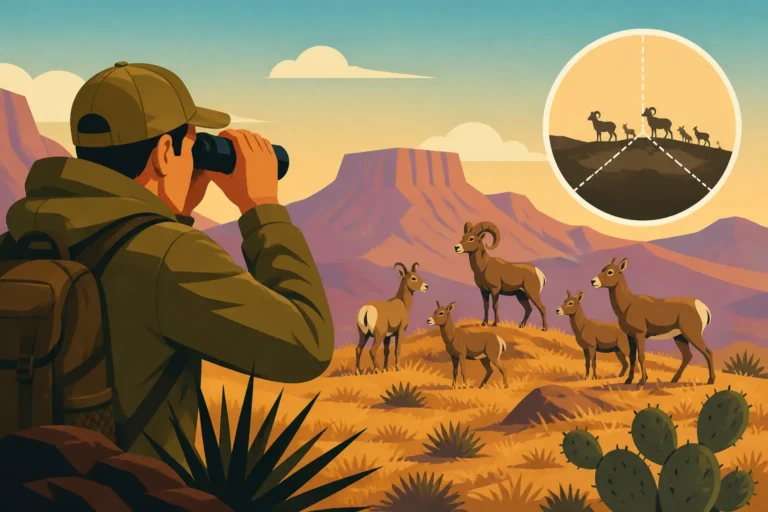
- Spot and Stalk: This is often the most effective method, especially in more open, broken country or areas with natural clearings. Find a good vantage point, often a ridge or a high knob, and spend hours methodically glassing the opposite slopes. Use high-quality binoculars and a spotting scope on a sturdy tripod. Take your time, break down the landscape into grids, and look for subtle clues – a horizontal line in a vertical world, the flick of an ear, or the glint of an antler. The Grid Glassing Method, Step by Step can be invaluable here. Once you spot a buck, the real challenge begins: planning and executing a quiet, downwind stalk through rugged terrain.
- Still Hunting: In dense timber or during periods of bad weather, still hunting can be highly effective. This involves moving incredibly slowly through the woods, taking a few steps, then stopping to observe and listen for several minutes. Use your eyes to scan for parts of an animal rather than the whole, looking for patches of hair, dark shapes, or movement. Pay attention to the wind, as deer have an incredible sense of smell. Move quietly, utilizing natural cover and the sounds of the forest (wind, rustling leaves) to mask your approach.
Regardless of your chosen tactic, patience is your greatest ally. Northern New Mexico deer are not generally as dense as some other regions, and they are masters of blending into their surroundings. Be prepared to hunt hard, cover a lot of ground, and spend many hours glassing or still hunting before you find your opportunity.
Seasonal Movements and Rut Behavior
Understanding the seasonal movements and rutting behavior of mule deer in northern New Mexico is fundamental to timing your hunt effectively. Their patterns shift dramatically throughout the year, driven by forage availability, breeding cycles, and weather.
Summering Grounds and Early Season Habits
During the summer months, and extending into the early archery seasons, many northern New Mexico mule deer, particularly the mature bucks, will be found higher up in the mountains. They seek the cooler temperatures, abundant high-protein forage in alpine meadows and aspen stands, and the security of dense timber. Bachelor groups of bucks are common during this time, often feeding in the mornings and evenings in open parks before retreating to heavy cover for the heat of the day.
For early season hunts, focus your efforts on these high-elevation summer ranges. Glassing meadows, open timber patches, and the fringes of burn areas at first light and last light can be productive. As the sun rises, deer will often move into dense north-facing timber or thick stands of aspen to bed. Hunting water sources can also be effective, especially if it's been a dry summer, as deer will often visit seeps and springs. The tactics for When New Mexico's First Archery Deer Season Runs will be highly relevant here.
The Pre-Rut and Rutting Activity
As autumn progresses and temperatures drop, mule deer begin to transition into their pre-rut and rutting phases. Bucks become more active, shedding their velvet and beginning to rub trees and spar with other bucks to establish dominance. This pre-rut period can start in late October and build through November. During this time, bucks become less predictable and more focused on seeking out does.
The peak of the mule deer rut in northern New Mexico typically falls from mid-November through early December, though it can vary slightly depending on weather and specific unit characteristics. This is often when the biggest bucks are most vulnerable, as they are actively chasing does and are less cautious. Focus your hunting efforts on areas where you're finding does – the bucks won't be far behind. Look for fresh rubs, scrapes, and tracks. Bucks will move through traditional doe bedding and feeding areas, often checking them for estrous females. Knowledge of When the Mule Deer Rut Actually Starts is paramount for timing your hunt right.
Winter Range Considerations
Once heavy snows begin to fall and temperatures consistently drop, mule deer in the high country will start their migration to lower elevation winter ranges. These wintering areas are crucial for their survival, offering less snow, milder temperatures, and access to crucial browse like bitterbrush, mountain mahogany, and sagebrush. These lower-elevation zones might be in piñon-juniper foothills, south-facing slopes, or river bottoms.
For late-season rifle or muzzleloader hunts, understanding these migration patterns is key. Deer will follow historical routes, often utilizing the same drainages and ridges year after year. While these lower areas may not be as aesthetically pleasing as the high country, they can concentrate deer, making them highly productive during harsh winter conditions. Access to these lower elevation units might also be easier, although some forest roads in the high country might be closed due to snow. Getting current information on Winter Access to Northern New Mexico Units can help you plan for these later season opportunities.
Northern New Mexico Mule Deer Unit Characteristics
| Unit Range | Primary Habitat | Key Features | Hunting Style Focus | Best Season for Bucks | Challenges |
|---|---|---|---|---|---|
| Carson National Forest (e.g., 4, 5A, 6A) | Dense ponderosa, spruce-fir, aspen, alpine meadows | High elevations, rugged terrain, deep canyons | Spot & stalk, still hunt in timber | Late pre-rut, rut | Physical demand, dense cover, elevation |
| Santa Fe National Forest (e.g., 43, 44) | Mixed conifer, aspen, Pecos Wilderness | Wilderness access, challenging topography | Backcountry spot & stalk, packing | Rut (mid-late Nov) | Extreme terrain, remote access, weather |
| High Plateaus/Mesas (Surrounding units) | Piñon-juniper, sagebrush flats, broken country | Diverse habitat, easier access in some areas | Long-range glassing, still hunting | Pre-rut, early rut | Sparse deer density in some areas, open exposure |
Disclaimer
This article is for general informational purposes only and does not constitute professional advice. Laws, prices and regulations vary by location and change over time. Consult a qualified professional for guidance on your specific situation.