Can Residents Use the New Mexico Outfitter Pool?
It’s a common question that pops up around application time here in New Mexico: can residents even think about applying in that special outfitter pool, or is it strictly for the out-of-state folks and their guides? Many resident hunters, after years of trying to draw those coveted tags, start wondering if there’s some secret backdoor or overlooked advantage in the outfitter allocation. You see that 10% of tags set aside and it’s easy to get curious, especially when you’re constantly putting in for those tough Gila elk or high-country mule deer. This guide is here to untangle the rules, lay out the realities, and help you understand if the New Mexico outfitter pool is a viable, or even sensible, option for resident hunters.
Deconstructing New Mexico's Tag Allocation System
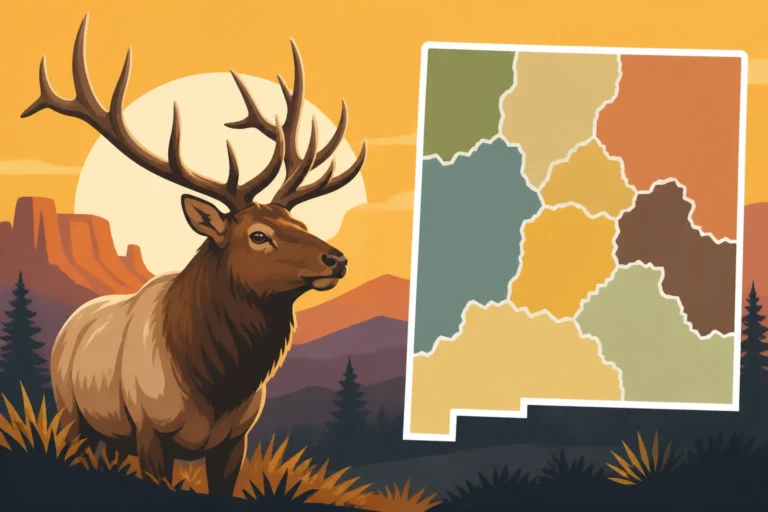
New Mexico has a unique way of carving up its highly sought-after big game tags, a system that often leaves hunters scratching their heads. Understanding this fundamental structure is the first step to figuring out where you, as a resident, fit into the outfitter pool equation. It's not as simple as just one big lottery; there are distinct buckets, each with its own quirks and intended recipients.
The Three Allocation Pools: Resident, Outfitter, Nonresident
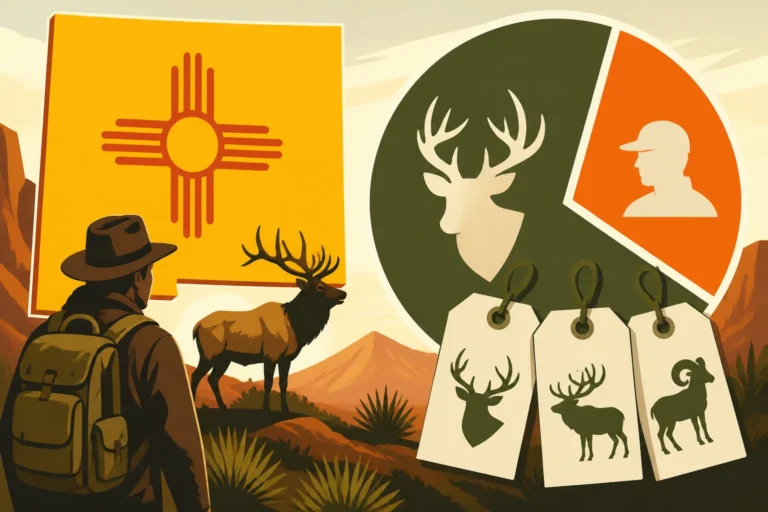
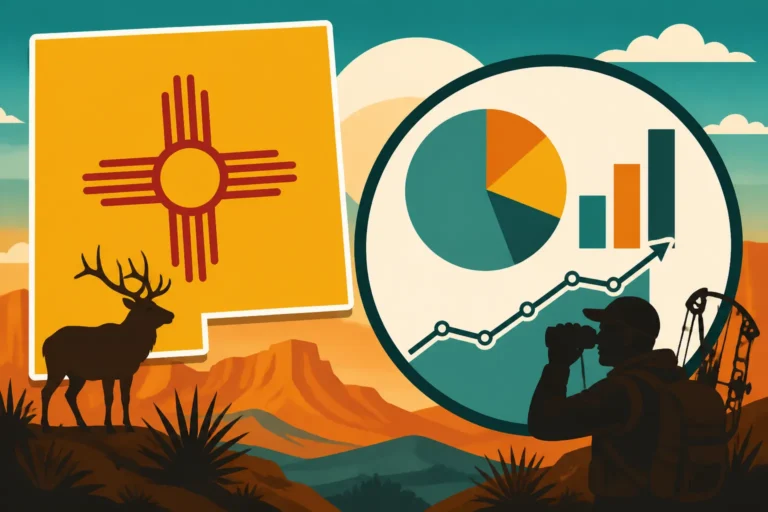
At the heart of New Mexico's draw system is the famous (or infamous, depending on who you ask) 84/10/6 split. This means that for nearly every big game draw hunt, the total number of tags is divided into three main categories:
- 84% Resident Pool: This is the largest chunk, explicitly reserved for New Mexico residents. This is where the vast majority of resident hunters apply, and for good reason—your odds are generally the best here, as you're only competing against other in-state hunters. This pool is a huge benefit for those of us who call New Mexico home, providing a much higher chance at drawing a tag compared to nonresidents. To learn more about this crucial allocation, check out our detailed piece on The 84 Percent Resident Allocation in New Mexico.
- 10% Outfitter Pool: This is the segment that sparks all the questions, and it’s the focus of our discussion today. This 10% is specifically allocated for applicants who are applying with a contract from a New Mexico registered outfitter. Many assume this is exclusively for nonresidents, given that they often have tougher odds in their own pool and frequently use outfitters.
- 6% Nonresident Pool: The smallest slice of the pie, dedicated solely to nonresident hunters who apply independently, without an outfitter contract. As you can imagine, with such a small percentage, the draw odds in this pool are notoriously difficult.
This allocation system was put in place to balance various interests: giving residents priority, providing opportunity for outfitters who contribute to the state's economy, and still allowing some access for hunters from other states. It's a complex dance, and knowing these percentages is key to strategizing your applications.
The Purpose and Structure of the Outfitter Pool
The outfitter pool wasn't just pulled out of thin air; it serves a specific purpose within the state's hunting economy and management goals. The idea is to incentivize the use of licensed New Mexico outfitters, who often provide significant services in terms of guiding, packing, and promoting the state's hunting opportunities. From a practical standpoint, it creates a dedicated pathway for outfitters to secure tags for their clients, helping them run their businesses and offer legitimate guided hunting experiences.
Outfitters play a vital role in showcasing the incredible hunting opportunities here, particularly in vast, challenging areas like the Gila National Forest where navigating and accessing prime elk country can be incredibly difficult for those unfamiliar with the terrain. Outfitters often have the horses, the local knowledge, and the logistical support that makes a high-country hunt achievable for many. For deeper insight into how this all works, you might find our article The New Mexico Outfitter Draw and Its Two-Day Rule quite informative. It’s not just about drawing a tag; it’s about accessing a full service that can make or break a hunt of a lifetime.
Resident Eligibility and the Specific Requirements
Now, let's get right to the burning question: can a New Mexico resident actually apply in the outfitter pool? The short answer is yes, you can. However, it's not a simple checkbox on the application form. There are stringent requirements you must meet, and understanding these is critical before you even consider this route.
The Contract and Outfitter Number
If you, as a New Mexico resident, want to apply for a tag through the outfitter pool, the first and most fundamental step is to engage with a New Mexico registered outfitter. This isn't just a handshake agreement; you need a legitimate, signed contract. This contract signifies a formal agreement for the outfitter to guide you on your hunt, should you draw a tag.
Once you have this contract in place, the outfitter will provide you with their unique outfitter registration number. This number is absolutely essential. When you fill out your application online, you will specifically select the "Outfitter" applicant category and then enter this outfitter number directly into the designated field. Without a valid outfitter number and the underlying contract, your application will simply default to the general resident pool or be rejected if you try to force it into the outfitter category without proper documentation. It’s important that this contract is in place before the application deadline, which for most species is March 18th at 5 p.m. Mountain Time. For more details on the paperwork side of things, our piece on The Signed Guide-Client Contract New Mexico Requires covers all the necessary bases.
Understanding the Two-Day Accompaniment Rule
Beyond the contract and the outfitter number, there's another crucial requirement known as the "two-day accompaniment rule." This rule states that the registered outfitter (or one of their licensed guides) must accompany you in the field for a minimum of two days during your hunt. This isn't just a formality; it's a legal obligation.
This rule is in place to ensure that outfitters are genuinely providing guiding services, not just acting as a conduit for tags. It means that if you draw a tag through the outfitter pool, your outfitter will be actively involved in your hunt for at least a portion of it. This could involve scouting with you, helping you locate game, providing transportation, or assisting with field dressing and packing out an animal.
It's vital for resident hunters to understand that this isn't a "set it and forget it" arrangement where you just pay for the outfitter number and then hunt on your own. You are committing to a guided experience for those two days. If, for some unforeseen circumstance, your outfitter is unable to fulfill this accompaniment, it can lead to complications, potentially even jeopardizing your tag if the state discovers the rule was not followed. For clarification on potential issues, read about If Your New Mexico Guide Cannot Attend. This rule adds a layer of logistical and financial commitment that many resident hunters might not anticipate when first considering the outfitter pool.
Weighing the Odds and Financial Considerations for Residents
While residents can apply in the outfitter pool, the more important question is: should they? For most New Mexico resident hunters, the answer is usually no, for a few very compelling reasons rooted in both draw odds and the significant financial commitment involved.
Analyzing Draw Probabilities and Opportunity Costs
Let's talk numbers, because that's usually where the dream of applying in the outfitter pool fades for most residents. As we discussed, the resident pool gets a massive 84% of the tags. The outfitter pool gets only 10%. While the outfitter pool is also open to nonresidents, the pool of applicants in the 84% resident category is generally much larger, but the sheer volume of tags typically means your odds are significantly better there.
Consider this: if a unit has 100 elk tags, residents get 84 of them. The outfitter pool gets 10. While there might be fewer applicants in the outfitter pool than the resident pool, the tag allocation is proportionally smaller. Unless an outfitter pool hunt is dramatically undersubscribed—a rare occurrence for desirable units—your statistical chances of drawing a tag as a resident are almost always better in the 84% general resident pool. This is especially true for popular elk and quality mule deer units.
Hunting is all about maximizing your chances. Why would you willingly move from a pool where you have 84% of the tags available to you, to one where only 10% are available, unless there was an overwhelming statistical advantage? For residents, such an advantage in the outfitter pool is almost non-existent. You're effectively trading higher probability for a lower one, simply to use an outfitter's service. You can use tools like GoHunt's draw odds data to meticulously compare the success rates for resident general versus outfitter pools across various units and species. This data often confirms that for a resident, applying in the 84% pool is usually the smarter play. Understanding How New Mexico Draw Odds Work Without Points is crucial here, as it highlights that every applicant, resident or nonresident, starts on equal footing each year, making the allocation percentages even more impactful.
Here’s a simplified comparison to illustrate the typical scenario:
| Hunt Category | Tag Allocation | Example Applicants (Hypothetical) | Example Draw Odds (Hypothetical) |
|---|---|---|---|
| Resident General Pool | 84% | 800 | 10.5% (84 tags / 800 applicants) |
| Outfitter Pool | 10% | 150 | 6.6% (10 tags / 150 applicants) |
| Nonresident General | 6% | 200 | 3% (6 tags / 200 applicants) |
As you can see, even with fewer applicants in the outfitter pool, the proportional tag allocation makes the resident general pool the clear statistical winner for a New Mexico resident.
The True Cost of an Outfitter Pool Tag for Residents
Beyond the draw odds, the financial aspect is a massive hurdle. Hiring a registered outfitter for a big game hunt in New Mexico is a significant investment. We’re talking thousands, and often tens of thousands, of dollars depending on the species, duration, and level of service. For many residents, the primary goal is simply to draw a tag and have the opportunity to hunt. If you draw a tag in the 84% resident pool, your cost is primarily the license fee itself, plus your gear, travel, and camp expenses.
If you choose to apply in the outfitter pool, you’re adding the entire cost of a guided hunt on top of your license fees. For example, a fully guided New Mexico elk hunt can easily run from $6,000 to $15,000 or more, not including your personal expenses. This cost is incurred whether you draw the tag or not (though many outfitters have refund policies if you don't draw). For many New Mexicans who are perfectly capable of hunting public land on their own, or with friends and family, this added expense is simply not justifiable for a hunt they could potentially draw in the general resident pool for a fraction of the price. To understand the full financial picture, read What a Guided New Mexico Elk Hunt Costs. Unless the guided experience itself is your primary objective, the cost-benefit analysis rarely favors a resident using the outfitter pool.
When a Resident Might (Rarely) Choose the Outfitter Route
So, if the odds are usually worse and the cost is significantly higher, why would any New Mexico resident ever consider applying in the outfitter pool? There are a couple of very specific, and relatively rare, scenarios where it might make sense, but these are exceptions rather than the rule.
Prioritizing the Guided Experience Itself
For some resident hunters, drawing a tag isn't just about the animal; it's about the entire experience. They might be looking for the specialized knowledge, logistical support, and camaraderie that comes with a fully guided hunt. Perhaps they're new to a particular type of hunting, like a remote backcountry elk hunt in the Gila Wilderness, and want the expertise of an outfitter to navigate the challenges. Or maybe they simply enjoy the convenience of having camp set up, meals cooked, and animals packed out, allowing them to focus entirely on the hunt itself.
In these cases, the outfitter pool isn't just a means to a tag; it's a means to a specific type of hunting adventure. The resident hunter is willing to pay the premium for the service, knowing that they could potentially draw a cheaper tag on their own, but they wouldn't get the guided experience they desire. If securing a particular type of guided hunt is your goal, regardless of the draw odds implications, then the outfitter pool becomes a viable path. This is a personal choice, driven by preferences and financial capacity, rather than a strategy to improve draw odds. Before committing, asking Questions Worth Asking Before You Book with an outfitter is paramount to ensure your expectations align with their services.
Extreme Niche Scenarios and Strategic Application
There are extremely rare, niche situations where a resident might, for a very specific hunt code, find slightly better odds in the outfitter pool. This usually only happens with highly unpopular or incredibly difficult units/hunts that even outfitters struggle to fill. These are generally hunts with low success rates, extremely challenging terrain, or undesirable dates. It's not a common occurrence, and it would require a deep dive into historical draw odds data, perhaps utilizing platforms like GoHunt that provide detailed breakdowns for each allocation pool. You would need to identify a hunt where the number of outfitter applicants is so low, relative to the available tags in that 10% pool, that it actually surpasses the draw odds in the 84% resident pool.
Such a strategy would be for the most dedicated and data-driven resident hunter, and even then, the benefit would likely be marginal and still come with the significant financial burden of paying for an outfitter. For the vast majority of desirable elk, deer, or antelope hunts, the 84% resident pool remains the undisputed best option for New Mexico residents. Unless you’re looking to hunt a specific unit that is nearly impossible to draw and have verified through extensive research that the outfitter pool surprisingly offers an advantage and you’re willing to pay for a guide, it’s simply not the most effective strategy.
Disclaimer
Always check the most current New Mexico Department of Game and Fish regulations and consult with licensed professionals before making any hunting application decisions. This guide provides general information and should not be considered legal advice or a substitute for official state publications.