How Much BLM Land New Mexico Has
Many of us, myself included, have spent countless hours staring at maps, trying to decipher where we can actually put boots on the ground for a hunt in New Mexico. It can feel like navigating a patchwork quilt of private, state, and federal lands, with access being the biggest headache. Thankfully, one of the largest and most accessible pieces of that public land puzzle comes from the Bureau of Land Management (BLM), offering vast opportunities if you know where to look. This guide will dive into the sheer scale of BLM land in the Land of Enchantment and how you can make the most of it for your next hunting adventure.
The Expansive Reach of BLM Land in New Mexico
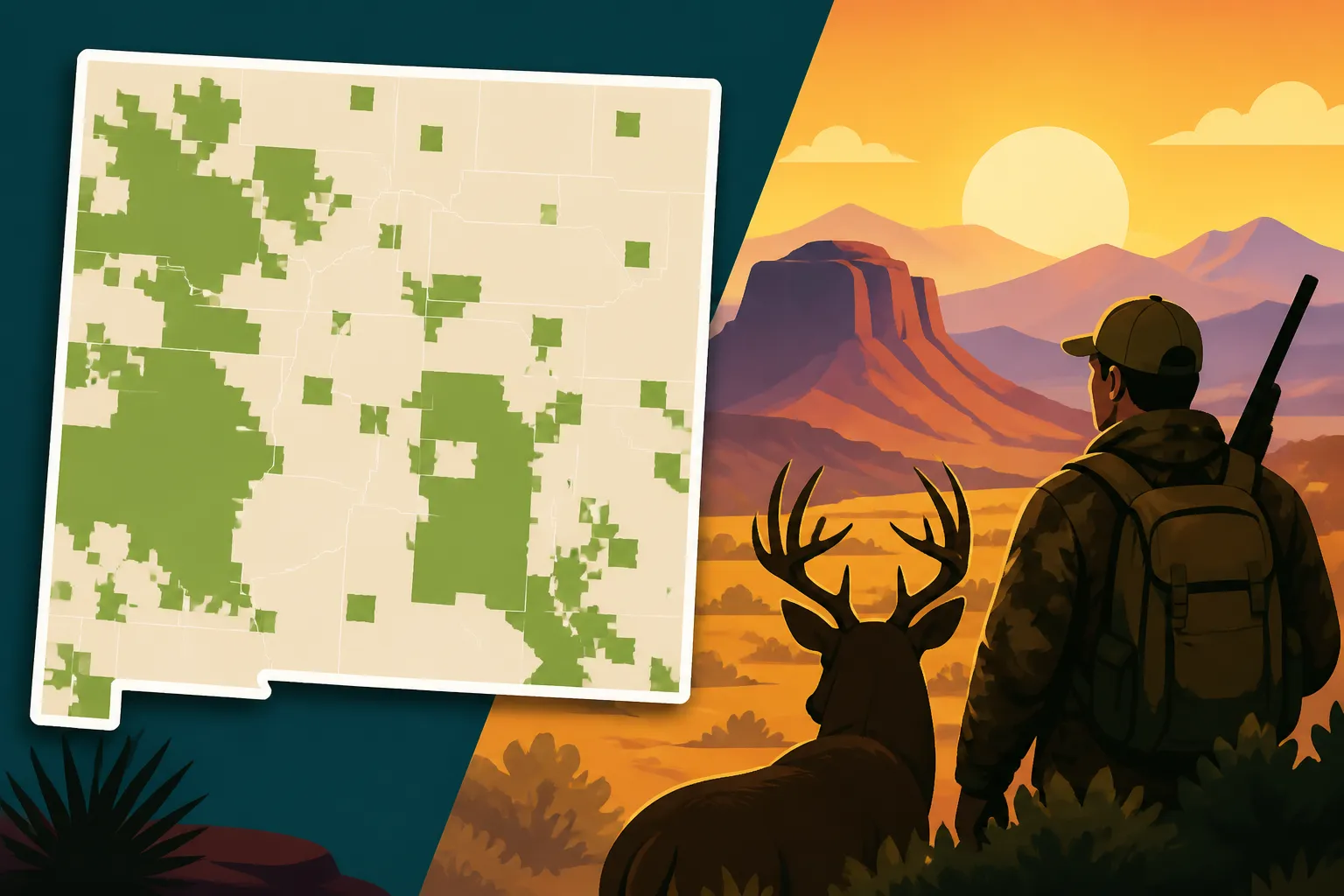
When you look at a land ownership map of New Mexico, one color tends to dominate vast swathes of the landscape, especially in the southern and western parts of the state: the color that denotes Bureau of Land Management (BLM) property. This isn't just a few scattered parcels; we're talking about millions of acres. In fact, New Mexico boasts some of the most extensive BLM holdings in the entire United States, providing an incredible amount of open-access ground for hunters, hikers, and outdoor enthusiasts.
These BLM lands are not always continuous blocks. Often, they intermingle with private ranches, state trust lands, and even small pockets of Forest Service ground, creating a mosaic that can be both challenging and rewarding to hunt. The sheer volume of this acreage means that a significant portion of New Mexico’s hunting heritage relies directly on the accessibility these lands provide. For many, BLM land is the gateway to chasing desert mule deer, pronghorn, or even an elusive oryx. It's truly a testament to the fact that How Much Public Land New Mexico Holds is substantial, and a large part of that is attributed to BLM. These lands are managed for multiple uses, and hunting is absolutely one of the primary ones, ensuring these wild spaces remain open for future generations.
Why BLM Land is a Hunter's Backbone for Access
The question often comes up: why is BLM land so prevalent and seemingly more accessible than some other federal or state lands? The answer lies partly in its historical designation and its "multiple-use" mandate. Unlike National Forests, which often prioritize timber or watershed management, or National Parks, which forbid hunting, BLM lands were largely leftover tracts from westward expansion, managed for grazing, mining, and recreation, including hunting. This means that, by its very nature, BLM land is designed for broader public use.
This "multiple-use" philosophy translates directly into open gates for hunters. While National Forests might have more restrictive road systems or designated wilderness areas that limit vehicle access, many BLM roads are often dirt tracks open to the public, allowing for deeper penetration into prime hunting areas. There's a certain freedom that comes with hunting BLM ground; you can often camp anywhere, within reasonable guidelines, and set up a hunting camp without the strictures sometimes found on other public lands. This open access is precisely Why BLM Ground Carries New Mexico's Open Access and makes it a critical component for both resident and nonresident hunters looking for a do-it-yourself adventure. You're not always looking for a specific trailhead or a designated camping spot; often, if you can drive to it, you can hunt it.
Navigating and Utilizing BLM Ground for Your Hunt
Hunting on BLM land requires a good understanding of land boundaries, especially given its patchwork nature. Gone are the days of just a paper map and a compass, though those are still essential backups! Today, digital mapping tools are invaluable. Services like onX Hunt have revolutionized how hunters approach public land, allowing you to instantly see property lines, clearly identifying BLM, state trust, private, and other federal lands. This is crucial for avoiding accidental trespass, which can quickly ruin a hunt and lead to legal trouble. It's about Reading a Land Ownership Layer Correctly and making sure every step you take is on legal ground.
Before heading out, a thorough e-scouting session is a must. Utilizing satellite imagery, elevation data, and public land layers on apps like onX Hunt or through platforms like GoHunt can help you identify potential game corridors, water sources, and bedding areas on BLM ground. Look for changes in topography, washes, and isolated pockets of cover. Downloading New Mexico unit layers onto your device ensures you have access even when cell service inevitably drops out in the remote corners of the state. This pre-hunt preparation is key to maximizing your time in the field, allowing you to go into a new area with a solid game plan and minimize time spent simply driving around looking for access. E-Scouting a New Mexico Unit Before the Season is not just a suggestion; it's a necessity for success on these vast and often featureless landscapes.
Here's a quick comparison of what you might find across different public land types in New Mexico:
| Feature | BLM Land | National Forest Land | State Trust Land |
|---|---|---|---|
| Typical Terrain | Arid grasslands, desert scrub, broken mesas | Ponderosa forests, high-elevation mountains | Varied, often adjacent to BLM/private, checkerboard |
| Accessibility | Generally very open, many dirt roads | Trail systems, some wilderness, designated roads | Requires hunting license as easement, 14-day scout |
| Camping | Dispersed camping widely allowed | Designated campgrounds, dispersed rules vary | Dispersed camping usually allowed |
| Primary Game | Mule deer, pronghorn, oryx, barbary sheep | Elk, mule deer, bear, turkey | Mule deer, pronghorn, various small game |
| Road Access | Extensive network of two-tracks and dirt | Forest Service roads, some seasonal closures | Roads often less maintained, can be rough |
Hunting Opportunities on New Mexico's BLM Lands
The types of game you’ll find on New Mexico’s BLM lands often reflect the arid, rugged, and diverse landscapes they encompass. While you might occasionally find elk migrating through certain BLM areas, especially those bordering National Forests, the most consistent opportunities are for species adapted to the desert and semi-arid environments.
Desert Mule Deer: The vast, brushy, and often broken terrain of BLM country provides excellent habitat for Desert Mule Deer in Southern New Mexico. These deer are masters of camouflage and can disappear into seemingly sparse cover. Hunting them on BLM often involves covering a lot of ground, glassing from vantage points, and employing spot-and-stalk tactics. Finding pockets of water, even temporary ones, can be key, as deer will often concentrate around these precious resources.
Pronghorn: On the more open, rolling grasslands and plains that are characteristic of much of the eastern and central BLM areas, pronghorn thrive. Their incredible eyesight makes hunting them a unique challenge, often requiring long-range glassing and careful, often circuitous, stalks using terrain to hide your approach. You'll find strong populations of Pronghorn on the Eastern Plains Units, making BLM a prime destination for these speedsters.
Exotic Species: New Mexico is unique in offering hunts for exotic species on public land, and a significant portion of these opportunities are on BLM. Oryx, originally from Africa, roam vast sections of southern New Mexico, including BLM lands adjacent to or near White Sands Missile Range. Barbary sheep, or Aoudad, can also be found in the rugged, canyon-filled BLM country of the central and southeastern parts of the state. These hunts are highly coveted and offer an incredible challenge.
Small Game and Predators: Don't forget the smaller critters! BLM land is excellent for pursuing rabbits, quail, and a host of predators. If you're looking to stretch your legs and perhaps pick up some dinner, the expansive nature of BLM provides endless possibilities. Coyote hunting, for example, is a year-round pursuit on many BLM acres. Hunting Coyotes Year Round in the Desert is a fantastic way to sharpen your skills and explore new areas.
One critical consideration when hunting BLM in New Mexico is the availability of water and managing the elements. Many of these areas are true desert, and finding Water Sources That Concentrate Desert Game can be the key to locating animals. Furthermore, temperatures, especially during early seasons, can be extreme. Proper Heat Management on an Early Season Hunt is paramount for both hunter safety and meat care. Always carry more water than you think you need, understand the signs of heat exhaustion, and be prepared for wide temperature swings from day to night. Choosing the right footwear for rocky, uneven ground is also vital, as you'll be covering many miles on foot in search of game.
Disclaimer
This article is for general informational purposes only and does not constitute professional advice. Laws, prices and regulations vary by location and change over time. Consult a qualified professional for guidance on your specific situation.