Why BLM Carries New Mexico’s Open Access
One of the biggest hurdles for any hunter, especially those new to the expansive landscapes of New Mexico, is figuring out where you can actually legally hunt. It's not always as simple as seeing "public land" on a map. Many hunters get frustrated by the complex patchwork of federal, state, and private ground, leading to missed opportunities or, worse, accidental trespass. This guide will walk you through why Bureau of Land Management (BLM) acreage stands out as the most consistently open and accessible public hunting land in the state and how you can confidently utilize it for your next adventure.
Understanding New Mexico's Public Land Puzzle
New Mexico is a treasure trove of wild spaces, boasting an incredible amount of public land that draws hunters from all over. But the sheer volume can be overwhelming when you're trying to pin down huntable ground. It's not just one giant block; it's a tapestry woven with different threads, each managed by distinct agencies with their own sets of rules and access quirks.
The Sheer Volume of Public Acreage
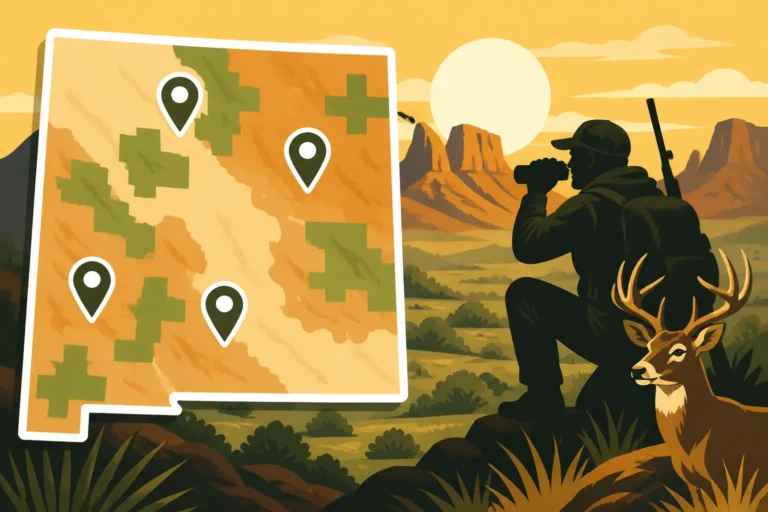
When you look at a map of New Mexico, the amount of green, yellow, and blue indicating public ownership is truly impressive. We're talking millions upon millions of acres. This vastness is one of the state's biggest appeals for hunters seeking genuine wilderness experiences or simply more room to roam than they might find in other states. It means there's opportunity for nearly every species, from elk in the high mountains to pronghorn on the open plains, and desert mule deer in the rugged southern ranges. The challenge isn't a lack of space, but rather understanding which spaces are truly open for your specific activity. How Much Public Land New Mexico Holds is often a surprise to first-time visitors, offering a different scale of hunting than they might be accustomed to.
However, this volume doesn't automatically translate to easy access. Many hunters, myself included, have spent countless hours poring over maps, trying to distinguish between different shades of public land, only to find that some are restricted, landlocked, or require special permits beyond a general hunting license. It's a fantastic resource, but it demands careful study to unlock its full potential.
Different Agencies, Different Rules
The public lands in New Mexico aren't a monolith. They're managed by various federal and state agencies, each with its own mission, regulations, and access policies. You have the U.S. Forest Service (USFS), the Bureau of Land Management (BLM), State Trust Land, National Wildlife Refuges, and even military installations. While all are "public" in some sense, the rules for hunters can vary dramatically. For example, National Forests, while excellent hunting grounds, often have more developed infrastructure, specific wilderness area regulations, and sometimes require a New Mexico Habitat Stamp for Federal Land if you're on designated federal ground. State Trust Land, as we'll explore, has unique access requirements. These differences can lead to confusion if you don't do your homework, potentially leading to unintentional violations.
It’s crucial to understand that a hunting license gives you permission to hunt game, but not necessarily to access every piece of land where game lives. The land access part is determined by the managing agency. This is where the reputation for BLM land having the most "open" access really starts to make sense.
The Checkerboard Conundrum
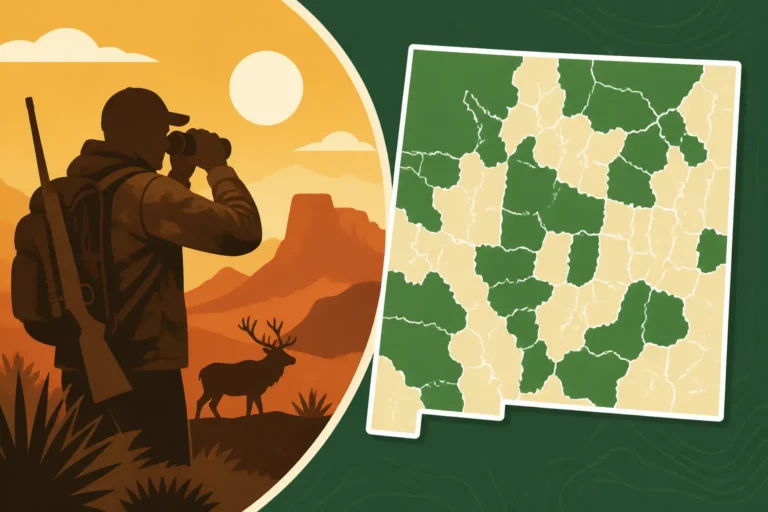
Perhaps one of the most frustrating aspects of mapping out a hunt in New Mexico is the "checkerboard" pattern of land ownership, especially prevalent in certain areas. This occurs when public land (often BLM or Forest Service) is interspersed with private land in alternating sections, resembling a chessboard. What looks like a vast expanse of public hunting ground can quickly become a maze of private parcels and landlocked public sections. Crossing Private Ground to Reach New Mexico Public Land is a significant issue, as even if public land is visible, you may not have a legal way to get to it without traversing private property.
This means that while a unit might have a high percentage of public land, a good portion of it could be inaccessible without explicit permission from private landowners, which often means getting Written Permission Requirements in New Mexico. The checkerboard makes e-scouting and on-the-ground navigation critical. Without precise tools, you can easily find yourself walking a boundary line, unsure if your next step will take you onto legally accessible land or onto someone's private ranch.
The Role of BLM Land in New Mexico's Public Access
When you're looking for truly open, widely accessible hunting ground in New Mexico, Bureau of Land Management (BLM) land consistently rises to the top. It's the workhorse of public access, offering millions of acres where hunters can roam freely with fewer restrictions compared to other land types.
Acres Upon Acres of Open Country
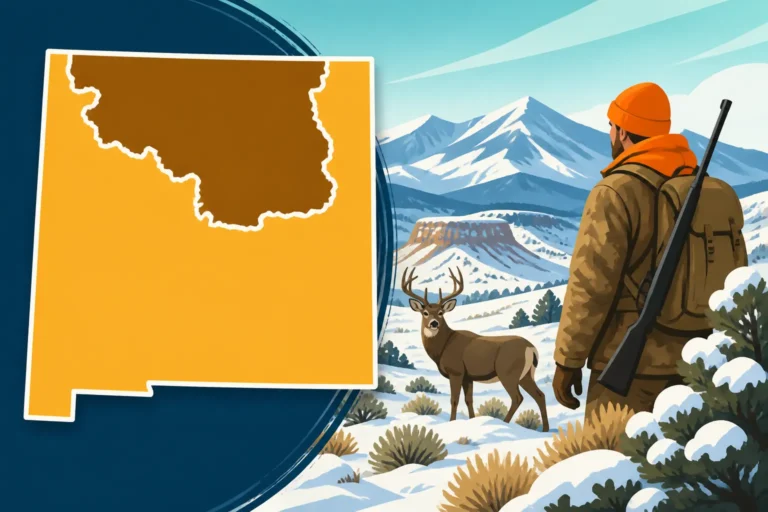
New Mexico is blessed with an immense amount of BLM acreage, second only to Alaska. We're talking about millions of acres spread across the state, from the high desert mesas and rolling grasslands to rugged canyon systems. BLM Acreage Across New Mexico is a huge contributing factor to the state's hunting opportunities. This land is typically characterized by its undeveloped nature, providing vast expanses for free-ranging game and ample room for hunters to spread out. Unlike some National Forests that might have more designated trails or established campgrounds, BLM ground often feels more raw and untamed.
This expansive, open character means you can often find solitude, even during popular seasons. It's the kind of land where you can glass for miles, put boots on the ground for a silent stalk, or set up a remote camp without seeing another soul for days. For many hunters, myself included, this sense of open, unrestricted possibility is what makes hunting New Mexico so appealing. It embodies the spirit of public land hunting.
Fewer Restrictions, More Flexibility
One of the primary reasons BLM ground stands out for open access is the relative simplicity of its regulations compared to other public land agencies. Generally speaking, if it's open to hunting, BLM land usually means you can access it with your valid New Mexico hunting license, often without additional permits, fees, or specific agency sign-ins that you might encounter elsewhere. You don't typically need a separate permit to hike, camp (within certain limits), or hunt on BLM land, making it a straightforward choice for many.
This flexibility also extends to activities like dispersed camping, which is often allowed outside of designated campgrounds, giving you more freedom to set up a primitive camp close to your hunting area. While there are still rules to follow (like respecting fire restrictions, leaving no trace, and abiding by Motorized Travel Rules on New Mexico Public Land), the overall approach is geared towards multi-use and public enjoyment, which strongly benefits hunters. It's less about managing specific recreational sites and more about managing the natural resources for a broader range of uses.
Connectivity with Other Public Lands
A significant advantage of BLM land is its geographic distribution and how it often borders or intersperses with other public land types, particularly National Forests and State Trust Land. This connectivity can be a game-changer for hunters. Instead of isolated islands of public ground, BLM often acts as the connective tissue, linking larger blocks of National Forest or providing corridors between private ranches, effectively opening up larger huntable landscapes.
For example, you might find a massive block of National Forest that's somewhat challenging to access, but a finger of BLM land provides the perfect entry point. Or, a particular unit might have a mix of State Trust Land and BLM, allowing you to transition seamlessly between them, utilizing the unique access rules for each to maximize your hunt. When you're using a mapping tool like onX Hunt, you'll often see how these different public land types flow into one another, creating expansive territories where animals aren't bound by property lines, and neither are you, as long as you understand the nuances of each land type. This interconnectedness allows for more dynamic hunting strategies, letting you follow game movement across different elevations and habitats.
Comparing BLM to Other Public Land Types
While BLM land offers fantastic open access, it's important to understand how it differs from other public land categories in New Mexico. Each type has its own set of rules, access points, and characteristics that can influence your hunting strategy. Knowing these distinctions is key to a successful, legal hunt.
BLM vs. National Forests: Distinct Experiences
National Forests, managed by the U.S. Forest Service (USFS), are another significant component of New Mexico's public hunting lands. National Forest Acreage in New Mexico is substantial, particularly in the mountainous regions. While both BLM and National Forests are federal lands, they often present distinct hunting experiences. National Forests, like the Gila, Carson, or Lincoln, tend to be higher in elevation, heavily timbered, and often encompass designated wilderness areas. These areas are fantastic for species like elk, bear, and mountain lion, offering rugged, challenging hunting.
The key differences for hunters often lie in terrain and infrastructure. National Forests typically have more established trail systems, campgrounds, and developed roads, though many of these roads can be subject to seasonal closures. Wilderness areas within National Forests have stricter rules regarding motorized travel and group sizes. BLM land, by contrast, is often more open, less timbered, and found at lower to mid-elevations. It's characterized by mesas, arroyos, and sparse vegetation, making it prime habitat for mule deer, pronghorn, and Oryx in specific areas. While both offer excellent hunting, BLM generally provides more "backcountry lite" access without the deep wilderness regulations, and often better visibility for glassing.
State Trust Land: Access with Conditions
New Mexico State Trust Land is a unique category that can be confusing for many out-of-state hunters, and even some residents. These lands are managed by the State Land Office to generate revenue for public institutions, primarily schools. While they are technically public, access is not entirely free-ranging. New Mexico State Trust Land Access Rules dictate that your valid hunting license acts as your easement, granting you access for hunting and fishing during legal seasons. This is a huge benefit, effectively turning millions of acres into huntable ground for license holders.
However, there are important caveats. Camping is often more restricted on State Trust Land, with many areas requiring day-use only or special permits for overnight stays. There's also a specific The 14-Day Scouting Window on Trust Land that limits when you can scout before a hunt. Unlike BLM, where you might freely scout months in advance, State Trust Land has a much tighter window. Additionally, you cannot conduct any commercial activity without a lease, and it's imperative to distinguish it from private land, as violations can be costly. For detailed planning, tools like onX Hunt are indispensable for clearly identifying State Trust Land boundaries and understanding its specific regulations within a given unit.
Military Bases and Preserves: Special Entry
Beyond BLM, National Forests, and State Trust Land, New Mexico also has special public land categories such as military bases (like White Sands Missile Range) and National Preserves (like Valles Caldera). These areas offer incredible hunting opportunities but come with very strict and often complex access rules. For instance, hunting Oryx on White Sands Missile Range is a highly sought-after tag, but it requires a very specific drawing, military security clearance, and adherence to strict protocols while on the range.
Similarly, places like the Valles Caldera National Preserve offer draw hunts for elk and other species, but these are managed almost like private ranches with specific guides, rules, and very limited entry points. These areas are usually not "open access" in the same way BLM or even many National Forest lands are. They represent premium, highly controlled hunting experiences rather than widespread public opportunity. If you're planning a hunt on these lands, you need to research their unique requirements months in advance.
Navigating and Utilizing BLM Ground for Hunting
Successfully hunting on BLM land in New Mexico isn't just about showing up; it's about preparation, smart navigation, and understanding the rules of engagement. With its vast, often undeveloped nature, having the right tools and mindset is crucial.
Essential Tools for Identifying BLM Boundaries
Given the checkerboard nature of land ownership in New Mexico, pinpointing exact BLM boundaries is non-negotiable. Relying solely on paper maps from a decade ago or hoping for the best is a recipe for disaster. This is where modern technology becomes your best friend. Mapping applications like onX Hunt are absolutely indispensable. With onX Hunt, you can download offline maps to your phone or GPS device, showing precise property lines, land ownership (BLM, Forest Service, State Trust, Private), roads, trails, and water sources. Using onX Layers for New Mexico Public Land has become standard practice for serious hunters because it allows you to see, in real-time, exactly where you are relative to property boundaries.
Beyond commercial apps, the New Mexico Department of Game and Fish (NMDGF) website often provides downloadable GIS data or links to online mapping resources where you can view unit boundaries and public land ownership. Many hunters also swear by GoHunt's mapping and research tools, which compile a wealth of information including draw odds, unit data, and interactive maps that can greatly assist in pre-season planning. These tools enable you to identify accessible parcels, plan your routes to avoid private land, and locate potential bottlenecks or travel corridors for game. Without such precise information, you risk trespassing, spoiling a hunt, or wasting precious time in the field.
Understanding Permitted Activities
While BLM land is known for its open access, it's not a free-for-all. Hunters must understand the permitted activities and general regulations. Your New Mexico hunting license generally grants you permission to hunt game during legal seasons. Dispersed camping (camping outside of designated campgrounds) is often allowed, but typically with limitations on duration (e.g., 14 days in a 28-day period) and specific rules about leaving no trace. You can usually drive on existing roads and two-tracks, but off-road travel is almost universally prohibited to protect sensitive habitats and prevent erosion. Always look for signage and check the local BLM field office regulations for any specific area you plan to hunt.
It's also important to be aware of any fire restrictions, especially during dry seasons, as campfires may be prohibited. Baiting and Trail Camera Rules in New Mexico also apply on BLM lands, so make sure you're compliant. Activities like cutting firewood or disturbing cultural sites are generally not permitted without special authorization. The spirit of BLM land use is responsible recreation – take only pictures, leave only footprints, and ensure your presence has minimal impact on the environment. When in doubt, always err on the side of caution and consult the BLM's local guidance.
Respecting Adjacent Private Land
One of the most challenging aspects of hunting New Mexico's public land, particularly BLM, is the ever-present need to respect private property boundaries. Due to the checkerboard pattern, public and private parcels can be intertwined, making it easy to inadvertently stray onto private land if you're not paying close attention. This is not just a matter of ethics; trespassing can lead to fines, confiscation of game, and even loss of hunting privileges. Retrieving Game From Private Land in New Mexico is a common concern; generally, you cannot pursue or retrieve wounded game onto private land without explicit, prior permission from the landowner.
Always be aware of fence lines, "No Trespassing" signs, and property markers. Modern mapping apps, as mentioned, are critical here. Before you even set foot in the field, use your mapping tools to identify private land boundaries and plan your approach accordingly. If a public parcel is landlocked by private property, you generally cannot access it unless you secure permission from the intervening landowner. Many a hunter has seen prime public ground on a map, only to find it completely inaccessible from a public road, forcing a change of plans. Establishing good landowner relations in areas bordering public land can sometimes open up new opportunities, but never assume access.
Overcoming Challenges on BLM Land
While BLM land offers unparalleled access, it also presents unique challenges that hunters must be prepared for. Its undeveloped nature, coupled with the New Mexico environment, means you need to be self-sufficient and strategic in your approach.
Water Sources and Game Concentrations
One of the biggest challenges on much of New Mexico's BLM land, particularly in the desert and high desert regions, is finding reliable water sources. Unlike mountain environments with numerous springs and creeks, BLM can be very dry. Water is life in the arid West, and animals are often highly concentrated around dependable water sources like stock tanks, guzzlers, or ephemeral seeps. Finding Water in New Mexico's Dry Country is often the key to finding game. However, this also means these areas can experience higher hunting pressure.
As a hunter, you need to understand how crucial water is for game movement. E-scouting using satellite imagery to identify stock tanks, windmills, or even green-up areas (which often indicate subsurface moisture) is a vital step. Using tools like onX Hunt or GoHunt can help you overlay water data with topo maps to pinpoint these critical areas. During your hunt, prioritize scouting around these sources. You also need to plan for your own water needs. Carrying sufficient water, or knowing where to cache it, is not optional on a multi-day hunt in these dry environments. Water You Must Carry on a Desert Day Hunt is a non-trivial amount, often much more than you might think.
Navigating Remote and Undeveloped Areas
Much of New Mexico's BLM land is remote and undeveloped, lacking paved roads, maintained trails, or even reliable cell service. This can be exhilarating for those seeking solitude but equally dangerous if you're not prepared. Roads are often unimproved, two-track dirt roads that can become impassable with rain or snow. Getting stuck miles from civilization is a very real possibility.
Navigation relies heavily on GPS devices, downloaded offline maps, and good old-fashioned compass skills. You need to be prepared for self-rescue or, at the very least, have a way to communicate in an emergency, like a satellite messenger. Physical fitness is also paramount, as you'll often be covering rugged, uneven terrain on foot, far from vehicle access. Preparing Physically for a High Elevation Hunt, even if not at extreme elevations, still applies to the demands of walking across broken country. Understanding your limits and packing appropriate emergency gear are crucial for safety in these expansive, wild spaces.
Managing Hunting Pressure
Because BLM land offers such open and relatively easy access, it can sometimes experience significant hunting pressure, especially on opening weekends or for popular species. While you can often find solitude, specific, well-known areas or those with easy road access might see a lot of other hunters. This pressure can push game into thicker cover, onto adjacent private land, or make them more nocturnal.
To mitigate this, consider hunting mid-week, during less popular seasons, or, most effectively, by venturing deeper into the remote areas that require more effort to reach. The old adage "the farther you walk, the fewer people you see" holds true on BLM. Utilize satellite imagery to identify natural travel corridors, hidden benches, or secluded drainages that might offer refuge for animals away from roads and popular trailheads. Having a backup plan or multiple spots scouted is also a good strategy. Diversify your approach, and don't be afraid to put in the miles to find those less disturbed pockets of habitat where game feels more secure.
Planning Your Hunt: BLM as Your Primary Resource
For many New Mexico hunters, especially those new to the state or looking for DIY opportunities, BLM land should be a cornerstone of their hunt planning. It provides a reliable foundation of accessible ground that can be integrated into almost any strategy.
Researching Unit-Specific BLM Opportunities
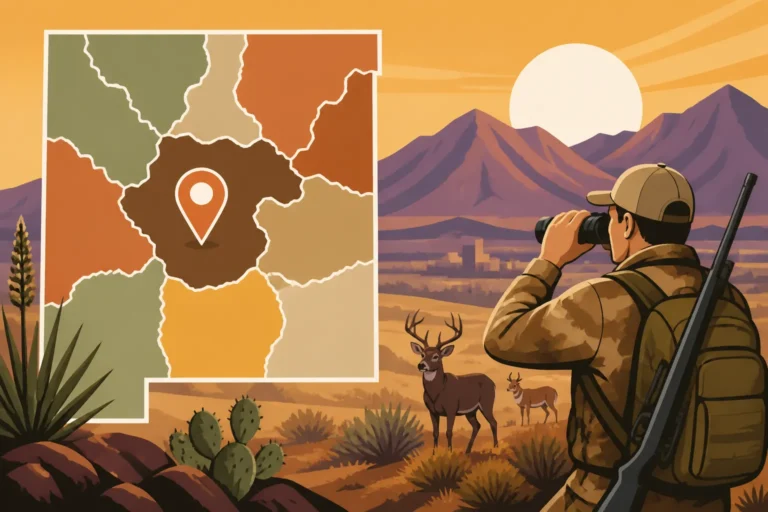
Before you even consider applying for a tag, it's essential to dive deep into researching BLM opportunities within specific Game Management Units (GMUs). Not all BLM land is created equal, and its distribution and character vary greatly from unit to unit. Some units might be predominantly National Forest, while others are a mosaic where BLM plays a dominant role. You'll want to find units that have a significant percentage of BLM land, especially if you're prioritizing open access and flexibility. Reading a New Mexico Hunt Code Before You Apply will give you the unit number, and then you can start your deep dive.
Use online mapping resources, the NMDGF website, and platforms like GoHunt to analyze land ownership percentages within a unit. Pay attention to how the BLM land connects to other public or private holdings. Is it fragmented or does it form large, contiguous blocks? Is it nestled against wilderness areas, providing a buffer? This research will inform your tag application choices and help you identify units where BLM access provides the best chance for a successful hunt. For example, some southern units might be almost entirely BLM, offering incredible desert mule deer or pronghorn opportunities.
Integrating BLM into Your Overall Hunt Strategy
Once you've identified units with strong BLM presence, you can start to integrate this knowledge into your overall hunt strategy. Think about how the unique characteristics of BLM land fit with your target species and hunting style. If you're chasing mule deer in the wide-open spaces, expansive BLM mesas and arroyos are often ideal for glassing and spot-and-stalk tactics. For pronghorn, the vast, unbroken views offered by BLM grasslands are unparalleled.
Consider how BLM land might serve as a strategic entry point or as a retreat for game pressured on adjacent private land or more heavily hunted Forest Service ground. You might plan to hunt the fringes of BLM where it meets private agricultural fields, catching animals moving between feed and cover. Or, you could use a large block of BLM as your basecamp for a multi-day backcountry excursion, knowing you have the flexibility to move freely within its boundaries. Understanding Hunting New Mexico From 4,000 Feet to 10,000 helps you envision how different land types and elevations complement each other. The goal is to leverage the open access and varied terrain of BLM to your advantage, maximizing your time in the field and increasing your odds of success.
Leveraging Technology for Pre-Season Scouting
The ability to e-scout BLM land before you ever set foot in New Mexico is a tremendous advantage, and technology has made this more effective than ever. Using satellite imagery on tools like onX Hunt or Google Earth allows you to zoom in on potential hunting areas, identify terrain features, locate water sources, and plan your approach routes. Look for subtle changes in vegetation, terrain breaks, and potential travel corridors. E-Scouting a New Mexico Unit Before the Season can save you countless hours of unproductive hiking once you arrive.
Beyond basic topography, look for details like old two-track roads, windmills, stock ponds, or even game trails that are visible from above. These can all be indicators of animal activity. Pay attention to areas where canyons or washes might provide cover and funnel game movement. By dropping pins and marking potential spots on your digital map, you build a comprehensive plan that guides your boots-on-the-ground scouting or actual hunt. This preparation minimizes wasted time and ensures you're spending your valuable hunting days in areas with the highest potential, all thanks to the unparalleled access provided by BLM land.
| Land Type | Primary Managing Agency | General Access for Hunting | Key Characteristics | Common Challenges |
|---|---|---|---|---|
| BLM Land | Bureau of Land Management (BLM) | Most open; license is generally sufficient | Vast, undeveloped; high desert, mesas, grasslands | Water scarcity, remoteness, variable road quality |
| National Forest | U.S. Forest Service (USFS) | Generally open; license + Habitat Stamp possible | Mountainous, timbered; designated wilderness areas | Road closures, wilderness restrictions, higher elevation |
| State Trust Land | NM State Land Office | License acts as easement; specific rules | Mixed terrain; checkerboarded with private | Scouting window limits, camping restrictions, private land boundaries |
| Military Land | Department of Defense | Highly restricted; special permits/draws | Specific ranges (e.g., White Sands) | Security clearance, strict protocols, limited seasons |
| National Preserve | National Park Service/USFS | Limited draw hunts; often guided | Unique ecosystems (e.g., Valles Caldera) | Very limited tags, often expensive, highly regulated |
| Private Land | Individual/Corporate Landowners | Requires explicit permission | Varies widely; often adjacent to public land | Trespassing risk, securing access |
Disclaimer
This article is for general informational purposes only and does not constitute professional advice. Laws, prices and regulations vary by location and change over time. Consult a qualified professional for guidance on your specific situation.