Guide to Hunter Ratio Limits on a Trip
It's incredibly exciting to plan a guided hunting trip to New Mexico, dreaming of those wide-open spaces and incredible big game opportunities. But for many folks, especially those newer to booking with an outfitter, there's often a quiet concern about what the "guided" experience actually looks like on the ground. You might wonder, "Am I going to be one of five hunters with just one guide trying to manage us all?" This guide is here to shed some light on guide-to-hunter ratios, helping you understand why they matter and what questions to ask so your New Mexico hunting adventure is everything you hoped for.
Understanding Why Guide-to-Hunter Ratios Matter
When you invest your hard-earned money and precious time into a guided hunt, you're not just paying for access; you're paying for expertise, safety, and a quality experience. The number of hunters each guide is responsible for can profoundly impact all these aspects, directly influencing your chances of success and how much you enjoy the entire trip.
Safety and Attention in the Field
Imagine yourself deep in the Gila National Forest, navigating steep canyons or dense ponderosa timber. This isn't your local hunting club; it's vast, wild country with real hazards. A favorable guide-to-hunter ratio means more eyes on the terrain, more hands ready to assist, and a more focused approach to safety. If a guide is trying to keep track of four clients spread out over a couple of hundred yards during a stalk, their ability to react quickly to a sudden rock slide, a venomous snake, or even just a twisted ankle is significantly diminished.
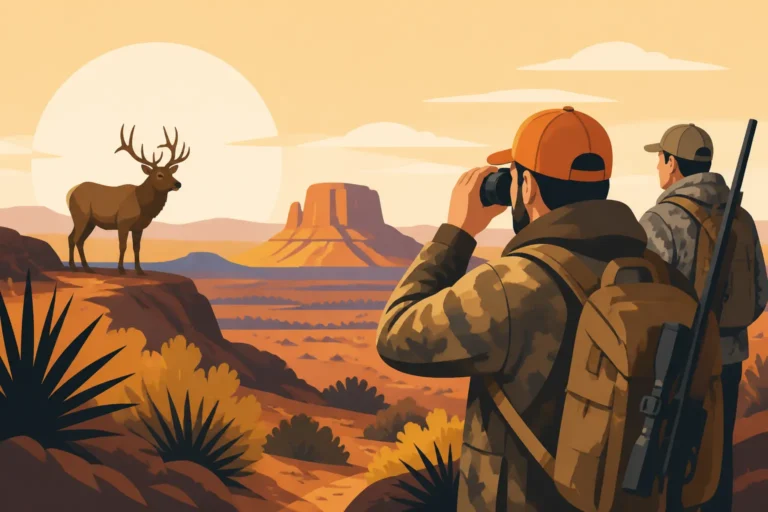
Think about a scenario where you're attempting to close the distance on a mature bull elk. With a 1:1 or 1:2 ratio (one guide to one or two hunters), the guide can devote their full attention to reading the wind, planning your approach, and whispering instructions about foot placement and timing. They can help you range the animal, set up your shooting sticks, or confirm shot placement without being distracted by another client moving into position a hundred yards away. In contrast, a higher ratio might mean less direct instruction, potentially leading to errors that spook game or, worse, compromise safety in challenging terrain. The terrain in New Mexico, from the high desert to the high mountains, demands respect, and proper guidance is paramount.
Quality of the Hunting Experience
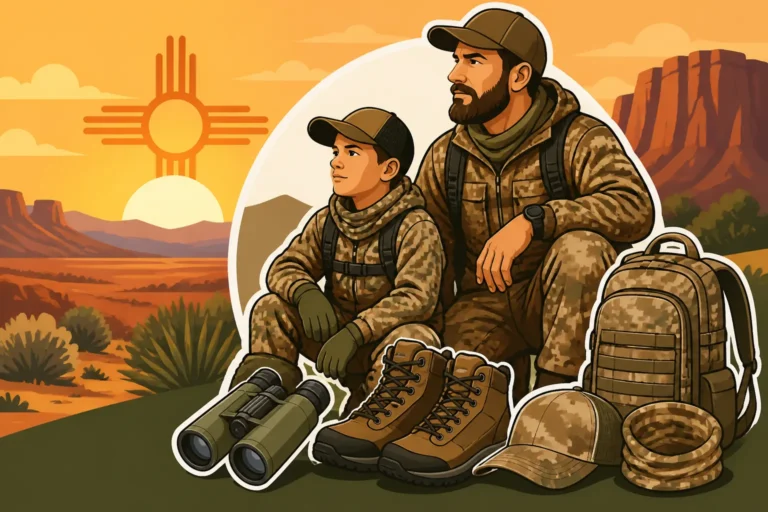
Beyond safety, the guide-to-hunter ratio directly correlates with the quality and personalization of your hunting experience. A lower ratio often translates into more hands-on coaching, more opportunities for individual questions, and a greater sense of being "on the hunt" rather than simply following along.
Consider a new bowhunter on their first elk hunt. With a 1:1 guide relationship, that guide can spend time teaching them Reading Wind in a Deep Gila Canyon or showing them how to effectively Cow Calling Pressured Gila Bulls. They can critique their stalk, help them understand elk behavior, and truly mentor them. If that guide is juggling three or four clients, those precious teaching moments become scarce. You might feel rushed, or like you're just another number. For many, a guided hunt isn't just about killing an animal; it's about learning, experiencing, and building skills. A better ratio ensures you get that dedicated guidance, whether it's identifying fresh sign, making a difficult shot, or even just processing your animal in the field. It’s an investment in the entire journey, not just the outcome.
Common Guide-to-Hunter Ratios in New Mexico
When you start looking at outfitters, you’ll notice that ratios can vary. It's not always a hard and fast rule, but there are definitely industry standards and factors that nudge those numbers one way or another. Knowing what’s typical can help you gauge if an outfitter’s offering aligns with your expectations for a quality hunt.
Standard Industry Practices
For most big game hunting in New Mexico, especially for highly sought-after species like elk, mule deer, or oryx, you'll typically see ratios of 1:1 (one guide per hunter) or 1:2 (one guide per two hunters). These are generally considered the gold standard for a quality, personalized experience. A 1:1 ratio is often offered for premium hunts, particularly for trophy animals or on hunts that involve very specific, quiet stalking tactics, such as archery elk. With a 1:1, you get the guide's undivided attention, their full focus on your success, and maximum flexibility in the field.
A 1:2 ratio is also very common and can still provide an excellent experience, especially if you're hunting with a buddy or family member. In this setup, the guide can still give significant attention to each hunter, and if one hunter gets an opportunity, the other can often be positioned to observe or wait for their own. This is a popular choice for rifle elk hunts or general mule deer hunts where the hunting style might involve more glassing and less intense individual stalking. However, for specialized hunts like Hunting Oryx on an Active Missile Range or Ibex Hunting in the Florida Mountains, the challenging nature of the terrain and the animals often means a 1:1 or very close to it is ideal, if not necessary, for safety and success.
Factors Influencing Ratio Changes
Several variables can lead to an outfitter adjusting their standard guide-to-hunter ratios:
- Species and Hunting Style: As mentioned, archery elk hunts often demand a lower ratio than a rifle hunt simply due to the proximity required for a shot and the intensity of the stalk. Similarly, something like a bear hunt over bait might accommodate a higher ratio than a spot-and-stalk Closing on a Barbary Ram in Broken Rimrock.
- Terrain Difficulty: Hunting the steep, rugged country of the Gila for elk is physically demanding and technically challenging. A guide managing one or two clients in that environment is already working hard. Trying to manage more could be unsafe and ineffective. Flatter, more open country for pronghorn, for instance, might allow for slightly higher ratios if the hunting method is primarily long-range glassing and vehicle-assisted scouting.
- Type of Trip (e.g., Drop Camps vs. Fully Guided): If you're booking a drop camp, the expectation of a guide in the field with you daily is completely different. A drop camp essentially provides logistics (camp setup, food, packing out game) but you, as the hunter, do the actual hunting, often with minimal, if any, daily guide presence. This drastically changes the "ratio" because you're essentially self-guided in the field. Fully guided hunts, where a guide is with you from dawn till dusk, will always have a defined ratio. What a New Mexico Drop Camp Actually Includes can clarify this for you.
- Client Experience Level: Sometimes, an outfitter might be willing to take a 1:3 ratio if all three clients are experienced, self-sufficient hunters who are simply looking for someone to lead them to prime ground and assist with game recovery. However, for novice hunters, a 1:1 or 1:2 is almost always recommended.
- Outfitter Philosophy and Pricing: Some outfitters pride themselves on offering a highly personalized, boutique experience and will only offer 1:1 hunts. These hunts often come with a higher price tag. Others might offer a more budget-friendly option with slightly higher ratios to accommodate more clients. When considering The Average Cost of a Guided New Mexico Elk Hunt, remember that the guide-to-hunter ratio plays a significant role in that pricing.
Here's a quick look at how ratios might break down:
| Hunt Type/Species | Typical Guide-to-Hunter Ratio | Notes |
|---|---|---|
| Archery Elk/Mule Deer | 1:1 or 1:2 | High attention required for stalks, quiet movement, and shot setup. Often premium for 1:1. |
| Rifle Elk/Mule Deer | 1:2 or 1:3 | Can be effective if hunters stay together; often involves more glassing and less intense individual stalking. |
| Oryx/Bighorn/Ibex | 1:1 or 1:2 | Demanding terrain, elusive animals, and specific shot requirements often necessitate close guidance. |
| Barbary Sheep | 1:2 or 1:3 | Challenging spot-and-stalk, but sometimes allows for multiple hunters on a single approach. |
| Bear/Lion (Hounds) | 1:2 to 1:4 | Focus is on dog work and treeing; once animal is treed, guide directs hunters. |
| Waterfowl/Small Game | 1:3 to 1:5+ | Less individual attention needed per shot; focus is on calling, decoy setup, and general area management. |
What to Ask Your Outfitter About Ratios
You've done your research, found a few New Mexico outfitters that look promising, and now it's time to start asking questions. This is where you can proactively ensure your expectations align with what the outfitter provides. Don't be shy; a reputable outfitter will appreciate your thoroughness.
Clarifying Expectations Before Booking
Before you commit to anything – before you even think about putting down a deposit – you absolutely must have a clear understanding of the guide-to-hunter ratio. This isn't a detail to assume or gloss over. Start by explicitly asking: "What is your typical guide-to-hunter ratio for [specific species] on this [type of hunt – e.g., rifle, archery]?"
Then, dig a little deeper. If they say 1:2, ask if that means you'll be paired with another hunter, and if so, how they typically pair clients. Will it be an individual hunter you've never met, or do they only run 1:2 if you book as a party of two? What happens if you book alone for a 1:2 hunt? Will you be guaranteed to be with just one other hunter, or could it be a larger group with multiple guides? It's also wise to ask about how they handle opportunities if two hunters are with one guide. Does the first person to get a shot take it, or do they try to alternate?
Remember, this is part of your vetting process, similar to all the Questions to Ask a New Mexico Outfitter. Many online platforms, like BookYourHunt or GoHunt, often list this kind of detail in their outfitter profiles, which can be a great starting point for comparison before you even make the first call. But always confirm directly with the outfitter.
Understanding the Contract and Logistics
Once you've discussed the verbal assurances, it’s critical to look at the contract. Does the contract explicitly state the guide-to-hunter ratio? If not, ask if they can add it as a rider or clarify it in writing. While New Mexico doesn't have a universal legal requirement stipulating ratios in contracts, a clear agreement provides peace of mind.
Also, think about what the outfitter's policy is regarding The New Mexico Guide-Client Contract Requirement and What Counts as Accompaniment Under New Mexico Rules. The state requires a signed contract and specifies that an outfitter or guide must physically accompany the client in the field for at least two days of any hunt for which an outfitter number was used in the draw. However, "accompany" can be interpreted in various ways. Does it mean the guide is with you every step of the way, or just generally in the same hunting area? For instance, if you're in a group of four with two guides (a 1:2 ratio), does that mean one guide is with you and your buddy all day, or are both guides splitting their time between all four hunters? These logistical details, while seemingly minor, can significantly impact your daily experience.
It’s about setting clear expectations. If a dispute arises later, having everything in writing, including the agreed-upon guide-to-hunter ratio, can be incredibly important. Don't be afraid to walk away if an outfitter is vague or unwilling to clearly define these terms.
The Impact of Ratios on Hunt Success and Enjoyment
Ultimately, the guide-to-hunter ratio isn't just a number; it's a fundamental element that shapes the flow, challenges, and triumphs of your hunting trip. Understanding its impact can help you prioritize what matters most to you in a guided experience.
Advantages of a Lower Ratio
When you have a lower guide-to-hunter ratio, typically 1:1 or 1:2, the advantages are palpable and directly contribute to a more rewarding experience:
- Increased Individual Attention: This is perhaps the most significant benefit. Your guide can focus entirely on your needs, your physical capabilities, and your hunting style. They can tailor their approach to finding game that suits you, whether you prefer aggressive spot-and-stalk or patient sitting over a water source. This is invaluable, especially for Reading Fresh Elk Sign in Ponderosa Timber or making precise calls during the rut.
- Enhanced Safety: As discussed earlier, fewer clients per guide means greater vigilance and faster response times for any unforeseen circumstances in the backcountry. Your guide isn't stretched thin trying to monitor multiple individuals.
- More Personalized Coaching and Education: For those looking to learn and grow as hunters, a lower ratio is a classroom on legs. You'll receive direct, immediate feedback on everything from your walking cadence to your glassing technique. You can ask more questions, engage in deeper discussions about game behavior, and truly absorb the guide's expertise.
- Greater Flexibility and Nimbleness: A smaller group can move more stealthily and quickly. If a bull suddenly bugles two canyons over, a 1:1 or 1:2 team can react and reposition far more easily than a larger group. This nimbleness often translates to more shot opportunities.
- Higher Potential for Success (Often): While success is never guaranteed, a dedicated guide focused on one or two hunters can devote all their energy and skill to finding and putting you on game. They can spend more time assessing individual animals, making the critical decision of When to Take the Shot Your Guide Calls, and ensuring a clean harvest.
Potential Drawbacks of Higher Ratios
Conversely, higher guide-to-hunter ratios, such as 1:3 or even 1:4 (which is less common for big game but can happen), introduce several potential drawbacks that might diminish your experience:
- Diluted Attention: The guide's focus is necessarily split between multiple individuals. This can mean less personalized instruction, fewer opportunities for questions, and a general feeling of being part of a group rather than an individual hunter. You might miss out on crucial tips or insights.
- Compromised Stealth and Mobility: More people in a hunting party almost always mean more noise, more scent, and slower movement. This makes successful stalking, especially for wary animals like Gila elk or Coues deer, significantly more challenging. It can also be harder to react quickly to changing game movements.
- Shared Opportunities: If a prime animal presents itself, and there are multiple hunters with one guide, who gets the shot? This can lead to awkward situations or feeling like you're competing with your fellow hunters. The guide might have to make a tough call, or everyone might miss out trying to get positioned.
- Feeling Rushed or Neglected: If one hunter is struggling or takes longer to get ready, it can impact the entire group's timeline, potentially making others feel rushed or as if their time is being taken away. Conversely, if you're the one who needs more time, you might feel pressured to keep up.
- Reduced Learning Opportunities: With less one-on-one interaction, the educational aspect of a guided hunt can suffer. You might not get the chance to fully understand the "why" behind certain tactics or behaviors, making it harder to apply those lessons to future hunts.
When a Higher Ratio Might Be Acceptable
It's important to be realistic; a higher guide-to-hunter ratio isn't always a deal-breaker. There are specific scenarios where it might be perfectly acceptable, or even preferred, depending on your hunting goals and experience:
- Budgetary Considerations: Guided hunts are a significant investment. Opting for a higher ratio can sometimes reduce the per-person cost, making a trip more accessible. If saving money is a primary concern and you're an experienced hunter, a 1:3 might be a viable option.
- Specific Hunt Types: For certain types of hunts, particularly those that involve less active stalking or more stationary methods, a higher ratio can work. Waterfowl hunting from a blind, predator calling from a set location, or even some stand hunting scenarios can often accommodate more hunters per guide without a significant dip in experience.
- Hunting with a Close-Knit Group: If you've booked the trip with your own party of friends or family, and you all have similar experience levels and expectations, a higher ratio might be fine. You're already comfortable with each other, and the social aspect of hunting together might outweigh the need for constant, individualized guide attention. In this case, the guide acts more as a coordinator and expert on the ground.
- Focus on Logistics and Access: Some hunters are highly self-sufficient in terms of hunting skills but want a guide primarily for access to private land, knowledge of specific unit hotspots, or logistical support like game retrieval and camp management. For these hunters, the actual in-field "guiding" might be less critical than the overall service, making a higher ratio less impactful.
Ultimately, your ideal guide-to-hunter ratio depends on your personal preferences, budget, experience level, and the specific goals for your New Mexico hunting trip. Always ask, always clarify, and ensure that the outfitter's offering truly aligns with the experience you envision. It's your hunt, and you deserve to have those expectations met.
Disclaimer
This article is for general informational purposes only and does not constitute professional advice. Laws, prices and regulations vary by location and change over time. Consult a qualified professional for guidance on your specific situation.