Bighorn Disease Die-Offs Explained
One of the most disheartening realities for anyone who cares about New Mexico's wildlife, especially our majestic bighorn sheep, is the sudden and often devastating impact of disease die-offs. It's a gut-wrenching experience to see a thriving herd decimated, and it leaves hunters and conservationists alike wondering what happened and what can be done. This guide aims to pull back the curtain on bighorn disease die-offs, explaining the primary causes, how they spread, and what management efforts are in place to protect these iconic animals across our diverse landscapes.
Understanding Bighorn Sheep Disease
Bighorn sheep are incredibly resilient creatures, adapted to some of the most rugged and unforgiving terrain New Mexico has to offer, from the high peaks of the Sangre de Cristos to the arid ranges of the southern desert. However, this hardiness doesn't protect them from certain diseases that can sweep through a population, causing severe declines. These die-offs are not random events; they are often driven by specific pathogens and environmental factors that create a perfect storm for tragedy.
The Primary Culprit: Mycoplasma ovipneumoniae (M.ovi)
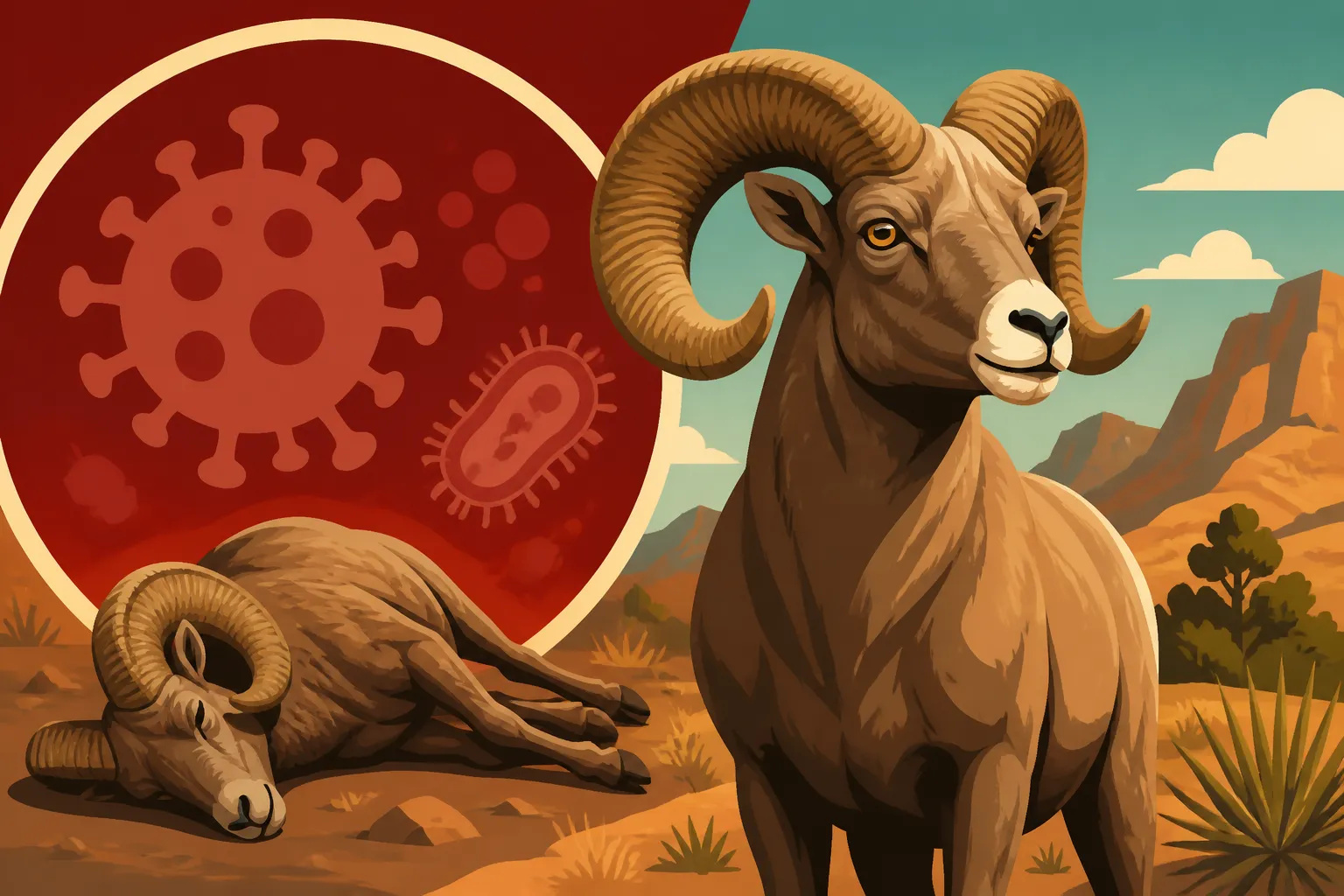
When we talk about bighorn disease die-offs, the conversation almost always turns to Mycoplasma ovipneumoniae, or M.ovi. This bacterium is the primary pathogen responsible for what's commonly known as "bighorn sheep pneumonia." It's not just a run-of-the-mill sniffle; this disease causes severe, often fatal pneumonia, particularly in lambs. Imagine a respiratory infection that just keeps getting worse, filling the lungs, and making it impossible to breathe. That's what M.ovi does to bighorn sheep. It's a microscopic enemy that can turn robust animals into weak, vulnerable individuals, leading to a slow and agonizing death or making them susceptible to other threats. The insidious nature of M.ovi is that it can lie dormant in some sheep, making them carriers who appear healthy but can transmit the disease to unsuspecting herd mates.
The frustrating part for biologists and hunters alike is that while M.ovi is the main offender, it often works in conjunction with other secondary bacterial infections and environmental stressors to really hammer a herd. It's rarely just one thing, but M.ovi is usually at the root of the most severe outbreaks. The sheep's immune system, already fighting off the primary infection, becomes overwhelmed, making them vulnerable to anything else circulating in the environment. This complex interplay makes managing the disease incredibly challenging.
How the Disease Spreads
Understanding how M.ovi spreads is crucial to preventing future outbreaks. The primary mode of transmission is through direct contact between bighorn sheep. This usually happens when animals are in close proximity, such as at watering holes, mineral licks, or during seasonal migrations when different sub-herds might mingle. A single infected animal, even one that appears healthy, can introduce the bacteria into an otherwise healthy herd, setting off a chain reaction. Think of it like a highly contagious flu ripping through a classroom – once one student has it, it's only a matter of time before others start showing symptoms.
Another significant, and often controversial, pathway for disease transmission is contact with domestic sheep and goats. These domestic animals can carry M.ovi without showing any signs of illness themselves, effectively acting as silent reservoirs for the bacteria. If a wild bighorn herd grazes in an area where domestic sheep have recently been, or if a lone bighorn wanders onto a ranch, the transfer of the pathogen can occur. This interaction, though sometimes rare, has been identified as a major driver of bighorn pneumonia outbreaks in various regions, including parts of New Mexico where ranges overlap. The close genetic relationship means what's benign for one can be deadly for the other.
The Devastating Impact on Herds
The impact of a bighorn disease die-off can be nothing short of catastrophic. When M.ovi strikes, it often hits the youngest and most vulnerable animals the hardest. Lamb mortality rates can skyrocket, sometimes reaching 100% in an infected herd for multiple lambing seasons. This means an entire generation of bighorn sheep is wiped out, leaving a gaping hole in the herd's future. New Mexico Bighorn Recovery efforts can be set back decades by a single severe outbreak, unraveling years of careful management and hard-won population gains.
Beyond the immediate loss of life, the disease can have long-term consequences for herd health and population dynamics. Survivors, especially adults, can become chronic carriers, meaning they carry the bacteria and can shed it, continually posing a threat to new lambs or newly introduced sheep. This creates a cycle of infection that can persist for years, preventing the herd from truly recovering its numbers. A herd that once thrived and offered limited but exciting hunting opportunities might see its New Mexico Bighorn Sheep Draw Odds plummet to near zero as biologists work to stabilize the population. The genetic diversity of the herd can also be reduced, making them potentially less resilient to future challenges.
Factors Contributing to Die-Offs
It's never just one thing that triggers a massive die-off; it's usually a combination of factors. Understanding these contributors helps us to see the bigger picture and develop more effective strategies to protect our bighorn sheep. From human-introduced risks to natural environmental pressures, each plays a role in the vulnerability of these magnificent animals.
Contact with Domestic Sheep and Goats
As mentioned, the interaction between wild bighorn sheep and domestic sheep or goats is a flashpoint for disease transmission. It's not that domestic animals are inherently "bad"; it's simply that they have evolved with M.ovi and often carry it asymptomatically. When wild bighorns, which lack natural immunity to this particular strain, come into contact, their systems are ill-equipped to fight it off. This can happen in various ways: a domestic flock grazing near public lands where Desert Bighorn Live in New Mexico might intersect with a wild herd's range, or free-ranging domestic animals might wander into bighorn habitat.
The problem is particularly acute in areas where the federal lands that bighorns call home butt up against private ranching operations. Even a brief nose-to-nose encounter at a fence line or a shared water source can be enough for the bacteria to jump species. Biologists, land managers, and ranchers are continually working on solutions to create buffer zones or implement grazing management plans that minimize this risk. This often involves discussions about land use, fencing, and herd separation, all aimed at protecting the wild sheep while respecting the livelihoods of ranchers. It's a complex dance that requires cooperation from all sides.
Environmental Stressors and Habitat Issues
Even without direct disease transmission, bighorn sheep are constantly under pressure from their environment. Drought, for instance, can severely impact forage quality and water availability, leading to weakened immune systems. When animals are stressed and malnourished, they are far more susceptible to illness, even if the pathogen load isn't particularly high. A prolonged drought can weaken a herd over time, making them ripe for a disease outbreak when M.ovi does arrive. This is especially true for Where Desert Bighorn Live in New Mexico, where water sources are already scarce.
Habitat fragmentation also plays a role. As human development expands, bighorn sheep populations can become isolated into smaller, less resilient herds. This isolation reduces genetic exchange, which can lead to lower genetic diversity over time. Less genetic diversity means a herd might have a weaker collective immune system, making them more vulnerable to disease. Additionally, fragmented habitat can push sheep into less ideal areas, forcing higher densities around limited resources, which in turn increases the likelihood of disease transmission within the herd. Predators can also exacerbate the problem, preying on weakened or infected animals, further stressing the population.
Herd Density and Genetic Diversity
The density of a bighorn sheep herd can have a profound effect on disease transmission and severity. In a high-density population, animals are more frequently in close contact, providing ample opportunities for M.ovi to spread rapidly from one individual to another. Imagine a crowded room versus an open field – the chances of catching a cold are much higher in the crowded room. This is why sometimes targeted New Mexico Population Management Hunts are considered, not just for population control, but also for herd health management by reducing densities and thus the risk of rapid disease spread.
Conversely, low genetic diversity within a herd can also be a significant risk factor. When a population has a limited gene pool, it means that many individuals share similar genetic traits, including their immune responses. If a pathogen like M.ovi evolves a way to overcome that specific immune response, it can potentially wipe out a large portion of the herd because few, if any, individuals have the genetic variations needed to fight it off. How New Mexico Rebuilt Its Bighorn Herds often involves careful consideration of genetics when transplanting animals, ensuring a healthy mix to bolster overall herd resilience. Monitoring herd health and genetic markers, sometimes with tools like those offered by GoHunt, helps biologists track these critical factors and make informed management decisions to safeguard these precious animals.
Management and Conservation Efforts in New Mexico
Protecting bighorn sheep from disease die-offs is a continuous, multi-faceted effort in New Mexico. It involves dedicated biologists, veterinarians, land managers, and even hunters, all working together to implement strategies that mitigate risk and promote herd health. It's a testament to the value we place on these magnificent animals that so much effort goes into their survival.
Monitoring and Testing Protocols
A cornerstone of bighorn sheep disease management is robust monitoring and testing. Biologists in New Mexico regularly conduct surveys to assess herd health, population size, and lamb recruitment rates. These surveys often involve aerial counts, ground observations, and sometimes even trapping and collaring efforts to get up-close data on individual animals. When a bighorn sheep is captured for collaring or relocation, blood and nasal swab samples are routinely collected and sent to specialized labs for M.ovi and other pathogen testing. This proactive testing helps identify infected individuals or herds before a full-blown die-off occurs.
Furthermore, in the unfortunate event of a suspected die-off, biologists are quick to respond, collecting carcasses for necropsy to determine the cause of death. These post-mortem examinations are crucial for confirming the presence of M.ovi or other diseases, and understanding how the infection spread. The data collected from these efforts informs management decisions, helping to pinpoint problem areas or high-risk herds. Organizations like GoHunt often publish updates and information on herd health, drawing from these official reports, which can be invaluable for hunters interested in the long-term sustainability of bighorn populations.
Mitigating Disease Transmission
Preventing disease transmission is paramount, and efforts focus heavily on minimizing contact between wild bighorn sheep and domestic small ruminants. This often involves collaboration with private landowners to establish "buffer zones" where domestic sheep and goats are restricted or managed in a way that prevents them from mingling with wild bighorns. Fencing projects are sometimes implemented to physically separate populations, although this can be challenging in vast, rugged landscapes. Education is also a key component, informing ranchers and the public about the risks associated with commingling.
Another strategy involves careful planning of bighorn translocations, which are vital for How New Mexico Rebuilt Its Bighorn Herds. Before any bighorns are moved to establish new herds or augment existing ones, they undergo rigorous health screening to ensure they are disease-free. Introducing an infected animal into a healthy population would be counterproductive, undoing years of conservation work. This meticulous approach to health checks is a critical step in preventing the spread of M.ovi to new areas or vulnerable populations.
The Role of Hunters and GoHunt in Conservation
Hunters play a surprisingly vital role in bighorn sheep conservation, often contributing financially and through direct action. Revenue from hunting licenses and tags, like The HMAV and Habitat Stamp Every New Mexico Hunter Needs, directly funds wildlife research, habitat improvement projects, and disease monitoring programs. Organizations like the Wild Sheep Foundation, largely supported by hunters, raise millions of dollars annually for bighorn conservation across North America, including critical disease research.
Beyond financial contributions, ethical hunters are often the first eyes on the ground, noticing sick animals or unusual die-offs in remote areas. Prompt reporting of such observations to the New Mexico Department of Game and Fish can be critical for early detection and rapid response. Tools and platforms like GoHunt also provide valuable information, not just about drawing a tag, but also about herd statistics and conservation initiatives, empowering hunters to be more informed advocates for wildlife. When hunters understand the challenges facing species like bighorns, they become powerful allies in the ongoing battle against diseases that threaten their existence. Their passion for these animals extends far beyond the hunt, fostering a deep commitment to their long-term survival.
Disclaimer
This article is for general informational purposes only and does not constitute professional advice. Laws, prices and regulations vary by location and change over time. Consult a qualified professional for guidance on your specific situation.