How Drought Affects Desert Deer Numbers
We've all been there, staring out at a New Mexico landscape that feels a little too dry, the ground cracked, and the usually vibrant scrub looking dusty and tired. When you're investing your time, money, and hope into drawing a desert deer tag, the last thing you want to see is a parched environment. Drought isn't just an inconvenience; it's a profound natural force that dramatically reshapes our desert ecosystems, and its impact on the health and numbers of New Mexico's desert mule deer and Coues deer populations is something every hunter needs to understand. This guide will walk you through exactly how periods of low rainfall ripple through the landscape and directly affect the deer you pursue, offering insights into what to expect and how to adapt your hunting strategy.
Impact of Drought on Forage and Water Availability
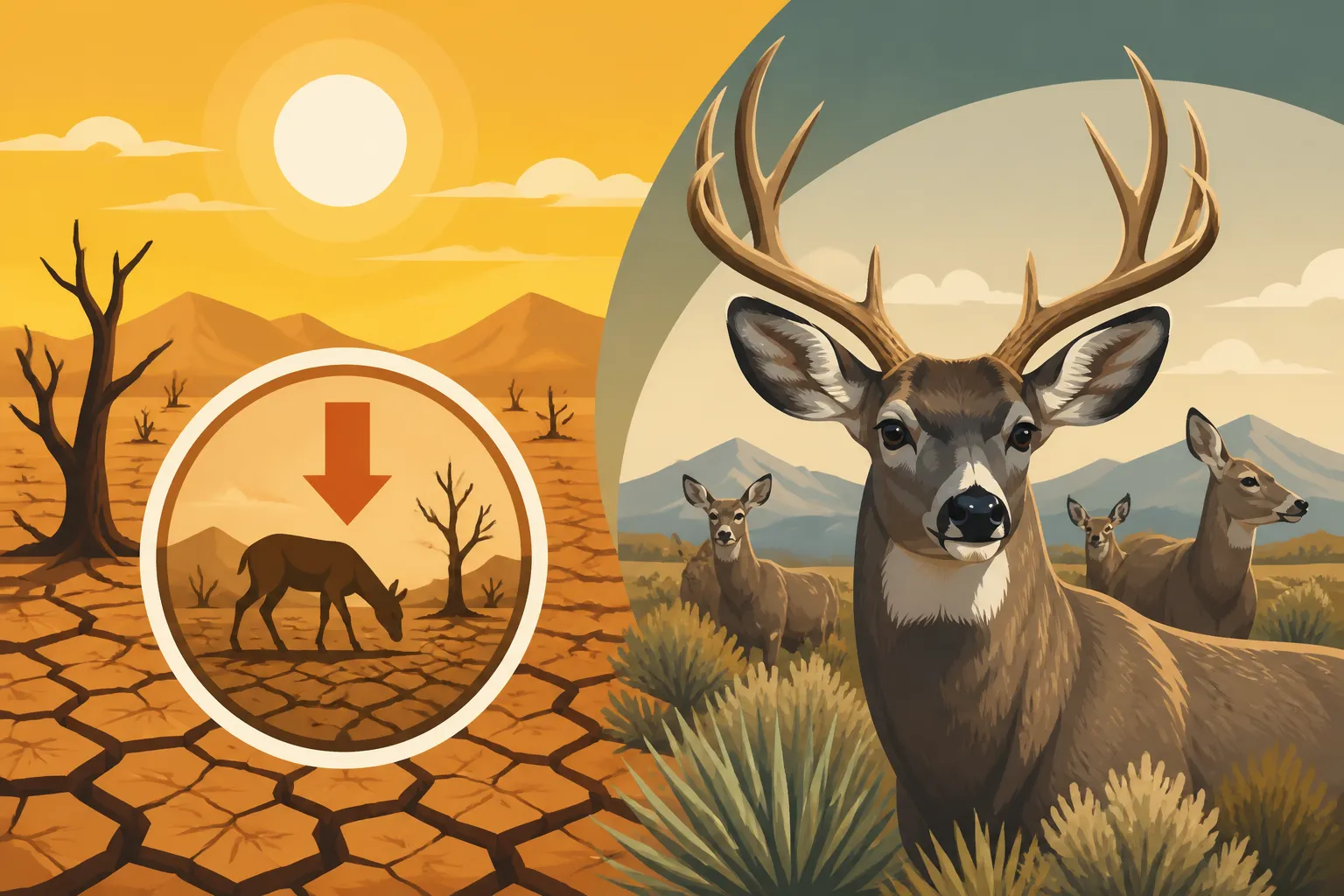
The most immediate and obvious consequence of drought in New Mexico's desert country is the crippling effect it has on the availability and quality of forage and water. Deer, like all wildlife, rely on a consistent supply of both to survive and thrive. When the rains don't come, everything changes.
Imagine a typical late summer in a southern New Mexico unit, perhaps where you're chasing desert mule deer or even the elusive Coues. In a good year, monsoon rains green up the desert, bringing a flush of new growth – tender forbs, succulent cacti fruits, and palatable browse from shrubs like mesquite, acacia, and various ephedra species. This nutritious buffet allows deer to pack on fat reserves, crucial for the upcoming rut and winter. But when drought settles in, that green-up simply doesn't happen. Instead, the landscape remains brown and brittle. Plants that are usually part of a deer's diet become tough, woody, and far less nutritious, if they even grow at all. The essential moisture content within these plants, which deer also rely on, diminishes significantly. This means deer have to eat more of less nutritious food just to get by, burning precious calories in the process.
Beyond the dinner plate, water sources literally dry up. Ephemeral tanks, natural depressions that hold rainwater, and even some reliable springs can vanish or become drastically reduced. Deer suddenly have to travel much farther, sometimes miles, between scarce water sources and whatever sparse forage they can find. This increased travel expends energy, exposes them to more predators, and concentrates them around the few remaining waterholes, which can then become vectors for disease transmission. It's a cruel cycle where every aspect of their existence becomes a struggle. If you’re looking to find reliable water sources, understanding Water Sources and Ethics in Desert Hunting can be critical during these times.
Direct Effects on Deer Health and Reproduction
The scarcity of food and water directly translates into a cascade of negative effects on the deer themselves, impacting their physical condition, their ability to reproduce, and ultimately, their long-term survival. You'll hear biologists talk about "body condition," and during a drought, that condition plummets.
Deer that are constantly stressed by a lack of nutrition will show it. Their coats might be dull, their ribs prominent, and their overall demeanor lethargic. For bucks, this directly impacts antler growth. Antler development is an energetically expensive process, and if a buck's body is in survival mode, allocating resources to basic metabolic functions takes precedence over growing impressive headgear. So, in drought years, expect to see bucks with smaller, less robust antlers than usual. It’s a harsh reality, but an important indicator of the herd's overall health. This means the potential for finding truly mature bucks that represent the genetic potential of a unit, which a platform like GoHunt might highlight in good years, will be significantly diminished.
Even more critically, drought severely compromises reproductive success. Does that are malnourished are less likely to conceive, and if they do, they might carry fewer fawns. Even if fawns are born, the mother's inability to produce sufficient milk due to poor body condition means a much lower fawn survival rate. Imagine a fawn in the unforgiving desert, already vulnerable, now struggling to get the nourishment it needs from a stressed mother. These little ones are often the first casualties of drought, making future deer recruitment a major concern. This low fawn recruitment is one of the key factors that can dramatically reduce overall deer numbers in the long run. If you're interested in how these young animals contribute to future populations, understanding Why Fawn Ratios Predict Next Season offers deeper insight.
Here’s a snapshot of how drought conditions manifest in the deer population:
| Aspect | Normal Conditions | Drought Conditions |
|---|---|---|
| Forage Quality | Abundant, nutritious browse and forbs | Sparse, woody, low-nutrient vegetation |
| Water Sources | Reliable springs, tanks, riparian areas | Dried up tanks, distant or scarce waterholes |
| Deer Body Condition | Robust, healthy, visible fat reserves | Gaunt, ribs showing, dull coat, poor muscle mass |
| Antler Growth | Strong potential for good antler development | Often stunted, reduced mass, fewer points |
| Fawn Survival | Higher survival rates due to maternal health | Significantly reduced, mothers struggle to lactate |
| Disease/Predation | Lower susceptibility, strong immune systems | Increased vulnerability to illness and predators |
Long-Term Population Trends and Management Challenges
When drought persists for multiple years, the effects on deer populations can be devastating and long-lasting. It’s not just a bad season; it can reshape the demographics of a herd for a decade or more.
The cumulative effect of poor fawn survival and reduced overall health is a noticeable decline in deer numbers. Units that might typically boast strong populations of Mule Deer Across New Mexico's High Country and Desert or Coues Deer in New Mexico's Southern Ranges can see significant drops. This isn't just about hunter success; it's about the ecological balance of the region. Fewer deer mean less grazing pressure in some areas, but more concentrated pressure in others, further exacerbating the problem around the few remaining resources. State wildlife agencies face immense challenges during these periods. They often have to make tough decisions about tag allocations, sometimes drastically reducing the number of permits to protect the remaining breeding stock and allow the herd to recover. This is where the long-term data, which many agencies publish and tools like GoHunt can help analyze, becomes invaluable.
Recovery from severe drought is also a slow process. Even when the rains finally return, it takes time for vegetation to rebound and for deer to regain lost body condition. Fawn crops might improve, but it takes years for those fawns to mature into breeding age animals or trophy-class bucks. The age structure of the herd can be skewed, with fewer middle-aged animals. Understanding Reading a Herd Unit Management Plan can give you a window into how biologists try to manage these cyclical challenges. It highlights the delicate balance between sustainable hunting opportunities and protecting the long-term viability of the population. When you’re looking at applications, checking Where New Mexico Publishes Harvest Data in previous years can often give you an indication of the health of a unit's deer population, which directly reflects environmental conditions.
What Hunters Can Observe and Do
As hunters, we are often among the first to truly witness the effects of drought firsthand in the field. Our observations can be valuable, and our actions matter.
When you're out scouting, pay close attention to the small details. Are the mesquite bushes and cacti healthy and robust, or are they shriveled and sparse? How many stock tanks are actually holding water, and how much? Are there fresh tracks around those water sources, or do they look like they haven’t been visited in a while? Scarcity of game sign, especially fresh tracks, droppings, and rubs, can be a stark indicator of low deer numbers and poor health. It also suggests that deer might be highly concentrated around the few remaining viable areas, making them potentially more visible but also more vulnerable. Utilizing modern tools for E-Scouting a New Mexico Unit Before the Season and checking Using onX Layers for New Mexico Public Land can help you pinpoint potential water sources or denser vegetation pockets that might be holding deer during dry spells. Remember that in a dry year, a deer is going to prioritize its stomach and its thirst.
Ethically, hunting in drought conditions requires an extra layer of responsibility. If you harvest a deer, pay close attention to its body condition. Was it healthy, or did it show signs of malnutrition? This kind of anecdotal feedback from hunters is important for wildlife managers. Also, consider your impact on sensitive environments. Water sources are critical, and minimizing disturbance around them is paramount. If you're having trouble finding deer, it's not necessarily because they're "smarter" or "wiser" that year; it's often because the conditions are pushing them to the edge of survival. It might mean adjusting your expectations and focusing more on the experience and appreciation of the challenging landscape. Just remember to always carry enough Water You Must Carry on a Desert Day Hunt for yourself, and understand that for the deer, finding their own water is an everyday struggle during drought.
Ultimately, while we can't control the weather, understanding the profound impact of drought on New Mexico's desert deer helps us become more informed and responsible stewards of these incredible animals and the harsh, beautiful landscapes they call home.
Disclaimer
This article is for general informational purposes only and does not constitute professional advice. Laws, prices and regulations vary by location and change over time. Consult a qualified professional for guidance on your specific situation.