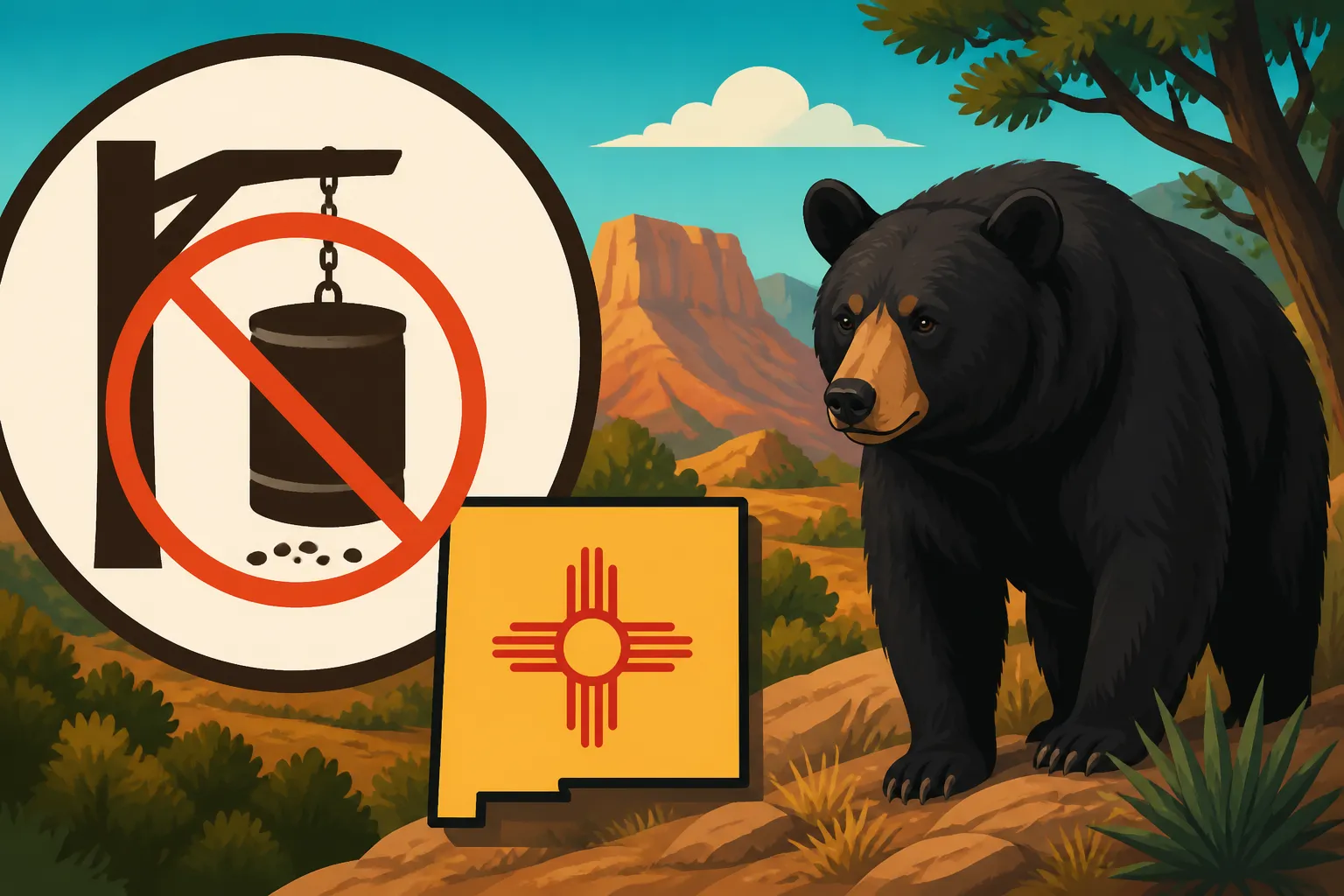
Baiting Rules That Apply to New Mexico Bears
Navigating the nuanced world of hunting regulations can feel like trying to solve a riddle in the dark, especially when it comes to specific rules for different species. Many hunters, eager to maximize their chances, often wonder if techniques like baiting are legal for bears in New Mexico. This comprehensive guide will shed light on the exact regulations surrounding bear baiting, clarify what constitutes baiting, and explore the ethical and practical implications for hunters in the Land of Enchantment.
The Foundation of New Mexico's Baiting Regulations for Bears
Let's cut right to the chase because this is one of those rules where clarity is absolutely crucial. When it comes to hunting black bears in New Mexico, the regulations are pretty straightforward: baiting is generally prohibited. This isn't a gray area with loopholes you can squeeze through; it's a foundational principle of fair chase hunting in the state for most big game species. The New Mexico Department of Game and Fish (NMDGF) crafts these rules to ensure that hunting remains a challenging and ethical pursuit, where the animal has a reasonable chance of escape.
The intent behind these regulations is to prevent situations where animals are lured into a predictable location, removing the element of skill and fair chase from the hunter's endeavor. Imagine the effort involved in understanding bear movements, their feeding habits, and their preferred bedding areas through dedicated scouting, compared to simply placing an irresistible food source and waiting. The difference in challenge and the integrity of the hunt is vast. You can find all the official rules in the Reading the New Mexico Rules and Info Booklet, which every hunter should review thoroughly before heading afield.
The General Prohibitions on Baiting Big Game
New Mexico's hunting rules broadly prohibit the use of bait for big game, and bears fall squarely under that umbrella. This means you cannot place any material that attracts animals for the purpose of hunting them. This prohibition isn't unique to New Mexico; it's a common regulation across many states for various big game species, reflecting a widespread understanding of fair chase principles. The NMDGF defines baiting quite broadly to prevent hunters from trying to find technicalities.
This means putting out corn, apples, protein pellets, or any other foodstuff specifically to draw bears to a stand or ambush point is a definite no-go. Even non-food items designed to attract animals through scent can sometimes fall under this prohibition if they're used to manipulate an animal's natural movement for hunting purposes. Hunters must rely on their woodsmanship, scouting abilities, and knowledge of bear behavior rather than artificial attractants. When you're spending countless hours preparing for a hunt, like figuring out The New Mexico Black Bear Population Estimate or checking New Mexico Bear Season Dates, it’s vital to ensure every part of your strategy aligns with the law.
Why Bears Are Treated Differently (or not)
It's common for hunters to think that certain species might have different baiting rules, especially for predators or animals that are managed differently, but for black bears in New Mexico, they are indeed treated like other big game in this regard. While some states might allow bear baiting under specific permits or in certain zones, New Mexico does not currently offer such provisions for black bears. This consistent stance simplifies the rules for hunters, as the general prohibition applies across the board for big game animals.
The primary reason for this consistent approach is the NMDGF's commitment to maintaining fair chase standards for all big game. Baiting could potentially lead to higher harvest rates than desired, concentrate animals in unhealthy ways, or even habituate bears to human-provided food sources, which can create dangerous situations for both humans and bears down the line. It's a management decision rooted in both ethics and wildlife conservation. Knowing this helps you understand why focusing on natural scouting methods, perhaps using tools like those from GoHunt to analyze terrain and historical data, is so crucial for success.
Understanding What Constitutes "Bait" and "Baiting"
So, if you can't bait, what exactly is bait? This question might seem simple, but it's where many hunters inadvertently get themselves into trouble. The NMDGF defines "bait" as any substance, including any liquid or solid material, placed to attract game animals. And "baiting" is the act of placing or distributing bait in an area for the purpose of taking game. It's not just about the typical piles of corn you might see for deer in other states; it's much broader. The rules aim to cover anything that artificially draws an animal to a specific spot.
This broad definition means hunters need to be hyper-aware of their actions and surroundings. For instance, leaving food scraps at a campsite, even unintentionally, could theoretically be construed as baiting if an animal is then hunted in that area. It's about exercising common sense and prudence in the field. The best practice is to assume that any deliberate placement of anything intended to attract an animal for hunting purposes is probably illegal for bears in New Mexico.
Defining Bait Beyond Food Sources
While food is the most obvious form of bait, New Mexico's regulations often extend to non-food attractants as well if they are used to lure animals for hunting. This means highly aromatic substances, mineral blocks, or even certain non-consumable attractants that are designed to draw animals in through their sense of smell could potentially fall under the baiting prohibition. The key is the intent to attract for hunting.
Consider the various products on the market: scents that mimic estrous does, dominant buck urine, or even general wildlife attractants. While some scent lures are legal for certain species (always check the specific regulations!), for bear hunting, anything placed with the purpose of drawing them in to hunt could be problematic. When you're planning your scouting trips, perhaps reviewing E-Scouting a New Mexico Unit Before the Season resources, remember that your focus should be on finding natural bear sign, not creating artificial draws.
Scent Attractants and Their Legality
The line between a legal scent lure and illegal bait can sometimes feel blurry, but for New Mexico bear hunting, it's generally best to err on the side of extreme caution and avoid anything that could be interpreted as bait. Some hunters might use cover scents or attractant scents on their person or gear to mask human odor or pique an animal's curiosity without "baiting." However, deliberately placing large quantities of a strong attractant scent on the ground or on trees in a fixed location with the intent to draw a bear and shoot it from that spot would likely be considered baiting.
It's about whether the attractant fundamentally alters the natural movement patterns of the animal for hunting purposes. If it creates an artificial "hot spot" where bears are accustomed to finding something interesting and are then ambushed, that's where the problem lies. Always consult the official NMDGF rules and regulations, specifically the section on Baiting and Trail Camera Rules in New Mexico, to understand the exact wording and any species-specific nuances.
Incidental Attractants vs. Intentional Baiting
This is where common sense truly comes into play. There's a big difference between intentional baiting and incidental attractants. For example, if you're eating a sandwich in your tree stand, and a crumb falls to the ground, and a bear happens to sniff it out later, that's an incidental attractant, not intentional baiting. The key differentiator is intent and deliberate placement for hunting.
Let's say you're camping in a remote area during a deer hunt, and you properly store your food in bear-resistant containers, but a bear still gets into your camp trash while you're away. If you then decide to hunt that bear from your camp, that would be highly unethical and potentially illegal, as you'd be exploiting an incidental attractant. However, a properly managed camp with no deliberate placement of attractants for hunting is not considered baiting. Always practice Leave No Trace principles, and remember that Water Sources and Ethics in Desert Hunting can sometimes bring animals in naturally, but you can't manipulate these for baiting purposes. This distinction is crucial for staying within the bounds of the law and ethical hunting practices.
Table: Legal vs. Illegal Attractant Use for Bear Hunting in New Mexico (General Guidelines)
| Activity/Item | Intent | New Mexico Legality (for Bears) | Explanation |
|---|---|---|---|
| Piling apples, corn, meat | Deliberately attracting bears to a specific spot | Illegal | Clearly defined as baiting; removes fair chase element. |
| Placing a mineral block | Attracting bears to supplement diet/curiosity | Generally Illegal | While not "food," it's a deliberate attractant placed to lure animals to a specific location for hunting. |
| Using a strong liquid scent | Drawing bears to a specific location for ambush | Generally Illegal | If used with the clear purpose of concentrating bears in a kill zone, it falls under the baiting prohibition. |
| Scents on clothing (cover/curiosity) | Masking human odor, general curiosity | Generally Legal | Used on hunter, not to establish a fixed attractant site. Always check specific product claims and NMDGF updates. |
| Scouting for natural food sources | Locating areas bears naturally feed | Legal & Encouraged | Identifying natural food (berries, acorns) is part of ethical scouting and understanding bear patterns. |
| Accidental food drop at camp | Unintentional, not for hunting | Legal (if not exploited) | If no deliberate intent to hunt over it. However, always clean up to avoid conditioning bears. Hunting over it after discovering it would be unethical/illegal. |
| Trail cameras | Monitoring wildlife movement and presence | Legal (with restrictions) | Legal for scouting, but cannot be used to monitor a baited site. Refer to Baiting and Trail Camera Rules in New Mexico for specific guidelines. |
Disclaimer: This table offers general guidance. Always consult the most current New Mexico Department of Game and Fish regulations for definitive legal information.
Practical Implications and Legal Ramifications of Baiting Violations
Ignorance of the law is never an excuse, especially when it comes to hunting regulations. Violating baiting rules in New Mexico can lead to serious consequences, far beyond just losing your bear tag. The NMDGF takes fair chase and ethical hunting very seriously, and violations can impact your hunting privileges for years to come, not just in New Mexico but potentially in other states as well through interstate compacts. It's simply not worth the risk to cut corners or try to outsmart the system.
A violation could stem from something as blatant as putting out a pile of donuts to something as subtle as consistently throwing your apple cores in the same spot at the base of your tree stand. The key is the intent to attract for hunting. Even if you don't harvest an animal, the act of baiting itself is a violation if proven. This is why meticulous planning, understanding your unit, and focusing on legitimate scouting methods are paramount. How New Mexico Bear Harvest Limits Close a Zone are strictly monitored, and violations could draw unwanted attention to specific areas.
Penalties for Illegally Baiting Bears
The penalties for illegally baiting bears in New Mexico can be quite severe. A conviction can result in significant fines, loss of hunting privileges for a period of time (which can extend for years), confiscation of equipment (including firearms or bows), and even jail time in some egregious cases. It's not a slap on the wrist. Imagine losing the ability to participate in your passion for multiple seasons, all because you tried to gain an unfair advantage.
Beyond the legal ramifications, there's also the damage to your reputation as a hunter and the potential for public scorn. The hunting community generally has a strong sense of ethics and fair play, and baiting violations are often looked upon very unfavorably. It undermines the conservation efforts that hunters tirelessly support and creates a negative image for hunting as a whole. Always prioritize staying within the law and upholding ethical standards; it protects both the wildlife and the future of hunting.
How Enforcement and Reporting Work
Game wardens in New Mexico are highly trained professionals dedicated to upholding wildlife laws. They patrol hunting areas, conduct investigations, and respond to reports of suspected violations. They are adept at recognizing signs of baiting, even subtle ones, and can use various methods to gather evidence. Often, reports from other hunters or concerned citizens play a crucial role in bringing violations to light.
If you witness what you suspect is illegal baiting, it's important to report it to the NMDGF. You can do so anonymously. Providing as much detail as possible, such as dates, times, specific locations, and descriptions of individuals or vehicles involved, can be incredibly helpful for wardens. This kind of vigilance from the hunting community is essential for self-policing and ensuring that everyone plays by the rules, preserving the integrity of the sport for all. Remember that rules like Legal Shooting Hours and Blaze Orange in New Mexico are enforced rigorously, and baiting violations are no different.
Ethical Considerations and Best Practices for Bear Hunters
Beyond the letter of the law, there's the spirit of the hunt. Ethical hunting principles are deeply ingrained in the outdoor community, and they often go above and beyond what's simply legal. For bear hunting, these ethics emphasize fair chase, respect for the animal, and responsible stewardship of the resource. Choosing not to bait, even if there were a legal loophole (which there isn't for bears in New Mexico), aligns with these broader ethical considerations.
A true hunter takes pride in their ability to locate, stalk, and outsmart an animal on its own terms, using knowledge and skill rather than artificial means. This approach fosters a deeper connection to the wild and a greater appreciation for the challenge. Tools like GoHunt can provide invaluable assistance in e-scouting and understanding terrain, allowing you to develop a sophisticated hunting strategy that respects these principles.
The Role of Fair Chase in Bear Hunting
Fair chase is the cornerstone of ethical hunting, dictating that an animal should have a reasonable opportunity to escape. Baiting inherently compromises this principle by luring an animal to a specific, predictable spot, often making it an easier target. For bears, this is especially true. Bears are intelligent creatures with keen senses, and a fair chase hunt requires the hunter to overcome these natural advantages through skillful woodsmanship.
When you successfully harvest a bear that you've located through careful tracking, reading sign, and understanding its habitat, the accomplishment feels earned. You've engaged in a genuine challenge of wits and endurance. This is the essence of fair chase, and it’s why New Mexico’s regulations are structured as they are. It’s about ensuring that the pursuit itself is as honorable as the harvest. You can read more about what it takes to find them by looking into topics like Hunting New Mexico From 4,000 Feet to 10,000.
Scouting Without Baiting: Effective Strategies
So, if baiting is out, how do you effectively scout for bears in New Mexico? The answer lies in leveraging technology, physical scouting, and a deep understanding of bear ecology. Bears are creatures of habit, often following consistent travel corridors, seeking out specific food sources, and utilizing dense cover for bedding. Your scouting should focus on identifying these natural patterns.
First, utilize mapping applications and tools like those from GoHunt for e-scouting. Look for areas with diverse natural food sources that bears favor throughout the season, such as oak thickets for acorns, berry patches, or areas with specific mast crops. Identify dense timber for bedding areas, water sources, and natural funnels like saddles and ridges that bears might use for travel. Study topo maps to understand elevation changes and potential escape routes.
Next, get boots on the ground. Physically scouting an area before the season is irreplaceable. Look for fresh bear sign: tracks, scat, rubbed trees, claw marks on trees where they’ve climbed, and turned-over rocks or logs where they’ve fed on insects. Place trail cameras in strategic locations, such as along game trails or near natural food sources, to monitor activity (but be mindful of Baiting and Trail Camera Rules in New Mexico to ensure your camera placement is legal). Remember that Scouting New Mexico State Trust Land Fourteen Days Out is a legal and effective way to prepare for your hunt. This diligent, ethical approach to scouting not only increases your chances of success but also deepens your connection to the landscape and the animals you pursue.
Disclaimer
This article is for general informational purposes only and does not constitute professional advice. Laws, prices and regulations vary by location and change over time. Consult a qualified professional for guidance on your specific situation.