Where Persian Ibex Live in New Mexico
For many hunters, the idea of chasing an exotic species like the Persian Ibex brings to mind far-flung mountain ranges in Asia, not the deserts of the American Southwest. Yet, here in New Mexico, these magnificent animals roam free, offering one of the most uniquely challenging big game hunts available. But if you're like most hunters, you're probably scratching your head wondering, "Where on earth can I even find them?" This guide is going to lay out exactly where New Mexico's Persian Ibex call home and what makes their habitat so special and so incredibly tough to hunt.
The Unlikely Home of Persian Ibex in New Mexico: The Florida Mountains
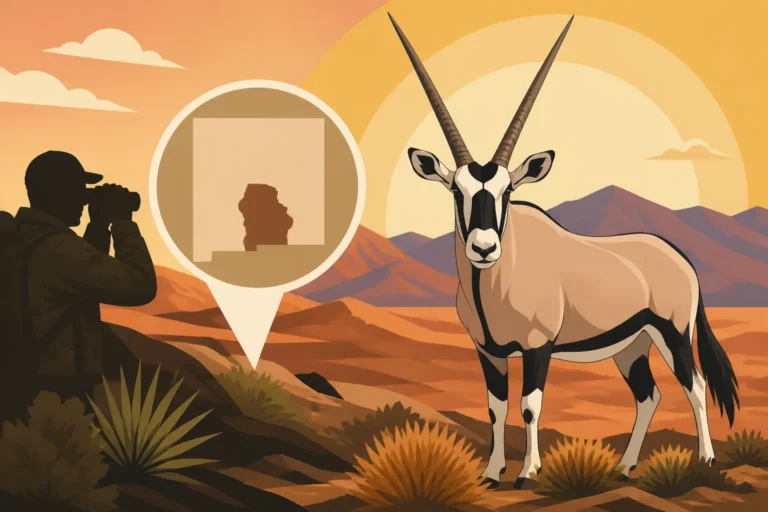
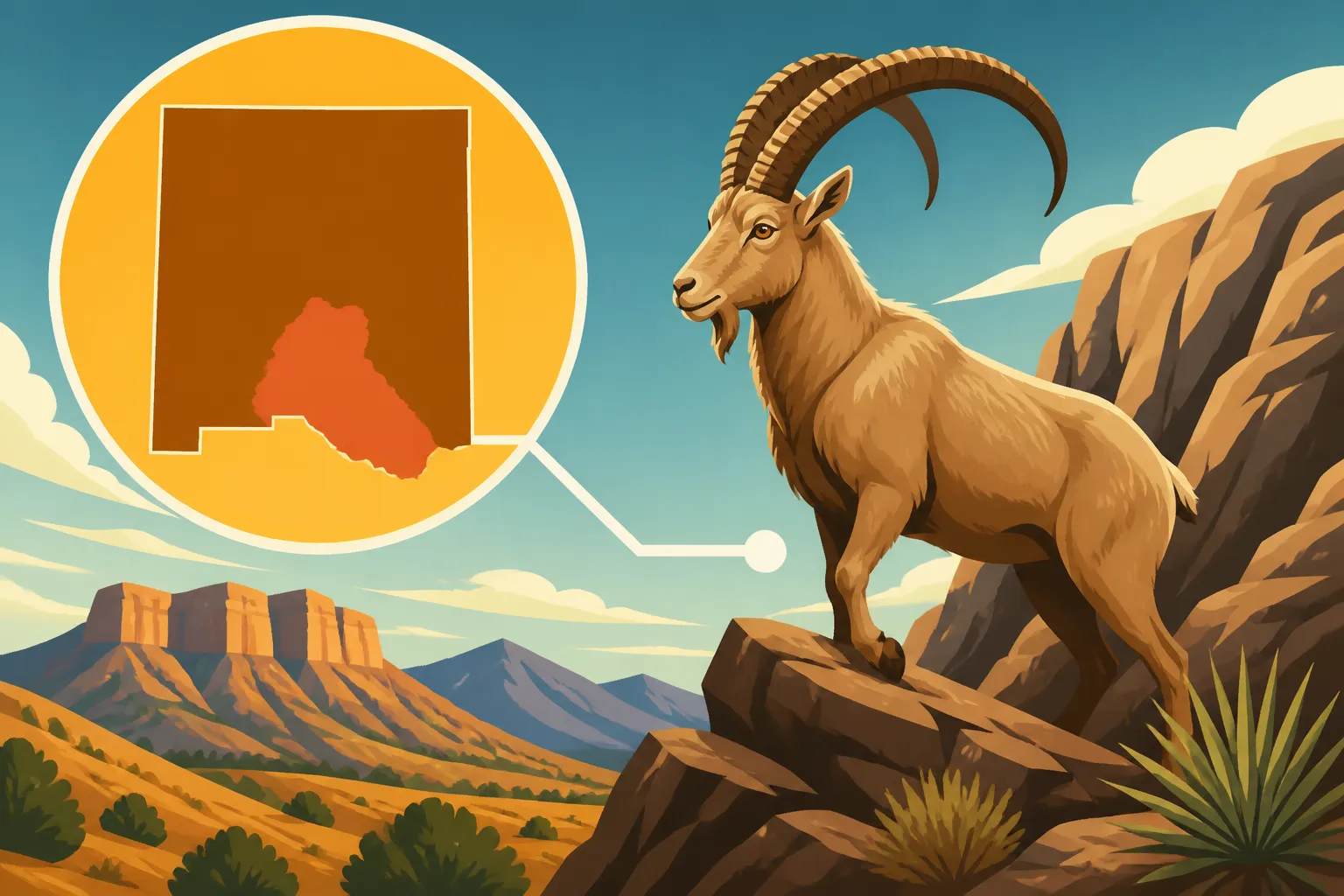
Let's cut right to it: if you want to find Persian Ibex in New Mexico, you need to set your sights on one very specific and incredibly rugged mountain range in the southwestern part of the state – the Florida Mountains, often affectionately called the "Little Rockies" by locals. These mountains, rising sharply out of the Chihuahuan Desert near Deming, are the only place in North America where you'll find a free-ranging population of Persian Ibex. It’s a remarkable story of conservation and adaptation that has created a truly one-of-a-kind hunting opportunity.
The Florida Mountains are not massive in scale compared to, say, the Gila Wilderness, but what they lack in sprawling acreage, they more than make up for in sheer verticality and brutal, unforgiving terrain. They are a jumble of steep, rocky peaks, deep canyons, and razor-sharp ridges that look like they've been torn straight from another continent. This is precisely why the ibex thrive here – it mimics their native habitat in the Middle East. For hunters, this means an experience unlike any other, demanding peak physical condition, precise shooting skills, and optics that can pull details from miles away.
How Ibex Were Introduced to New Mexico
The presence of Persian Ibex in the Florida Mountains isn't a natural phenomenon; it's the result of a deliberate and very successful introduction effort. Back in the late 1960s, the New Mexico Department of Game and Fish, in partnership with the State Game Commission, sought to introduce a new big game species to fill a specific ecological niche in these incredibly harsh desert mountains. After careful consideration, the Persian Ibex (Capra aegagrus aegagrus) from Iran was chosen due to its ability to thrive in arid, rugged, and rocky environments, much like their native lands.
The initial releases occurred in 1970 and 1971, with a small number of ibex from a zoo herd. These animals took to the Florida Mountains like they were born there. The population grew steadily, adapting perfectly to the steep slopes, rocky outcroppings, and sparse vegetation. It’s truly incredible to think that a species from halfway across the world found such a perfect home in the heart of New Mexico's desert. This introduction has created a unique genetic pool, and the ibex here are known for their impressive horn growth, making them a highly coveted trophy for hunters seeking a truly exceptional challenge. You can learn more about how these animals found their way here by reading about How Ibex Were Introduced to New Mexico.
The Specifics of the Florida Mountain Range
The Florida Mountains, despite their imposing appearance, are relatively small, spanning only about 15 miles long and 6 miles wide. The highest point, Florida Peak, stands at just over 7,400 feet, which might not sound like much compared to the towering peaks of northern New Mexico, but consider that the surrounding desert floor sits around 4,000 feet. This creates an abrupt, dramatic rise of over 3,000 feet in elevation, resulting in extremely steep and unforgiving terrain.
The range is primarily composed of igneous and metamorphic rock, which means lots of loose scree, jagged edges, and minimal flat ground. Vegetation is typical Chihuahuan Desert fare at lower elevations, transitioning to pinyon-juniper woodlands and sparse grasses higher up. Water sources are scarce and often seasonal, making them critical focal points for all wildlife, including the ibex. Navigating this landscape requires not just physical strength but also a keen sense of direction and perhaps some prior experience with similar country, like what you might encounter when Hunting Barbary Sheep in New Mexico Canyon Country. The ibex here are master escape artists, using every rock and shadow to their advantage, disappearing in an instant.
Why the Florida Mountains Offer Ideal Ibex Habitat
The fact that Persian Ibex have not only survived but thrived in the Florida Mountains is a testament to how perfectly suited this range is to their specific ecological needs. It's not just any mountain; it's a very particular kind of mountain that caters directly to their instincts and survival strategies. Understanding these factors is key to understanding why they're so elusive and challenging to hunt.
Ibex are masters of vertical terrain. They possess incredible agility and balance, allowing them to navigate sheer cliffs, narrow ledges, and steep rock faces with ease. The Florida Mountains provide an abundance of this extreme vertical habitat, giving them a distinct advantage over most predators and, let's be honest, most hunters. They can quickly ascend to safety, using the broken terrain as both a vantage point and a refuge.
Mimicking Native Terrain
Think about the native range of Persian Ibex in places like the Zagros Mountains of Iran. These are arid, rugged, and high-elevation environments characterized by steep, rocky slopes, deep canyons, and sparse vegetation. Now picture the Florida Mountains: they mirror these conditions almost perfectly. The rock formations, the climate, the limited water, and the relative isolation all contribute to an environment that feels familiar to these mountain specialists.
This isn't just about providing physical space; it's about providing the right kind of physical space. The broken rock and cliff faces offer natural bedding areas that are almost inaccessible, perfect for escaping the desert heat or hiding from potential threats. The sparse vegetation, while challenging for many species, offers enough browse for the ibex, which are not overly picky eaters when it comes to hardy desert plants. This mimicry of their native terrain is the fundamental reason why the Florida Mountains are the primary answer to Where Persian Ibex Live in New Mexico.
Predators and Isolation
Another critical factor in the success of the Florida Mountains ibex population is the relative lack of large, consistent predators that could seriously impact their numbers. While mountain lions and bobcats are certainly present in the range, the sheer difficulty of the terrain, combined with the ibex's vigilance and ability to scale impossible slopes, makes them incredibly hard to target effectively. Unlike a wide-open basin where a lion might have a better chance at a sprint, the ibex can simply outclimb danger.
Furthermore, the isolation of the Florida Mountains from other large ranges means the ibex population remains relatively contained. This prevents widespread dispersal into less suitable habitats and concentrates the population within its optimal environment. This isolation, however, also means that the herd's health and management are highly dependent on the conditions within this specific range. The New Mexico Department of Game and Fish closely monitors the population, using limited draw tags to ensure sustainable hunting opportunities while maintaining a healthy herd.
The Challenges of Hunting Ibex in Their New Mexico Stronghold
Hunting Persian Ibex in the Florida Mountains is often considered one of North America's most physically demanding and mentally grueling big game hunts. It's not just a walk in the park; it's a vertical marathon on a broken treadmill. If you're lucky enough to draw one of these highly coveted tags, you need to understand the immense challenges ahead.
The terrain is the primary antagonist. Imagine climbing a staircase made of loose gravel and jagged boulders, all while wearing a heavy pack and constantly scanning for tiny specks against a massive rock face. This is the reality of an ibex hunt. The animals spend their lives at the highest, most inaccessible reaches of the mountains, often disappearing into nooks and crannies that seem impassable. This kind of hunt demands extraordinary Physical Conditioning for a Gila Hunt, but with even more vertical component.
Brutal Terrain and Physical Demands
Successful ibex hunters are not just good shots; they are mountaineers, endurance athletes, and master glassers rolled into one. The ascent can be relentless, with loose rock making every step precarious. A slip or fall isn't just inconvenient; it can be genuinely dangerous. Temperatures can swing wildly, from freezing nights to scorching midday heat, especially during late season hunts, further adding to the physical toll.
You'll be covering miles of steep, uneven ground, often with significant elevation gain. It's a true test of grit and determination. Many hunters find themselves utterly spent after just a few hours in this country. And once you've located an animal, the stalk itself can be just as, if not more, challenging than the initial climb. Getting into a shooting position often means traversing even more treacherous ground, all while remaining undetected by an animal known for its incredible eyesight and wariness.
The Need for Exceptional Optics and Patience
Because ibex inhabit such vast, open, and vertical landscapes, top-tier optics are not just helpful; they are absolutely essential. Without them, you're essentially hunting blind. You'll spend countless hours meticulously picking apart distant mountainsides, trying to distinguish an ibex from the rocks and shadows. This is where patience truly becomes a virtue.
High-magnification binoculars, paired with a sturdy tripod, are your most important tool. A good spotting scope, capable of 60x or even 80x magnification, is also crucial for confirming an animal's identity, assessing its horn growth (which you can learn more about in Judging an Ibex in the Florida Mountains), and planning a stalk. The difference between a distant rock and a trophy ibex can only be discerned with quality glass. Brands like Swarovski, Zeiss, and Kowa are favorites among serious mountain hunters for their clarity and durability. You'll be using techniques similar to Grid Glassing a Basin Without Missing Bucks, but applied to vertical rock faces. Many hunters rely on platforms like GoHunt for their optics recommendations and gear reviews, making sure they're investing in the best tools for such a demanding hunt.
Planning Your Ibex Hunt in the Florida Mountains
So, you're convinced that chasing these incredible animals in their New Mexico home is the challenge for you. Great! But getting a tag and preparing for the hunt is a journey in itself. It's not a hunt you can just decide to do next weekend; it requires meticulous planning, often years in advance.
The first hurdle, and often the biggest, is securing a tag. Ibex tags are extremely limited and highly sought after, meaning the draw odds are incredibly tough. This is a true trophy draw hunt, where success in the lottery is largely a matter of luck, as New Mexico doesn't operate on a preference point system, meaning New Mexico Draw Odds Do Not Improve With Time.
Understanding the Draw Odds and Application Process
New Mexico typically offers a very small number of ibex tags each year, often in the single digits for either the archery or rifle seasons. These are true unicorn tags. You'll need to apply through the New Mexico Department of Game and Fish draw system, usually with an application deadline in mid-March. Make sure you understand The New Mexico Application Deadline Date to avoid missing out. You'll want to review past draw statistics, which you can often find on the New Mexico Department of Game and Fish website or on platforms like GoHunt, to understand just how competitive these tags are. Knowing New Mexico Ibex Draw Odds is critical for setting realistic expectations.
It’s crucial to select the correct hunt code when applying. Each code specifies the weapon type and dates. Pay close attention to these details, as they dictate your hunt period and method. You can find comprehensive information on Reading a New Mexico Hunt Code Before You Apply to ensure your application is submitted correctly. The application fee will be due at the time of application, but the full tag fee is only charged if you are successful in the draw.
Physical Conditioning and Gear Essentials
Once you beat the odds and secure an ibex tag, the real work begins: preparing your body and gathering the right gear. As mentioned, this hunt is incredibly physical. You should start a rigorous training regimen months, if not a full year, in advance. Focus on leg strength, cardiovascular endurance, and balance. Hiking with a weighted pack on steep, uneven terrain is excellent preparation. Consider hiking up and down stairs or doing step-ups with weight to mimic the relentless climbing.
Your gear list should prioritize lightweight, durable, and high-performance items.
- Boots: Invest in high-quality mountaineering or stiff-soled hiking boots that provide excellent ankle support and traction on rocky surfaces. Break them in thoroughly.
- Layered Clothing: New Mexico weather, especially in the mountains, can be unpredictable. Pack layers that allow you to adapt to temperature swings, including rain gear.
- Backpack: A comfortable, adjustable pack capable of carrying essential gear, water, and potentially meat if you're successful.
- Optics: As discussed, premium binoculars and a spotting scope with a sturdy tripod are non-negotiable. Using a platform like GoHunt for gear reviews can help you identify the best options.
- Hydration: Plan for carrying a significant amount of water. Water sources in the Floridas are scarce and often unreliable.
- Navigation: A reliable GPS device or a smartphone app like onX Maps, along with a physical map and compass, is essential for navigating the complex terrain.
- Rifle/Bow: Choose a rifle chambered in a flat-shooting caliber suitable for long-range shots (e.g., .270, 7mm Rem Mag, .300 Win Mag). If bowhunting, ensure your setup is capable of ethical shots at longer distances and you've practiced accordingly.
Remember, the Florida Mountains are remote and unforgiving. Being prepared for emergencies, carrying a first-aid kit, and having a satellite communication device are highly recommended. This is a hunt where preparedness can literally mean the difference between success and a dangerous situation.
Table: Key Considerations for a New Mexico Ibex Hunt
| Aspect | Consideration | Importance |
|---|---|---|
| Location | Florida Mountains, near Deming, NM | Crucial: Only free-ranging population |
| Terrain | Extremely steep, rocky, loose scree, jagged ridges, deep canyons | High: Demands exceptional physical fitness |
| Draw Odds | Very low, single-digit percentages; no preference points | High: Requires consistent application |
| Physical Fitness | Mountaineer-level endurance, strength, balance; intense training months in advance | Essential: Most challenging aspect |
| Optics | Premium binoculars (10x-15x), high-magnification spotting scope (60x-80x), sturdy tripod | Essential: Ibex are small, blend well |
| Water | Carry ample supply; natural sources are scarce and unreliable | Critical: Desert environment |
| Navigation | GPS (onX), physical map, compass; detailed understanding of unit boundaries | High: Easy to get lost in rugged terrain |
| Weapon Choice | Flat-shooting rifle for potential long shots; archery requires exceptional skill and closer ranges | High: Ethical shot placement is key |
| Season Dates | Check current New Mexico Game & Fish regulations for specific archery/rifle dates | Crucial: Varies annually |
In the end, hunting Persian Ibex in New Mexico's Florida Mountains is more than just a hunt; it's an adventure into one of the most unique big game opportunities in North America. It will test your physical limits, demand every ounce of your mental fortitude, and, win or lose, leave you with an experience you'll never forget.
Disclaimer
This article is for general informational purposes only and does not constitute professional advice. Laws, prices and regulations vary by location and change over time. Consult a qualified professional for guidance on your specific situation.