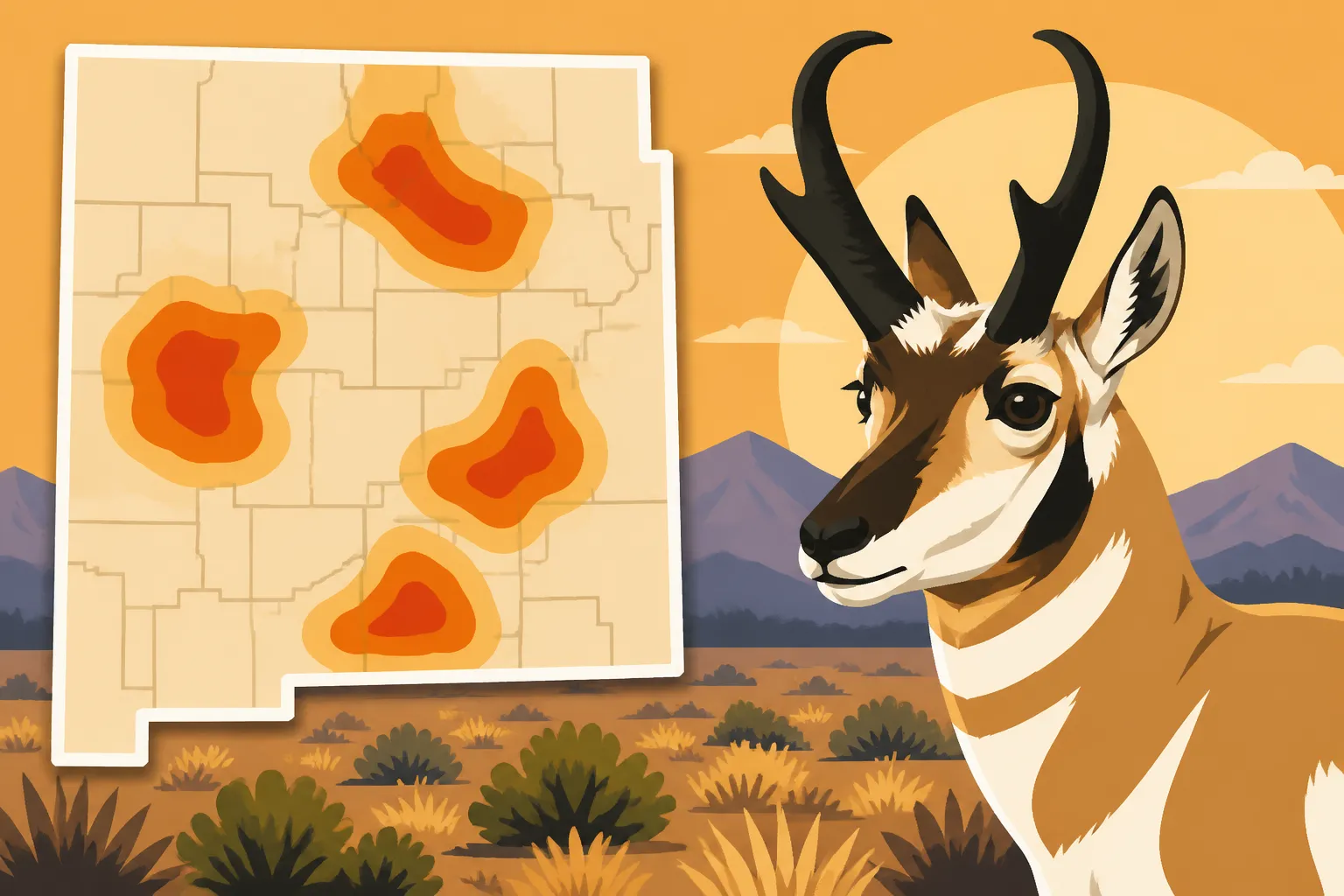
Where New Mexico Pronghorn Numbers Are Strongest
For many hunters, the New Mexico pronghorn tag is the dream ticket. There's nothing quite like spotting those distinctive black horns across vast open country, but actually drawing one of those coveted tags, especially in a unit known for strong numbers, can feel like hitting the lottery. This guide is dedicated to breaking down where New Mexico's pronghorn populations thrive, offering insights into the prime regions and what makes them so productive, so you can make informed decisions when it's time to apply.
Understanding New Mexico's Pronghorn Habitat
New Mexico's diverse landscape offers various habitats, but for pronghorn, it's all about open country. These magnificent animals, often mistakenly called antelope, are built for speed and thrive where they can see for miles, using their incredible eyesight to detect predators long before they become a threat. Knowing this helps us narrow down where you're most likely to find them in significant numbers.
The Eastern Plains: A Pronghorn Paradise
When you talk about pronghorn in New Mexico, most seasoned hunters immediately think of the eastern plains. This vast expanse of shortgrass prairie, dotted with sagebrush and cholla cactus, is the quintessential habitat for these speedsters. The terrain here is generally flat to gently rolling, providing the expansive visibility pronghorn crave. It’s a landscape that feels tailor-made for them, stretching from the northeastern corner down through the southeastern part of the state.
The sheer openness of these units means that not only are pronghorn more visible, but the habitat often supports denser populations. There's typically ample forage, consisting of various grasses, forbs, and shrubs that make up their diet. Because the land isn't choked by dense timber or steep mountains, it’s easier for herds to move freely between feeding grounds and water sources. This consistency in habitat across wide areas allows for larger, more stable herds. If you're looking for the heart of the action, the eastern plains are undeniably where Pronghorn on the Eastern Plains are most abundant.
Beyond the Plains: Scattered Herds and Unique Opportunities
While the eastern plains are the undeniable stronghold, it would be a mistake to think pronghorn are only found there. New Mexico is full of surprises, and pockets of pronghorn can be found in other parts of the state where suitable habitat exists. These often include elevated mesas, large plateaus, and even intermountain valleys in central and western New Mexico that mimic the open, sagebrush-dotted environment of the plains.
These "off-the-beaten-path" herds might not be as numerous or as consistently high-density as those on the eastern plains, but they offer unique hunting experiences. They might require different scouting techniques or a more adaptive hunting strategy due to varied terrain. Sometimes, these more isolated populations can yield impressive bucks simply because they receive less pressure or have access to excellent, undisturbed forage. It's a testament to the adaptability of these animals that they can persist and even thrive in these scattered, less obvious locations, offering a different kind of challenge for the adventurous hunter.
Top Units for Strong Pronghorn Numbers
New Mexico has a unit system for managing its big game, and when it comes to pronghorn, certain units consistently stand out year after year for their robust populations and, consequently, better draw odds and harvest success. It's crucial to dive into the specifics of these areas, as simply knowing "eastern plains" isn't enough to guide your application strategy.
East-Central New Mexico: The Heart of Pronghorn Country
For many, the east-central region of New Mexico is synonymous with top-tier pronghorn hunting. Units in this area, like 40, 41, 42, 43, 44, and 45, often boast some of the highest pronghorn densities in the state. This is where the shortgrass prairie meets vast ranchlands, providing an almost unbroken sea of ideal forage and open vistas. These units are predominantly private land, which can be a double-edged sword: it means access can be limited and often requires landowner permission or paying a trespass fee, but it also means less public hunting pressure on the animals themselves.
The habitat in these units is characterized by its rolling grasslands, interspersed with low-growing shrubs and an abundance of crucial food sources. Successful hunters often describe hunts here as a chess match, utilizing slight rises and draws for stalks in extremely open terrain. When researching, platforms like GoHunt provide invaluable data on these units, allowing you to filter by public land percentage, harvest statistics, and even specific habitat types, helping you pinpoint the best areas within this prime region. Understanding the nuances of New Mexico Pronghorn Season Dates for these units is also vital for planning.
Northern and Northeastern Hotspots
Moving north, the northeastern corner of the state also holds significant pronghorn populations, particularly in units like 55, 56, 57, and parts of 58. While still part of the broader "eastern plains" designation, these units often experience different weather patterns and might have a slightly varied vegetation mix due to their higher latitude. These areas also tend to have a mix of large private ranches and some interspersed public land, particularly Bureau of Land Management (BLM) tracts, offering a bit more accessible ground for the determined DIY hunter.
The high mesas and vast plains around areas like Clayton and Roy are prime examples of this habitat. Pronghorn here thrive on the nutritious grasses and forbs, and the slightly cooler temperatures can sometimes make for more comfortable hunting conditions compared to the southern desert regions. For those willing to put in the time to scout the public parcels, or secure permission on private ground, these northern units can be incredibly rewarding. It’s worth noting that the general landscape for these herds can vary slightly, impacting how you approach a Field Judging a Pronghorn Buck From Distance situation, as the backdrop might be slightly different than pure shortgrass.
Southern Units with Surprising Potential
While the focus often falls on the east, some southern New Mexico units can also hold respectable pronghorn numbers. Units like 32, 33, and parts of 28 often come into play, especially after years of good rainfall. These regions are more characteristic of the Chihuahuan Desert, with vast expanses of creosote bush, mesquite, and desert grasses. The pronghorn here are adapted to these drier conditions, often concentrated around playas, stock tanks, and other water sources.
Hunting in these southern units can be a different experience entirely. The terrain, while still open, might feature more drainages, arroyos, and small hills, which can offer more cover for stalking. However, the desert heat can be a significant factor, especially during early season hunts. Successful hunters in these areas often prioritize finding reliable water. While the overall numbers might not be as high as the core eastern plains, these units can still offer quality hunts, particularly for those who prefer the desert environment. Utilizing resources like GoHunt to analyze unit-specific success rates and public land access maps is particularly helpful when considering these less-traditional pronghorn grounds.
| Region | Typical Habitat | General Pronghorn Density | Access Challenges | Common Units (Examples) |
|---|---|---|---|---|
| East-Central Plains | Shortgrass prairie, sagebrush, ranchland | High | Predominantly private, landowner permission | 40, 41, 42, 43, 44, 45 |
| Northeastern Plains | Rolling grasslands, higher mesas | Medium-High | Mix of private & accessible BLM | 55, 56, 57, 58 |
| Southern Desert/Plains | Chihuahuan Desert, mesquite, creosote | Medium | Mix of private & accessible BLM/State | 28, 32, 33 |
| Western Plateaus | Sagebrush flats, intermountain valleys | Low-Medium (scattered) | Varied, often good public access | Pockets in some western |
Factors Influencing Pronghorn Populations
Understanding where pronghorn thrive isn't just about geography; it's also about the environmental and management factors that dictate herd health and population size. These elements play a significant role in determining New Mexico Pronghorn Draw Odds and success rates year after year.
Rainfall, Forage, and Herd Health
The availability of quality forage is perhaps the single most critical factor influencing pronghorn numbers and health. Pronghorn are selective grazers, relying on a diverse diet of grasses, forbs, and shrubs. In an arid state like New Mexico, this directly links back to rainfall. Years with ample monsoon rains generally lead to lush forage growth, which translates to healthier animals, higher fawn survival rates, and stronger herd numbers. Conversely, prolonged drought can severely impact populations, leading to reduced fawn crops and higher mortality among adults.
Hunters often check historical weather data for their chosen units, especially rainfall patterns in the spring and summer, to get a sense of potential forage conditions. A good year for moisture usually means a healthier herd going into the hunting season, which can sometimes translate to better antler growth and overall animal condition. This connection between precipitation and animal health is a fundamental aspect of wildlife management in the arid West, directly impacting things like How Monsoon Rain Affects Antler Growth.
Land Ownership and Access Challenges
New Mexico's land ownership mosaic significantly impacts pronghorn hunting. As mentioned, many of the prime pronghorn areas on the eastern plains are largely private ranchland. This means that while the animals are there in abundance, securing access can be a challenge. Hunters often need to either know a landowner, hire a guide with existing leases, or pay a trespass fee. This dynamic can reduce hunting pressure on private lands, allowing populations to remain robust, but it can also make it difficult for the average public land hunter to get a tag in these units.
However, New Mexico also has considerable public land, including BLM and State Trust Land. While State Trust Land generally requires a hunting license as your easement, it's crucial to understand the rules around it, including Scouting New Mexico State Trust Land Fourteen Days Out. The sheer amount of public land in some units, particularly in parts of the northeast and south-central regions, can offer excellent DIY opportunities, even if the pronghorn densities aren't quite as high as the most exclusive private ranches. Tools like GoHunt's mapping features are incredibly useful for overlaying public and private land boundaries, helping hunters visualize potential access points and plan their hunts. This can directly influence How Public Land Percentage Shapes Draw Odds for certain units.
Predator Management and Population Trends
Predation, particularly from coyotes and bobcats, can have an impact on pronghorn fawn survival, especially in years when other factors like drought already stress the herd. While New Mexico manages predator populations, their presence is a natural part of the ecosystem. Healthy pronghorn populations are generally resilient, but understanding regional predator densities can sometimes provide additional context to overall herd trends.
The New Mexico Department of Game and Fish conducts regular surveys and studies to monitor pronghorn populations. They track metrics like fawn-to-doe ratios and buck-to-doe ratios, which are key indicators of herd health and reproductive success. These population trends directly inform the tag allocations for each hunting season. You can often find this information, sometimes within the published rules and information booklet or on the NMDGF website, when preparing for the application period. Biologists use techniques like aerial surveys and remote cameras to estimate herd sizes, playing a crucial role in determining How Biologists Count a Desert Big Game Herd in New Mexico's vast expanses.
Scouting and Applying for the Best Odds
Securing a pronghorn tag and having a successful hunt in New Mexico takes more than just luck; it requires diligent research and a strategic approach to both scouting and the application process.
E-Scouting with Modern Tools
In today's hunting world, effective e-scouting is non-negotiable, especially for open-country species like pronghorn. Before you ever set foot in a unit, you can spend hours poring over satellite imagery, topo maps, and land ownership overlays from the comfort of your home. Platforms like GoHunt and others are indispensable for this. They allow you to identify key features: vast open plains, subtle rises that might offer a vantage point, scattered patches of brush for cover, and critical water sources like stock tanks and playas.
When e-scouting, pay close attention to areas that look like natural travel corridors or feeding grounds. Look for green-ups that indicate better forage, especially in drier years. Identifying potential public land access points and understanding the boundaries of private ranches before you apply is paramount. This detailed pre-planning, often described as E-Scouting a New Mexico Unit Before the Season, can save you countless hours of driving and hiking once you're on the ground, making your actual scouting trips much more efficient. Don't forget to study the topography for subtle elevation changes, as even a small rise can be enough to hide a pronghorn stalk.
Analyzing Draw Odds and Unit Statistics
The New Mexico draw is notoriously tough for many species, and pronghorn tags can be highly coveted. To maximize your chances, you need to deeply understand the draw odds and past harvest statistics for the units you're considering. The NMDGF publishes draw reports and harvest data, showing how many applicants applied for each hunt code, how many tags were issued, and the success rates. This data is the backbone of a smart application strategy.
Pay attention to trends over several years. Are the draw odds improving or declining for a particular unit? Is the success rate high, indicating a healthy population and good hunting opportunities, or low, suggesting difficult conditions or fewer animals? It's also wise to consider the trade-off between drawing a "guaranteed" tag in a lower-success unit versus taking a long shot at a blue-chip unit with fantastic numbers but astronomically tough odds. While New Mexico doesn't have a preference point system, making every applicant equal each year, studying past data is the closest you'll get to predicting future outcomes. Remember to also meticulously review Reading a New Mexico Hunt Code Before You Apply to ensure you're applying for the correct season and weapon type in your chosen units.
New Mexico's pronghorn hunting offers an incredible experience, but knowing where to focus your efforts is half the battle. By understanding their preferred habitats, identifying the top units, and leveraging detailed information and modern scouting tools, you significantly increase your chances of drawing that dream tag and having a memorable hunt for these remarkable prairie speedsters.
Disclaimer
This article is for general informational purposes only and does not constitute professional advice. Laws, prices and regulations vary by location and change over time. Consult a qualified professional for guidance on your specific situation.