Judging a Coues Buck in the Field
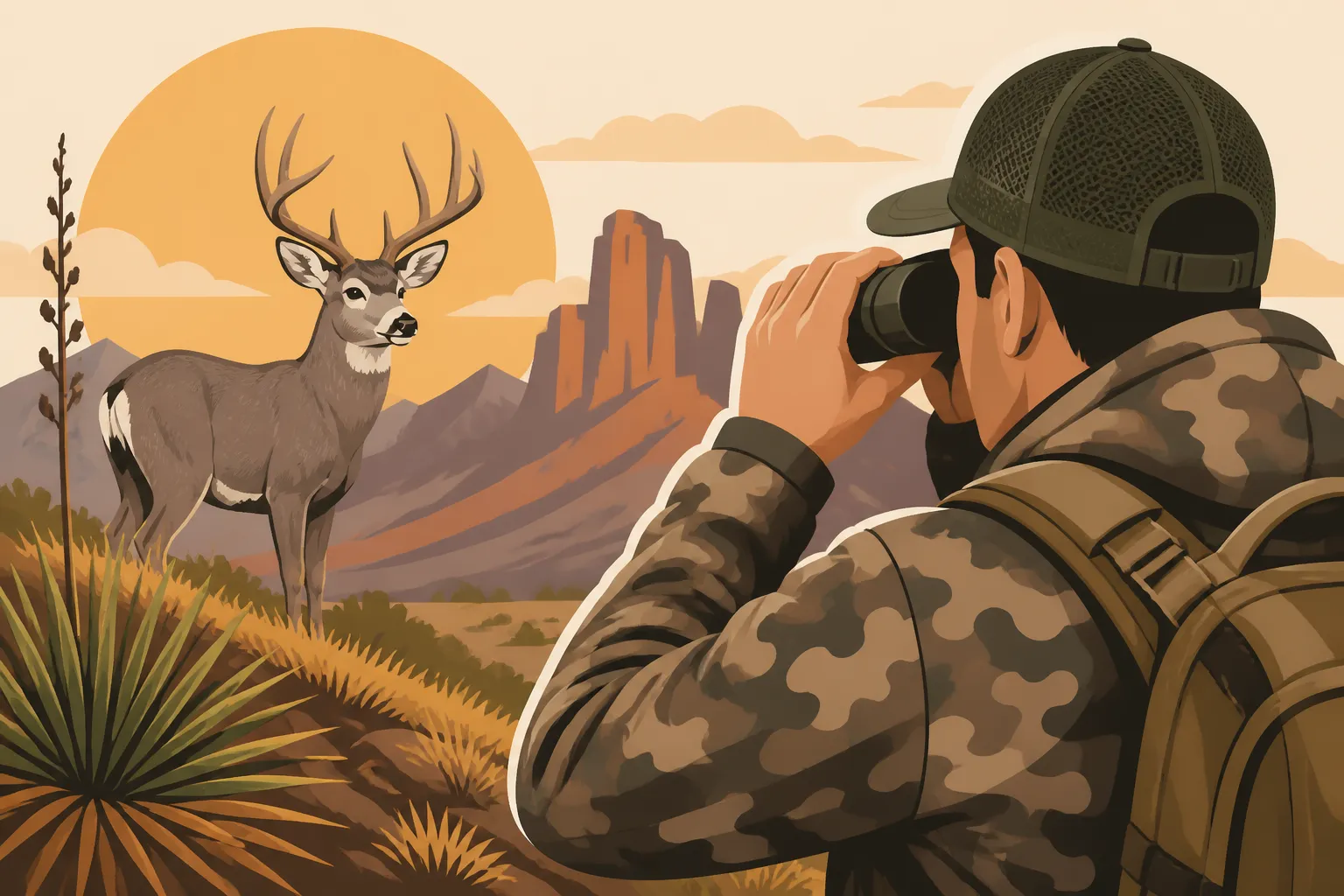
There's nothing quite like the sight of a Coues deer Ghost of the Desert dancing through the sun-drenched, broken country of southern New Mexico. But let's be honest, trying to judge that elusive little buck in the field, often glimpsed for mere seconds before he melts into the brush, can be one of the most frustrating challenges a hunter faces. His small body size, combined with the often-exaggerated perspective of distance and adrenaline, can make a solid young buck look like a Boone and Crockett contender, leading to what we lovingly call "ground shrinkage" when you walk up to him. This guide is all about giving you the tools and insights to confidently assess a Coues buck's antlers, so you can make those critical shoot-or-pass decisions with less guesswork and more informed precision.
The Unique Challenge of Judging Coues Bucks
Hunting Coues deer is a special kind of addiction, and a big part of that allure comes from how incredibly difficult they can be to spot, let alone judge. Unlike their larger mule deer cousins, Coues bucks don't give you much to work with, and the environment they call home conspires to make every assessment a puzzle.
Why Coues Deer Are So Deceptive
The primary reason Coues deer are so tricky to judge lies in their diminutive stature. These are truly miniature deer. A mature buck might weigh around 100-120 pounds, which means their antlers, while potentially impressive for their body size, are also scaled down. This small frame creates an optical illusion in the vast, open country they inhabit. A buck that appears to have a huge rack against his small body can often translate to an average spread or relatively short tines when you actually put your hands on him. It's a classic case of perspective playing tricks on your eyes, especially when you're glassing across a canyon with heat shimmer distorting your view.
Adding to the deception is their incredible speed and agility. Coues bucks rarely stand still for long. They'll pause for a moment, offer a tantalizing glimpse, and then vanish into the shadows, leaving you scrambling to get enough information for a judgment call. This fleeting opportunity means you have to be quick, but also disciplined, in your observation, resisting the urge to shoot before you've had a chance to properly size him up. The combination of small size, quick movement, and challenging terrain makes them masters of illusion.
The Elusive Nature of Coues Habitat
The typical habitat of Coues deer, particularly in New Mexico's southern ranges, is another significant factor in why judging them is so tough. We're talking about rugged, broken country, often covered in thick oak brush, juniper, and various desert scrub. Imagine trying to get a clear, unobstructed view of an animal in terrain that's constantly throwing up visual barriers – that's Coues country. This means you're frequently seeing only fragments of the buck: a flicker of antlers above the brush, a portion of his body through a small window in the vegetation, or a quick dash across a small opening.
This habitat forces you to rely heavily on good optics and patience. You might spend hours glassing a hillside, picking apart every shadow and patch of brush, hoping for that one brief moment when a buck steps out into the clear. But even then, the background can be cluttered, making it hard to discern details like antler mass or tine length accurately. The best hunters learn to work with these limited views, piecing together the puzzle over several observations, rather than trying to make a snap decision on the first glimpse. Many times, what you think you see is only part of the story, hidden by the very brush that gives these deer their refuge. For tips on navigating this kind of environment, you might find our guide on Still Hunting Oak Brush for Coues helpful.
Key Indicators for Field Judging a Coues Buck
When those precious seconds present themselves, knowing what to focus on is paramount. You need a mental checklist, a rapid-fire assessment strategy to quickly glean the crucial details that separate a mature buck from a younger one.
Antler Mass and Length
For any deer, mass is a huge indicator of age and potential score, and Coues bucks are no exception. Look for antlers that appear thick at the base, carrying that heft well up into the main beams. A younger buck will often have spindly, thin antlers, even if they're tall. Compare the thickness of the main beam near the head to the diameter of the buck's eye or the base of his ear. A truly mature buck will have a main beam that looks substantial, almost rope-like. Don't be fooled by just tines; strong mass is key.
Length is another critical factor. The main beams of a good Coues buck will typically extend well past the tips of his ears. The ears of a Coues deer are a fantastic built-in measuring tool. When a buck is alert, his ears are generally about 6-7 inches long from base to tip, and the distance between the tips when alert is often around 14-16 inches. A main beam that curls well past his ear tips is a strong sign of good length. Also, pay attention to the tines themselves. Are they long and sharp, or do they look stubby? Long tines add significant score and usually accompany good main beam length and mass.
Width and Inside Spread
While mass and length are often more important for overall score, width is what makes a buck look truly impressive to the eye. For Coues bucks, an inside spread that is equal to or wider than the ear tips (around 14-16 inches) is considered a respectable buck. Anything beyond that starts getting into trophy territory. Visualizing this can be tough, especially with a buck facing you or angled away.
Try to estimate the width relative to the width of his head and shoulders. Does the rack appear to "basket out" past his ears, or does it seem narrow and inside his ear tips? Be cautious of bucks that might have tall, but very narrow, racks. While they might have good length, a lack of spread can significantly reduce their overall appeal and score. A buck that appears to have an inside spread well past his ear tips, especially when combined with good mass and tine length, is definitely one to give a serious look. Using good optics with a clear field of view, like those discussed in Binocular Size That Survives an All-Day Session, will greatly aid this assessment.
Number of Points
Most Coues deer, like most whitetails, are typically scored as an inside spread, total length of main beams, and the length of each typical tine. While a "10-point" (5×5) is often the goal, a clean 8-point (4×4) with exceptional mass, length, and spread can easily outscore a scraggly 10-point with weak tines. Don't get fixated solely on the number of points.
When counting points, be sure to differentiate between typical tines and non-typical abnormalities like kickers or stickers. For gross typical score, only typical tines are counted. However, non-typical points can still add to the overall visual impressiveness of a buck and contribute to a gross non-typical score. Also, remember to look for eye guards (G1s). While often small, their presence and length are factored into the score. Sometimes, a buck might have a G1 on one side and not the other, or they could be broken. A quick count and assessment of the main typical tines (G2, G3, G4, etc.) is a good starting point after you've considered mass and length.
Body Size as a Reference
Using the buck's body as a reference point for his antlers is a technique that takes practice but can be very effective for judging age. Younger bucks, typically 1.5 to 2.5 years old, will have a more slender, athletic body. Their neck might appear long and thin, and their legs seem a bit gangly. As Coues bucks mature into the 3.5 to 4.5+ year range, their bodies fill out significantly. Their necks will thicken, especially during the rut, and their shoulders will become more pronounced, giving them a stockier, more powerful appearance.
When you see a buck with a thick, heavy body and a developed neck, even if his antlers don't immediately jump out as "huge," it's a strong indicator that he's a mature animal with his full antler potential. His antlers, while still relatively small compared to a mule deer, will look proportional and impressive on his filled-out frame. Conversely, a buck with a huge-looking rack on a small, slender body is likely a younger deer whose antlers are simply disproportionate, and he hasn't reached his full body or antler maturity yet. Understanding When the Coues Rut Peaks can help you recognize those body changes due to rut activity versus true age.
Practical Tips and Tools for Better Judging
No matter how many articles you read or photos you study, the real test comes in the field. But there are certainly ways to prepare and tools to employ that will dramatically improve your success.
Optics Are Your Best Friend
This really can't be stressed enough: quality optics are absolutely non-negotiable for Coues deer hunting. You're going to spend 90% of your hunt behind glass, meticulously picking apart the landscape. A good pair of 10x or 12x binoculars is essential for general scanning and initial spotting. You need something that gathers light well, has a wide field of view, and is comfortable to hold for extended periods.
Beyond binoculars, a high-quality spotting scope (20-60x or 25-75x) on a sturdy tripod is crucial for detailed evaluation. Once you've spotted a potential buck with your binos, transition to the spotting scope to zoom in and assess the rack. This is where you can really count points, judge mass, and estimate spread with much greater accuracy. Don't skimp on your optics. They are your primary tool for judging, and a cheap pair will only lead to missed opportunities and frustrations. For deeper insights, consider our article on Optics Power for New Mexico's Open Country.
Using Reference Points
As mentioned earlier, Coues deer provide some excellent natural reference points on their own bodies. The ears are your best friend. An alert Coues deer's ears are typically 6-7 inches long from base to tip, and the distance between the tips is often around 14-16 inches. Use these measurements as a mental ruler. How far do the main beams extend beyond the ear tips? Is the inside spread wider than the ear tips?
Another useful reference can be the distance from the buck's nose to the inside corner of his eye, which is a fairly consistent measurement across deer of the same species. While harder to gauge at extreme distances, it can help confirm overall scale. Remember, these are estimates, not exact measurements, but they provide a consistent framework for comparison across different bucks. It's about developing an eye for proportion against these known dimensions.
Taking Your Time
The biggest mistake many hunters make when judging a buck is rushing. Adrenaline is a powerful thing, and the urge to quickly get on the trigger can override careful assessment. Fight that urge. If the buck offers a clear shot, but you're unsure of his rack, take a breath. Watch him for as long as he allows. See if he turns, giving you different angles to evaluate. Does he drop his head to browse, revealing more of his main beams? Does he stretch, showing his body size?
If you're hunting with a partner, communicate what you're seeing. Two sets of eyes are almost always better than one. Describe the buck's features out loud to your partner, and listen to their observations. Sometimes, a different perspective can highlight something you missed. Use a technique similar to The Grid Glassing Method, Step by Step but applied to a single animal, systematically evaluating each part of the rack and body. If you're still uncertain, it's almost always better to pass and wait for another opportunity.
Practice, Practice, Practice
Field judging is a skill, and like any skill, it improves with practice. The more Coues deer you see and evaluate, the better you'll become.
Here are a few ways to hone your skills:
- Off-season scouting: Spend time in Coues country with your optics during the off-season. Spot and practice judging any deer you find, even does and fawns, to get a feel for their scale.
- Game camera photos: Review countless game camera photos. Try to judge the bucks in the photos before you see any known measurements or subsequent photos that clarify size.
- Harvest photos: Look at harvest photos of Coues bucks, both small and large. Study the angles, the light, and how they looked in the field versus how they look up close. Many hunters share these on forums or social media.
- E-scouting tools: Platforms like GoHunt provide valuable resources, including community photos and articles, that can help you understand the type of bucks taken in specific New Mexico units. You can even use their mapping features to Scouting a Unit From Satellite Imagery to identify potential Coues hot spots and visualize the terrain challenges you might face when judging. This virtual practice can be surprisingly effective for training your eye.
Common Mistakes and How to Avoid Them
Even seasoned hunters can fall victim to common pitfalls when judging Coues deer. Being aware of these traps can help you avoid them and make more accurate decisions.
The "Ground Shrinkage" Phenomenon
This is perhaps the most famous and frustrating mistake in hunting. You spot a buck across a canyon, and he looks absolutely enormous. The adrenaline surges, you take the shot, and when you walk up to him, he seems to have "shrunk." This often happens with Coues deer due to their small body size and the vast, open landscapes they frequent. A buck can appear huge against a distant backdrop, but without proper reference points, your brain can easily exaggerate his size.
To avoid ground shrinkage, consciously force yourself to use your reference points: the ears, the body size, the known dimensions of the habitat features around him. Don't let excitement rush your judgment. If you're seeing a buck across a particularly deep canyon, remember that distance often makes things appear smaller than they are, but the contrast with the small Coues body can still lead to overestimation. When in doubt, apply a little "mental shrinkage" to your initial assessment and see if the buck still looks like a shooter.
Focusing Only on Width
It's natural to be drawn to a wide set of antlers. A buck with a broad spread looks impressive, and it's often the first thing our eyes register. However, focusing solely on width can lead you to pass up a truly great buck or, conversely, shoot a lesser one. A buck with a huge width but very little mass or short tines won't score as high as a narrower buck with incredible mass and length.
For Coues deer, mass and overall main beam length often contribute more significantly to the final score than width, especially in typical scoring systems. While width is visually appealing, make sure you're giving equal, if not more, weight to the other attributes. Look for that heavy, rope-like mass at the bases that carries through the beams, and tines that are long and distinct. A well-rounded rack is usually a better indicator of a trophy than just a wide one.
Rushing the Shot
The fleeting nature of Coues deer often pressures hunters into taking a quick shot. They appear for a moment, and you feel like it's now or never. While speed can sometimes be necessary, rushing your judgment or your shot sequence is a recipe for regret. A rushed judgment can lead to ground shrinkage, while a rushed shot can lead to a missed animal or, worse, a wounded one.
Prioritize getting a clear, ethical shot and making a confident judgment. If you can't get both, it's always best to let the buck walk. There will be other deer, and another day. Patience is a virtue in Coues hunting, both in finding the deer and in making the decision to shoot. Give yourself those extra few seconds to confirm what you're seeing through your scope. Your ethical responsibility to the animal, and your personal satisfaction, will be far greater if you make a clean shot on a buck you're truly proud of after a confident assessment.
Coues Buck Field Judging Checklist
| Feature | What to Look For | Indicator of Mature/Trophy Buck |
|---|---|---|
| Body Size | Thick neck, stout shoulders, filled-out abdomen | Large, mature body, not gangly |
| Antler Mass | Thick bases, heavy main beams | Main beam diameter > eye or ear base diameter |
| Main Beam Length | Extends past ear tips, long overall curl | Well past ear tips (approx. 7 inches from base) |
| Inside Spread | Width between main beams | Equal to or wider than ear tips (approx. 14-16 inches) |
| Tine Length | Length of G2, G3, etc. | Long, distinct, and proportionate to main beam |
| Point Count | Number of typical points (G1, G2, G3, G4) | 4×4 or 5×5 with good length and mass is excellent; don't chase points alone |
| Eyeguards (G1) | Present and of decent length | Adds to score; often small but distinct |
| Abnormal Points | Kickers, stickers, drops | Can add character and non-typical score; consider overall balance |
| Overall Impression | Rack looks "heavy" and proportional to a mature body | Balanced, impressive rack that stands out |
Remember, successful Coues deer hunting requires a keen eye, good equipment, and a whole lot of patience. Keep practicing, learn from every animal you see, and you'll soon be judging these magnificent desert ghosts with confidence. For more on New Mexico's various deer, read our piece on Coues Deer in New Mexico's Bootheel.
Disclaimer
This article is for general informational purposes only and does not constitute professional advice. Laws, prices and regulations vary by location and change over time. Consult a qualified professional for guidance on your specific situation.