Mule Deer Population Trends Across the Southwest
It’s a frustrating truth for many of us who chase mule deer across the vast landscapes of the Southwest: one year the population seems robust, deer are everywhere, and the next, it feels like they’ve simply vanished. This roller-coaster ride of mule deer numbers isn't just a figment of our imagination; it's a complex reality shaped by a myriad of environmental and management factors. This guide will dive deep into the specific population trends affecting mule deer in New Mexico and the broader Southwest, exploring the reasons behind the fluctuations and what we, as hunters and conservationists, can do.
Understanding the Southwest's Unique Challenges for Mule Deer
The American Southwest is a land of extremes, and for mule deer, these extremes define their existence. Unlike their whitetail cousins who thrive in more stable, lush environments, mule deer in these arid lands are constantly navigating a delicate balance, and their populations reflect this precarious situation. When conditions are good, they can rebound remarkably, but when the pendulum swings the other way, numbers can plummet rapidly, leaving hunters scratching their heads and wildlife managers scrambling.
Arid Landscapes and Water Scarcity
Perhaps no single factor influences mule deer populations in the Southwest as profoundly as water. We're talking about vast stretches of country where annual rainfall can vary wildly, often dictating the quality and quantity of forage available. A couple of dry years in a row can decimate fawn survival rates, as does and fawns struggle to find enough nutritious feed to support lactation and growth. This isn't just about standing water for them to drink, though that's crucial too. It's about the very plants they rely on for food, which wither and become less palatable without adequate moisture. Think about trying to find lush browse in a truly dry year; it’s like searching for a needle in a haystack. This makes Water Sources and Ethics in Desert Hunting an incredibly important consideration for any hunter in these regions, as deer naturally gravitate to the limited water available.
When these conditions persist, the deer are weaker, less able to escape predators, and more susceptible to disease. Their movements become concentrated around dwindling water and forage, leading to increased pressure on those limited resources. This can create a downward spiral that takes years, even decades, to reverse, even with a few good rain years thrown in.
Habitat Fragmentation and Development
Beyond the natural harshness of the desert, human development poses an ever-growing threat to mule deer habitats. From sprawling urban areas on the fringes of traditional deer country to the relentless march of energy development (think oil and gas fields, solar farms, wind turbines), mule deer are finding their historical ranges sliced and diced. New roads, fences, and human activity disrupt ancient migration corridors and fragment critical winter and summer ranges. A new highway, for instance, might cut off deer from essential water sources or escape cover, forcing them into less ideal habitats or making them more vulnerable to vehicle collisions.
Even within public lands, increased recreational use can push deer into more secluded, often less productive, areas. Fences, intended for livestock, can become impassable barriers for deer, hindering their ability to move freely in search of food and water, especially during drought conditions. This constant encroachment means that even when other factors are favorable, the amount of quality, connected habitat available for mule deer is shrinking, putting a cap on how high populations can truly climb.
Key Factors Influencing Mule Deer Populations
Understanding the big picture of mule deer population trends requires looking at several interwoven threads. It’s never just one thing that causes a population boom or bust; it's a dynamic interplay of environmental pressures, biological factors, and human influence.
The Impact of Drought and Weather Patterns
Let's circle back to weather, because it really is the kingmaker (or king-breaker) for mule deer in the Southwest. Consecutive years of drought are perhaps the most significant predictor of declining deer numbers. When the rains don't come, the landscape turns brown. Grasses don't grow, forbs are scarce, and even woody browse becomes stressed and nutrient-poor. This directly impacts the does, who need ample nutrition to conceive, carry fawns to term, and then produce enough milk for their offspring.
If does enter the winter in poor condition, their fawn crops suffer, or they may not even breed at all. When fawns are born, they need high-quality forage to grow quickly and develop the strength to evade predators. In dry years, fawn survival can be alarmingly low. We often hear wildlife biologists discussing Why Fawn Ratios Predict Next Season, and it's precisely because those little fawns represent the future of the herd. A year with poor fawn recruitment means fewer young deer entering the breeding population in two to three years. On the flip side, good monsoon rains can lead to an explosion of forage, boosting fawn survival and the overall health of the herd, even influencing How Monsoon Rain Affects Antler Growth in the bucks by providing better nutrition. This cycle of feast and famine, driven by precipitation, is central to understanding How Drought Affects Desert Deer Numbers.
Predation Pressure
Predators are a natural part of the ecosystem, but their impact on mule deer populations can become magnified when deer are already stressed by other factors. Mountain lions, coyotes, and even black bears (especially on fawns) exert pressure on deer. In a healthy, robust deer population, predation is a manageable factor that culls the weak and helps maintain balance. However, when deer numbers are low due to drought or habitat loss, predation can become a much more significant impediment to recovery.
Imagine a scenario where a unit has suffered several dry years, fawn crops have been minimal, and the remaining deer are concentrated in smaller areas. Now, add a healthy population of predators, and the recovery becomes even harder. This is why Predator Management and Deer Recovery is often a contentious but necessary discussion among wildlife managers and hunters. It's not about eradication, but about understanding the balance and, in some cases, intervening to give deer populations a chance to rebound when they are at their most vulnerable.
Disease and Competition
Like any wildlife population, mule deer are susceptible to various diseases, some of which can have localized impacts. Chronic Wasting Disease (CWD) is a persistent concern, though its prevalence varies by region. While not currently causing widespread population collapses in the Southwest, it remains a threat that wildlife agencies monitor closely. Other issues like blue tongue or epizootic hemorrhagic disease (EHD) can flare up in certain years, often tied to insect vectors and warmer, wetter conditions, causing localized die-offs.
Competition with other ungulates, both wild and domestic, also plays a role. In some areas, an overabundance of elk or domestic livestock can compete with mule deer for critical forage, especially during dry periods. While deer, elk, and cattle often have different dietary preferences, there's always an overlap, and when resources are scarce, any competition can negatively impact deer health and reproductive success. These complexities are often detailed in documents like Reading a Herd Unit Management Plan, which guides state agencies' efforts to manage all species in a given area.
Hunter Harvest and Management Strategies
Hunting is often perceived as a major factor in deer populations, and while it plays a role, it’s usually less significant than habitat, weather, or predation in the long-term trends of mule deer in the Southwest. Wildlife agencies set harvest quotas and season structures carefully, usually targeting specific buck-to-doe ratios and ensuring that enough mature bucks are left for breeding. The number of tags issued is directly tied to population estimates and management goals.
In New Mexico, for example, the Game and Fish Department uses harvest data, aerial surveys, and field observations to make informed decisions about tag allocations. When populations are struggling, tag numbers are often reduced, and vice versa. It’s a dynamic process, and your participation in reporting your harvest is a critical piece of that puzzle. If you're looking for detailed historical data to help understand a unit's potential, resources like GoHunt offer incredible depth, allowing you to analyze past success rates and population metrics. This helps us ensure that hunting remains a sustainable activity, contributing to conservation rather than detracting from it.
Regional Spotlights: New Mexico and Beyond
The term "Southwest" covers a vast and varied landscape, and mule deer trends, while sharing common themes, can look quite different from one state or even one unit to the next. New Mexico, with its diverse terrain, offers a microcosm of these broader regional patterns.
New Mexico's Diverse Mule Deer Habitats
New Mexico is a land of incredible contrasts, from the high, timbered mountains in the north to the arid, rocky deserts of the south. This diversity means mule deer populations behave differently depending on where they live. In the northern mountains, like parts of the Carson National Forest or the Sangre de Cristo range, mule deer often benefit from more consistent moisture and higher elevation forage. Here, the primary concerns might be severe winters, habitat changes from wildfire, or predation. These areas are where you might find Where Mule Deer Range in Northern Units.
However, as you move south into the vast expanses of the Chihuahuan Desert or the rugged Gila country, the mule deer face an entirely different set of challenges. Here, water is king, and populations are much more sensitive to drought cycles. These are the regions where you encounter Desert Mule Deer in the Southern Units, animals adapted to harsh conditions but still profoundly impacted by a lack of rain. Hunters often use tools like GoHunt to pore over unit-specific data, looking for insights into how these varied conditions affect mule deer numbers in areas like Units 2B or 2C versus the extreme southern units.
Comparing Trends Across Southwest States
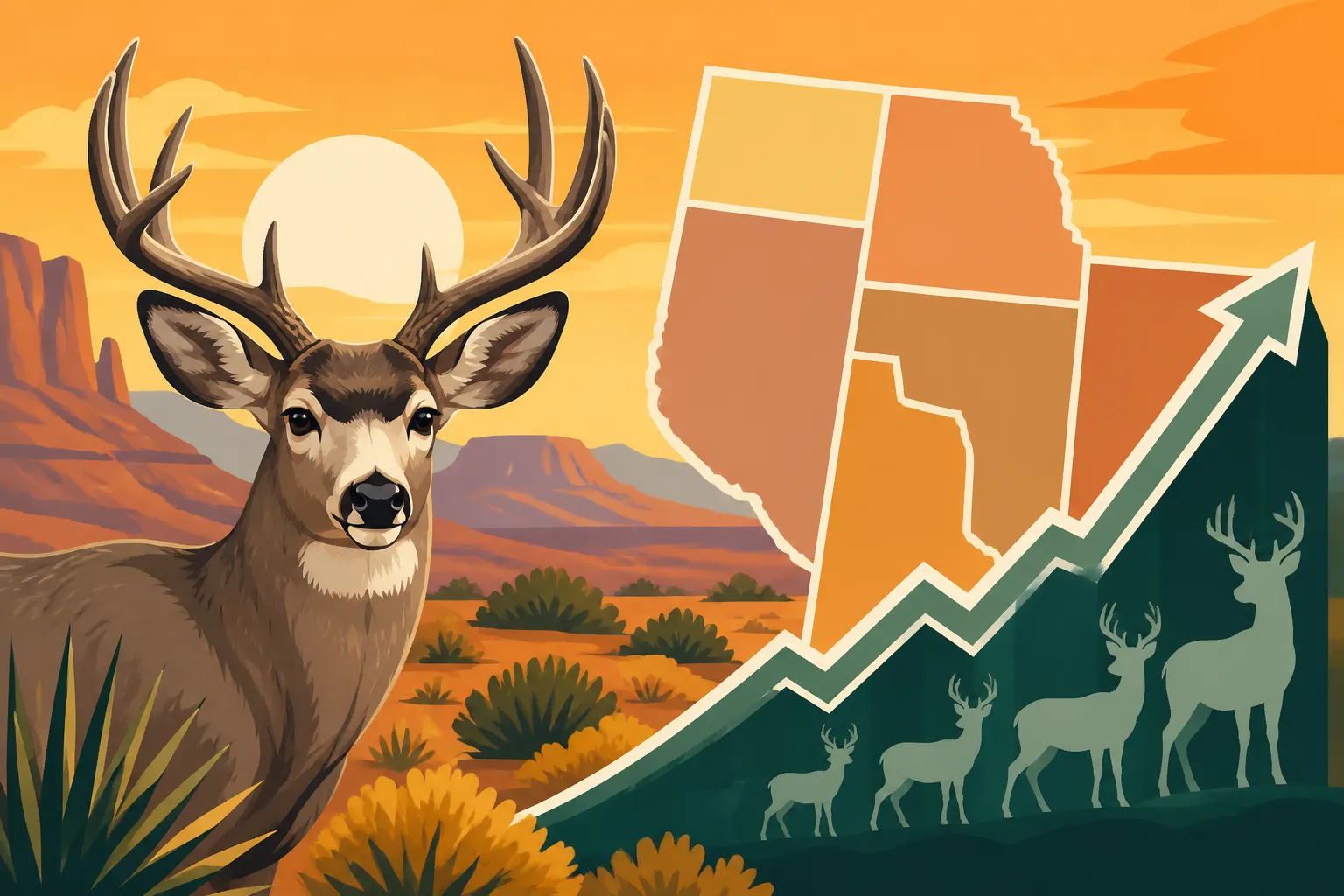
While New Mexico's mule deer face unique challenges, their struggles and successes often mirror those in neighboring states like Arizona, Utah, and even parts of Colorado. Across the entire Southwest, drought is a common culprit for declines. For instance, Arizona's mule deer in the lower desert often experience similar boom-and-bust cycles tied directly to rainfall. Utah's mule deer, while generally higher in population, still feel the pinch of prolonged drought in their traditional winter ranges.
The trends often show a regional pattern: a severe multi-year drought across the entire Four Corners area will likely impact deer in all those states. Conversely, a few years of exceptional moisture can spark a region-wide rebound. Platforms like GoHunt become invaluable for hunters who apply in multiple states or simply want a broader understanding of mule deer health across the region. They provide data that helps identify these larger trends, offering a clearer picture than just focusing on a single state's numbers.
Here’s a simplified look at some common factors and their general impact on mule deer populations in the Southwest:
| Factor | General Impact on Mule Deer Populations |
|---|---|
| Prolonged Drought | Negative: Reduced forage, poor fawn survival, decreased body condition, concentrated animals. |
| Exceptional Rainfall | Positive: Abundant forage, high fawn survival, improved body condition, population growth. |
| Habitat Loss/Fragmentation | Negative: Restricted movement, reduced carrying capacity, increased stress, isolation of herds. |
| High Predator Numbers | Negative: Increased fawn mortality, pressure on adult deer, especially in stressed populations. |
| Disease Outbreaks | Negative: Localized die-offs, reduced population health, can spread if not managed. |
| Overgrazing (Livestock/Elk) | Negative: Competition for forage, reduced food availability for deer, habitat degradation. |
| Managed Hunting | Neutral/Slightly Negative: Removes individuals, but populations generally remain healthy when managed well. |
What Hunters Can Do: Conservation and Management
It's easy to feel helpless when facing such complex, large-scale issues like mule deer population trends. But as hunters, we are often the most passionate advocates and the primary funding source for wildlife conservation. Our actions, both individually and collectively, have a tangible impact on the future of mule deer in the Southwest.
Supporting Research and Advocacy
One of the most powerful things we can do is support the organizations and agencies dedicated to mule deer research and habitat improvement. Groups like the Mule Deer Foundation work tirelessly to fund habitat projects, advocate for sensible land management policies, and educate the public about the challenges mule deer face. Your hunting license fees directly contribute to state wildlife agencies, which are on the front lines of managing these herds.
Beyond direct financial support, being an informed advocate matters. Understanding the data, staying abreast of legislative changes, and participating in public comment periods for game and fish proposals helps ensure that wildlife management decisions are based on sound science and long-term sustainability. Utilizing platforms like GoHunt that compile and present detailed herd data can help you stay informed and support data-driven conservation efforts.
Responsible Hunting Practices and Data Contribution
Every time you head afield with a deer tag, you're not just pursuing an animal; you're also part of the management puzzle. Practicing ethical hunting, understanding the regulations, and making clean, swift kills are fundamental. But equally important is participating in harvest reporting. When you fill out that mandatory report after tagging a buck, you're providing crucial data to wildlife biologists. They use this information, combined with field surveys and observation data, to calculate harvest success rates, track buck-to-doe ratios, and estimate population numbers. This helps them refine future tag allocations and adapt management strategies.
If you don't report your harvest, that's a missing piece of information that makes their job harder. It’s a small, easy step that makes a huge difference. Think of it as your direct contribution to mule deer conservation, helping ensure accurate information is used to manage the herd. You can often find comprehensive harvest data on the New Mexico Game and Fish website, or through specialized platforms that pull this data into user-friendly formats. Where New Mexico Publishes Harvest Data is an excellent resource for this.
Leveraging Data for Better Hunts
In today's age, information is power, and that's especially true for hunting. Gone are the days when you relied solely on word-of-mouth or a quick glance at a topo map. Now, sophisticated e-scouting tools and data platforms are at our fingertips. Before you even apply for a tag, you can delve deep into unit-specific data. This includes historical draw odds, harvest success rates, habitat types, and even population trends like fawn-to-doe ratios, which, as we discussed, are key indicators of herd health and future potential. This is where tools like GoHunt shine, providing comprehensive data that can help you strategize your application.
For example, you can research Mule Deer Across New Mexico's High Country and Desert and compare specific units' performance over the last decade. You might notice that a particular unit known for its big bucks has seen a drop in fawn ratios over the last three years, suggesting a potential dip in the overall population in the near future. Or perhaps a unit that has historically been tough to draw is showing an uptick in harvest success, indicating a healthy and growing herd. This level of detail allows you to make more informed decisions when choosing units, especially if you're trying to figure out Which Rifle Season Suits a First New Mexico Hunt or looking for units with better long-term prospects. This approach isn't just about drawing a tag; it's about making a responsible, data-backed choice that aligns with conservation and increases your chances of a successful and fulfilling hunt. It's a key part of effective E-Scouting a New Mexico Unit Before the Season.
Disclaimer
This article is for general informational purposes only and does not constitute professional advice. Laws, prices and regulations vary by location and change over time. Consult a qualified professional for guidance on your specific situation.