Merriam’s Turkey Through New Mexico Timber
There's nothing quite like the sound of a distant gobble echoing through New Mexico's vast timber country. For many hunters, the pursuit of Merriam's turkey in these high-elevation pine forests presents a unique and incredibly rewarding challenge. It's not just about harvesting a bird; it's about immersing yourself in some of the most beautiful and rugged landscapes the state has to offer, often facing unpredictable weather and crafty birds. This guide aims to pull back the curtain on hunting Merriam's turkey in New Mexico, offering seasoned insights into their habits, habitats, and how to put a tag on one of these magnificent birds.
The Allure of Merriam's in New Mexico Timber
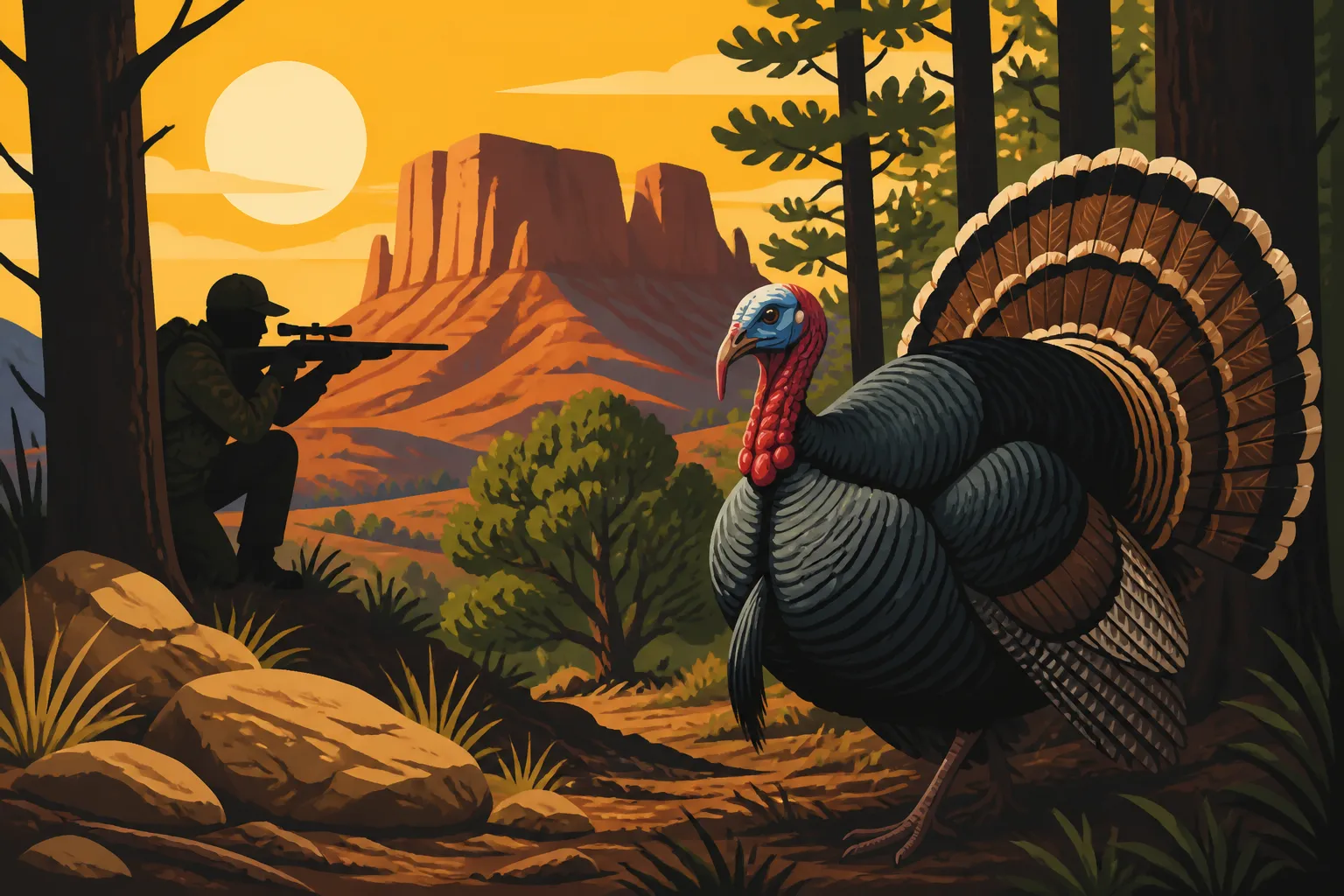
Merriam's turkeys are truly a gem of the American West, and New Mexico is blessed with a healthy population of these striking birds. Unlike their Eastern or Rio Grande cousins, Merriam's typically inhabit higher elevations, thriving in the ponderosa pine, mixed conifer, and even aspen forests that drape across our mountain ranges. Their distinct white-tipped tail feathers and iridescent blue and bronze body plumage make them a breathtaking sight, especially when fanned out in a full strut against a backdrop of towering pines.
What Makes Merriam's So Special
Hunting Merriam's isn't just a hunt; it's an experience rooted in the landscape itself. These birds are known for their strong gobbling activity, particularly in the crisp mountain air, which is a key part of their appeal. Hearing a thunderous gobble break the silence of a canyon at dawn can send shivers down your spine and ignite a primal excitement that few other hunts can match. It's a testament to the wildness of New Mexico that these birds thrive in such rugged and often remote country. Their wariness, keen eyesight, and often-challenging terrain make them a formidable quarry, ensuring that success feels hard-earned and deeply satisfying.
The Unique Challenges of Mountain Turkey Hunting
Don't let anyone tell you turkey hunting is easy, especially not for Merriam's in New Mexico. The terrain itself is often the biggest obstacle. You'll find yourself navigating steep inclines, rocky slopes, and dense timber, often at elevations where the air is noticeably thinner. Physical conditioning is absolutely crucial for these hunts, as you'll spend hours covering ground, often chasing distant gobblers or trying to cut off birds moving through a canyon. Beyond the physical demands, the weather can be incredibly fickle. A warm, sunny morning can quickly give way to a sudden snow squall or a chilling rain, making proper layering and preparation essential. This isn't a sit-and-wait kind of turkey hunt; it's an active, physically demanding pursuit that tests your resolve as much as your calling skills.
Merriam's Habitat and Preferred New Mexico Terrain
To consistently find Merriam's turkeys in New Mexico, you first need to understand where they prefer to live. Their habitat selection is quite specific, heavily influenced by elevation, forest type, and the availability of food and water. This understanding forms the foundation of any successful scouting or hunting strategy.
High-Elevation Pine and Mixed Conifer Forests
Merriam's turkeys are quintessential mountain dwellers. You'll primarily find them ranging from about 6,000 feet up to 10,000 feet, sometimes even higher. Their preferred habitats are dominated by ponderosa pine forests, often intermixed with Douglas fir, white fir, blue spruce, and aspen stands. These areas provide the perfect blend of tall trees for roosting, open understories for strutting and feeding, and dense cover for escape. Look for areas with a mosaic of these forest types, particularly where open meadows or clearings break up the timber. These openings are crucial for strutting gobblers and for hens to feed. If you're looking at a map, focus on the green, forested areas of mountain ranges rather than the open desert or plains. For a broader understanding of how different elevations impact hunting, you might find insight in our guide on Hunting New Mexico From 4,000 Feet to 10,000.
Critical Water Sources and Roosting Habitat
Just like any other wildlife, Merriam's turkeys rely heavily on reliable water sources, especially in New Mexico's often-arid climate. While they can get some moisture from dew and insects, they will frequent springs, seeps, stock tanks, and streams. During drier periods, these water sources become absolute magnets for birds, so scouting them out ahead of time is critical. Look for areas with fresh tracks around these water points.
As for roosting, Merriam's prefer tall, mature trees with strong, horizontal limbs that provide a secure perch high above the ground. Ponderosa pines are often prime roosting trees due to their height and structure, but large firs and aspens can also be used. They typically roost in groups, especially during the breeding season, often in protected areas like canyon bottoms or along ridges that offer a good vantage point. Locating these communal roost sites is a huge advantage, as it tells you exactly where the birds will be at dawn and dusk. Keep an eye out for droppings and feathers at the base of large trees – tell-tale signs of a well-used roost.
Decoding Merriam's Behavior and Seasonal Patterns
Understanding the annual and daily rhythms of Merriam's turkeys is paramount to a successful hunt. Their behavior changes significantly throughout the year, but particularly during the spring breeding season when they become most vocal and visible.
Spring Breeding Behavior and Gobbling Activity
Spring is prime turkey hunting season in New Mexico, largely because it's when the birds are focused on breeding. This is when gobblers are most vocal, using their loud calls to attract hens and challenge rival males. Gobbling activity tends to be highest right off the roost at dawn, as birds announce their presence. It can also pick up again in late morning or early afternoon after hens have dispersed to nest, and then again leading up to dusk as birds prepare to roost.
Hens play a crucial role in dictating gobbler behavior. Early in the season, gobblers might be "henned up," meaning they are with a group of hens and are less likely to respond aggressively to a hunter's calls. As the season progresses and hens start to sit on nests, gobblers become more solitary and often more receptive to calling, desperate to find an un-bred hen. This transition is a critical window for hunters. Pay attention to local reports and the general progression of spring in your area; a late spring might mean hens are receptive longer, while an early spring could mean they're nesting sooner.
Daily Routines: Roost, Feed, Strut, and Water
Merriam's turkeys follow a fairly predictable daily routine, which, once you understand it, helps you anticipate their movements.
- Roost to Fly Down: Just before dawn, birds will start to "tree talk" from their roosts, often giving soft clucks and yelps. As light breaks, gobblers will often let out thunderous gobbles. At fly-down, which happens soon after, birds hit the ground, typically heading straight to an open area to feed or for gobblers to strut.
- Morning Feeding and Strutting: After fly-down, birds disperse. Hens will feed on insects, grasses, and seeds. Gobblers will actively strut in open areas – meadows, logging roads, ridge tops – trying to attract those hens. This is a great time to intercept a bird if you've done your E-Scouting a New Mexico Unit Before the Season and know potential strut zones.
- Midday Lull and Movement: The mid-morning can see a lull in gobbling as birds feed and move through the timber. This is often when hens go to their nests. Gobblers might still be strutting, but often in more secluded spots, or they might move to water sources. This is a good time for a patient hunter to cover ground, trying to locate new birds or follow sign.
- Afternoon Re-Group and Roosting: In the late afternoon, birds often start to group up again, feeding and slowly making their way back towards their roosting areas. Gobbling can pick up again as they approach the roost. Being in position to "put birds to bed" – locating their roost for the next morning's hunt – is a highly effective strategy.
Understanding these daily patterns allows you to position yourself strategically throughout the day, rather than just blindly wandering the woods hoping for a chance encounter.
| Activity | Timing (Approx.) | Gobbler Behavior | Hunter Strategy |
|---|---|---|---|
| Roosting | Pre-dawn | Tree-talking, first gobbles | Get to a known roost silently, listen for calls. |
| Fly-down | Dawn | Birds hit the ground, often gobbling | Set up 100-200 yards from roost, call gently. |
| Strutting | Early-mid morn | Displaying in open areas | Locate strut zones, try to draw gobbler away from hens. |
| Feeding | All day | Foraging for insects, seeds, plants | Move cautiously through feeding areas, look for fresh sign. |
| Watering | Midday, late day | Visiting springs, seeps | Stake out active water sources, especially in dry conditions. |
| Re-Roosting | Late afternoon | Moving to roost, last gobbles | Locate new roosts for next morning, listen at dusk. |
Strategic Scouting and E-Scouting for Gobblers
Before you even step foot in the woods with your shotgun or bow, a solid scouting plan is critical for Merriam's turkeys in New Mexico. This combines both modern technology (e-scouting) and good old-fashioned boots-on-the-ground reconnaissance.
Using Technology for Pre-Season Planning
Today's digital tools are game-changers for turkey hunters. Platforms like GoHunt, Gaia GPS, or onX Maps allow you to pour over satellite imagery, topographical maps, and public land boundaries right from your living room.
- Identify Potential Roosts: Look for mature timber stands, especially on protected slopes or canyon edges. You're looking for clusters of tall pines or firs.
- Pinpoint Strutting Zones: Seek out open meadows, logging clearings, old burn areas, or logging roads within or adjacent to heavy timber. These are the stages where gobblers display.
- Locate Water Sources: Mark springs, seeps, stock tanks, and intermittent streams. These are crucial, especially as the season progresses and things dry out. Our article on Finding Water in New Mexico's Dry Country has more tips on this.
- Map Travel Corridors: Identify saddles, benches, and ridge lines that birds might use to travel between roosting, feeding, and watering areas. Use topography to understand how birds might move through the terrain.
- Public Land Access: Double-check property boundaries. New Mexico offers a vast amount of public land for hunting, and tools like GoHunt can clearly delineate between public and private. Knowing where you can legally walk and hunt is crucial. Our guide on New Mexico Holds Over 30 Million Acres of Public Hunting Land provides more context.
E-scouting helps you narrow down vast landscapes to manageable, high-potential areas, saving you valuable time and effort once you're in the field. Don't forget to study the New Mexico Turkey Season Dates for your chosen unit to align your scouting with prime times.
Boots-on-the-Ground Reconnaissance
As helpful as e-scouting is, there's no substitute for getting your boots dirty. Actual in-field scouting is where you confirm your digital hunches and discover fresh sign.
- Listen for Gobbles: The most obvious sign of turkeys is hearing them. Drive forest service roads (respecting any Reading a Forest Service Road Map closures), pull over, and listen, especially around dawn and dusk. Use locator calls (owl hoots, coyote howls, crow caws) to provoke shock gobbles.
- Look for Physical Sign:
- Tracks: Look for three-toed tracks in soft dirt, especially near water, roads, and trail edges. Large, distinct tracks indicate gobblers.
- Droppings: Gobbler droppings are typically J-shaped, while hen droppings are more coiled. Finding fresh droppings confirms recent activity.
- Feathers: Look for body feathers in feeding areas or white-tipped tail feathers around strutting zones. Roost trees often have a collection of feathers and droppings directly underneath.
- Dust Bowls: Turkeys love to take dust baths to rid themselves of parasites. These shallow depressions in soft dirt are a clear sign of recent presence.
- Pre-Season Timing: Try to scout a week or two before the season opens, if possible. This gives you current information on where birds are roosting and strutting without disturbing them too much right before your hunt. It allows you to focus your efforts on hot spots rather than wasting precious hunting time searching.
Effective Calling and Hunting Tactics in New Mexico
Once you've located some birds, the real game begins. Calling and tactical approaches are what will ultimately bring a Merriam's gobbler within range. This is where patience, subtlety, and an understanding of turkey vocalizations truly shine.
Mastering the Art of Calling Merriam's
Calling Merriam's turkeys is an art form that requires practice and timing. Unlike some other subspecies, Merriam's can sometimes be more responsive to soft, subtle calls, especially in heavily hunted areas.
- Locator Calls: Start your day with locator calls (owl hooters, crow calls, coyote howlers) to pinpoint gobblers on the roost. This allows you to close the distance before fly-down.
- Soft Tree Yelps: Once you hear a gobbler on the roost, use very soft, convincing tree yelps and clucks. Don't overdo it. You're trying to sound like a hen waking up, not an alarm clock.
- Fly-Down Cackle: After the gobbler flies down, you can imitate the sound of a hen flying off the roost with a cackle. Then go silent for a bit, let the woods wake up.
- Basic Yelp and Cluck Sequences: These are your bread and butter. Vary the cadence and volume. You want to sound like a natural hen. Less can often be more.
- Purrs and Putts: These are soft, contented calls that can be incredibly effective when a gobbler is close but hanging up. They suggest an unalarmed hen.
- Cutting: This is a series of sharp, fast yelps. Use it to aggressively challenge a gobbler or to get his attention if he's not responding to softer calls. Be careful not to sound too aggressive too often.
Remember that Merriam's in timber often have excellent hearing, but they also have many obstacles between you and them. Don't be afraid to experiment with different calls and volumes based on the bird's response. Sometimes, a subtle approach can be far more effective than an aggressive one, especially if you think the bird is nearing you.
Strategic Setups and Approaching Gobblers
Setting up correctly is just as important as your calling. A poor setup can ruin a hunt even with perfect calling.
- The "Gobbler's Obstacle" Setup: Always try to set up with an obstacle between you and the direction you expect the gobbler to come from. This could be a small rise, a downed log, or a cluster of trees. This forces the gobbler to come over or around it, giving you a few extra seconds to get your gun up as he clears the obstacle.
- Back to a Tree: Always sit with your back against a tree that's wider than your shoulders. This breaks up your outline and protects you from any potential approach from behind.
- Decoy Placement: If using decoys, place them where the gobbler can see them from a distance, but not so close that he can spot you moving to get ready. Often, 20-30 yards from your position is ideal. Position a hen decoy facing slightly away from you, as if she's about to walk off – this encourages the gobbler to approach to cut her off. Some hunters also use a jake or gobbler decoy to provoke a fight.
- Patience and Stealth: Turkeys have incredible eyesight. Minimize movement. Wear full camouflage, including a head net and gloves. When you hear a gobbler, resist the urge to move too quickly. Often, waiting him out will draw him closer. In timbered terrain, you can sometimes use the contours of the land to make a move, Playing Thermals on a Canyon Stalk or using draws and benches to gain an advantage. This might involve still-hunting or making a short, quick stalk when the bird is out of sight or gobbling.
The key is to think like a turkey: where would they strut, what path would they take, and what would make a hen sound realistic? By putting yourself in their shoes (or talons), you can often anticipate their movements and set up for success.
Essential Gear for Your New Mexico Turkey Adventure
Preparing for a Merriam's hunt in New Mexico involves more than just your firearm and calls. The rugged terrain and variable weather demand a well-thought-out gear list to ensure comfort, safety, and success.
Clothing and Footwear for Mountain Terrain
Layering is non-negotiable for spring turkey hunting in New Mexico. Mornings can be freezing, especially at higher elevations, but midday can warm up quickly.
- Base Layers: Start with moisture-wicking synthetic or merino wool base layers to manage sweat.
- Mid-Layers: Fleece or synthetic insulation layers provide warmth.
- Outer Layer: A good quality, quiet camouflage outer shell that is water and wind-resistant. Make sure it's breathable for those uphill climbs. Consider our insights on Layering for Gila Temperature Swings for more ideas.
- Rain Gear: A lightweight, packable rain jacket and pants are essential. Mountain weather can change in an instant.
- Headwear: A warm beanie for cold mornings and a camo ball cap or full headnet for concealment.
- Gloves: Lightweight camo gloves for concealment and warmth.
- Footwear: Sturdy, waterproof hiking boots with good ankle support are crucial for navigating uneven, rocky, and steep terrain. You'll be covering miles, so comfort and durability are paramount. Make sure they are well broken-in.
Remember, quiet fabrics are key. The rustle of synthetic pants can carry a long way in still timber.
Optics, Navigation, and Safety Equipment
Beyond your clothing, several other items are critical for a safe and effective hunt.
- Binoculars: A good pair of 8x or 10x binoculars is invaluable for glassing distant ridges, identifying subtle movement, and confirming turkey identities without unnecessary movement.
- GPS or Mapping App: A handheld GPS unit or a reliable mapping app on your phone (like GoHunt's map features) is essential for navigation. You'll be traversing unfamiliar timber and canyons, and getting lost can be dangerous. Download offline maps before you go.
- Compass and Map: Always carry a physical compass and paper map as a backup, especially in areas with no cell service.
- Headlamp: A powerful headlamp with a red light option (to preserve night vision) is vital for navigating in the dark before dawn and after dusk.
- First-Aid Kit: A compact but comprehensive first-aid kit for minor cuts, blisters, and other common field injuries.
- Water and Snacks: Pack plenty of water, even more than you think you'll need, especially during active hunts. High-energy snacks like trail mix, granola bars, and jerky are great for keeping your energy up.
- Emergency Whistle/Signal Mirror: For signaling in an emergency.
- Blaze Orange: While often not required for archery-only turkey seasons, always check the Blaze Orange Requirements Through the Season for your specific hunt code. If rifle seasons are open simultaneously for other species, blaze orange may be mandatory. Even if not required, carrying a blaze orange vest to put on when walking out after a successful hunt or in areas of high pressure is a smart safety practice.
Being well-prepared not only increases your chances of success but also ensures a safer and more enjoyable experience in New Mexico's beautiful but demanding Merriam's turkey country.
New Mexico Turkey Season Structure
Understanding the regulatory framework for turkey hunting in New Mexico is crucial. The seasons are designed to coincide with the spring breeding period, offering hunters opportunities through both archery and shotgun seasons.
Archery and Shotgun Season Dates
New Mexico typically offers spring turkey seasons that run from April into May, with specific dates varying slightly by year and hunt unit. There are usually dedicated archery-only periods, followed by mixed seasons where shotguns are also permitted. Always consult the official New Mexico Game and Fish "Rules & Information Booklet" for the most current and exact dates for the units you plan to hunt. This document also contains vital information such as Reading a New Mexico Hunt Code Before You Apply. It’s important to note that turkey hunting is generally limited to specific legal shooting hours, so be sure to review New Mexico Legal Shooting Hours for Big Game to ensure you're always hunting within legal times.
Bag Limits and Licensing Requirements
The bag limit for spring turkey in New Mexico is typically one bearded turkey per hunter per license year, though this can vary so always confirm. A "bearded turkey" can be either a gobbler or a hen with a visible beard.
To hunt turkey in New Mexico, residents and non-residents alike must possess a valid Game Hunting License. In addition, you'll need a specific turkey tag or stamp, often referred to as a "Turkey License." Hunters on federal lands (like National Forests or BLM areas) will also need a Habitat Management & Access Validation (HMAV) and a Habitat Stamp. It's always a good practice to review all required licenses and validations well in advance of your hunt to avoid any last-minute surprises or delays. Ensure you have all necessary documentation printed and readily available in the field, along with any relevant tags affixed to your bird immediately upon harvest.
Disclaimer
This article is for general informational purposes only and does not constitute professional advice. Laws, prices and regulations vary by location and change over time. Consult a qualified professional for guidance on your specific situation.