Judging Coues Against Mule Deer
It’s a tale as old as time for many New Mexico hunters: you’re glassing a distant ridge, and a deer pops into view. Your heart rate jumps, but then the classic question hits – is that a Mule deer, or is it a Coues? Distinguishing between these two magnificent species, especially in the vast and varied landscapes of our state, can be genuinely frustrating, even for those of us who have spent decades afield. This guide will meticulously break down the unique characteristics, habitats, and behaviors of Coues deer and Mule deer to help you make confident identifications when it matters most.
The Challenge of Identification in New Mexico
New Mexico is a treasure trove of hunting opportunities, but it also presents some unique challenges, not least of which is correctly identifying the deer species you're looking at. The subtle differences between Coues deer and Mule deer can blur, especially when distance, terrain, and light conditions play tricks on your eyes. It’s a common scenario that has led to many a second guess, and sometimes, a missed opportunity or a misidentified trophy.
Shared Habitats and Overlapping Ranges
One of the primary reasons for this confusion stems from the fact that both Coues deer and Mule deer can, and often do, inhabit similar transitional zones within New Mexico. While Coues deer are typically associated with the rugged "bootheel" ranges and southern mountains, and Mule deer are more widespread, particularly in the state's northern and eastern expanses, there's a significant overlap. You might find Mule deer in the foothills of mountains that eventually transition into classic Coues country further south. Units in the southwestern part of the state, such as areas around Silver City or even segments of the Gila National Forest at lower elevations, can sometimes host both. This geographical overlap means you can’t always rely solely on your location as a definitive identifier. It forces you to rely on physical characteristics, which can be tougher than it sounds.
Subtle Differences in Body and Antler Structure
When you’re looking at a deer through your binoculars, especially if it's moving through brush, the subtle nuances in their build and antler configuration can be incredibly difficult to pick out. A young Mule deer buck might have smaller antlers that momentarily trick you into thinking it's a Coues. Conversely, an exceptionally large Coues buck can boast an impressive antler spread that might, at first glance, suggest a smaller Mule deer. The way light hits the coat, the angle of the animal, or even the type of vegetation it’s standing in can all conspire to make a definitive ID a real head-scratcher. It's not just about antler points; it's about the overall silhouette, the proportions, and those minute details that only become clear with experience and careful observation.
Validation of Hunter Frustration
Let's be real, you’re not alone if you've stared at a deer for five minutes, flipping through your mental field guide, still not quite sure what you're seeing. This isn't a sign of inexperience; it's a testament to how well adapted these animals are to their environments and how challenging it can be to get a perfect look. Seasoned New Mexico hunters, who've spent countless hours glassing canyons and mountain sides, will readily admit to situations where they’ve been stumped. The frustration is a natural part of hunting these intelligent creatures in their complex habitats. But by focusing on a few key differentiators, you can significantly improve your odds of making the right call.
Key Physical Characteristics of Coues Deer
The Coues deer, often affectionately called the "grey ghost" of the desert, is a subspecies of the white-tailed deer. In New Mexico, they are found primarily in the southern reaches, making them a highly sought-after trophy for those looking to complete a North American deer slam. Their elusive nature and unique adaptations to arid, rugged terrain make them a truly special animal to pursue.
Compact Body Size and Build
The most immediate and striking difference when comparing Coues deer to their Mule deer cousins is their significantly smaller body size. Imagine a typical whitetail deer, and then shrink it down a bit; that's closer to the scale of a Coues. An adult Coues buck will typically weigh between 80 to 120 pounds, with some larger specimens pushing 150 pounds. Their height at the shoulder usually falls in the range of 30 to 36 inches. They possess a fine, delicate bone structure and a sleek, athletic build that allows them to navigate dense scrub and rocky terrain with surprising agility. Their coat is generally a muted grayish-brown, blending seamlessly with the dry, brushy hillsides they call home. This compact size contributes significantly to their "ghostly" ability to disappear in seemingly sparse cover. If you're trying to gauge body size from a distance, consider the surrounding vegetation or rocks for scale.
Antler Structure and Form
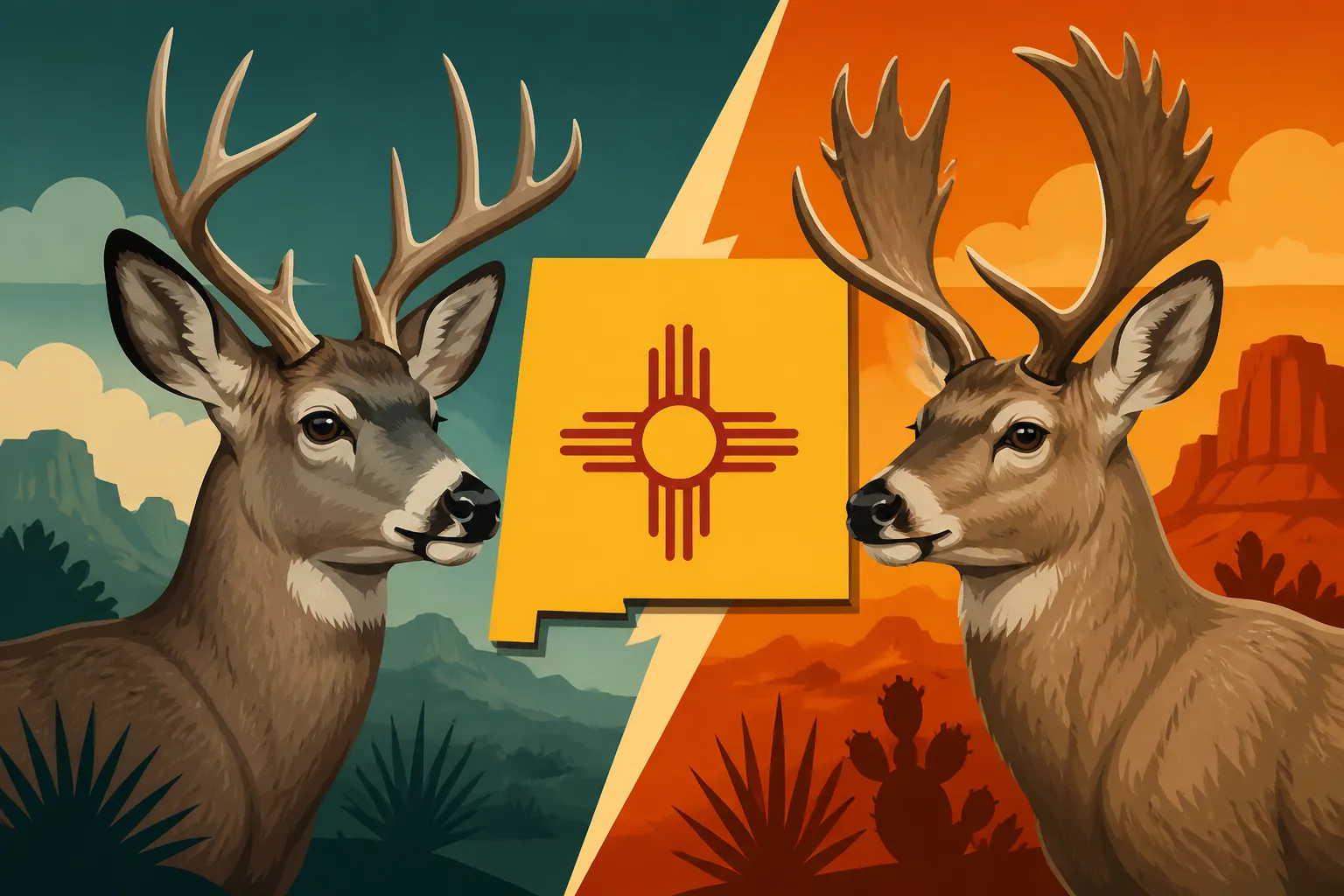
Coues deer antlers are where many hunters get tripped up. While they are a subspecies of white-tailed deer, their antlers don't always exhibit the classic forward-curving main beam with tines projecting upward that you might see in eastern whitetails. Instead, Coues antlers often show a more "forked" appearance, albeit distinct from a Mule deer's deep bifurcations. Their main beams tend to be shorter and don’t typically sweep forward as dramatically. You'll often see the main beam branching, with smaller points or forks off of these branches. The overall spread is generally narrower, often barely exceeding the width of their ears. This narrower, more branched configuration, combined with their smaller body, means a 100-inch Coues buck is an exceptional animal, truly a trophy, whereas a 100-inch Mule deer would be considered a relatively small buck. This unique antler growth is a key feature to observe, especially when you're meticulously glassing a distant ridge for a buck.
Ear Size and Shape
This is a critical identifier. Coues deer have ears that are proportionate to their smaller head and body size. They are often described as "normal deer ears" or, by some, "mouse ears" when compared to the enormous ears of a Mule deer. They are rounded at the tips and generally don't appear overly large or out of place on their head. When a Coues deer is alert, its ears will stand erect, but they won't dominate its head profile. If you can get a clear view of the head and ears, paying attention to this detail can be a definitive way to tell them apart, even if the antlers are hard to judge due to growth patterns or distance.
Tail Appearance and Coloration
The tail of a Coues deer is another crucial distinguishing feature. As a subspecies of white-tailed deer, they carry the characteristic white underside, which they will often flag when alarmed. The tail itself is relatively bushy and broad, mostly white on the underside and sides, with a distinct black tip on the top. When they flick their tail, that broad flash of white with the contrasting black tip is unmistakable. This is in stark contrast to the rope-like tail of a Mule deer, which we'll discuss next. Observing how the deer carries and moves its tail can be a quick and reliable way to identify it, especially if it’s spooked and making an exit.
Distinctive Features of New Mexico Mule Deer
New Mexico's Mule deer are iconic figures of the Western landscape, known for their impressive antlers and the characteristic way they move across rugged terrain. They are far more widespread across the state than Coues deer, inhabiting everything from the high country timber of the northern mountains to the arid desert scrublands further south. Understanding their unique traits is essential for any hunter looking to distinguish them from their smaller counterparts.
Larger Body Mass and Stockier Build
Mule deer are considerably larger and more robust than Coues deer. An adult Mule deer buck can easily weigh between 150 to 300 pounds, with some mature bucks pushing even heavier, especially in prime habitat. Their shoulder height typically ranges from 36 to 42 inches or more, making them a much more substantial animal overall. They have a thicker neck, broader shoulders, and a more muscular build, reflecting their ability to thrive in diverse and often challenging environments. Their coat color can vary from a light tan to a reddish-brown in summer, transitioning to a grayer, thicker coat in winter, offering excellent camouflage against rocks and timber. When you see a Mule deer, it just looks bigger, heavier, and more powerfully built than a Coues. This size difference is often the first thing you'll notice, even at long distances, and is a strong indicator of the species.
Classic "Forked" Antler Configuration
The name "Mule deer" comes from their ears, but their antlers are what truly define them for many hunters. Unlike the branched configuration of Coues deer, Mule deer antlers typically exhibit a distinctive bifurcated, or deeply forked, growth pattern. The main beam extends upward and slightly outward, then typically forks into two tines, and each of those tines forks again, creating a classic "double fork" or "crab claw" appearance. While there are variations, and some younger bucks or those with atypical genetics might not perfectly fit this mold, the overall tendency is towards these deep, symmetrical forks. The main beams are usually longer than a Coues, often sweeping back and out, and the overall mass is generally greater. A Mule deer buck with a 150-inch antler score is a solid animal, and anything over 180 inches is truly exceptional. When you're trying to quickly judge a buck, focusing on the deep, characteristic forks can be a quick way to differentiate it. Knowing how to differentiate these types of antler growths is key to accurately Judging a Coues Buck in the Field versus Field Judging a Mule Deer Buck Quickly.
Prominent Ear Size
The most unambiguous field mark for a Mule deer, and the source of its common name, is its enormous ears. These ears are strikingly large, long, and broad, often appearing disproportionately big for their head. They can measure anywhere from 8 to 12 inches in length and are constantly swiveling, like a mule's, to pick up the faintest sounds. When a Mule deer is alert, these ears can make its head look even larger. This feature is so pronounced that even at great distances, you can often pick out a Mule deer simply by the size and movement of its ears. If you're trying to decide between a Coues and a Mule deer, the ears are usually the most reliable "tie-breaker," especially on a buck where antler patterns might be ambiguous.
Rope-Like Tail with Black Tip
Another critical differentiator is the Mule deer's tail. It is typically narrow, relatively short, and rope-like, usually white with a prominent black tip. Unlike the Coues or other white-tailed deer subspecies, the Mule deer generally does not "flag" its tail with a broad flash of white when alarmed. Instead, it usually holds its tail down or somewhat stiffly, with the black tip being the most noticeable feature. The absence of that wide, bushy, all-white underside flash is a key indicator. If you see a deer trot off with a small, narrow, white tail tipped in black, you can be fairly confident you're looking at a Mule deer.
| Feature | Coues Deer (Subspecies of Whitetail) | Mule Deer |
|---|---|---|
| Body Size | Small, compact, delicate (80-150 lbs) | Large, stocky, robust (150-300+ lbs) |
| Shoulder Height | 30-36 inches | 36-42+ inches |
| Antler Pattern | Shorter main beams, often "branched" with points off the branches; narrower spread | Longer main beams, distinctive deep "forks" (bifurcated); wider spread |
| Ear Size | Proportionate, "normal deer ears" | Very large, long, broad, "mule-like" |
| Tail Appearance | Bushy, broad, white underside, black tip; often "flags" white when alarmed | Narrow, rope-like, mostly white with a prominent black tip; typically held down/stiff |
| Gait (when spooked) | Runs like a typical deer, often darting and weaving | Distinctive "stotting" or "bounding" hop |
Habitat and Behavior Clues
Beyond the physical characteristics, understanding where these deer prefer to live and how they typically behave can provide valuable clues for identification. New Mexico’s varied landscape, from high mountain peaks to vast desert basins, influences where you’ll find each species and how they navigate their world.
Coues Deer Preferred Terrain
Coues deer are creatures of rugged, arid, and semi-arid mountain ranges and foothills, primarily found in the southwestern "bootheel" region of New Mexico, extending into Arizona and Mexico. They thrive in country characterized by steep, rocky slopes, thick oak brush, juniper, and chaparral. Think of the smaller, isolated mountain ranges in Hidalgo, Grant, and Luna counties, like the Peloncillo or Animas Mountains, which are classic Coues Hunting in the Bootheel Ranges. These deer are masters of camouflage and cover, often disappearing into seemingly sparse vegetation. They are notoriously elusive, tending to stick to dense cover during the day and emerging at dawn and dusk to feed. If you're in this type of habitat, particularly in southern New Mexico, your chances of encountering a Coues deer are much higher. Knowing that you're in a specific unit that is known for them, which you can often discern by carefully Reading a New Mexico Hunt Code Before You Apply, can certainly help manage expectations.
Mule Deer Habitat Diversity
Mule deer, on the other hand, are far more adaptable and widely distributed across New Mexico. You'll find them in the high alpine forests and open meadows of the Sangre de Cristo and Jemez Mountains in the north, in the ponderosa pine forests of the Gila National Forest, and even in the rolling sagebrush and juniper country of the central and eastern plains. Their range extends from roughly 4,000 feet up to above 10,000 feet in elevation. This broad distribution means that while you might find Mule Deer Across Northern New Mexico in high country, you'll also encounter Desert Mule Deer in Southern New Mexico in more open, arid environments. They tend to prefer broken terrain, often near agricultural fields or riparian areas, but are equally at home in dense timber or vast expanses of short grass prairie with scattered brush. This wide habitat preference means that simply being in "deer country" isn't enough to rule out a Mule deer; you must dig deeper into the specific features of the animal.
Movement Patterns and Gait
Another tell-tale sign that can help differentiate these two species, especially when they're on the move, is their distinct gaits. Mule deer are famous for their unique "stotting" or "bounding" gait. When alarmed or moving quickly, they will typically spring into the air, landing on all four feet simultaneously, then pushing off again in a powerful, synchronized bound. This distinct "pogo stick" motion allows them to cover rough, broken terrain efficiently and often gives them an advantage over predators. If you see a deer hopping away with this characteristic four-footed bounce, it's almost certainly a Mule deer.
Coues deer, as a subspecies of white-tailed deer, exhibit a more traditional deer run. When spooked, they will typically run with a fluid, darting motion, using long strides, and often zig-zagging through cover. They may "flag" their white tail high as they bound away, a classic white-tail characteristic. Observing the gait can be a definitive identifier, particularly if you catch a deer in motion before you've had a chance to scrutinize its other features.
Practical Field Glassing and Identification Tips
Identifying deer in the field isn't always as straightforward as looking at a picture in a guide book. Real-world conditions—distance, light, cover, and the deer's behavior—can make it tricky. However, with a few practical tips and the right mindset, you can significantly improve your chances of making a confident identification.
Using Optics for Detailed Observation
Good optics are your best friend when distinguishing Coues from Mule deer. A high-quality pair of binoculars (10×42 or 12×50 are popular choices for still hunting or scanning) and a reliable spotting scope (20-60x or higher for long-range glassing) are absolutely essential. When you spot a deer, resist the urge to immediately reach for your rifle. Instead, settle in, get steady, and use your optics to systematically examine the animal. Start with the overall body size and shape, then move to the ears, then the tail, and finally, the antlers if they are visible.
For those long-distance observations common in New Mexico's open country, a powerful spotting scope is indispensable. Consider an optic with sufficient power for Optics Power for New Mexico's Open Country. Remember that heat waves, especially on warm days, can distort the image, making fine details blurry. Try to glass in the early morning or late evening when the air is cooler and clearer. Using a tripod with your binoculars or spotting scope is also crucial; it minimizes shake and allows for extended, strain-free observation, which is exactly what you need when you're trying to pick out subtle differences.
Focusing on Multiple Features
Never rely on just one characteristic for identification. A small-antlered Mule deer might be mistaken for a Coues if you only look at the headgear. Conversely, a large Coues might have an impressive rack that could be confused with a smaller Mule deer. Instead, adopt a holistic approach:
- Body Size & Proportions: Is it compact and delicate, or large and robust?
- Ears: Are they proportionate to the head, or do they look unusually large, like a mule's? This is often the quickest and most reliable indicator.
- Tail: Is it bushy and broad with a white flag, or narrow and rope-like with a distinct black tip?
- Antlers: Once you've established the body and ear size, then look at the antler configuration – branched for Coues, deeply forked for Muleys.
- Gait: If the deer moves, how does it move? The "stotting" of a Mule deer is unmistakable.
By cross-referencing these features, you create a more accurate profile of the deer, leading to a much more confident identification. This systematic approach is a core part of effective glassing, whether you're grid glassing a basin or focusing on a specific ridge.
Contextual Clues: Time of Year and Location
Beyond the physical attributes, your knowledge of the hunt location and time of year can also offer important contextual clues. For instance, if you are hunting in the Florida Mountains or the "bootheel" units, you are squarely in prime Coues deer territory. While Mule deer can be found there, the likelihood of a Coues is much higher. Conversely, if you're in the high country of the Carson National Forest in northern New Mexico, you're almost certainly looking at a Mule deer.
Before you even step foot in the field, tools like GoHunt can provide invaluable unit-specific information, including habitat descriptions and species distribution maps, helping you understand the likelihood of encountering one species over another. Familiarizing yourself with Where Coues Deer Live in New Mexico and Where Mule Deer Range in Northern Units is a great starting point. Furthermore, during certain times of the year, like the early archery seasons, deer might be in different stages of antler growth or behavior, which can affect your assessment. Understanding the unit's characteristics and the general behavior of deer during your specific hunt dates will add another layer of certainty to your field identification. Utilizing resources like Scouting a Unit From Satellite Imagery or Using onX Layers for New Mexico Public Land can provide detailed topography and habitat maps to further refine your understanding of potential deer locations.
Common Mistakes and Misconceptions
Even with all the knowledge and the best optics, field identification can still present challenges. Hunters often fall prey to certain common mistakes or misconceptions that can lead to misidentification. Being aware of these pitfalls can help you avoid them and become a more proficient observer.
"Small Mule Deer" vs. Coues
One of the most frequent errors hunters make is mistaking a young or genetically inferior Mule deer buck for a Coues deer. It's easy to see a smaller Mule deer, perhaps a 1.5-year-old with a modest rack, and think it's a large Coues. This is where the emphasis on body size and ear size becomes paramount. Even a young Mule deer, while smaller than a mature buck, will typically have a more robust body than an adult Coues. More importantly, its ears will still be disproportionately large, giving it that characteristic "mule-like" appearance, even if its antlers are still developing. Always default to checking the ears and overall body mass before focusing on the antlers, especially if you're in a transitional zone where both species might be present.
Antler Anomalies and Variability
While we talk about "classic" antler configurations for both species, nature doesn't always read the textbook. Antler growth can be incredibly variable due to genetics, nutrition, age, and even injury. You might encounter a Mule deer with a more branched, less typically forked rack, or a Coues deer with an unusually heavy or wide spread. These "non-typical" antlers can throw a wrench into your identification process if you're relying too heavily on antler shape alone.
For example, a Mule deer that broke a main beam early in its antler development might grow an atypical, less-forked side. Similarly, an older Coues buck might develop more mass and unique points that don't perfectly fit the "branched" description. In these situations, fall back on the other, more consistent indicators: ear size, body size, tail type, and gait. These physical markers are generally more stable and less prone to individual variations than antler growth.
Lighting and Distance Distortions
The conditions under which you observe a deer can profoundly impact your ability to identify it. Low light conditions, such as dawn or dusk, can make it difficult to discern subtle color variations or fine details of antler structure. Heavy cover, like dense juniper or oak brush, might only allow you partial views of the animal, obscuring key features like its tail or ears.
Distance is perhaps the biggest culprit. What looks like a massive animal at 1,000 yards can shrink considerably at 300. The same goes for ear size or antler configuration. Heat shimmer, especially in the desert units of New Mexico, can make everything wavy and indistinct, rendering precise identification nearly impossible. It’s important to understand the limitations of your optics and the conditions. Sometimes, the best call is to spend more time observing, try to close the distance, or wait for the animal to move into better light or a clearer vantage point. Remember, patience is a virtue in hunting, and that applies just as much to identification as it does to the stalk. GoHunt or similar digital scouting tools can help mitigate some of these challenges by allowing you to familiarize yourself with the terrain and potential vantage points before you even arrive in the field, giving you a better chance to set up for a clear observation.
Disclaimer
Hunting is an inherently risky activity. Always prioritize safety, follow all local, state, and federal hunting regulations, and ensure you have the necessary licenses and permits. The information provided in this guide is for educational purposes only and should not be considered a substitute for professional guidance or official New Mexico Department of Game and Fish regulations. Always consult the most current official rules and information booklet before heading afield.