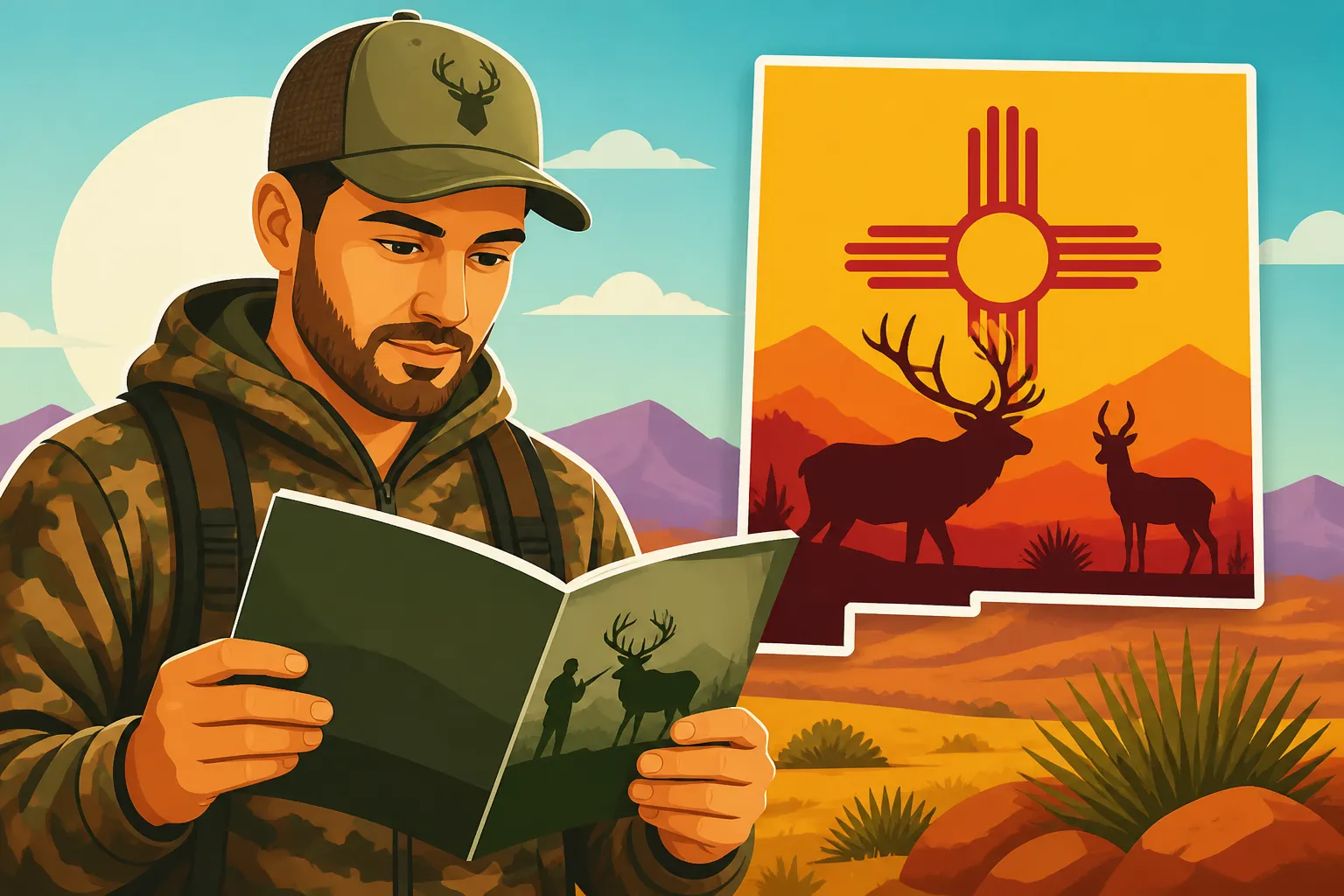
Reading the New Mexico Rules and Info Booklet
Let's be honest, few things are as universally dreaded by hunters as diving into a new state's — or even your home state's updated — annual hunting regulations booklet. It's often a thick stack of pages, dense with legal jargon, confusing abbreviations, and seemingly endless dates and unit numbers that can make your head spin before you even finish the introduction. But ignoring it, or just skimming for the bits you think you need, is a recipe for a ruined hunt, or worse, an unintentional violation. This guide is here to demystify the New Mexico Rules and Info Booklet, helping you navigate its complexities with confidence so you can focus on the hunt itself, not the headache of deciphering the rulebook.
Why the New Mexico Rules and Info Booklet is Your Bible (Not Just a Pamphlet)
When you first lay eyes on the New Mexico Department of Game and Fish (NMDGF) Rules and Info Booklet, it can feel like you've been handed a legal textbook. The sheer volume of information, often presented in a dry, legislative style, is enough to make even seasoned hunters feel a pang of dread. You might be tempted to just flip to your desired species and season dates, or rely on a buddy's interpretation, but that's a gamble you really don't want to take in the field.
This isn't just a suggestion; it's the absolute foundational text for every single hunt you undertake in New Mexico. Every regulation, every definition, every crucial date and unit boundary is meticulously laid out within its pages. Misunderstanding a rule, no matter how small, can lead to fines, loss of privileges, and even confiscation of your hard-earned trophy. Think of it as your field guide for legality – every successful hunt starts with a deep understanding of what's allowed and what's not. It's the ultimate authority, and knowing how to properly consult it is an essential skill for any hunter pursuing game in the Land of Enchantment.
Overcoming the Initial Intimidation Factor
That initial feeling of overwhelm is completely normal. The NMDGF booklet, like most state regulation guides, packs a tremendous amount of crucial information into a relatively small space. From intricate draw odds and application processes to specific weapon restrictions, blaze orange requirements, and even rules about retrieving game, it covers every conceivable scenario. The language often mirrors legal statutes, which isn't always the most digestible prose for someone just trying to figure out if their muzzleloader is legal in Unit 15.
The key to overcoming this intimidation is to approach it systematically, almost like a puzzle. Don't try to absorb everything at once. Instead, identify the sections most relevant to your specific hunt first, then delve into the details. Understand that it’s designed to be comprehensive, not necessarily easy reading, but with a bit of patience and a focused approach, you can extract every piece of information you need to stay on the right side of the law. Think of it less as a novel to be read cover-to-cover and more as a reference manual to be consulted for specific topics.
Where to Find the Most Current Version
In today's digital age, accessing the New Mexico Rules and Info Booklet is easier than ever, but it also means you need to be vigilant about having the absolute latest version. While many sporting goods stores, NMDGF offices, and license vendors will have physical copies available, the most up-to-date and authoritative version will always be found online. The NMDGF website publishes the current booklet, usually several months before the application periods begin.
It's absolutely critical to confirm you're looking at the current year's regulations. Regulations, fees, and even season dates can change from year to year, sometimes even mid-season if certain quotas are met (like bear or cougar). Always double-check the publication date. If you're heading into the field, having a digital copy downloaded to your phone or a printed copy from the official NMDGF website ensures you have the most accurate information at your fingertips, even if cell service is spotty. For a deeper dive, check out our guide on Where the Current New Mexico Regulations Are Posted.
Navigating the Core Sections and What to Prioritize
Once you’ve got the current booklet in hand, whether digital or physical, it’s time to start peeling back the layers. You don't need to memorize every single page, but understanding the general layout and knowing where to find critical information will save you countless headaches and potential missteps. Think of it as learning the table of contents for successful hunting.
Understanding General Regulations and Definitions
Before you even look at a specific hunt code, it's paramount to familiarize yourself with the general regulations and the glossary of definitions at the beginning of the booklet. This section establishes the baseline rules that apply to all hunters and all species, regardless of your specific tag. Skipping this step is like trying to build a house without understanding the laws of gravity; it just won't work out.
For example, understanding "legal shooting hours" is fundamental. New Mexico has specific times for shooting, typically half-hour before sunrise to half-hour after sunset. These aren't just suggestions; they are hard-and-fast rules. Firing a shot outside these windows can have serious repercussions. Similarly, knowing what constitutes an "any legal weapon" hunt versus a "primitive weapon" hunt is critical. If your hunt code specifies "primitive weapons," showing up with a modern rifle, or even a muzzleloader with a scope (if not explicitly allowed), could lead to a violation. These foundational definitions set the stage for all specific hunt rules. Our articles like New Mexico Legal Shooting Hours for Big Game and What Makes a Weapon Primitive Under the Rules can offer additional context.
Another often-overlooked area within the general regulations are the rules surrounding the Mentored Youth Hunter Program. If you're taking a young, aspiring hunter into the field who hasn't completed their hunter education, you need to understand the strict guidelines for age, species allowed, and mentorship responsibilities. This program is a fantastic opportunity to introduce the next generation to hunting, but it comes with its own set of rules designed for safety and compliance. Consulting this section ensures both you and your mentee are hunting legally and responsibly. Learn more in The New Mexico Mentored Youth Program Explained.
Deciphering Hunt Codes and Season Dates
This is arguably the most critical section for anyone applying for or holding a New Mexico tag: the hunt codes and season dates tables. These are the alphanumeric sequences (e.g., ELK-1-16A-1-10) that define exactly what, where, when, and how you can hunt. Many hunters get tripped up here, either misreading a unit number, overlooking a weapon restriction, or confusing opening and closing dates.
Each component of a hunt code tells a story. It typically specifies the species, the Game Management Unit (GMU), the weapon type allowed (archery, muzzleloader, any legal weapon), and the exact dates of the season. For instance, "ELK-1-16A-1-10" might break down to Elk, the first hunt choice for that species, in Unit 16A, using Any Legal Weapon, for a 10-day season. It's not just about getting drawn; it's about making sure the tag you do draw matches the hunt you intended and the equipment you possess. New Mexico doesn't award preference points, so every applicant has an equal chance year after year, making precise application all the more important.
Here's a simplified breakdown of a typical New Mexico hunt code structure:
| Element | Example (e.g., ELK-1-16A-1-10) | Description |
|---|---|---|
| Species | ELK | What animal you are hunting (Elk, Deer, Oryx, etc.) |
| Hunt Pool | 1 | The specific draw pool (e.g., Resident, Nonresident, Outfitter) |
| Unit(s) | 16A | The Game Management Unit(s) where the hunt takes place |
| Weapon | 1 | The weapon type allowed (1=Any Legal Weapon, 2=Muzzleloader, 3=Archery, etc.) |
| Season | 10 | The specific season choice or duration within the unit/weapon combination |
Always cross-reference the hunt code with the detailed season tables to confirm dates, unit boundaries, and specific rules for that hunt. A small mistake in reading this can lead to being in the wrong unit, hunting with an illegal weapon, or being out during a closed season. For more help, check out Reading a New Mexico Hunt Code Before You Apply and What the Letters in a New Mexico Hunt Code Mean. Also, our guide on New Mexico Elk Season Structure by Unit can help you understand the variations.
License and Stamp Requirements Beyond the Tag
Drawing a big game tag in New Mexico is certainly exciting, but don't stop there! Your specific animal tag isn't the only piece of paper you need. New Mexico has additional licensing requirements that apply to almost all hunters, and overlooking these can render your primary tag invalid or lead to a separate citation. This is where many hunters, especially non-residents or those new to the state, often stumble.
First, almost everyone needs a New Mexico Game Hunting License. This is your baseline permit to hunt any game in the state, even if you’re just pursuing small game or have a specific big game tag. It’s a separate purchase from your big game draw application fee or your actual tag. Secondly, you'll likely need a Habitat Management and Access Validation (HMAV). This validation, often referred to as a "Conservation Stamp" in other states, grants you access to State Trust Lands for hunting and angling. It's a non-negotiable for most public land hunts. Our article, The New Mexico HMAV Validation Explained, delves into this in detail.
Finally, if you plan to hunt on any federal lands, such as National Forests or BLM (Bureau of Land Management) acreage, you'll need a New Mexico Habitat Stamp. This stamp contributes to habitat improvement projects on these crucial public lands. These three components – the general hunting license, HMAV, and Habitat Stamp – are almost universally required for public land big game hunting in New Mexico. Always verify which ones apply to you and your specific hunt location. Understanding What the New Mexico HMAV Validation Costs and The New Mexico Habitat Stamp for Federal Land can help you budget and prepare.
Important Details Often Overlooked (But Crucial!)
Beyond the major hurdles of understanding basic regulations and hunt codes, the NMDGF booklet contains numerous smaller, yet equally critical, details that are easy to gloss over. These "fine print" items can often be the difference between a successful, compliant hunt and an unfortunate encounter with a game warden.
Rules on Public vs. Private Land Access
New Mexico boasts an incredible amount of public land, from vast stretches of BLM ground to the sprawling Gila National Forest. However, understanding the nuances of accessing and hunting on these lands, as well as navigating adjacent private property, is vital. The booklet dedicates significant portions to explaining these distinctions, and you should pay close attention.
For instance, New Mexico State Trust Land is a unique category. While it's considered public land for hunting purposes with a valid Game Hunting License and HMAV, it comes with specific rules. You can't just drive anywhere; often, access is restricted to foot traffic or existing roads. Additionally, there are rules about when you can scout, usually allowing access up to 14 days before a hunt. Understanding these subtleties ensures you're not inadvertently trespassing or violating specific land use rules. Our articles A New Mexico License Is Your State Trust Land Easement and You May Scout New Mexico Trust Land 14 Days Before a Hunt offer more clarification. Critically, crossing private land to reach public land, even if it's just a corner, almost always requires explicit written permission from the landowner. Don't assume implied access; always get it in writing. This is detailed further in Written Permission Is Required to Cross Private New Mexico Ground.
Carcass Tagging, Transport, and Evidence of Sex
The moment of truth arrives when you successfully harvest an animal. The regulations don't end there; in fact, some of the most critical rules kick in after the shot. Proper tagging, transportation, and maintaining evidence of sex are non-negotiable steps that every hunter must follow to remain compliant. These rules are designed to prevent poaching and ensure proper management of game populations.
The booklet will clearly outline the requirement to immediately validate and attach your tag to the animal's carcass. This isn't something you can put off until you get back to camp or your vehicle. "Immediately" means as soon as practical after the animal is down and you've secured it. Furthermore, certain hunts, particularly for antlerless animals or specific antler-point restrictions (like spike-only elk), require you to maintain "evidence of sex" on the carcass during transport. This often means leaving a portion of the head, hide, or other identifying features attached until the animal is at its final destination or fully processed. Failure to do so can lead to a citation because a game warden might not be able to verify the legality of your harvest. Read up on How Soon You Must Tag a Downed Animal and Evidence of Sex Requirements on a Carcass for more in-depth information. Additionally, with the growing concern over Chronic Wasting Disease (CWD), the booklet will also detail any carcass transport restrictions or mandatory testing areas, which you can explore further in Carcass Transport Rules After a CWD Detection.
Prohibited Activities and Ethical Considerations
Every rulebook includes a section on what you cannot do, and the New Mexico booklet is no exception. These prohibited activities are often rooted in conservation, fair chase ethics, and public safety. It’s imperative to understand these limitations fully, as ignorance is rarely an acceptable excuse in the eyes of the law.
Common prohibitions include baiting for big game, which is illegal in most areas of New Mexico. While a stock tank might seem like an ideal place to ambush a desert deer, you must ensure you are not creating an illegal baiting situation. The use of trail cameras, while a valuable scouting tool, also has specific regulations regarding their placement and monitoring on public lands. Another crucial area is motorized vehicle use. While many roads are open, driving off-road to retrieve game, for instance, is often strictly prohibited and can lead to hefty fines and damage to fragile ecosystems. And of course, spotlighting – using artificial light to locate game animals at night – is almost universally illegal for big game hunting. The booklet will clearly delineate these boundaries, and adhering to them is a mark of a responsible hunter. For more details, see Baiting and Trail Camera Rules in New Mexico and Motorized Travel Rules on New Mexico Public Land.
Leveraging Additional Resources for Clarity
Even with the NMDGF Rules and Info Booklet in hand, sometimes you’ll still encounter a question that isn't explicitly answered, or you might want to visualize the information in a different way. Thankfully, there are additional resources available that can complement the official booklet and enhance your understanding.
Official NMDGF Website and Online Tools
The New Mexico Department of Game and Fish website is an invaluable extension of the physical regulations booklet. It serves as a dynamic hub for information that is updated more frequently than the printed guide. Here, you'll find FAQs, detailed explanations of complex regulations, and essential online tools for hunters.
For instance, the website is where you'll access your online account to manage licenses, apply for draws, and check draw results. It also hosts crucial statistics, such as historical draw odds, which can significantly influence your application strategy. While the official booklet provides the rules, tools found on sites like GoHunt often pull directly from NMDGF data to create visual aids and detailed analyses that can help you interpret the raw information more effectively. For anyone planning to apply, setting up your online account (as detailed in Setting Up a New Mexico Online Account) and regularly checking draw statistics (our guide on Checking New Mexico Draw Odds Before You Apply can walk you through it) should be part of your pre-application routine.
Don't Be Afraid to Call the Department
Sometimes, no matter how many times you read a particular regulation, it just doesn't click, or your specific scenario isn't clearly addressed. When in doubt, the very best thing you can do is pick up the phone and call the New Mexico Department of Game and Fish directly. They have staff and information officers whose job it is to assist hunters with questions and clarify regulations.
Many hunters are hesitant to call game and fish departments, fearing they might sound ignorant or draw unwanted attention. However, wardens and staff much prefer you ask a question before you head into the field than make an honest mistake that could lead to a violation. Their goal is ultimately to ensure compliance and promote ethical hunting, and that includes helping hunters understand the rules. Have your specific question ready, reference the section of the booklet you're confused about, and don't hesitate to seek official clarification. It's a proactive step that can save you a lot of grief and ensure your hunt is not only successful but entirely legal.
Disclaimer
Please remember that hunting regulations can change, and it is always the hunter's responsibility to consult the most current New Mexico Department of Game and Fish Rules and Info Booklet and relevant proclamations for the up-to-date and complete legal requirements before engaging in any hunting activities.