Applying for Multiple Species in One Year
It’s a common daydream for many hunters: imagining a year where you successfully chase multiple big game species across New Mexico’s incredible landscapes. The thought of an elk hunt in the Gila followed by a desert mule deer pursuit, or maybe even an oryx adventure, is exhilarating. But then reality hits, and the New Mexico draw system, with its specific deadlines, fees, and unit choices, can feel like a daunting puzzle. This guide aims to demystify the process, helping you understand how to confidently apply for multiple species in a single year without getting tangled in the red tape.
Understanding New Mexico's Multi-Species Application Approach
New Mexico's draw system is unique in that it operates without a traditional preference point system. This means that every applicant, whether it's your first time applying or your tenth, theoretically has an equal chance in the draw each year, assuming you apply in the same pool (resident, non-resident, or outfitter). This "clean slate" approach is fantastic, but it also means that applying for multiple species in one year requires careful planning, not just accumulating points.
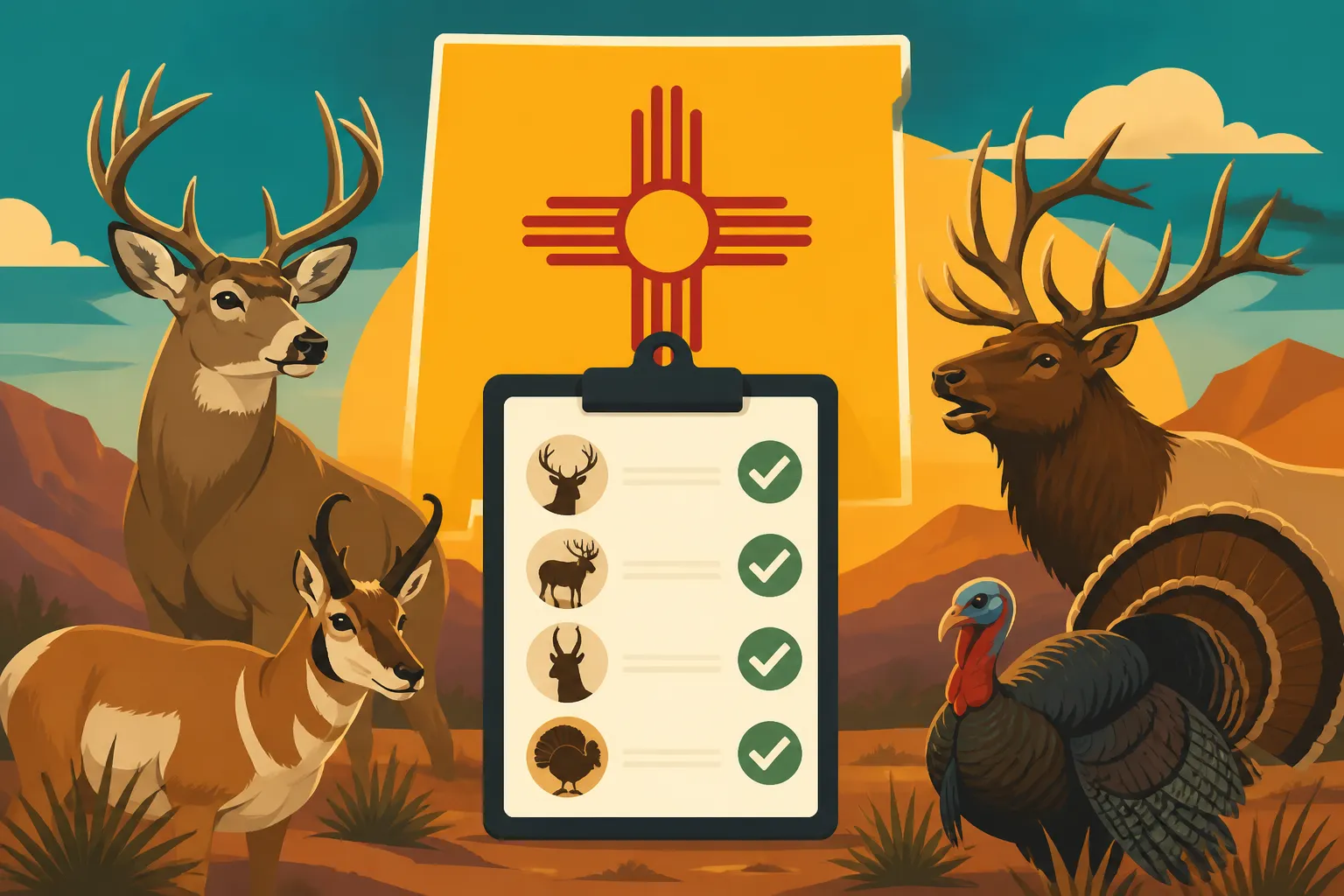
The New Mexico Department of Game and Fish (NMDGF) allows you to apply for various species independently. This isn't like some states where applying for one species might hinder your chances for another. In New Mexico, each species application is a distinct entry into its respective draw pool. You can apply for elk, deer, pronghorn, oryx, ibex, and Barbary sheep all in the same application period, each with its own set of hunt codes and choices. This flexibility is a huge advantage for hunters looking to maximize their opportunities.
For each species, you typically get to list up to nine hunt choices. These choices are crucial, as they allow you to prioritize your dream hunts while also including fallback options with potentially higher draw odds. The system processes your application by going through your choices in order for that specific species. If your first choice doesn't draw, it moves to your second, and so on, until you either draw a tag or exhaust all your choices. It's important to remember that once you draw a tag for a specific species, all your lower choices for that same species are voided.
Many hunters find the process of researching draw odds and unit breakdowns overwhelming. This is where tools like GoHunt's Insider can be incredibly helpful. Their platform consolidates historical draw data and unit information, allowing you to quickly compare the success rates and application statistics for different hunt codes. Understanding New Mexico Draw Odds Work Without Points is key to building a smart multi-species strategy. You're not building a bank of points; you're playing the odds each year for specific units and seasons.
Navigating Application Logistics for Different Game Animals
While New Mexico offers the freedom to apply for many species, the logistics and timing can be tricky if you're not paying close attention. Most big game applications, including elk, deer, and antelope, typically share the same main deadline. However, there are critical exceptions that can easily trip up an eager hunter.
One of the most common pitfalls involves the bear application. Unlike other big game species, the bear application usually has a significantly earlier deadline, often in February, well before the general March deadline for other species. Missing this date means no bear hunting for you that year, regardless of your other applications. This early cut-off is a common source of frustration for those not intimately familiar with the New Mexico calendar. For example, understanding Why New Mexico Bear Applications Close in February is essential.
When you apply, you'll need to purchase a Game Hunting License (often referred to as a "base license") first. This license is a prerequisite for all big game draw applications. Nonresidents, for instance, will need to purchase The Nonresident New Mexico Game Hunting License before they can even apply for species tags. On top of that, each species application incurs a non-refundable application fee. These fees, while generally modest, can add up quickly if you're applying for several different animals. It’s important to budget for these initial application costs, as they are not returned even if you don't draw a tag. Knowing New Mexico Application Fees Per Species is crucial for budgeting.
After you've submitted your applications, the NMDGF system processes them. Generally, the draws happen sequentially, often starting with elk, then moving to deer, antelope, oryx, and so on. This sequence doesn't typically affect your ability to draw for other species, as each draw is independent. What it means is that if you're successful in an earlier draw, say for elk, it doesn't then disqualify you from drawing for a mule deer tag later in the process. Each species is truly its own lottery.
Another critical piece of the puzzle is the requirement for a Habitat Management and Access Validation (HMAV) and, for federal lands, a Habitat Stamp. While these aren't part of the draw application itself, they are mandatory for any hunter once they secure a tag and step into the field. You'll need to ensure you have The HMAV and Habitat Stamp Every New Mexico Hunter Needs before your hunt begins. These validations help fund critical wildlife habitat projects and secure access for hunters, which is something we all benefit from.
Here's a quick overview of some common application fees and deadlines, though always check the current year's NMDGF regulations booklet as these can change:
| Species | General Application Deadline | Resident Application Fee | Nonresident Application Fee |
|---|---|---|---|
| Elk | Mid-March | $7 | $7 |
| Deer | Mid-March | $7 | $7 |
| Pronghorn | Mid-March | $7 | $7 |
| Oryx | Mid-March | $7 | $7 |
| Barbary Sheep | Mid-March | $7 | $7 |
| Ibex | Mid-March | $7 | $7 |
| Bear | Mid-February | $7 | $7 |
| Turkey (Spring) | Early February | $7 | $7 |
Note: All fees are approximate and subject to change. The Game Hunting License fee is separate and required annually.
GoHunt offers incredibly detailed regulations summaries that can be a lifesaver when double-checking specific dates, fees, and any new rules that might come into play each season. It’s far too easy to assume deadlines are universal, only to find out you missed a crucial one.
Strategic Planning for a Successful Multi-Species Year
The beauty of New Mexico's system is that it opens the door for incredible hunting opportunities. But with that freedom comes the responsibility of strategic planning. It's not just about applying; it's about applying smartly, realistically, and with a clear understanding of what you're signing up for.
First off, consider your personal hunting goals. Are you chasing a once-in-a-lifetime trophy bull elk, or are you hoping for any big game opportunity in New Mexico this year? Your answer will shape your application choices. If you're focused on a specific, hard-to-draw unit for a trophy animal, you might dedicate most of your choices there, accepting that your odds are low. However, if your goal is simply to hunt something, you might include higher-odds, often less-trophy-centric units in your later choices for multiple species. A well-thought-out Choice Order Strategy in the New Mexico Draw can make all the difference.
Another critical aspect is the physical and logistical demands of hunting multiple species. A high-country elk hunt in New Mexico's Gila National Forest for Elk Hunters is a vastly different experience from a desert oryx hunt on White Sands. Do you have the physical conditioning for both? An elk hunt might require weeks of preparation to handle the elevation and rugged terrain, while an oryx hunt could demand different scouting techniques and heat management. For instance, Altitude Preparation for a Gila Elk Hunt is a real consideration that won't apply to a desert mule deer hunt. Consider how much time you realistically have off work and away from family obligations. Can you squeeze in two or three extended hunts in a year? Be honest with yourself about your limits.
Financial considerations are also paramount. While application fees are relatively low, the cost of the actual tags once you draw can be substantial, especially for non-residents. A nonresident elk tag, for instance, is a significant investment, and an oryx tag like What a New Mexico Nonresident Oryx Tag Costs adds another substantial expense. Then you have travel costs, accommodation, food, fuel, new gear specific to each hunt (like a different rifle for elk versus deer, or specialized optics), meat processing, and taxidermy. These costs can quickly snowball. Before you dive into multiple applications, lay out a clear budget for each potential hunt.
It’s also wise to research the timing of different seasons. While you can apply for multiple species, can you realistically hunt them if you draw? New Mexico's New Mexico's First and Second Archery Deer Seasons, for example, run back-to-back in September, which could potentially overlap with early archery elk seasons. You might draw both, but then have to choose which tag to fill if their seasons conflict or your time is limited. GoHunt provides fantastic mapping and regulations overlays that help you visualize these overlaps and plan accordingly.
Avoiding Common Application Pitfalls
Even the most seasoned hunters can fall victim to simple mistakes when navigating complex draw systems. New Mexico, while straightforward in some ways, has its own set of traps.
One of the biggest blunders, as mentioned, is missing deadlines. The March deadline for most species is ingrained in many hunters' minds, but that early February bear deadline often gets overlooked. Put these dates on your calendar, set reminders, and consider submitting your applications well in advance to avoid last-minute website crashes or forgotten details. The NMDGF system tends to get heavy traffic right before the deadline. While the main deadline is generally in mid-March, make sure you know The March Deadline for New Mexico Applications for the current year.
Another common issue arises from incorrect hunt code entry. Each hunt unit, weapon type, and season period combination has a unique hunt code. Mistyping even one character can lead to your application being invalid or, worse, applying for a hunt you never intended. Take your time, double-check every single hunt code against the official regulations booklet or reliable sources like GoHunt, which often have searchable databases for hunt codes. Understanding how to interpret each part of Reading a New Mexico Hunt Code Before You Apply is essential for success.
Forgetting required licenses and stamps can also be a headache. While the draw system will typically prompt you to purchase the base Game Hunting License before applying, the HMAV and Habitat Stamp are often purchased separately and later. Don't wait until the last minute before your hunt to buy these. Ensure they are secured well in advance to avoid any legal issues or delays in getting to your hunting grounds.
Lastly, don't underestimate the non-refundable nature of application fees. If you apply for five species at $7 each, that's $35 you won't see again, even if you don't draw any tags. While a small amount compared to the overall cost of a hunt, it's something to factor into your budget. There are no refunds for application fees, nor does New Mexico offer preference points or loyalty systems that would make a "failed" application contribute to future success. Every year is a fresh start in the draw.
The New Mexico Game and Fish website is the official source for all regulations and application procedures. However, many hunters, myself included, rely on GoHunt to keep track of critical dates, verify regulations, and ensure all their ducks are in a row before clicking that final submit button. Their detailed filters and unit comparisons can save you hours of research and help you pinpoint the best opportunities for a multi-species year. With careful planning and attention to detail, a dream year of hunting multiple species in New Mexico can become a reality.
Disclaimer
Hunting involves inherent risks, and regulations can change. Always consult the official New Mexico Department of Game and Fish regulations booklet for the current year before planning any hunting activity or submitting applications. This article is for informational purposes only and does not constitute legal advice.