Which New Mexico Units EPLUS Authorizations Cover
Navigating the world of New Mexico hunting tags can feel like trying to solve a puzzle with missing pieces, especially when you start looking beyond the general public draw. Many hunters, particularly those eyeing coveted elk tags, often hit a wall trying to understand how the EPLUS system fits into the picture and, more importantly, which units actually offer EPLUS authorizations. It’s a common frustration, feeling like you’re missing out on opportunities because the rules aren't always laid out in the simplest terms. This guide is here to demystify the EPLUS program, revealing exactly where these landowner authorizations are available across New Mexico and how you can leverage them to pursue your hunting dreams.
Understanding EPLUS Authorizations and Their Purpose
Before we dive into the specific units, let's get a solid grasp on what EPLUS is and why it exists. It’s a crucial distinction from the standard public draw system, and understanding its roots will help you comprehend its geographical footprint.
What EPLUS is and How it Works
EPLUS stands for Elk Private Land Use System, and while it started primarily with elk, it does extend to a few other species in a limited capacity. In essence, it's a program managed by the New Mexico Department of Game and Fish (NMDGF) that allocates a certain number of hunting authorizations directly to private landowners. These landowners, in turn, can use these authorizations themselves, sell them, or provide them to clients of a registered outfitter. The fundamental goal of EPLUS is to encourage private landowners to manage their property in a way that benefits wildlife, particularly elk, by providing an incentive for habitat conservation and herd management on their acreage.
Think of it this way: the state acknowledges that a significant portion of game animals, especially elk, spend at least part of their lives on private land. By giving landowners a direct stake in the hunting opportunities these animals represent, it fosters a partnership. Instead of purely relying on the public draw, How New Mexico EPLUS Authorizations Work creates an alternative path to a tag, often allowing access to prime hunting ground that might otherwise be inaccessible. This system operates outside the main public draw odds, meaning if you secure an EPLUS authorization, you don't have to worry about the randomness of the draw for that specific hunt.
The Rationale Behind EPLUS Units
The reason some units have EPLUS authorizations and others don't boils down to a few key factors, primarily private land ownership and game distribution. Units with a high percentage of private land, or units where significant elk populations reside on or regularly cross private property, are naturally better candidates for EPLUS. The program is designed to create opportunities where public land access might be limited or where landowners are already doing the heavy lifting of managing habitat.
For example, units on the eastern plains might have vast expanses of private ranch land where elk graze, even if the overall elk population isn't as dense as in the mountains. EPLUS helps manage these herds and provides a way for landowners to benefit from their stewardship. Conversely, units that are almost entirely public land, like some deep wilderness areas, might not have EPLUS authorizations because the incentive structure isn't as relevant there. It's about balancing public access with private land stewardship and game management across the diverse landscapes of New Mexico.
Identifying Units with EPLUS Opportunities
Now for the meat and potatoes of the matter: which units actually participate in this program? It's not every unit across the state, but there's a substantial number that do, offering a variety of opportunities depending on your target species and preferred hunting environment.
Broad Geographical Distribution of EPLUS Units
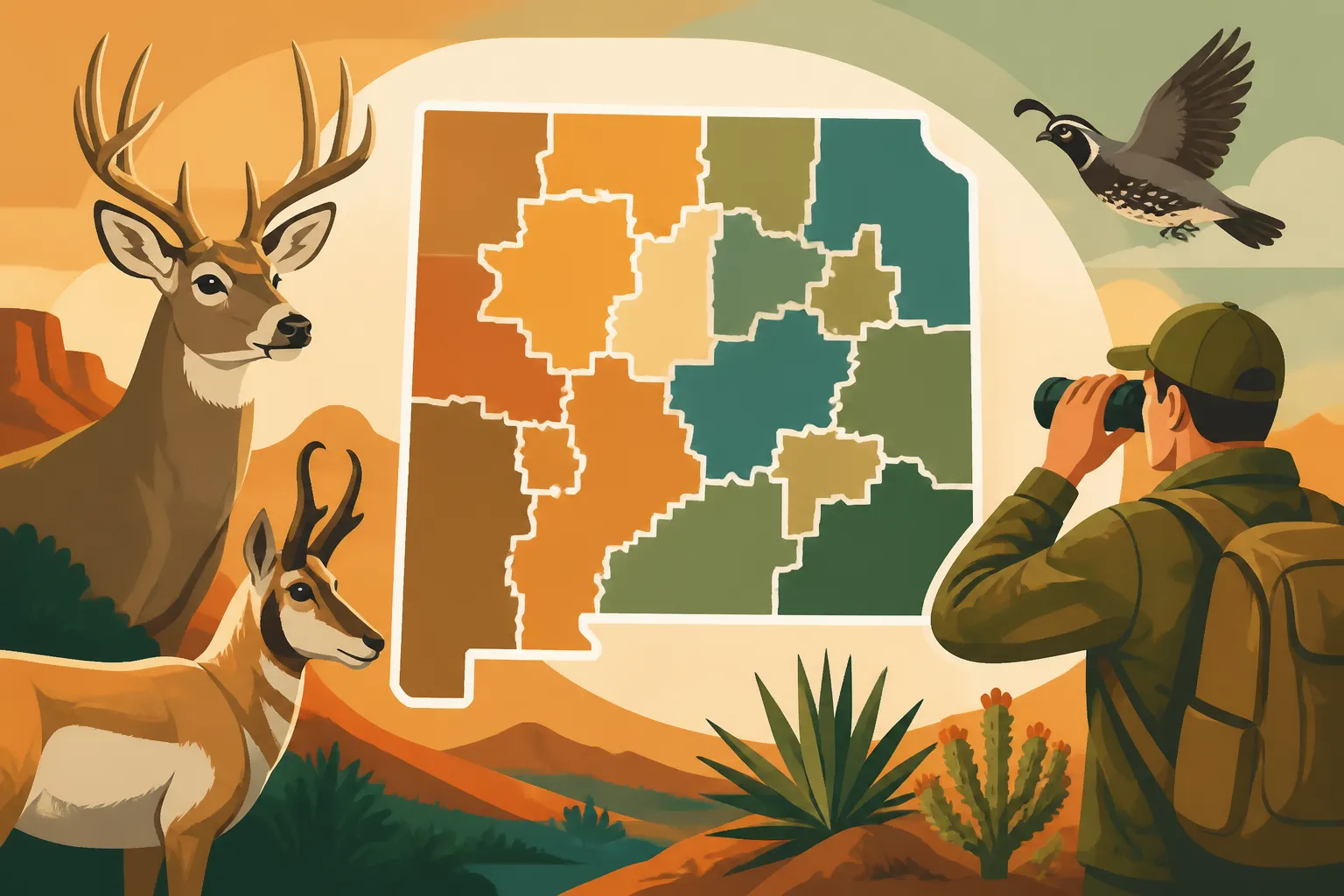
Generally speaking, EPLUS units are found across various regions of New Mexico, but they tend to be concentrated where there's a mix of private and public land, or in areas with strong elk populations that utilize private holdings. You’ll find EPLUS units scattered through the northern mountains, central regions, and even extending into the eastern plains. These aren't exclusively units dominated by private land; many units feature a patchwork of ownership, and it’s in these mixed landscapes that EPLUS often shines.
The idea is that even in units with considerable public land, critical wintering grounds, migration corridors, or bedding areas might fall within private property. EPLUS tags for these units allow a hunter to access these vital areas, either directly on the private land or by enabling passage to isolated public parcels. It's a system designed to be flexible and adapt to the diverse land ownership patterns across the state.
Specific Examples of Prominent EPLUS Units for Elk
While it would be exhaustive to list every single unit (the NMDGF regulations booklet lists over 40 units as eligible for EPLUS elk authorizations), we can highlight some prominent examples to give you a clearer picture. These units represent a good cross-section of where you'll most commonly find EPLUS elk tags:
- Northern Units (e.g., Units 4, 5B, 6A, 6B, 7, 45, 49, 50, 51, 52, 53, 54, 55, 56, 57, 58): These units, especially those bordering Colorado, are often characterized by a blend of national forest and private ranch land. They hold significant elk populations, and EPLUS tags can be a gateway to exceptional hunting, particularly on private agricultural lands that draw elk in the colder months. Units like 4 and 45 are renowned for quality elk and can be extremely tough to draw publicly.
- Gila Region Units (e.g., Units 15, 16A, 16B, 16C, 16D, 16E, 17): Yes, even the legendary Gila, known for New Mexico Elk Are Why the Gila Draws Everyone, has EPLUS opportunities. While a large portion of these units is National Forest or Wilderness, there are still private inholdings and bordering ranches that hold EPLUS authorizations. For example, What Makes New Mexico Unit 15 the Gila's Finest for primitive weapons also has private land portions where EPLUS can be relevant. These tags can be incredibly valuable for accessing parts of these units that might be difficult to reach otherwise, or for hunting elk that move between public and private lands.
- Central and Eastern Units (e.g., Units 9, 10, 12, 13, 34, 36, 37, 38, 40, 41, 42, 44, 46, 47, 48): These units often have a higher percentage of private land, particularly ranches and agricultural fields. Units like 34 and 37 are popular for their large elk herds and often require careful navigation of public and private property boundaries. EPLUS tags here can provide guaranteed access to land that consistently holds elk, making them a very attractive option for hunters who prioritize a tag over the public draw lottery.
It's important to remember that the availability of EPLUS tags within any given unit can fluctuate year to year based on landowner participation and elk populations. Always consult the most recent New Mexico Game and Fish regulations booklet or use resources like GoHunt to verify current EPLUS unit designations and offerings.
EPLUS for Other Species
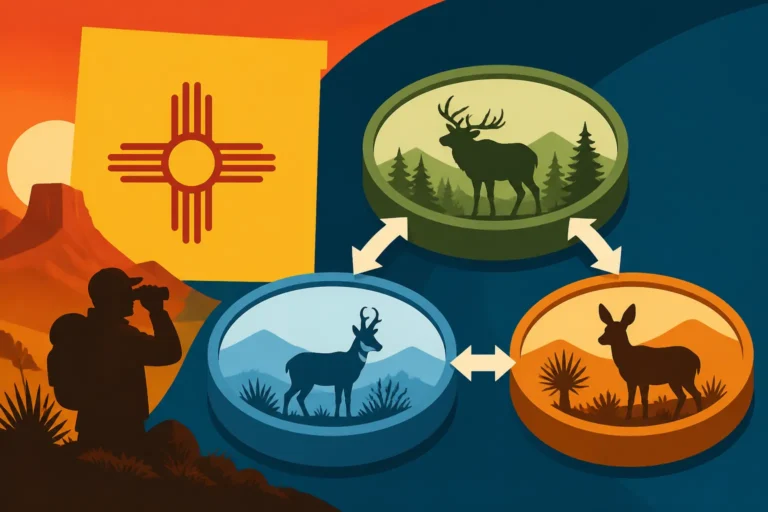
While elk are the primary focus of the EPLUS system, it’s not exclusively for them. You'll find a more limited number of EPLUS authorizations for other big game species, most notably mule deer and pronghorn.
For Mule Deer Across New Mexico's High Country and Desert, EPLUS tags are less common than elk but do exist in units with significant private land holdings where deer often concentrate. These might include units on the eastern plains or in certain agricultural regions where deer thrive on ranch properties.
Similarly, for Pronghorn on New Mexico's Eastern Plains, EPLUS authorizations can be found in some of the premier pronghorn units, again tied to large private ranches. Pronghorn are highly dependent on expansive grasslands, much of which is privately owned. An EPLUS pronghorn tag can provide access to these vast properties, offering a fantastic opportunity to pursue these incredibly fast animals.
However, the bulk of the EPLUS program's offerings remain dedicated to elk, given their management complexities and high demand among hunters. For species like oryx, ibex, or bighorn, the EPLUS system is not typically in play due to the unique management strategies and habitat requirements for these animals.
Navigating Unit Boundaries and Private Land
Understanding which units have EPLUS authorizations is only half the battle. The real strategy comes in knowing how to navigate these units, especially given the intrinsic link between EPLUS and private land.
The Critical Role of Private Land in EPLUS Units
It cannot be overstated: EPLUS tags are fundamentally tied to private land. This means that even if a unit has EPLUS authorizations, the specific hunting opportunity you secure will likely be on or heavily influenced by private property. This is a critical distinction from a public draw tag, where you’re guaranteed access to public lands within the unit. With an EPLUS tag, your access is typically negotiated with the landowner or outfitter who holds the authorization.
This is where the benefit and challenge of EPLUS intersect. The benefit is often access to high-quality, less pressured game animals. The challenge is that you need to clearly understand the boundaries of the private property you have permission to hunt and respect those boundaries meticulously. Trespassing, even accidentally, is a serious offense that can jeopardize your hunt and future opportunities. It's a good idea to know Reading a New Mexico Unit Boundary Before You Apply and then verify specific property lines.
Unit-Wide vs. Ranch-Only EPLUS Authorizations
Within the EPLUS framework, there’s a crucial distinction between "unit-wide" and "ranch-only" authorizations, and this dramatically impacts your hunting strategy.
- Unit-Wide EPLUS Authorizations: These tags are gold. A unit-wide EPLUS authorization allows you to hunt anywhere within the designated Game Management Unit (GMU) where you have legal access. This means you can hunt on public land (National Forest, BLM, State Trust Land where accessible with a license) within that unit, as well as any private land you have permission for. These tags offer immense flexibility and are highly sought after because they don't restrict you to a single ranch. However, obtaining them usually still involves a landowner or outfitter, even if you plan to hunt public ground. They essentially grant you a state tag for that unit.
- Ranch-Only EPLUS Authorizations: As the name implies, these authorizations restrict your hunting to a specific ranch or private property for which the landowner holds the permit. You cannot legally hunt public land or other private properties within the unit with a "ranch-only" tag. These are more common for landowners whose property doesn't have an extensive public land component or who simply want to manage hunting opportunities exclusively on their own land. While they offer less flexibility, they can still provide excellent hunting experiences on well-managed private properties, often with less competition.
Understanding Unit-Wide Against Ranch-Only New Mexico EPLUS Tags is paramount when considering an EPLUS tag. Always clarify which type of authorization you are getting from a landowner or outfitter to avoid any misunderstanding or legal issues in the field.
Using Mapping Tools to Confirm EPLUS Unit Boundaries
In this day and age, technology is your best friend when it comes to navigating complex land ownership. Reliable mapping tools are essential for any hunter, but they become absolutely critical when dealing with EPLUS units and private land access.
Platforms like GoHunt and onX Hunt are invaluable resources. These applications provide detailed land ownership maps, overlaying public and private boundaries directly onto satellite imagery or topographic maps. You can zoom in and identify specific parcels, distinguish between BLM, National Forest, State Trust Land, and private holdings. When considering an EPLUS tag, especially a unit-wide one, using these tools allows you to:
- Visualize Access: See how much public land is actually within the unit.
- Identify Inholdings: Locate public land parcels that might be landlocked by private property, which an EPLUS tag could grant you access to.
- Plan Your Hunt: Develop a solid plan for where you can legally hunt, whether on the associated private ranch or on nearby public land.
- Avoid Trespass: Clearly delineate legal hunting areas from off-limits private property, protecting yourself from potential legal trouble.
The NMDGF website also provides unit maps and regulations, which are your official source for unit boundaries and rules. Always cross-reference your digital maps with the official regulations to ensure you have the most up-to-date and accurate information. This diligence can save you a lot of headaches and ensure a legal, ethical hunt.
Finding and Securing EPLUS Tags within These Units
So, you've identified potential EPLUS units that align with your hunting goals. The next step is figuring out how to actually get your hands on one of these tags. It's a different process than simply applying in the public draw.
The Process of Acquiring an EPLUS Tag
Acquiring an EPLUS tag is fundamentally about connecting with the landowners or outfitters who possess these authorizations. Unlike the public draw, where you apply directly to the state, with EPLUS, you're essentially entering into a private transaction.
Here's the general pathway:
- Identify a Desired Unit and Species: Based on your research into EPLUS units and your hunting preferences, narrow down your choices.
- Contact Landowners or Outfitters: This is the critical step. Many landowners who receive EPLUS authorizations work with outfitters to market and guide hunts on their property. Some larger ranches may directly sell authorizations. Start by searching for licensed New Mexico outfitters who operate in your target EPLUS units. Websites dedicated to hunting outfitters and even the NMDGF website sometimes list registered outfitters.
- Negotiate Terms: Once you connect with a landowner or outfitter, you'll discuss the details: the type of tag (unit-wide vs. ranch-only), the species, hunt dates, price, and what's included (guide services, lodging, meals, etc.). Remember, the cost of What a Guided New Mexico Elk Hunt Costs with an EPLUS tag is typically significantly higher than just the state license fee because it includes the value of the authorization and often guided services.
- Secure the Authorization: If an agreement is reached, the landowner/outfitter will provide you with the EPLUS authorization number. You will still need to purchase a New Mexico Game Hunting License (like The Nonresident New Mexico Game Hunting License) and any required stamps (like the HMAV or Habitat Stamp) through the NMDGF online system. The outfitter or landowner will then provide you with the EPLUS authorization number to link to your license, effectively converting it into a valid tag for your hunt.
The process of Buying a New Mexico EPLUS Elk Authorization is distinct and requires direct engagement with the private sector rather than the state lottery.
Considerations When Choosing an EPLUS Unit
When you're looking at different EPLUS units, it's not just about the species or the size of the elk. You've got to consider the whole picture to make an informed decision that matches your hunting style and expectations.
First off, think about the public land access within the unit. Even if you're getting an EPLUS tag, if it's a unit-wide authorization, you'll still have access to any public land. So, look at units that have a good mix of public and private ground. For instance, some of the Gila units, while having significant private parcels, also boast huge tracts of national forest like New Mexico's Gila National Forest for Elk Hunters. This gives you flexibility. If you're on a ranch-only tag, this point is less critical, but still something to consider for the overall landscape and game movement.
Next, outfitter services and their reputation are a huge part of the EPLUS experience for many. Since many EPLUS tags are secured through outfitters, their knowledge of the specific unit and the ranches they work with is invaluable. Are they known for ethical practices? Do they have a good success rate? Ask for references and scrutinize reviews. A good outfitter can make or break your hunt, providing insights into game patterns, calling strategies, and even just navigating the vast landscapes.
Finally, think about specific ranch opportunities. Within an EPLUS unit, one ranch might be known for holding large migratory bulls during a certain time of year, while another might be better for an early-season cow hunt. Ask detailed questions about the specific property the authorization is tied to, if it's a ranch-only tag. How big is the property? What kind of habitat does it offer? What are the typical harvest statistics from that particular ranch? Using tools like GoHunt's property boundaries and game statistics can help you compare these options. This diligence ensures that your investment in an EPLUS tag aligns with the kind of hunting experience you’re truly looking for.
| EPLUS Unit Examples (Elk Focus) | Primary Terrain/Habitat | Common EPLUS Authorization Type | General Hunting Opportunity | Notes |
|---|---|---|---|---|
| Unit 4 | Mixed timber, private ranch, agriculture | Unit-Wide/Ranch-Only | High quality elk, often challenging | Popular, high demand, northern unit |
| Unit 15 | Rugged Gila Wilderness, ponderosa, private inholdings | Unit-Wide/Ranch-Only | Trophy elk potential, physically demanding | Primitive weapons focus, but EPLUS for all weapon types available |
| Unit 16A/D | Mountainous, canyons, timber, some private | Unit-Wide/Ranch-Only | Consistent elk, large wilderness areas | Good mix of public/private, requires effort |
| Unit 34 | Mixed forest, pinyon-juniper, private ranches | Unit-Wide/Ranch-Only | Strong elk populations, diverse habitat | Accessible, but private land knowledge is key |
| Unit 37 | Rolling hills, juniper, private ranches, agriculture | Ranch-Only (often) | Good numbers, often on private agriculture | Eastern plains influence, good for spotting |
| Unit 52 | Timbered mountains, large private ranches | Unit-Wide/Ranch-Only | Quality bulls, good habitat diversity | Northern unit, often snow impacted |
| Unit 58 | Timber, open parks, extensive private ranches | Unit-Wide/Ranch-Only | Good bull hunting on private land | Proximity to CO border, strong genetics |
This table provides a snapshot, but always remember to dive deep into the current regulations and talk to outfitters or landowners for the most specific information.
Disclaimer
Please be aware that hunting regulations, fees, and unit designations can change. While every effort has been made to provide accurate and up-to-date information, it is your responsibility to consult the official New Mexico Department of Game and Fish (NMDGF) regulations booklet and website for the most current rules before planning any hunt or making any financial commitments.