Where the Outfitter Number Goes on Your Application
It's easy to get lost in the labyrinth of online applications when you're dreaming of a New Mexico hunting adventure, especially when you're considering hunting with an outfitter. Many hunters get overwhelmed by the specific requirements and where to put crucial information, like that all-important outfitter number. This guide is here to untangle that process, walking you through exactly where to input your outfitter's details on your New Mexico big game application, ensuring your entry into the draw is smooth and correct.
Understanding the New Mexico Outfitter Draw Pool
New Mexico's draw system can feel a bit like a mystery, especially when you first encounter the different applicant pools. For anyone considering hiring a guide, one of the most significant aspects to understand is the dedicated outfitter pool. This isn't just a courtesy; it's a specific allocation built into the state's hunting regulations.
Why the Outfitter Pool Exists
The New Mexico Department of Game and Fish established the outfitter pool for a few key reasons, and it's important to grasp the intent behind it. Essentially, the state aims to support its local outfitting businesses, recognizing their significant economic contribution to the rural communities and their role in land stewardship and wildlife management. By reserving a portion of the tags for clients who book with registered outfitters, New Mexico creates an incentive for hunters to utilize these services, thereby supporting local economies and promoting guided hunting experiences, especially for those who might be new to the state or its challenging terrain. This system also helps ensure that a certain percentage of nonresident hunters, who often rely on outfitters, have a dedicated path to drawing a tag, even in highly sought-after units. It's a pragmatic approach to balancing various interests within the hunting community. For a deeper dive into this, you might want to read about What the Outfitter Pool Was Meant to Fix.
How the Allocation Works for Outfitter Clients
When you apply for a big game license in New Mexico, your application falls into one of three pools, depending on your residency status and whether you're using an outfitter. The state allocates 84% of its available tags to residents, 10% to nonresident hunters who apply with a registered New Mexico outfitter, and the remaining 6% to nonresident hunters who apply independently. If you're a nonresident and choose to apply through an outfitter, your application will be entered into that specific 10% pool. This effectively means you're competing against a much smaller pool of applicants compared to the general nonresident pool. It's a critical distinction because it can significantly impact your draw odds, offering a potentially higher chance of success for those seeking to hunt some of the state's most coveted species, like trophy elk in the Gila. Understanding this structure is foundational to making an informed decision about your application strategy.
The Specifics of Applying with an Outfitter
Applying for a New Mexico hunting tag with an outfitter isn't as simple as just checking a box. There are specific requirements that both you and your chosen outfitter must adhere to, most notably the guide-client contract and the on-the-ground accompaniment rule. These steps are put in place to ensure legitimate outfitter applications and protect both the hunter and the outfitter.
The Mandatory Guide-Client Contract
Before you even think about submitting your application, you absolutely must have a signed guide-client contract with a registered New Mexico outfitter. This isn't just a handshake agreement; it's a legally binding document that outlines the terms of your hunt, including dates, species, unit, services provided, and, crucially, the outfitter's agreement to list you as a client in the draw. The New Mexico Department of Game and Fish requires this contract to be in place before the application deadline, which is generally March 18th for most species. Without this valid contract, your application under the outfitter pool could be invalidated. It’s essential to review this contract carefully, asking any questions you have about its clauses, especially regarding payment, cancellations, and what happens if you don't draw a tag. Many reputable outfitters, like those you might find advertised on platforms like GoHunt, will be transparent about their contracts and process. You can find more detailed information on The New Mexico Guide-Client Contract Requirement.
The Two-Day Accompaniment Rule
Another critical component of applying through the outfitter pool is the "two-day accompaniment rule." This regulation stipulates that if you draw a tag through the outfitter pool, your registered New Mexico outfitter, or one of their licensed guides, must physically accompany you in the field for a minimum of two days of your hunt. This isn't just about showing you where to go; it's about active guidance and participation in your hunting experience. The state implements this rule to ensure that outfitters are genuinely providing services and not merely acting as a conduit for tags. It solidifies the spirit of the outfitter pool, linking the tag allocation directly to the provision of professional guiding services. It's important to discuss this with your outfitter beforehand to understand their plan for fulfilling this requirement. Make sure your expectations align with their operational procedures to avoid any misunderstandings once your hunt begins. Missing this requirement can lead to serious consequences, including fines and potential revocation of hunting privileges. Further details on this specific regulation are available in New Mexico's Two-Day Accompaniment Requirement.
Navigating the Online Application System
The online application portal for New Mexico Game and Fish can be intimidating with all its fields and options. When you’re applying with an outfitter, knowing exactly where to input their information is paramount to ensuring your application is correctly processed into the dedicated outfitter pool. A simple mistake here can shift your application to the general nonresident pool, drastically reducing your draw odds.
Locating the Outfitter Information Field
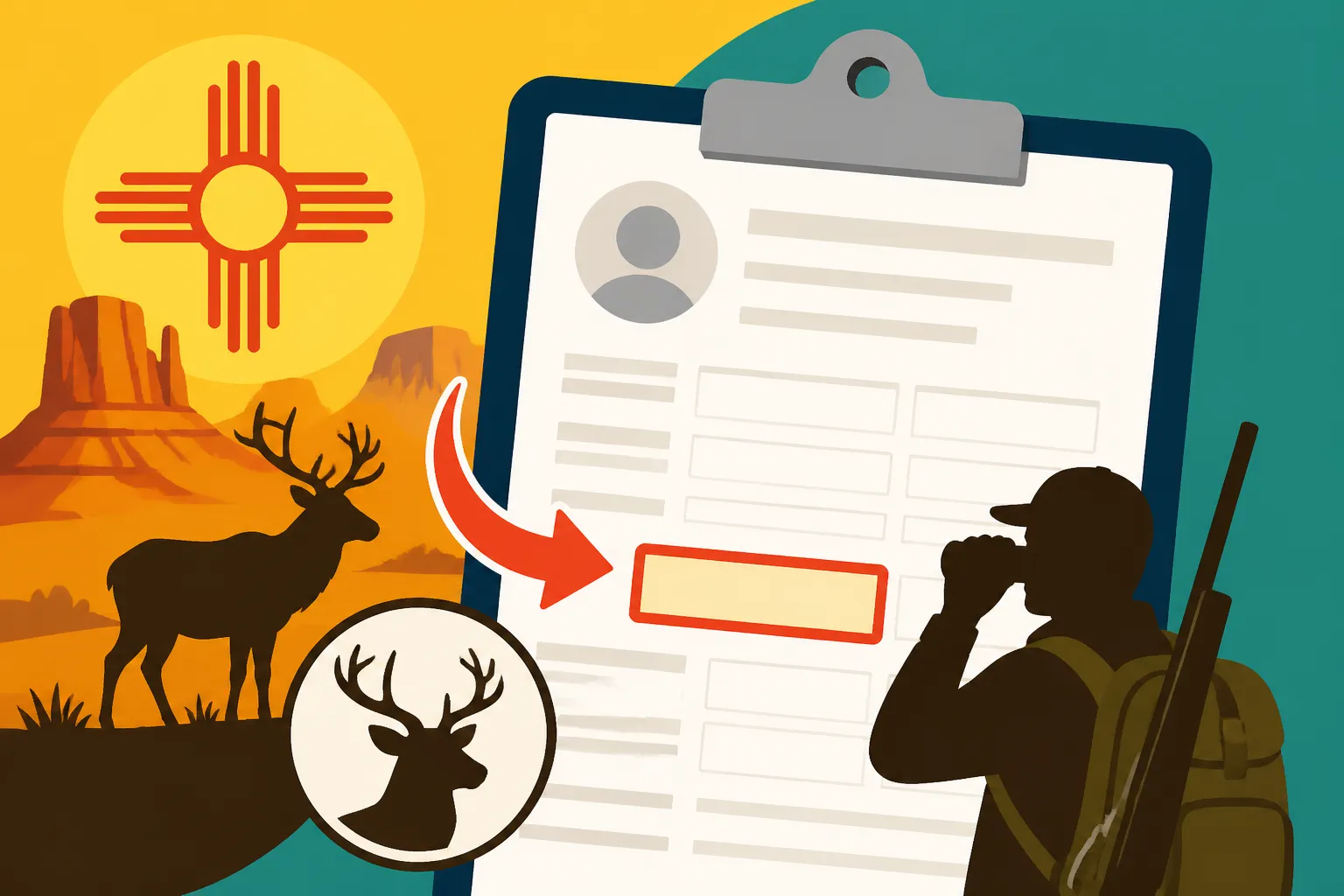
Once you've set up your account on the New Mexico Department of Game and Fish website and begun your big game license application, you'll eventually reach a section specifically designed for outfitter information. This field is usually clearly labeled, often asking for "Outfitter Number" or "Guide Number." It's crucial that you accurately enter the official, state-issued registration number of your chosen New Mexico outfitter in this designated box. Do not enter their name, phone number, or any other identifying information here; only the specific license number will suffice. This number is what the system uses to link your application to the outfitter pool and verify the legitimacy of your application against their registered status. If you're using a resource like GoHunt to research units or draw odds, they often provide links or information that can help you cross-reference outfitter details. Always double-check this number with your outfitter directly before finalizing your application to ensure there are no typos or outdated information.
Common Mistakes to Avoid
Submitting an application can be nerve-wracking, and it’s easy to make a small error that has big consequences. One of the most common mistakes hunters make when applying with an outfitter is simply forgetting to enter the outfitter number at all. Without this number, even if you have a signed contract, your application will default to the general nonresident pool, which has significantly lower draw odds. Another frequent error is entering incorrect information, such as an expired outfitter number or a number belonging to a different guide. Always verify the current, active outfitter number with your guide directly. Some hunters also mistakenly believe that simply mentioning an outfitter in their application notes is enough, but it isn't; the specific number must be in the designated field. Finally, ensure you understand the deadlines. While the primary application deadline is typically March 18th for most big game species, delays in getting your outfitter number or contract sorted can put you in a tough spot. For instance, understanding New Mexico's March Deadline for Applications is critical. Taking your time, carefully reviewing each field, and having your outfitter's details readily available can prevent these frustrating and costly errors.
Common Questions and Misconceptions
Applying for big game tags, especially in a state with a nuanced draw system like New Mexico, inevitably leads to questions. There are several common misconceptions surrounding the outfitter pool that can trip up even experienced hunters. Let's clear some of those up to ensure you're making the most informed decisions.
Does Applying with an Outfitter Really Improve My Odds?
This is perhaps the most frequently asked question, and the short answer is: yes, for non-residents, it can significantly improve your draw odds for many coveted hunts. Remember that the 10% outfitter pool means you are competing against a much smaller group of applicants compared to the 6% general nonresident pool. For highly desirable units and species, where hundreds or even thousands of independent nonresidents might apply, the outfitter pool often sees fewer applicants per tag, leading to statistically higher success rates.
However, it’s not a magic bullet. The improvement in odds varies wildly depending on the unit, species, and specific hunt code you're applying for. Some outfitter hunts are still extremely competitive. It's wise to use resources like the draw odds data available on GoHunt to compare the success rates of the outfitter pool versus the general nonresident pool for your desired hunt code. This data-driven approach will give you a realistic expectation of your chances. For more on this, check out Does Applying With an Outfitter Improve Your Odds?. The bottom line is that while it doesn't guarantee a tag, applying with an outfitter does provide a distinct advantage for nonresidents navigating New Mexico's draw system.
What If My Outfitter Cannot Attend the Hunt?
Life happens, and sometimes even the best-laid plans go awry. It's a legitimate concern: what if you draw a tag through the outfitter pool, but your outfitter experiences an emergency or unforeseen circumstance that prevents them from fulfilling the two-day accompaniment requirement? This situation, while uncommon with reputable outfitters, needs to be addressed in your initial contract discussions.
Generally, New Mexico regulations allow for a substitution. The registered outfitter is responsible for ensuring that a licensed guide from their operation, or another legally qualified individual, fulfills the accompaniment obligation. It's imperative that you communicate immediately with your outfitter if such a situation arises. They should have a contingency plan in place. If the outfitter completely fails to provide accompaniment without a valid substitution, it could lead to legal issues for both the outfitter and, potentially, the hunter, as the terms of the draw were not met. This is why a comprehensive guide-client contract is so crucial, as it should detail the procedures and remedies for such occurrences. Knowing What Happens If Your New Mexico Outfitter Cannot Attend is essential.
What Happens After You Apply
Once you've meticulously filled out your application, double-checked the outfitter number, and clicked "submit," the waiting game begins. This period can be filled with anticipation and a bit of anxiety. Knowing what to expect in the aftermath of your application can ease some of that tension and prepare you for the next steps, whether you draw a tag or not.
The Draw Process and Notification
After the application deadline, the New Mexico Department of Game and Fish processes all submitted applications, including those within the various outfitter and resident pools. This is a complex lottery system where tags are randomly allocated based on the number of available licenses and the applicants in each pool. New Mexico does not use a preference point system, meaning every applicant, regardless of past attempts, has an equal chance in the draw each year. This is a significant difference from many other western states.
Typically, draw results are announced in late March or early April. You won't receive a physical letter in the mail immediately; instead, the results are usually posted online, and successful applicants often receive an email notification. It's a nail-biting time for many hunters, constantly refreshing their emails or the state's draw results page. If you've been researching units and strategies with tools like GoHunt, this is where all that effort culminates. Remember, while applying with an outfitter can increase your chances, drawing a tag is never guaranteed. Keep an eye out for official announcements on the New Mexico Department of Game and Fish website for the exact date and time the results will be released. You can stay informed about When New Mexico Posts Draw Results through official channels.
| Step | Action | Key Detail | Common Pitfall |
|---|---|---|---|
| 1 | Select Hunt Codes | Research units/species carefully. | Not matching hunt code to outfitter's offering. |
| 2 | Secure Outfitter Contract | Sign valid contract with registered NM outfitter. | Not having a signed contract before applying. |
| 3 | Obtain Outfitter Number | Get official state-issued number from your outfitter. | Entering incorrect or expired outfitter number. |
| 4 | Create Online Account | Set up your New Mexico Game & Fish online profile. | Issues with forgotten passwords or expired licenses. |
| 5 | Start Application | Choose species, hunt code, and applicant type. | Accidentally applying as independent non-resident. |
| 6 | Enter Outfitter Number | Crucially, input the number in the designated field. | Forgetting to enter the number, or typing it in notes. |
| 7 | Pay Application Fees | Submit non-refundable application fees. | Declined payment, missing deadline. |
| 8 | Review and Submit | Double-check all details before final submission. | Not verifying all fields, especially outfitter number. |
| 9 | Await Results | Monitor email and NMDGF website for draw results. | Missing notification, assuming no tag if no email. |
What Happens If You Draw (and If You Don't)
If you're one of the lucky ones and draw a tag, congratulations! Your credit card will typically be charged for the full tag fee shortly after the results are posted. At this point, you'll need to coordinate with your outfitter to finalize hunt details, logistics, and any remaining payments as per your contract. Remember the two-day accompaniment rule, and confirm your outfitter's plan to fulfill this obligation. It's time to get serious about physical preparation and gear readiness for your New Mexico adventure.
If, like many hunters, you don't draw a tag in the primary draw, don't despair. Your application fees are typically non-refundable, but your hunting license fee (if it was included in the initial charge for the draw) will be refunded to your card if you don't draw. You still have options! New Mexico often has leftover tags available for undersubscribed hunts, which go on sale after the primary draw. While these might not be for the most sought-after units or species, they offer another chance to hunt. Keep an eye on the NMDGF website for announcements regarding leftover license sales. Additionally, this is the time to start planning for next year, analyzing draw odds, and perhaps considering different hunt codes or units to improve your chances on the next application cycle. You could also discuss with your outfitter about trying different strategies or exploring other opportunities like buying an EPLUS Tag from a Landowner.
Disclaimer
Please remember that hunting regulations, fees, and application procedures can change. Always consult the official New Mexico Department of Game and Fish website and the current year's hunting proclamation for the most accurate and up-to-date information before applying or heading into the field. This guide is for informational purposes only and does not supersede official regulations.