Bird Dog Rules for Quail Hunting
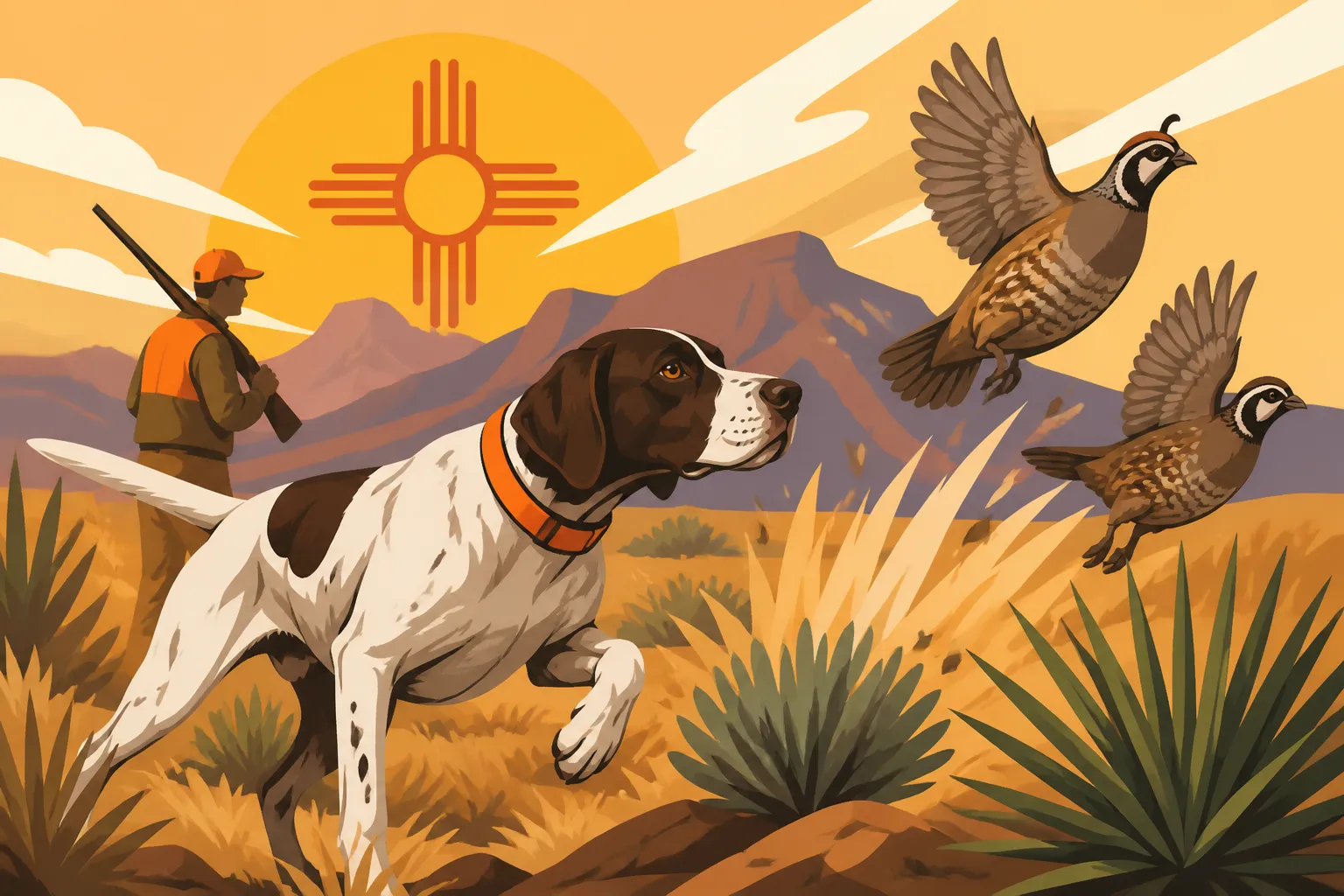
Heading out to the sprawling, rugged landscapes of New Mexico in pursuit of quail, with a loyal bird dog quartering ahead, is truly an experience like no other. But let's be honest, figuring out all the rules and regulations can feel like trying to hit a fast-flying Gambel's quail with a rusty BB gun – frustrating, confusing, and sometimes, you just miss the mark entirely. You want to give your dog the freedom to work, to sniff out those elusive coveys, but you're also acutely aware that hunting with dogs comes with its own set of responsibilities and legalities. This guide is here to clear up the confusion, walking you through the specific bird dog rules for quail hunting in New Mexico, ensuring both you and your four-legged hunting partner can enjoy the season safely and legally.
Understanding New Mexico's General Regulations for Hunting with Dogs
Before we dive specifically into quail, it’s really important to grasp the foundational rules that govern hunting with dogs in New Mexico. It's not a free-for-all, and there are some critical distinctions that hunters often overlook, leading to potential headaches down the line. The state wants to ensure ethical hunting practices and the welfare of wildlife, and that includes how we utilize our canine companions in the field.
The Basics of Dog Use for Upland Birds
When it comes to upland birds like quail, pheasant, chukar, or grouse, New Mexico is generally quite dog-friendly. The law acknowledges that a well-trained bird dog is an integral part of the upland hunting experience, helping locate birds, flush them, and most importantly, retrieve downed game. This retrieval aspect is crucial from an ethical standpoint; a good bird dog significantly reduces the chances of lost birds, ensuring a more responsible harvest. Think about those lightning-fast Gambel's quail, sprinting through thick brush after the shot – without a dog, finding them can be an almost impossible task. The rules permit the use of dogs primarily for these purposes: finding, flushing, and retrieving. They are seen as aids to the hunter, not independent hunters themselves. This means your dog isn't out there making its own decisions about what to chase or kill; it's working in conjunction with you, under your direct control, to help you harvest game within legal limits.
This general allowance for bird dogs is a big reason why upland hunting is so popular here. It allows for that classic partnership, the joy of watching a well-trained setter or pointer work a field, or a flusher like a springer spaniel or Labrador diving into the thick stuff. It's truly a special connection, and New Mexico’s regulations support that tradition for small game hunters.
Distinguishing Between Big Game and Small Game Rules
Here’s where things get really important, and where the lines blur for some folks. New Mexico draws a very firm line between using dogs for small game and using them for big game. For big game animals—we're talking elk, deer, antelope, oryx, bighorn sheep, even bear and cougar (with specific exceptions for the latter two)—using a dog to pursue, harass, or take the animal is almost universally prohibited. This is a critical regulation and one that carries serious penalties if violated. You simply cannot take your deer dog out to help you find a mule deer buck, or use your bird dog to track an injured elk. The only significant exception to this rule is the use of hounds for hunting mountain lion and, in some cases, bear, but these are highly regulated, require special permits, and involve trained hound teams, not your average backyard retriever.
So, while your trusty Labrador might be a retrieving machine on quail, it absolutely cannot be used to track a wounded deer across the next ridge, no matter how good it is. This distinction is paramount for every hunter to understand. The moment your bird dog starts to chase a mule deer, it becomes a problem, even if you’re quail hunting in prime deer country. This is why control and specific training are so vital, especially when hunting in areas where different species overlap. Knowing your dog's limitations and your own responsibilities is key to staying legal and ethical.
License Requirements for Handlers and Dogs
When you’re planning a quail hunt with your dog in New Mexico, you, the hunter, are the one who needs the proper licensing. Your dog doesn’t require a specific hunting license or permit to be in the field as long as it's assisting a properly licensed hunter in taking small game. However, it's not quite that simple. As a hunter, you'll need a valid New Mexico Game Hunting License, which is typically a prerequisite for all other species-specific tags. For quail, you'll then need the appropriate small game license or combination license that includes small game. If you're a nonresident, these fees will understandably be higher, but the principle remains the same. You might also need a Habitat Management & Access Validation (HMAV) and a Habitat Stamp if you plan to hunt on federal lands. It’s always best to check the current New Mexico Regulations booklet each year, as things can change.
There aren't specific "dog handler" permits for upland birds, nor do you need to "register" your bird dog with the state's Game and Fish Department for general hunting purposes. However, your dog should always have identification, like a collar with your contact information and their rabies tag, just in case they get separated from you in the vast New Mexico landscape. Some hunters also utilize GPS collars, like those from Garmin or SportDOG, which provide both tracking and often e-collar functionalities, which can be invaluable for maintaining control and safety, especially in dense cover or wide-open country.
Specific Rules for Quail Hunting with Bird Dogs in New Mexico
Now that we’ve covered the general ground rules, let’s get down to the nitty-gritty of what you need to know when specifically targeting New Mexico’s feisty quail with your feathered-friend-finder. The desert and high desert environments where quail thrive present unique challenges and considerations for dog handlers.
Leash Laws and Off-Leash Areas
This is often where hunters get a bit confused. Generally speaking, in designated hunting areas on public land in New Mexico, when you are actively hunting upland game, your dog is allowed to be off-leash to perform its duties of locating, flushing, and retrieving birds. This applies to vast tracts of Bureau of Land Management (BLM) and National Forest lands where many of our quail seasons occur. However, "allowed to be off-leash" doesn't mean "allowed to be out of control." Your dog must remain under your immediate command and control at all times. This means they should respond promptly to voice commands or e-collar signals, especially when encountering other hunters, livestock, or non-game wildlife.
There are specific areas, however, where leash laws are strictly enforced, such as developed recreation areas, campgrounds, or designated trails, even within public hunting lands. It's always crucial to pay attention to signage. For example, some wildlife management areas might have specific rules about dog use. When traveling to and from your hunting spot, or even in camp, it’s a good practice to keep your dog on a leash, or at least confined, to prevent any issues with other people or wildlife. Remember, even if your dog is the sweetest companion, not everyone is comfortable with an off-leash animal, especially when they might be carrying hunting equipment.
Training Seasons and Permits
New Mexico is pretty accommodating when it comes to training your bird dogs. You generally don't need a special permit to train your bird dog in the off-season, outside of regular hunting dates, as long as you're not actually taking game and are adhering to all other relevant regulations. This is a huge benefit for serious dog trainers who understand that a well-trained dog isn't born overnight. However, there are some important caveats. You must not use live game birds during the closed season for training unless they are legally acquired, banded, and released for training purposes. This is to prevent the illegal taking of wild birds outside the season. Most trainers use pen-raised birds or training dummies.
When you're training, you're still on public or private land, so all the rules about New Mexico State Trust Land Access Rules and Written Permission Is Required to Cross Private New Mexico Ground still apply. You can't just unleash your dog anywhere. Always be mindful of nesting seasons for wild birds; while it might not be explicitly illegal to train during this time, it's an ethical consideration to avoid disturbing nesting hens or vulnerable chicks. The focus during training should always be on developing your dog's skills and manners, not on pursuing wild game out of season. Many hunters use mapping applications like GoHunt to identify suitable public land areas far from sensitive habitats or private property where they can train their dogs responsibly.
Ethical Considerations and Best Practices
Beyond the black-and-white rules, there’s a whole spectrum of ethical considerations and best practices that elevate a good bird dog handler to a great one. The most important is control. A dog running wild, flushing birds out of range, chasing deer, or harassing livestock is not only unethical but also paints a bad picture for all hunters. Always ensure your dog respects game animals, whether they are target species or not. This means calling them off a chase immediately, every single time.
Another key ethical point is the swift and thorough recovery of downed birds. This is where a well-trained retriever shines. Losing a bird is a terrible feeling, and a dog's ability to locate and bring back game is an immense conservation tool. Ensure your dog is conditioned for the hunt. New Mexico's desert can be brutal, especially during early season hunts. Dogs need adequate water, protection from cactus and burrs, and breaks from the heat. Ignoring these needs isn't just unethical; it's a form of animal neglect. Understanding Heat Management on an Early Season Hunt is just as crucial for your dog as it is for you. Always carry extra water for your dog, and consider protective booties for their paws on rocky, thorny terrain.
Navigating Public and Private Land with Your Canine Companion
New Mexico offers vast stretches of diverse terrain, from high-altitude forests to sprawling deserts, all of which hold varying populations of quail. Understanding how to legally and ethically hunt these areas with your bird dog requires knowing the lay of the land, both literally and legally.
Rules on State Trust Land and Private Property
New Mexico State Trust Land is a fantastic resource for hunters, but it comes with its own unique set of rules. The good news is that a valid New Mexico hunting license acts as your easement to hunt on State Trust Land. This means you can typically take your bird dog with you to hunt quail on these lands without needing additional permits, as long as you are actively hunting and your dog is under control. However, it's vital to remember that State Trust Land is often leased for grazing, so you must always be hyper-aware of livestock. Your dog absolutely cannot harass cattle, sheep, or any other private property on these lands. Showing respect for these leases is crucial for maintaining hunting access. The New Mexico Mentored Youth Program Explained also applies here; if you're mentoring a youth hunter, your dog can still be part of the experience.
When it comes to private property, the rules are much stricter and simpler: you must have explicit written permission from the landowner before stepping foot on their land, and that includes sending your dog onto their property. Many of New Mexico's best quail areas are mosaics of public and private land, and accidentally crossing onto posted private property, or allowing your dog to do so, is trespassing. This is where tools like GoHunt or OnX Hunt become indispensable for clearly identifying land ownership boundaries, ensuring you and your dog stay on legal hunting ground. Always double-check your maps, and if there's any doubt, err on the side of caution. Even if a covey lands just over the fence, without permission, it's off-limits.
Federal Lands: BLM and National Forests
A huge percentage of New Mexico Holds Over 30 Million Acres of Public Hunting Land, and a significant portion of that is managed by the Bureau of Land Management (BLM) and the U.S. Forest Service (National Forests). These are often prime quail hunting areas, particularly for Scaled Quail in the desert flats and Gambel's Quail along riparian areas. On these federal lands, the general rules for bird dog use are quite consistent: dogs are allowed off-leash for hunting purposes as long as they are under your control.
However, specific regulations can vary by forest or district, and sometimes even by season. For instance, some areas might have temporary closures or restrictions during extreme fire danger, which could impact dog use. It’s always a good idea to check the specific land management agency's website for the area you plan to hunt. You'll definitely want to ensure you have your Habitat Stamp if hunting on National Forest land. BLM Ground Carries Most of New Mexico's Open Access, and this is often where you'll find expansive stretches perfect for covering ground with a wide-ranging pointer. Always be aware of other recreational users – hikers, mountain bikers, horseback riders – who may also be enjoying these public spaces, and ensure your dog is polite and under control when encountering them.
Avoiding Conflicts: Livestock, Other Hunters, and Wildlife
Hunting with a dog on public lands, especially in New Mexico, means sharing the space. Avoiding conflicts is paramount to ensuring continued access for all hunters. Livestock, as mentioned, is a big one. Many public lands are open range, and your dog cannot chase or harass cattle. This isn't just an ethical no-no; it can lead to legal trouble and fines. Train your dog to be completely indifferent to livestock, or at the very least, to heel immediately when livestock is present.
Other hunters are another consideration. While most upland hunters appreciate a good bird dog, not everyone is comfortable with an excited dog running up to them. Teach your dog a strong "heel" or "come" command and use it when you see other hunters. Give them a wide berth and keep your dog close until you've passed. Furthermore, think about Reading Wind in a Deep Gila Canyon or scouting tactics. Even if you're not targeting big game, your dog could flush an unseen deer or elk, potentially ruining another hunter's stalk. Being mindful of your surroundings and the presence of other hunters, especially during overlapping seasons, is a sign of respect.
Finally, while your dog is there to find game birds, it's crucial they don't harass non-game wildlife. A bird dog chasing a rabbit or a coyote is usually not an issue, but persistently harassing protected species could be. More importantly, it can distract your dog from its primary task. A well-trained dog understands what it's supposed to be hunting. Snake Awareness on a September Archery Hunt is also critical for your dog; desert rattlesnakes are common, and a curious dog can quickly get into trouble. Consider snake-avoidance training for your bird dog if you hunt regularly in rattlesnake country.
Gear, Training, and Preparing Your Dog for a New Mexico Quail Hunt
Bringing a bird dog into New Mexico's quail country isn't just about understanding the rules; it's about preparation. The unique challenges of the desert environment demand specific gear, training, and an unwavering focus on your dog's health and safety.
Essential Gear for Your Bird Dog
Just like you wouldn't go into the New Mexico backcountry without the right gear, your bird dog needs its own essential kit. First and foremost, a durable, reflective collar with up-to-date ID tags is non-negotiable. Many hunters now opt for GPS e-collars, which are incredibly useful for tracking your dog in vast, broken terrain and providing immediate correction if they range too far or get into trouble. Brands like Garmin Alpha or SportDOG Tek series are popular choices. These systems not only show you your dog's location on a handheld device or even your phone, but they also offer training functions to reinforce commands from a distance.
Beyond that, consider protective gear. The New Mexico desert is a minefield of thorns, burrs, and cactus. A protective vest can prevent nasty punctures to your dog's chest and belly. Many hunters also use dog booties to protect paws from sharp rocks, cactus, and extreme heat. Make sure these are well-fitted to prevent chafing. Don't forget a first-aid kit specifically for your dog, including items like tweezers for thorns, antiseptic wipes, vet wrap, and any necessary medications. Lastly, a portable water bowl and plenty of water are absolutely critical. Water You Must Carry on a Desert Day Hunt isn't just for you, it's for your dog too, and often in larger quantities.
Training Tips for New Mexico's Unique Terrain
Training a bird dog for New Mexico’s quail isn't quite the same as training for pheasants in a cornfield. The terrain, heat, and vegetation demand a different approach. Focus on a strong recall command, as quail often run before flushing, leading to longer chases and greater distances between you and your dog. Conditioning for endurance is also vital. Dogs that are not physically prepared for long days of running in the desert heat will quickly wear out, risking injury and heatstroke.
Introduce your dog to different types of cover, especially thick cholla and prickly pear cactus. While you want them to go into cover, you also want them to be cautious. Some dogs learn quickly to avoid painful cactus, while others need more encouragement. Practice retrieving in thorny conditions to build confidence. Because of the open nature of many quail habitats, training your dog to hunt within reasonable range, even if they have a big motor, is important. A good quail dog works for you, not just for itself. Understanding The Grid Glassing Method, Step by Step might not directly apply to your dog, but your strategy for covering ground will influence how your dog works with you.
Health and Safety Considerations in the Field
Your dog's health and safety should always be your top priority. New Mexico's environment can be harsh. Dehydration is a constant threat. Ensure your dog drinks plenty of water before, during, and after the hunt. Watch for signs of overheating: excessive panting, lethargy, or stumbling. If you suspect heatstroke, get your dog to shade and cool them down immediately.
Cactus spines and burrs are ubiquitous. Check your dog’s paws, ears, and mouth regularly for embedded thorns. A good pair of pliers or strong tweezers is essential. Snakebites are another serious risk. As mentioned, snake avoidance training can be life-saving. Even with training, always be vigilant. Carry veterinary contact information and know the nearest emergency vet clinic, especially if hunting far from home. Discuss potential risks and preventative measures with your vet before the season starts. For instance, some vets offer rattlesnake vaccines, which can lessen the severity of a bite but don't eliminate the need for immediate veterinary care.
| Aspect | Small Game (e.g., Quail) | Big Game (e.g., Deer/Elk) | Training (Off-Season) |
|---|---|---|---|
| Primary Purpose | Locating, flushing, retrieving | Generally prohibited for pursuit/taking | Skill development, conditioning |
| Off-Leash | Generally permitted if under control during active hunt | Prohibited for active hunting/pursuit | Generally permitted on public land if under control; no taking of wild game |
| License Required | Hunter needs valid Game Hunting & Small Game license/combo | Hunter needs valid Game Hunting & Big Game tag | Hunter needs valid Game Hunting license (if on public land or to establish intent) |
| Dog-Specific Permit | Not required | Not required (except specific hound permits for lion/bear) | Not required |
| Ethical Concerns | Livestock, other hunters, non-game wildlife, bird recovery | Harassment of game, illegal pursuit | Disturbing nesting birds, trespassing, livestock harassment |
| Key Gear | GPS e-collar, protective vest/booties, water, first-aid | N/A | Training dummies, bells, GPS e-collar, water |
| Land Ownership | Public (BLM/NF), State Trust (license = easement), Private (written permission) | Public (BLM/NF), State Trust (license = easement), Private (written permission) | Public (BLM/NF), State Trust (license = easement), Private (written permission) |
Remember, a well-prepared dog is a safe and effective hunting partner, enhancing your experience in the field and contributing to responsible hunting practices. Always prioritize their well-being and adhere to the regulations.
Disclaimer
The information provided in this article is for general informational purposes only and does not constitute legal advice. Hunting regulations in New Mexico are subject to change, and it is the hunter's responsibility to review and comply with the most current New Mexico Department of Game and Fish regulations prior to any hunting activity. Always consult the official New Mexico Hunting Rules & Information booklet or contact the NMDGF directly for the most accurate and up-to-date information.